
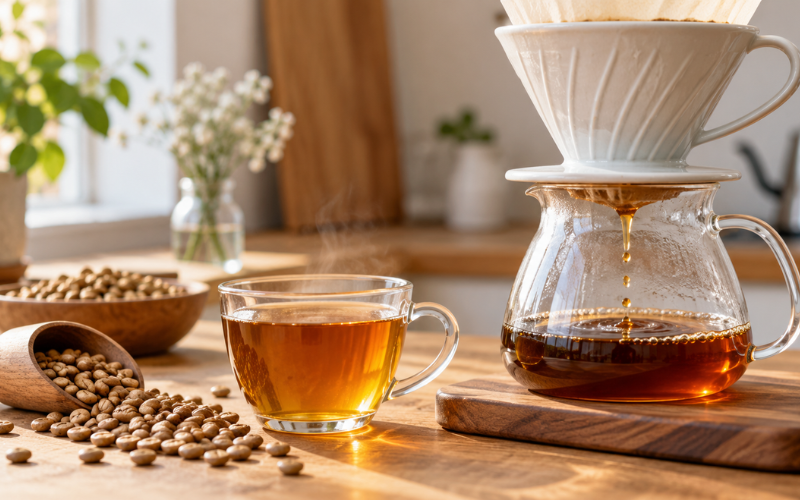
What is a light roast coffee, and why does it taste so different from darker coffee? Light roast coffee is made from beans that spend less time in the roasting machine. They are usually removed shortly after a stage called the first crack. As a result, the beans remain light brown and retain more of the flavors created by their variety, growing region, and processing method.
The lighter color does not mean the coffee has a weak flavor. In fact, light roast coffee can taste lively and complex. Depending on the beans, the cup may contain notes of fruit, flowers, citrus, herbs, honey, or tea. It also tends to have more noticeable acidity and less of the smoky bitterness commonly found in dark roasts.
Light Roast Coffee at a Glance
Light roast coffee is coffee roasted for a relatively short time and at a lower final temperature than medium or dark roast coffee. The exact temperature and roasting time depend on the beans, the equipment, and the roaster’s intended flavor. There is no single worldwide standard that every coffee company follows.
Names such as Cinnamon Roast, Half City, Light City, and New England Roast are sometimes used for lighter roast levels. However, these labels are not always consistent. A light roast from one company may look or taste closer to a medium roast from another.
Light-roasted beans are usually light to medium brown. Their surface normally looks dry because the roasting process has not continued long enough to draw oils to the outside of the bean. Their aroma can be sweet, floral, fruity, or grain-like, depending on the coffee and how it was roasted.
These beans are also relatively dense because they lose less moisture and expand less than dark-roasted beans. Their firm structure can make them slightly harder to grind, especially with a small or low-powered grinder.
How Coffee Beans Become a Light Roast
Coffee begins as a green seed found inside the fruit of the coffee plant. Before roasting, green coffee has little resemblance to the brown, aromatic beans used for brewing. Heat causes a series of physical and chemical changes that develop color, sweetness, aroma, and flavor.
During the early part of roasting, the beans absorb heat and lose moisture. Their color gradually changes from green to yellow and then to brown. As pressure builds inside them, the beans begin making popping sounds. This stage is known as the first crack.
The first crack is important because it marks a major point in flavor development. Light-roasted beans are generally removed from the roaster during or shortly after this stage. They are not normally roasted into the second crack, where darker, smokier, and more bitter flavors become stronger.
A shorter roast preserves more of the coffee’s natural or origin-related qualities. It also produces a lighter color and a denser bean. However, roasting too lightly can leave coffee tasting grassy, raw, or unusually sour. A skilled roaster must develop the bean enough to create sweetness while protecting its delicate character.
The Flavor Profile Behind the Lighter Color
One of the main attractions of light roast coffee is its wide range of flavors. While darker roasts often highlight flavors created by heat, light roasts reveal more of the qualities already present in the beans.
A well-prepared cup may taste bright, crisp, sweet, and detailed. Depending on the variety and origin, its tasting notes may suggest lemon, orange, berries, stone fruit, jasmine, honey, herbs, or black tea. These descriptions do not mean that fruit, flowers, or flavoring were added. They describe natural impressions created by the coffee’s aroma and taste.
Not every light roast is fruity or floral. Some offer caramel, cocoa, nut, grain, or spice-like qualities. The final flavor depends on the coffee variety, growing conditions, processing method, roast development, and brewing technique.
Light roast coffee can also change in character as it cools. A hot cup may initially seem sharp or simple, but greater sweetness and clearer fruit notes may appear at a comfortable drinking temperature.
Acidity, Body, and Aroma in the Cup
In coffee language, acidity does not simply mean that a drink is harsh or unpleasant. It describes the bright, lively quality that can remind people of citrus fruit, berries, apples, or wine. Balanced acidity gives coffee freshness and structure.
Light roasts generally present this quality more clearly than dark roasts. However, the actual level and type of acidity depend on the bean and the brewing method. Coffee grown at higher elevations often develops more complex acidity, although altitude is only one part of the overall picture.
The body of a light roast is commonly clean, smooth, and lighter than that of a dark roast. “Body” refers to how the coffee feels in the mouth rather than how strong it tastes. Some light roasts feel delicate and tea-like, while others have a rounder or creamier texture.
Aroma is equally important. Floral, fruity, sweet, or herbal scents can shape how the coffee tastes. If the drink is sharply sour, thin, or hollow, the problem may be under-extraction. This happens when the water does not remove enough flavor from the ground coffee.
Does Light Roast Coffee Have More Caffeine?
Light roast coffee is often described as having more caffeine than dark roast, but the answer depends on how the coffee is measured and brewed. Roasting changes the bean’s size, weight, and density, while the total caffeine level remains relatively stable compared with many other changes happening inside the bean.
Light-roasted beans are denser than dark-roasted beans. When coffee is measured by volume, such as with a scoop, a scoop of light roast may contain more bean material by weight. That can affect the amount of caffeine in the finished cup.
When equal weights of light and dark beans are compared, the difference in caffeine is usually small. Bean species also matters. Robusta coffee generally contains more caffeine than Arabica, regardless of roast level.
Serving size, coffee-to-water ratio, grind size, and brewing time may influence caffeine intake more than the roast label. A large cup brewed with more coffee grounds can contain more caffeine than a smaller drink made from a supposedly stronger roast. Light roast should therefore not automatically be treated as a high-caffeine option.
Light Roast vs. Medium and Dark Roast Coffee
The clearest differences among light, medium, and dark roasts involve color, roasting time, aroma, and flavor balance.
Light roast coffee tends to emphasize the bean’s origin, natural acidity, and delicate tasting notes. It usually has little surface oil and limited smoky bitterness. Medium roast offers a balance between origin character and flavors created during roasting. It may taste sweeter, rounder, and more caramel-like.
Dark roast spends more time under heat. The beans become darker, more porous, and sometimes oily. Flavors may include dark chocolate, toasted nuts, smoke, spice, or char. Acidity is often less noticeable, while bitterness and roast character become stronger.
None of these roast levels is automatically better. Someone who enjoys fruit, flowers, and a clean finish may prefer a light roast. A person who likes caramel sweetness and a balanced body may choose medium roast. Those who enjoy bold, smoky, or bitter flavors may be happier with a darker option.
Bean Origin Matters More in a Light Roast
Light roasting makes it easier to notice where and how the coffee was grown. Climate, elevation, soil, plant variety, harvesting, and processing all contribute to its final character.
African coffees, particularly those from Ethiopia and Kenya, are often associated with floral, citrus, berry, and tea-like qualities. Coffees from Latin America may offer chocolate, caramel, nut, apple, or citrus notes. Asian coffees can present earthy, herbal, spicy, or deeply sweet flavors. These are broad patterns rather than fixed rules, and every region produces a wide variety of coffees.
Processing also matters. Washed coffees often taste clean and bright because the fruit is removed before the beans are dried. Natural-processed coffees dry inside the fruit and may develop stronger berry-like sweetness or fermented fruit notes. Honey processing leaves some fruit material around the beans during drying, which can create a balance of sweetness and clarity.
The package can provide useful clues. Look for the country, region, processing method, roast date, and tasting notes. Detailed information does not guarantee that the coffee will match your preferences, but it makes choosing easier.
The Best Brewing Methods for Light Roast Coffee
Several brewing methods can work well with light roast coffee. The best choice depends on whether you want clarity, sweetness, body, or convenience.
Pour-over methods are popular because they can highlight delicate aromas and individual tasting notes. An AeroPress can produce a clean, balanced cup while allowing easy changes to grind size and brewing time. A standard drip machine is also suitable if it heats water properly and distributes it evenly over the grounds.
Light-roasted beans can be used for espresso, although they may require careful adjustment. Light roast espresso often tastes bright, sweet, and fruit-forward rather than heavy or bitter. Cold brewing can create a smooth drink, but it may soften some of the lively acidity that makes the roast distinctive.
Because light-roasted beans are dense and less soluble than darker ones, they may need a finer grind, hotter water, or a slightly longer brewing time. Small adjustments usually work better than making several major changes at once.
How to Brew Light Roast Without Sourness
Sour light roast coffee is often a sign that the grounds were not extracted enough. Water needs sufficient heat, time, and contact with the coffee to dissolve its sweetness and balance its acidity.
Start with fresh beans and clean brewing equipment. A coffee-to-water ratio of approximately 1:16 is a practical starting point. That means using about one gram of coffee for every 16 grams of water. The ratio can then be adjusted according to taste.
Water close to 200°F, or about 93°C, generally works well. Very light roasts may respond well to slightly hotter water, while boiling water should not be held on the grounds unnecessarily. If the cup tastes sour and thin, try grinding a little finer or increasing the brewing time.
If the coffee becomes bitter, dry, or unpleasantly heavy, the grind may be too fine or the brewing time may be too long. Change one factor at a time so that you can understand what improves the result.
Choosing a Light Roast That Matches Your Taste
Tasting notes are useful when they are treated as clues rather than promises. A package describing lemon and jasmine will probably offer a brighter, more delicate experience than one listing chocolate and almonds.
People new to light roast coffee may prefer familiar notes such as caramel, cocoa, nuts, or sweet fruit. More adventurous drinkers can explore coffees with strong floral, tropical fruit, citrus, or fermented flavors.
Single-origin coffee comes from one country, region, producer, or lot, depending on how the term is used. It often highlights a specific character. A blend combines beans to create a more consistent and balanced result.
Freshness also deserves attention. Check the roast date when it is available, and avoid assuming that the newest possible coffee is always ready to brew. Many coffees benefit from resting for several days after roasting so that excess gas can escape.
Storing Light Roast Coffee for Lasting Freshness
Air, heat, moisture, and direct light gradually reduce coffee’s aroma and flavor. Store light roast beans in an airtight, opaque container placed in a cool, dry cupboard. Avoid keeping them beside an oven, sunny window, or other source of heat.
Grinding exposes more of the coffee to air, so whole beans generally remain fresh longer than pre-ground coffee. Grind only the amount needed for each brew when possible.
The refrigerator is usually not ideal for daily coffee storage because moisture and food odors may affect the beans. Freezing can work for longer storage if the coffee is divided into airtight portions and allowed to reach room temperature before the container is opened.
Common Myths About Light Roast Coffee
The first common myth is that light roast is weak. Roast color does not determine brewing strength. The amount of coffee and water used has a much greater effect on how concentrated the drink becomes.
Another misconception is that light color always means mild flavor. Light roasts can be intense, especially when they contain bright acidity, strong fruit notes, or unusual aromas.
Acidity is also frequently confused with sourness. Pleasant acidity makes coffee lively, while sourness can indicate poor roasting, low-quality beans, or under-extraction.
Finally, light roast is not automatically healthier or more caffeinated than dark roast. Roast level can influence certain compounds, but health value and caffeine intake cannot be judged reliably from color alone.
Who Is Light Roast Coffee Best Suited For?
Light roast coffee is a strong choice for people who enjoy bright flavors, clear aromas, and noticeable differences between growing regions. It can also appeal to drinkers who find dark roast too bitter, smoky, or heavy.
It may require patience from someone accustomed to traditional dark coffee. The lighter body and fruit-forward taste can seem unusual at first. Trying a balanced light roast with chocolate, caramel, or gentle fruit notes can make the transition easier.
Those who prefer deep roast flavor, low perceived acidity, or a strong smoky character may be happier with a medium-dark or dark roast. Personal taste matters more than trends or expert opinions.
Conclusion
Understanding what is a light roast coffee begins with recognizing that lighter does not mean weaker. Light roast coffee is roasted for less time, usually around the first crack, allowing more of the bean’s natural character to remain noticeable.
Its bright acidity, clean body, and floral, fruity, citrus, or sweet notes can create a detailed and refreshing cup. Bean origin, processing, freshness, and brewing technique all influence the final result. Choosing a suitable coffee and adjusting grind size, water temperature, and brewing time can prevent sourness and bring out greater balance.
FAQs
1. Is light roast coffee stronger than dark roast?
It can taste brighter or more intense, but roast level does not determine drink strength. Strength mainly depends on the amount of coffee used in relation to water. Light and dark roasts can both produce strong coffee.
2. Is light roast coffee less bitter?
Light roast usually has less roast-related bitterness than dark roast. However, its noticeable acidity can taste sharp when the coffee is poorly brewed or under-extracted.
3. Can light roast coffee be used for espresso?
Yes. Light roast espresso often tastes fruity, sweet, and lively. It may require a finer grind, a longer extraction, or other careful adjustments to achieve a balanced result.
4. Is light roast coffee easier on the stomach?
Not necessarily. Individual reactions vary, and roast color alone cannot predict how someone’s stomach will respond. People sensitive to coffee should consider serving size, brewing method, and personal tolerance.
5. Should light roast coffee be enjoyed without milk?
It can be enjoyed black because doing so makes its delicate flavors easier to notice. However, milk can still be added according to personal preference. Coffees with chocolate, nut, or caramel notes often pair especially well with milk.