
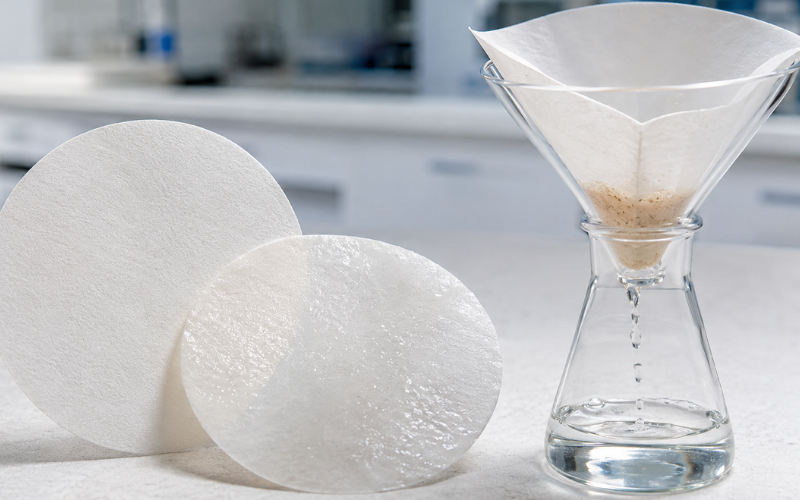
The appearance of filter paper may seem simple at first, but its color, texture, thickness, and condition can provide useful information. In most laboratories, filter paper looks like a thin, clean sheet of white or off-white paper. However, its exact appearance can change depending on the type, grade, pore size, and intended use.
Filter paper is designed to separate solid particles from a liquid or gas. Unlike ordinary writing paper, it contains a controlled network of tiny spaces between its fibers. These spaces allow liquid to pass through while holding back particles. Understanding the normal appearance of filter paper helps users select the correct type, handle it properly, and notice signs of damage or contamination.
The Typical Appearance of New Filter Paper
New laboratory filter paper usually has a white or slightly off-white color. It should look clean, even, and free from visible stains. Standard filter paper is commonly sold as circular sheets because the circles can be folded and placed easily inside a laboratory funnel. Square sheets and custom shapes are also available for certain uses.
The surface may look smooth from a distance, but a closer inspection often reveals a light fibrous texture. This texture comes from the cellulose fibers used to make most laboratory filter papers. The fibers are arranged to create small pathways through which a liquid can flow.
A new sheet should have an even shape and consistent thickness. Its edges should be complete, without tears or rough areas. Some grades are thin and flexible, while others are thicker and feel stronger. These differences are normal and relate to how the paper is expected to perform.
Color and Surface Characteristics
Color is one of the most noticeable parts of the appearance of filter paper. Most general laboratory papers are white because they are made from purified fibers. A white background also makes it easier to see colored particles, stains, crystals, or residue collected during filtration.
Some filter papers may have a light cream, gray, or natural fiber shade. This does not always mean the paper is dirty or unsuitable. The color can vary according to the raw material and manufacturing process. Specialty papers made from glass fibers or synthetic materials may look different from standard cellulose paper.
The surface should normally appear uniform. It should not contain oily marks, dark spots, dust, or fingerprints. Unexpected marks can indicate contamination, which may affect a sensitive experiment. If a paper looks unusually dirty or has been stored in an open or damp place, it is safer to replace it.
Texture, Thickness, and Flexibility
Filter paper generally feels soft, dry, and slightly rough. Its exact texture depends on its grade. Fine filter papers often have a tighter, smoother surface, while papers made for faster filtration may appear more open or textured.
Thickness also varies. A thin paper can fold easily and fit closely inside a funnel. A thicker paper may provide greater strength when collecting heavier material or filtering a larger amount of liquid. Thickness alone, however, does not show how small the paper’s pores are. Two sheets may look similar but have very different filtration abilities.
A good sheet should bend without breaking under normal handling. It should also hold its shape once folded. If it feels unusually brittle, it may be old, too dry, or damaged by poor storage. If it feels damp before use, it may have absorbed moisture from the air.
Pore Structure and Particle Retention
The tiny openings within filter paper are known as pores. They are usually too small to see clearly with the naked eye. Even so, the paper may look slightly more open or fibrous when held against a strong light.
Pore size affects which particles the paper can retain. Fine filter paper captures smaller particles but often allows liquid to pass more slowly. Coarser paper usually produces a faster flow but may allow very small particles to pass through.
The visible appearance cannot always confirm the paper’s pore size or grade. For this reason, users should check the packaging or product label instead of selecting paper by sight alone. The label may provide details about filtration speed, particle retention, material, size, and recommended use.
How Filter Paper Looks After Folding
Before filtration, circular filter paper is usually folded into a cone or a fluted shape. A simple cone has smooth folded sides and fits neatly inside a funnel. Fluted paper has several folds that create raised sections and channels. These channels can help liquid move through the paper more quickly.
A correctly folded paper should sit below the upper edge of the funnel. It should not have unwanted gaps, crushed areas, or torn folds. The bottom point should remain complete because a hole at the tip can allow solid material to enter the filtered liquid.
Sharp folds must be made carefully. Pressing too hard with a fingernail or a pointed object can weaken the fibers. A fold may look normal at first but tear after the paper becomes wet.
The Appearance of Wet Filter Paper
When filter paper becomes wet, its appearance changes. It often becomes darker and more transparent or translucent. This happens because the liquid fills the spaces between the paper fibers and changes how light passes through them.
Wet paper also becomes softer and more flexible. When placed correctly in a funnel, it should rest closely against the funnel wall. Even wetting can help remove air pockets and keep the paper in position before the main liquid is added.
Uneven wet areas may appear if the liquid does not spread properly. Dry patches can suggest poor contact with the funnel or incomplete wetting. Very dark spots may be caused by residue, contamination, or a high concentration of particles in one area.
Filter Paper During Filtration
During filtration, liquid spreads across the paper and moves through its pores. Solid particles remain on the surface and gradually form a layer called residue. The residue’s color and shape depend on the material being filtered.
A normal filtration pattern is generally centered and reasonably even. If most of the residue gathers on one side, the funnel may be tilted, the liquid may have been poured too quickly, or the paper may not be fitted correctly.
The filtered liquid should collect below the funnel without visible pieces of filter paper. If fibers or solid particles appear in the liquid, the paper may have torn, become overloaded, or been the wrong grade for the task.
What Used Filter Paper Can Reveal
After filtration, used filter paper may show sediment, powder, crystals, dirt, or other suspended material. A clear difference between the original white paper and the collected residue makes the result easy to observe.
The residue may form a smooth layer, an uneven deposit, or a group of visible particles. These patterns can provide basic clues about the filtered material. However, appearance alone cannot reliably identify an unknown substance. Proper testing is still required when accurate identification is important.
Used paper may also show signs of blockage. If a thick layer covers the pores, the flow can become very slow or stop completely. This does not always mean the paper is faulty. It may simply have collected more material than it can handle effectively.
Signs of Damaged or Unsuitable Filter Paper
Filter paper should be checked before use. Tears, holes, deep wrinkles, stains, weak edges, or uneven sections can reduce its performance. A damaged sheet may allow solid particles to pass through or cause liquid to leak around the sides.
Storage conditions also affect the appearance of filter paper. Paper kept in a dusty, humid, or chemically exposed area may become discolored or contaminated. It should be stored in its original package in a clean, dry place.
Users should avoid touching the main filtering area unnecessarily. Clean tweezers or gloves may be helpful during sensitive laboratory work because oil and dirt from the hands can leave marks on the surface.
Filter Paper Compared with Ordinary Paper
Filter paper and writing paper can look similar, but their structures are different. Ordinary paper may contain coatings, fillers, dyes, or other materials that are not suitable for laboratory filtration. Its pore structure is also not carefully controlled for separating particles.
Laboratory filter paper is made to provide a predictable flow and level of particle retention. It is usually more porous and absorbent than writing paper. It also tends to become evenly wet without immediately breaking apart.
Conclusion
The appearance of filter paper is usually clean, white or off-white, thin, porous, and slightly fibrous. Its exact color, texture, thickness, and flexibility depend on its material and grade. When wet, it commonly becomes darker, softer, and more transparent.
Checking the paper before, during, and after filtration can help identify damage, contamination, poor folding, or uneven residue. Although appearance provides useful clues, the product label remains the best source for confirming pore size, grade, and intended use.
FAQs
1. What does filter paper normally look like?
Filter paper normally looks like a thin, white or off-white sheet with a clean and slightly fibrous surface. Laboratory filter paper is often circular, although other shapes are available.
2. Why does filter paper become transparent when wet?
Liquid fills the small spaces between the fibers and changes how light travels through the paper. As a result, wet filter paper often looks darker and more transparent than dry paper.
3. Should filter paper have visible holes?
Standard filter paper should not have visible holes or tears. It contains tiny pores that allow liquid to pass, but these openings are generally too small to see without magnification.
4. Can the appearance of filter paper show its pore size?
Not reliably. Fine and coarse filter papers may have small visual differences, but pore size cannot usually be confirmed by sight. The paper’s packaging or technical label should be checked for accurate information.