
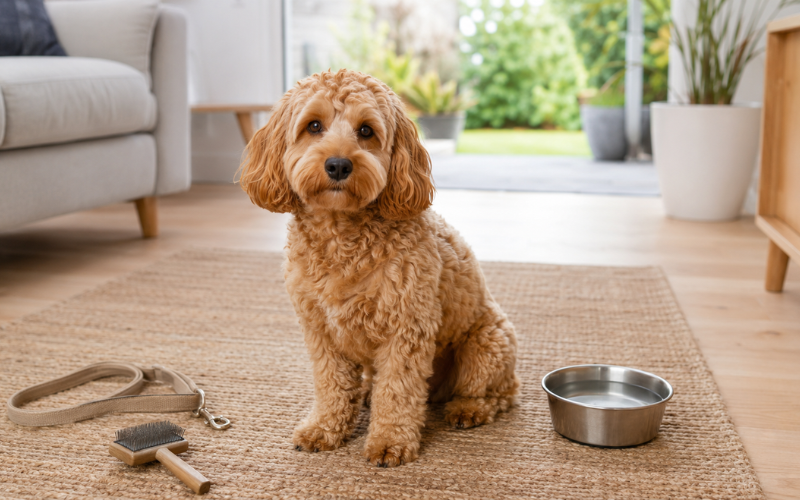
A Spoodle Cockapoo is a cross between a Cocker Spaniel and a Poodle. These dogs are often affectionate, intelligent and full of personality. Their soft, wavy coats and friendly nature make them attractive to families, couples and individual owners.
However, owning one involves more than enjoying its charming appearance. A Spoodle Cockapoo needs regular grooming, daily activity, patient training and plenty of companionship. Its exact size, coat and temperament can also vary because it is a crossbreed.
Spoodle and Cockapoo Terminology Explained
The names Spoodle and Cockapoo usually describe the same Cocker Spaniel–Poodle cross. “Spoodle” is commonly used in Australia, while “Cockapoo” is more familiar in the United States and United Kingdom.
Some breeders use “Spoodle” for dogs with English Cocker Spaniel ancestry and “Cockapoo” for those with American Cocker Spaniel ancestry. This is not a universal rule, so prospective owners should ask about the puppy’s actual parents rather than relying only on its name.
Cocker Spaniel and Poodle Parentage
The Cocker Spaniel contributes sporting instincts, affection and an interest in people. The Poodle brings intelligence, alertness and a coat that often sheds less than a typical Spaniel coat.
Most Spoodle Cockapoos have a Toy or Miniature Poodle parent, although Standard Poodles may occasionally be used. Whether the Cocker Spaniel parent is English or American can also influence the puppy’s build, energy and appearance.
Size, Appearance, Coat Types and Colours
A Spoodle Cockapoo is generally a small-to-medium-sized dog, but its adult size depends heavily on the Poodle parent. Many Cockapoos stand approximately 10–18 inches tall and weigh around 15–22 pounds, although smaller and larger dogs exist.
The coat may be straight, wavy or tightly curled. Common colours include cream, apricot, red, brown, black and white. Some dogs have two or more colours, and a puppy’s coat can change as it matures.
Temperament and Everyday Personality
Spoodle Cockapoos are often friendly, playful and eager to take part in household life. Many enjoy meeting visitors, learning tricks and staying close to their owners.
Even so, temperament is never guaranteed by breed type alone. Genetics, early experiences, training and the home environment all matter. Some individuals are calm and gentle, while others may be energetic, sensitive, easily distracted or more vocal.
Life With Families, Children and Other Pets
A well-socialised Spoodle Cockapoo can become an enjoyable family companion. These dogs are usually affectionate and may get along with children, dogs and other household animals.
Adults should always supervise interactions between dogs and young children. Children must learn not to pull the dog’s coat, disturb it while eating or treat it like a toy. Introductions to existing pets should also be slow and controlled.
Apartment Living and Home-Space Requirements
A large house is not essential. A Spoodle Cockapoo can live comfortably in an apartment when it receives enough exercise, attention and opportunities to explore outside.
Noise may be a concern because some dogs bark when excited, bored or left alone. Apartment owners should introduce quiet-time routines early and provide activities that prevent frustration. Access to a private garden is helpful, but it does not replace walks.
Daily Exercise and Mental Stimulation
These dogs need activity every day. Walks, games of fetch, scent-based activities and safe off-lead play can help maintain physical health. Exercise should match the dog’s age, size and fitness.
Mental activity is equally important. Food puzzles, short training sessions and hide-and-seek games can prevent boredom. VCA recommends daily exercise together with obedience work for mental stimulation.
Training and Early Socialisation
Spoodle Cockapoos often learn quickly, but intelligence does not mean they train themselves. Owners should begin with toilet training, recall, loose-lead walking and calm greetings.
Reward-based methods using food, praise or play are usually effective. Early socialisation should include positive exposure to different people, friendly animals, household sounds, transport and unfamiliar places. Experiences should remain gentle rather than overwhelming.
Grooming, Shedding and Coat Maintenance
The Spoodle Cockapoo is often described as low-shedding, but its coat can be demanding. Loose hair may remain trapped within the curls and form painful knots. Brushing and combing several times per week is commonly necessary.
Professional grooming is usually required approximately every four to six weeks. Owners must also check the ears, trim the nails and maintain dental care. Long, floppy ears can trap moisture, so redness, odour or repeated scratching should be discussed with a veterinarian.
Feeding and Healthy Weight Management
A Spoodle Cockapoo should receive complete, balanced food suitable for its age and size. Portions should be measured rather than estimated, especially because treats used during training can add significant calories.
Weight gain places unnecessary pressure on the joints and may contribute to other health problems. Owners should monitor body condition and ask a veterinarian to recommend an appropriate feeding amount when needed.
Lifespan, Health Risks and Preventive Care
Possible health concerns include eye diseases such as cataracts and progressive retinal atrophy, hip problems, skin allergies, dental disease and obesity. Crossbreeding does not automatically prevent inherited conditions. Routine veterinary examinations, vaccinations, parasite prevention, dental care and early treatment of unusual symptoms remain important.
F1, F1B, F2 and Other Spoodle Cockapoo Generations
An F1 Spoodle Cockapoo has one purebred Cocker Spaniel parent and one purebred Poodle parent. An F1B usually results from breeding an F1 dog back to a Poodle or Cocker Spaniel. An F2 generally comes from two F1 parents.
These labels describe ancestry, not quality. They cannot guarantee a particular temperament, adult size or non-shedding coat. Even puppies from the same litter may develop differently.
Care Through the Puppy, Adult and Senior Years
Puppies need frequent meals, toilet breaks, safe socialisation and short training sessions. Exercise should be age-appropriate while their bodies are developing.
Adult dogs benefit from a stable routine that includes exercise, grooming and preventive veterinary care. Senior Spoodle Cockapoos may require diet changes, gentler activity and more frequent health checks. New stiffness, confusion, weight changes or reduced energy should not simply be blamed on age.
Common Spoodle Cockapoo Myths and Misconceptions
One common myth is that every Spoodle Cockapoo is hypoallergenic. No dog is completely free of allergens because allergens are also found in saliva and skin particles. Some people may react less strongly to a low-shedding coat, but this varies.
Time, Costs and Daily Ownership Responsibilities
The cost of ownership continues long after purchasing or adopting the dog. Regular expenses include quality food, veterinary treatment, grooming, parasite prevention, training and basic supplies. Emergency care or long-term health conditions can add substantial costs.
Choosing a Responsible Breeder or Rescue Organisation
A responsible breeder should allow buyers to meet the mother and see where the puppies are raised. The breeder should discuss temperament honestly and provide verifiable health-screening records for both parents.
Health testing may include examinations for joint, eye, heart and inherited conditions connected with the parent breeds. Organisations such as the Orthopedic Foundation for Animals maintain searchable health information. Rescue organisations should also be open about known medical and behavioural needs.
Warning Signs to Recognise Before Bringing One Home
Be cautious if a seller refuses home visits, hides the puppy’s mother, offers several unrelated breeds or pressures you to pay immediately. Missing records and vague claims about “fully health-tested” parents are also warning signs.
Avoid puppies showing coughing, runny eyes, diarrhoea, weakness, poor movement or obvious skin problems unless an independent veterinarian has assessed the condition.
Deciding Whether a Spoodle Cockapoo Fits Your Lifestyle
This cross may suit people who want an affectionate, trainable companion and can manage regular grooming. It may be less suitable for someone who works long hours, wants a very independent dog or cannot meet ongoing grooming costs.
Before deciding, consider your schedule, budget, housing, activity level and plans for the next 12–15 years. Meeting adult Spoodle Cockapoos can provide a more realistic impression than viewing puppy photographs alone.
Conclusion
A Spoodle Cockapoo can be a loving and entertaining companion, but successful ownership requires preparation. The dog needs training, exercise, coat care, veterinary support and regular human interaction.
Its mixed ancestry means size, shedding and personality are not completely predictable. Choosing responsibly and understanding the daily commitment will help determine whether this Cocker Spaniel–Poodle cross is a suitable match for your household.
FAQs
1. Is a Spoodle the same as a Cockapoo?
In most cases, yes. Both names refer to a Cocker Spaniel crossed with a Poodle. “Spoodle” is used more often in Australia, while “Cockapoo” is common in the United States and United Kingdom. Exact naming practices can vary among breeders.
2. Do Spoodle Cockapoos shed?
Many shed less than typical Cocker Spaniels, but no coat outcome is guaranteed. Dogs with straighter coats may release more hair, while curly coats can trap loose hair and require frequent brushing to prevent mats.
3. How much exercise does a Spoodle Cockapoo need?
Most need daily walks, active play and mental stimulation. The correct amount depends on age, health and size. Puppies and senior dogs generally require different routines from healthy adults.
4. Can a Spoodle Cockapoo be left alone?
These people-focused dogs may struggle when left alone for long periods. Gradual training can help them become comfortable with short absences, but they still need regular companionship, exercise and toilet breaks.
5. Are Spoodle Cockapoos good for first-time owners?
They can be suitable for committed first-time owners because they are often friendly and responsive to training. However, new owners must be prepared for regular grooming, consistent training, daily exercise and ongoing veterinary expenses.