
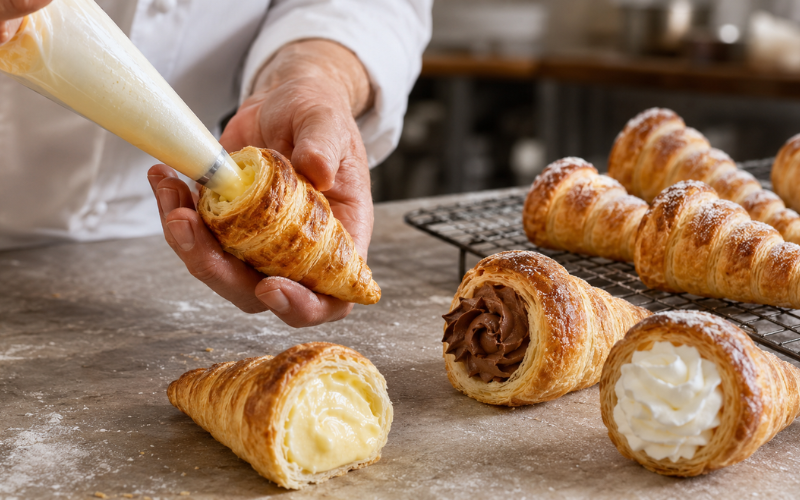
Conical cream commonly describes a cone-shaped pastry shell filled with whipped cream, custard, or another smooth filling. It is usually made by wrapping strips of dough around a cone-shaped baking mold. Once baked and cooled, the hollow shell is removed from the mold and filled.
The outer shell may be light and flaky, firm and crisp, or slightly soft, depending on the dough and recipe. The filling can range from simple vanilla cream to chocolate, fruit, or cream cheese.
It is important to understand that conical cream is not one universally recognized dessert name. The phrase may describe cream horns, pastry cones, cannoncini, or similar filled treats. In product listings, it may also refer to the metal molds used to create these pastries. The exact meaning therefore depends on the context.
What “Conical Cream” Usually Refers To
The word conical describes an object with a wide circular opening that narrows toward one end. When paired with “cream,” it normally refers to a cone-shaped pastry containing a creamy filling.
In baking, the phrase is often used descriptively rather than as the official name of a recipe. A baker may use it for a cream horn, while a kitchenware seller may use “conical cream” when describing a cream-horn mold. Some dessert shops may also apply the term to cone-shaped cakes, puff pastries, or custard-filled shells.
The Distinctive Shape, Shell, and Creamy Center
A conical cream pastry is easy to recognize by its horn-like form. Its wide opening provides space for the filling, while its narrow end makes the pastry easy to hold.
Puff pastry is one of the most common shell choices. It creates thin, flaky layers that become golden and crisp during baking. Other recipes may use sweet bread dough, wafer batter, or a firmer pastry dough.
The center is commonly filled with whipped cream, pastry cream, custard, or a cream-cheese mixture. The contrast between the crisp shell and soft filling is an important part of the dessert’s appeal. Its shape also allows each bite to include both pastry and cream.
Origins and Traditional Forms of the Pastry
Cone-shaped, cream-filled pastries are connected to several European baking traditions. Rather than belonging to one country or recipe, related versions have developed under different regional names.
The Italian cannoncino, for example, is a small pastry tube or horn that is commonly filled with custard. In Austria and other parts of Central Europe, similar pastries may be known as Schaumrollen and filled with a light, sweet foam or meringue-style mixture. Cream horns are also popular in English-speaking countries, while some American regional versions are called lady locks.
Modern conical cream pastries often use ready-made puff pastry and a wider variety of fillings. This makes them easier to prepare and gives home bakers more room to experiment.
How Conical Cream Pastries Are Made
Most conical cream pastries begin with puff pastry, although homemade dough can also be used. Other common ingredients include egg wash, sugar, cream, vanilla, and any flavorings chosen for the filling.
The dough is rolled out and cut into long, narrow strips. Each strip is wrapped around a conical mold, with the edges overlapping slightly. This overlap helps the pastry hold its shape during baking and prevents large gaps from forming.
The shaped pastry is placed on a baking tray, often with the loose end facing downward. Some bakers brush it with egg wash and add a light coating of sugar. It is then baked until puffed, firm, and evenly golden.
The shells must cool before the molds are removed. Pulling them out too early can crack or crush the warm pastry. Once completely cool, the shells can be filled with a spoon or piping bag. Filling them shortly before serving usually produces the best texture.
Popular Cream Fillings and Flavor Variations
Whipped cream is one of the lightest filling options. It works especially well when stabilized so that it keeps its shape for longer. Vanilla pastry cream provides a thicker, richer center, while custard gives the dessert a smooth and traditional character.
Cream-cheese filling has a mild tang that balances the sweetness of the pastry. Chocolate can be added to whipped cream, custard, or cream cheese. Fruit flavors may come from purees, jams, zest, or small pieces of fresh fruit.
Other variations include coffee cream, caramel, lemon custard, hazelnut filling, or almond-flavored cream. Dairy-free versions can be prepared with suitable plant-based cream and pastry. Reduced-sugar options are also possible, although changing the sweetener may affect the filling’s taste and texture.
Conical Cream Compared With Similar Desserts
A cream horn is the closest match to what people commonly mean by conical cream. Both usually have a hollow, flaky shell formed around a cone-shaped mold and filled after baking.
Cannoli are different because their shells are traditionally fried rather than baked. They are usually tubular and commonly contain a sweet ricotta-based filling. Cream puffs use choux pastry, which forms a soft, airy pocket instead of thin, flaky layers.
An ice-cream cone has a crisp wafer shell and holds frozen ice cream rather than pastry cream. Filled croissants and pastry rolls may contain similar creams, but their shapes and preparation methods are different. The conical form is therefore the main feature separating conical cream pastries from many related desserts.
Choosing and Using Conical Cream Horn Molds
Cream-horn molds are usually made from stainless steel or another oven-safe metal. They are sold in different lengths and widths, allowing bakers to create small individual pastries or larger dessert cones.
Reusable metal molds are durable and can produce consistent results. Disposable alternatives may be convenient, but they are generally less stable. Homemade foil forms can work when proper molds are unavailable, although their shape and strength may be less reliable.
A light coating of grease may help prevent sticking, depending on the mold and dough. After baking, the shell should be allowed to cool before it is gently twisted or slid away from the mold. Metal molds should be cleaned according to the manufacturer’s directions and dried fully before storage.
What Makes a Good Conical Cream Pastry
A well-made conical cream pastry should have an evenly baked shell with a pleasant golden color. The outside should be crisp enough to hold the filling without feeling hard or dry.
The cream should be smooth, fresh, and firm enough to remain inside the shell. A balanced shell-to-filling ratio is also important. Too little cream can make the pastry feel dry, while too much may overpower the shell or cause leaks.
Common Preparation Problems and Simple Solutions
Pastry may stick when a mold is not properly prepared or when the shell is removed while still warm. Allowing it to cool and gently twisting the mold can make removal easier.
Uneven shells often result from pastry strips that are wrapped too loosely. A slight overlap helps create a stronger structure. If a shell collapses, the dough may have been too warm before baking or removed from the mold too early.
Cream can leak when the filling is thin or the pastry has gaps. Chilling the filling and checking the shell before piping can help. Soggy pastry is usually caused by filling the shells too far in advance. Keeping the shell and cream separate until shortly before serving is the simplest solution.
Serving and Decorating Conical Cream
Conical cream pastries can be served plain or finished with a light dusting of powdered sugar. The open end may be decorated with grated chocolate, chopped nuts, fruit, or a small amount of jam.
They pair naturally with coffee, tea, hot chocolate, or fresh fruit. For gatherings, the pastries can be arranged on a flat platter with enough space to protect their delicate shells. Small individual pastries are often easier to serve because guests can pick them up without cutting or sharing.
Storage, Freshness, and Make-Ahead Tips
Empty pastry shells can usually be stored in an airtight container at room temperature once they are completely cool. They should be protected from moisture, which can quickly soften their crisp layers.
Dairy-based fillings must normally be refrigerated. Filled pastries should also be kept chilled and eaten within the safe period recommended by the recipe. However, refrigeration may gradually soften the shell.
For make-ahead preparation, bake the shells and prepare the filling separately. Store each component correctly and fill the pastries close to serving time. A sour smell, watery cream, visible mold, or an unpleasant taste can indicate that the dessert is no longer fresh.
Nutrition and Allergy Considerations
The nutritional value of conical cream depends on the shell, filling, portion size, and toppings. Puff pastry often contains butter or another fat, while sweet cream fillings may add sugar and calories. Rich custard and cream-cheese mixtures are generally heavier than lightly sweetened whipped fillings.
Traditional recipes may contain wheat, milk, eggs, and sometimes nuts. People with allergies should check every ingredient, including ready-made pastry, chocolate, flavorings, and decorations.
Gluten-free pastry, plant-based cream, and reduced-sugar fillings can provide alternatives, but substitutions may change the final texture. Anyone following a specific diet should review the complete recipe rather than judging the dessert by its name alone.
Conclusion
Conical cream generally refers to a cone-shaped pastry with a crisp or flaky shell and a smooth cream filling. Although the phrase does not identify one universal recipe, it is closely associated with cream horns and similar regional pastries.
Its appeal comes from the contrast between the delicate outer shell and soft center. By baking the shell evenly, choosing a stable filling, and assembling it near serving time, bakers can create a fresh and balanced dessert with many possible flavors.
FAQs
1. Is conical cream the same as a cream horn?
In many baking contexts, the terms describe the same general type of dessert. However, conical cream is a descriptive phrase, while cream horn is the more established pastry name. The exact recipe may differ between bakers and regions.
2. What type of cream works best?
Stabilized whipped cream, pastry cream, custard, and cream-cheese filling are all suitable choices. The best option should be thick enough to stay inside the shell without becoming overly heavy.
3. Can conical cream be made without a metal mold?
Yes. Some bakers create temporary molds from tightly folded oven-safe foil. The forms must be firm, smooth, and suitable for baking. Commercial metal molds generally provide a more even and reliable shape.
4. How can the pastry shell be kept crisp?
Allow the shell to cool fully before storing it in an airtight container. Keep it away from moisture and add the filling shortly before serving. Storing filled pastries for too long will normally soften the shell.
5. Can conical cream pastries be frozen?
Unfilled shells may freeze successfully when wrapped carefully. Some fillings can also be frozen separately, but whipped or custard-based creams may change texture after thawing. Freezing the assembled pastry is usually less effective because moisture can make the shell soggy.