Introduction
Hoogwaardig openbaar vervoer is a Dutch term for a public transport system designed to offer fast, frequent, reliable, and comfortable travel. It is commonly shortened to HOV in the Netherlands. The concept can include buses, trams, metros, and other services that provide a higher standard than ordinary public transport.
HOV is not simply about using modern vehicles. It brings together good route planning, regular service, clear passenger information, accessible stops, quick transfers, and infrastructure that reduces delays. Dutch transport plans officially use HOV as the abbreviation for hoogwaardig openbaar vervoer. The Dutch government’s Mobility Fund also recognizes this terminology.
The Core Principles Behind Hoogwaardig Openbaar Vervoer
The main purpose of hoogwaardig openbaar vervoer is to make public transport a practical alternative to travelling by car. For that to happen, the service must be easy to understand and dependable throughout the day.
A strong HOV system is built around several connected principles. It should offer short waiting times, direct routes, predictable journeys, safe vehicles, and comfortable stops. Passengers should also be able to move between different services without facing long walks or confusing schedules.
Key Features of a High-Quality Public Transport Network
A high-quality network usually has frequent departures, extended operating hours, sufficient passenger capacity, and reliable journey times. Routes often connect busy residential areas with city centres, business districts, schools, hospitals, and major transport hubs.
The service should also have a clear identity. Consistent signs, route colours, stop designs, and passenger information help people recognize the network and understand how to use it. These features make public transport feel simpler, even for occasional passengers.
How HOV Differs from Regular Public Transport
Regular public transport may serve many local streets and closely spaced stops. This provides broad coverage, but it can make journeys slower. HOV routes are normally designed to carry larger numbers of passengers along important travel corridors.
Stops may be placed farther apart to reduce travel time. Vehicles may receive priority at traffic lights or use separate lanes to avoid congestion. The difference is therefore based on the quality of the complete journey, not only the type of vehicle being used.
Buses, Trams, Metros, and Other Forms of HOV
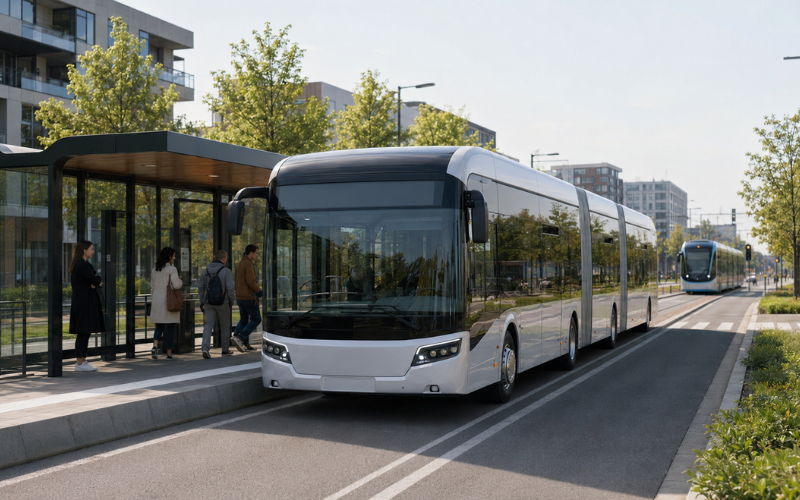
Hoogwaardig openbaar vervoer can take several forms. High-capacity buses are common because bus routes can be introduced or changed without building railway tracks. Some cities use bus rapid transit, which combines frequent buses with dedicated lanes and improved stations.
Trams and light rail can also form part of an HOV network. They provide high capacity and are well suited to busy urban routes. Metros offer even greater speed and capacity, although their infrastructure is more expensive. The best choice depends on passenger demand, available space, and the character of the area.
Dedicated Lanes, Priority Systems, and Smart Infrastructure
Infrastructure has a major influence on service quality. A frequent bus cannot remain reliable if it is repeatedly delayed by ordinary road traffic. Dedicated bus lanes, separate tram tracks, and priority at intersections help vehicles stay on schedule.
Traffic signals can detect an approaching bus or tram and give it an earlier green light. Carefully designed junctions can also reduce conflicts with cars, cyclists, and pedestrians. These improvements create more consistent journey times without always requiring a completely separate transport route.
Speed, Frequency, Reliability, and Passenger Comfort
Speed is valuable, but it is only one part of HOV. A fast service that runs once an hour is not convenient for most daily journeys. Passengers need regular departures so they can travel without carefully planning around a timetable.
Reliability is equally important. People are more likely to trust public transport when vehicles arrive close to the expected time. Clean interiors, comfortable seating, suitable temperatures, and enough space for passengers also shape the overall experience. Utrecht’s public transport planning, for example, describes high-quality urban service in terms of speed, capacity, frequent departures, long operating hours, easy travel, and reliability.
Stations, Stops, Accessibility, and Easy Transfers
HOV stations and stops should be visible, safe, and easy to reach. Shelters, lighting, seating, route maps, and clear departure displays make waiting more comfortable. Platforms should allow passengers to enter vehicles safely and with minimal difficulty.
Accessibility is essential for wheelchair users, older adults, parents with pushchairs, and passengers carrying luggage. Good connections with trains, local buses, cycling routes, and walking paths also reduce the effort required to complete a journey.
The Role of Technology and Real-Time Travel Information
Digital technology makes hoogwaardig openbaar vervoer easier to operate and use. Real-time displays can show when the next vehicle will arrive, while mobile travel planners help passengers compare routes and receive delay notices.
Operators can use vehicle-location data to identify slow sections, adjust schedules, and respond to disruption. Contactless payment and simple ticketing systems can make boarding quicker. Technology is most useful when it removes uncertainty rather than adding extra steps to the passenger experience.
How Hoogwaardig Openbaar Vervoer Benefits Passengers
A well-designed HOV system gives passengers more control over their time. Frequent service reduces waiting, while reliable schedules make it easier to arrive at work, school, or appointments on time.
Direct connections can also improve access to employment, education, healthcare, and leisure activities. People who do not drive gain greater independence, while car owners receive a realistic alternative for busy or expensive journeys.
Effects on Traffic, Cities, and the Environment
When enough people choose public transport, fewer private cars are needed to move the same number of travellers. This can reduce pressure on crowded roads and lower the demand for parking in valuable urban areas.
Electric buses, trams, and metros may also help reduce local air pollution and transport emissions, especially when they carry many passengers. However, the environmental result depends on factors such as vehicle energy use, occupancy, construction work, and the source of electricity.
Good HOV connections can support compact development around transport hubs. This allows homes, workplaces, and services to be located where people can reach them without relying entirely on cars.
Planning and Developing a Successful HOV Network
Planning begins with understanding where and when people travel. Authorities examine passenger demand, population growth, important destinations, current delays, and possible connections with other transport services.
Planners must then select suitable routes, stop locations, vehicles, and service frequencies. Municipalities, regional authorities, transport operators, residents, and businesses may all be involved. Public feedback is important because new lanes, stops, or route changes can affect neighbourhoods in different ways.
The full journey must remain the focus. A fast route will offer limited value if passengers cannot reach its stations safely or transfer easily to another service.
Common Challenges, Costs, and Practical Limitations
High-quality transport can require major investment. Dedicated roads, tram tracks, stations, vehicles, charging facilities, and traffic-control systems all have construction and maintenance costs.
Finding enough street space can be difficult in older or densely developed areas. Giving priority to buses or trams may require changes to car lanes, parking spaces, or junctions. Projects can also face delays when several public bodies must coordinate their plans.
Operating costs are another challenge. A frequent service needs enough vehicles and trained staff, even during quieter periods. Authorities must balance service quality with realistic passenger demand and available funding.
Measuring the Quality and Performance of HOV
Passenger numbers alone do not provide a complete picture. Performance can also be measured through punctuality, average speed, waiting time, missed journeys, passenger capacity, accessibility, safety, and user satisfaction.
Planners may compare travel times before and after an improvement or study how easily people can reach jobs and public services. Regular monitoring helps identify problems and shows whether the network is meeting its original goals.
The Future of Hoogwaardig Openbaar Vervoer
Future HOV networks are likely to use more electric vehicles, better live information, and smarter traffic management. Transport planners may also connect HOV routes more closely with cycling networks, shared mobility, and major transfer hubs.
Growth in towns and cities will increase the need to move more people through limited space. Flexible planning will therefore be important. New technology can support the network, but frequent service, reliable journeys, and accessible infrastructure will remain its foundation.
Conclusion
Hoogwaardig openbaar vervoer works when every part of the passenger journey receives attention. Fast vehicles are helpful, but they must be supported by frequent departures, reliable schedules, accessible stops, clear information, and convenient transfers.
A successful HOV network can improve access to daily opportunities while reducing pressure on roads and urban space. Its true quality is measured by whether people can depend on it for safe, simple, and comfortable travel.
FAQs
1. What does hoogwaardig openbaar vervoer mean?
It means high-quality public transport. The term describes services designed to provide fast, frequent, reliable, comfortable, and easily accessible travel.
2. Is HOV always a bus service?
No. HOV can include buses, trams, light rail, metros, and other forms of public transport. The term refers to the overall service standard rather than one specific vehicle type.
3. What makes an HOV route faster?
HOV routes may use dedicated lanes, separate tracks, traffic-light priority, direct routing, and greater distances between stops. These measures help reduce delays and unnecessary stopping.
4. Is hoogwaardig openbaar vervoer environmentally friendly?
It can reduce emissions and congestion when it encourages people to travel together instead of using separate cars. The total environmental benefit depends on passenger numbers, vehicle technology, energy sources, and infrastructure construction.
5. Why are HOV stops sometimes farther apart?
Greater spacing allows vehicles to stop less often and complete journeys more quickly. Local buses can connect nearby neighbourhoods with the main HOV route so that passengers still have access to the wider network.