
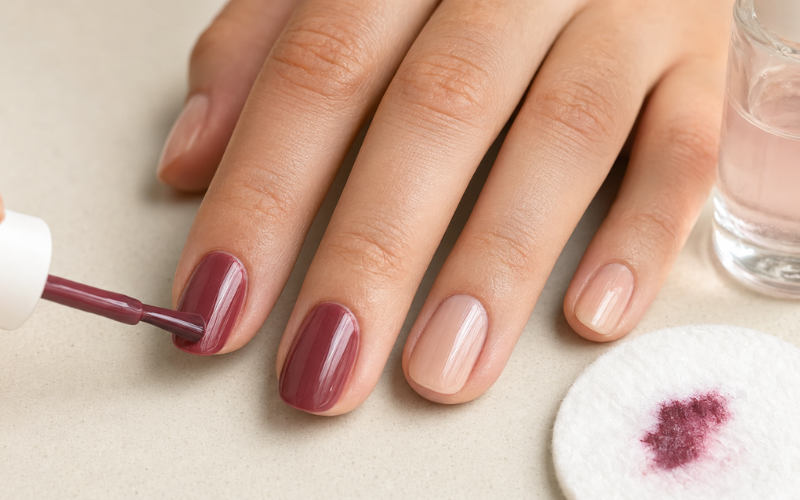
Nail polish on gel nails is a simple way to change the color of an existing gel manicure without removing the gel underneath. It usually involves applying traditional, air-drying nail polish over fully cured gel polish, gel extensions, or another smooth gel surface.
You may want to do this when your current color no longer matches your outfit, a special event, or your personal style. It can also help hide minor nail growth or refresh a manicure before your next salon visit.
Regular nail polish can generally be applied safely over cured gel, provided the gel is smooth, secure, and free from cracks or lifting. The new color may not last as long as a complete gel manicure, but it offers an affordable and easily removable option.
Can You Put Regular Nail Polish Over Gel Nails?
Yes, you can put regular nail polish over gel nails. Once gel has been properly cured under an LED or UV lamp, it creates a firm surface that can hold traditional nail polish.
The condition of the existing manicure is important. Regular polish works best when the gel is smooth and fully attached to the natural nail. If the gel is lifting, peeling, or cracked, painting over it may hide the problem temporarily but will not repair it.
This method is useful for short-term color changes. With careful preparation and application, regular polish may stay attractive for several days. However, its wear time depends on the polish quality, daily activities, and condition of the gel underneath.
When Applying Nail Polish Over Gel Makes Sense
Applying regular nail polish on gel nails makes sense when you want a temporary color change. For example, you may need a different shade for a wedding, holiday, work event, or weekend outfit but do not want to remove a good gel manicure.
It can also help cover minor visible growth near the cuticles. Darker or glitter-based colors may hide the gap better than light, sheer shades. However, polish should not be used to cover unusual discoloration, trapped moisture, or damage.
Repainting gel nails is also a convenient way to test a color before choosing it for your next full manicure. Because regular polish is easier to remove, you can return to the original gel color afterward.
What You Need Before Changing the Color
You will need traditional nail polish in your chosen shade, a regular base coat if desired, and a compatible air-drying top coat. Keep a non-acetone nail polish remover and lint-free pads nearby for cleaning and later removal.
A very fine nail buffer may help if the gel surface is extremely shiny, but it should be used gently. Heavy buffing can thin or damage the gel. Cuticle oil, a small cleanup brush, and cotton swabs can also make the finished manicure look neater.
Preparing Gel Nails for Regular Nail Polish
Begin by examining every nail. Look for cracks, peeling edges, lifting, or gaps where moisture may have collected. If you find significant damage, the gel should be repaired or removed instead of covered.
Wash and dry your hands thoroughly. Remove lotion, cuticle oil, and other residue from the nails using a lint-free pad. The surface must be completely dry before you begin.
You usually do not need to buff the gel. If the top coat is very slippery, gently pass a fine buffer across the surface to reduce some of the shine. Do not file deeply or remove layers of gel. Keep the surrounding skin clean and avoid cutting or irritating the cuticles.
How to Apply Nail Polish on Gel Nails
Start with clean, dry, and stable gel nails. A regular base coat is optional, but it can help prevent staining and create a more even surface. It may be useful when applying a dark or strongly pigmented color.
Apply the nail polish in a thin, even layer. Begin near the cuticle without touching the skin, and move the brush toward the tip. Allow the first coat to dry before applying the second. Two thin coats usually look smoother and dry better than one thick coat.
Finish with a regular, air-drying top coat. This adds shine and helps protect the color from early chipping. Use a small brush or cotton swab with remover to clean any polish from the skin.
Drying and Sealing Nail Polish Over Gel
Traditional nail polish dries when its solvents evaporate. It does not cure under an LED or UV lamp like gel polish. Placing regular polish under a gel lamp will not properly harden it and may leave the lower layers soft.
Air-drying is the safest method. A quick-dry top coat may reduce waiting time, but the color underneath still needs time to become fully firm. Keep each coat thin and avoid painting one layer immediately after another.
Drying time varies by brand and thickness. The surface may feel dry within 15 to 30 minutes, while the deeper layers can remain soft for several hours. Avoid hot water, tight gloves, or pressure on the nails during this period.
Making the New Nail Color Last Longer
Thin coats are one of the best ways to improve durability. Thick polish dries slowly and is more likely to dent, wrinkle, or peel. Lightly covering the free edge—the visible tip of the nail—with color and top coat may also reduce early chipping.
Wear gloves when washing dishes, cleaning, or handling strong household products. Long periods in water can affect both the regular polish and the gel manicure beneath it.
Avoid using your nails to open packages, scrape labels, or pick at objects. If the surface begins to look dull after a few days, applying another thin layer of regular top coat can restore the shine.
Removing Nail Polish Without Damaging the Gel Base
Use a non-acetone remover if you want to keep the gel manicure underneath. Apply it to a lint-free pad, hold it against the nail briefly, and wipe gently. You may need to repeat the process for dark or glitter polish.
Do not scrape or peel the color away. These actions can lift the gel and potentially remove thin layers from the natural nail.
After removing the regular polish, clean the gel surface and check it for damage. The original top coat may appear slightly dull after repeated exposure to remover. Apply cuticle oil around the nails to restore moisture, but keep oil away from the nail surface if you plan to repaint it immediately.
When Nail Polish Should Not Be Applied Over Gel Nails
Do not apply nail polish over gel that is loose, badly chipped, cracked, or separating from the natural nail. The damaged product should be safely removed or repaired first.
Unexpected green, dark, or unusual yellow discoloration should not simply be covered. It may be connected to trapped moisture, staining, or another nail problem that needs proper attention. Pain, swelling, redness, itching, or irritated skin are also signs that you should stop using nail products and seek advice from a qualified professional.
Regular Nail Polish Over Gel vs. a New Gel Color
Regular nail polish is the better choice for a quick or temporary change. It dries in the air, is easy to apply at home, and can usually be removed with non-acetone remover while leaving the gel base in place.
A new gel color generally lasts longer and resists chipping better, but it requires proper curing and more involved removal. It may also require removing or filing the existing color first.
Choose regular polish for a short event, color experiment, or brief refresh. Choose a new gel manicure when you want a longer-lasting result and the existing gel needs professional maintenance.
Conclusion
Applying nail polish on gel nails is a practical way to change your manicure without starting over. It works best on fully cured, smooth, and undamaged gel. Careful cleaning, thin coats, proper air-drying, and gentle removal can produce an attractive temporary result.
FAQs
1. Can regular nail polish be applied directly over gel nails?
Yes. It can be applied directly over gel that is fully cured, clean, smooth, and firmly attached. A regular base coat is optional.
2. Do gel nails need to be buffed first?
Not always. Gentle buffing may help on a very glossy surface, but excessive buffing can weaken the gel. Cleaning the nails is often enough.
3. Can regular nail polish dry under an LED or UV lamp?
No. Regular polish air-dries and does not cure properly under a gel lamp. Apply thin coats and allow enough natural drying time.
4. Will nail polish remover damage the gel underneath?
Non-acetone remover is less likely to affect the gel, although repeated use may dull its shine. Acetone can soften or remove certain gel products.
5. How long does regular nail polish last over gel nails?
It commonly lasts several days, depending on the products, preparation, and daily activities. Thin coats, a suitable top coat, and careful hand use can improve wear.