
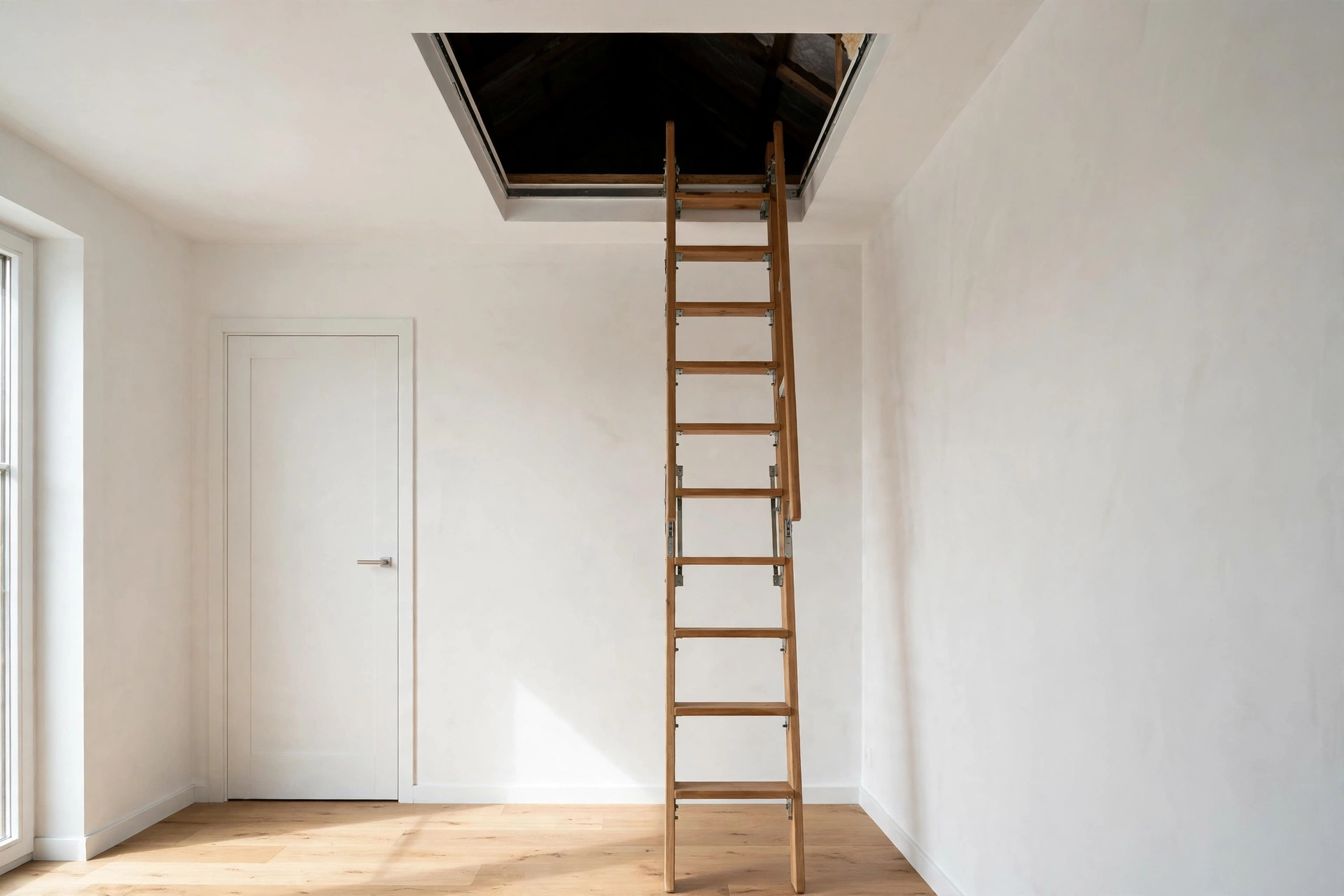
A loft ladder turns a hard-to-reach space above the ceiling into a part of the home you can actually use. Without one, getting into the loft often means carrying a separate ladder from another room and hoping it stays steady while you climb. With a loft ladder, the ladder stays with the hatch, folds or slides away when you are done, and is ready the next time you need stored boxes or want to check insulation and pipes.
That convenience only helps if the loft ladder fits your home, suits how often you will use it, and feels steady underfoot. This guide covers the main types, materials, and safety checks in plain terms. It is general information only. If fitting a loft ladder means changing the opening, cutting ceiling joists, or doing other structural work, ask a qualified professional before any work starts.
What a Loft Ladder Is and How It Works
A loft ladder is a ladder made to live at the loft hatch. In most homes it is fixed to the hatch or to the frame around the opening, so it can be pulled down when needed and pushed back up out of the way when it is not in use. The hatch door usually closes over it, leaving the ceiling looking neat and the landing clear.
When the ladder is lowered, it should reach the floor in a straight, steady line, with each step level and firm. A good loft ladder feels solid from the first step. It should not wobble, flex in a worrying way, or need force to open and close. It works well for occasional trips to a storage loft, but it is less suited to a room people use every day.
Types of Loft Ladders in Plain Terms
Folding loft ladders are the most familiar type. They are made in sections joined by hinges. You pull the ladder down, unfold each section, and lock it into place. Folding ladders often feel sturdy underfoot, and many come with a hatch and frame as a set. They need clear swing space below the hatch.
Sliding loft ladders work in a different way. The sections slide over each other, rather than folding, and extend in a straight line to the floor. They can suit a landing where there is room for the ladder to come straight down but less room for a folding ladder to swing. They are often made from light metal, which makes them easier to pull down.
Telescopic loft ladders collapse into themselves, section by section, much like a telescope. They pack away into a very small space, which makes them a good choice where the hatch is small or the room below is tight. They extend in a straight line, so they need little swing room. Because the sections are slim, they are often best for occasional use and lighter loads.
Concertina loft ladders, also called scissor ladders, open in a zigzag pattern. The sides cross and fold like a concertina, so the ladder takes up very little room in the loft and needs almost no swing space below. That compact design suits small hatches and tight landings. The steps are often narrower than on a folding ladder, so the climb can feel steeper.
Fixed loft ladders stay in place all the time and are always ready to use, but they always take up floor space. Electric loft ladders open and close with a motor, often at the press of a switch or remote control. They cost more than a manual ladder and need a power supply, so wiring and fitting should be handled by a qualified professional.
Wood, Aluminum, and Steel: Choosing a Material
Wood loft ladders are often made from pine or a similar softwood. Wood feels steady underfoot and tends to be quiet when you climb, with less rattle than a metal ladder. A wood ladder is heavier to pull down and push up. Wood also needs a dry home, so check for signs of damp in the loft.
Aluminum loft ladders are light, which makes them easy to operate. They resist rust, and they suit homes where the ladder will be opened and closed often. They are often made as sliding or telescopic models, with slim sections that store neatly. Look for wide steps with a non-slip surface, and a frame that holds the ladder firmly in the opening.
Steel loft ladders are strong and durable, and they can suit heavier use. In a typical home, a wood or aluminum loft ladder will usually be enough. Whichever material you choose, the quality of the joints, hinges, and fixings matters as much as the material itself. Do not paint over moving parts, hinges, or locking parts.
Choosing the Right Loft Ladder for Your Home
Start with how you will use the loft. If you go up a few times a year to fetch holiday decorations, a compact telescopic or concertina loft ladder may be all you need. If you go up every week with boxes, a folding or sliding loft ladder with wider steps and a handrail will feel safer. If children, older family members, or anyone with limited mobility will use the ladder, choose a model that is easy to open, has a handrail, and feels steady from the first step.
Next, think about the space below the hatch. Stand on the landing and picture the ladder coming down. Is there a clear area for your feet, with room to step on and off safely? If the landing is tight, the same layout thinking used in bathroom ideas for small spaces can help: keep the path clear and protect the space you need to move.
Also think about what you will carry. A loft ladder is meant for people first, and for light items carried with care. Try to see a ladder in person before you decide, if you can. Check the maker guidance for the weight limit, the ceiling height range, and the opening size. If they do not match your home, choose a different model or ask a professional whether the opening can be changed safely.
Measuring and Access: What to Check Before You Decide
Careful measuring is the foundation of a good loft ladder. The key details are the size of the opening, the height from the floor to the ceiling, and the clear space in the room below. Measure the opening in more than one place, because older ceilings are not always square. Measure the height where the ladder will land, not just at the hatch.
Swing room and landing space deserve just as much care. For a folding ladder, allow room for the sections to unfold and for you to stand clear while they come down. For a sliding or telescopic ladder, allow room for the ladder to extend straight down and for you to step on and off safely. This guide to sizing and choosing pull-down attic stairs from This Old House explains the same measuring checks in clear detail.
Headroom at the top is easy to overlook. As you climb through the hatch, you need room to move onto the loft floor without ducking into a beam. Check that the loft floor near the hatch is boarded and well lit. If fitting the ladder would mean cutting joists or changing the structure of the ceiling, stop and get professional advice. Structural work can affect the strength of the floor above and the safety of the rooms below.
Using a Loft Ladder Safely
Use the loft ladder the way it was made to be used. Open it fully and make sure it locks into place before you climb. Check that the feet rest flat on the floor and that the ladder does not rock or slide. Face the ladder as you climb, keep your body centered, and hold the sides or the handrail. Move one step at a time, and do not rush, especially on the way down.
Check the ladder before each use, even if you used it recently. Look for loose bolts, worn hinges, cracked steps, damaged springs, or a hatch that does not close cleanly. If anything looks damaged, feels unstable, or will not lock into place, do not use the ladder. Get it checked by a qualified professional.
Keep the foot of the ladder clear. Shoes, bags, and boxes left at the base create a trip hazard and can stop the ladder from resting flat. The floor at the foot of the ladder should feel steady underfoot, much as bathroom flooring needs to stay safe and easy to clean in a wet room. Never overload a loft ladder, and never use it as a work platform or a shelf. Children should only use a loft ladder with adult supervision.
Loft Ladders, Hatches, and Heat Loss
A loft hatch can be a weak point for heat loss, because warm air rises and can escape through gaps around the hatch. A loft ladder that is fitted well, with a hatch that closes firmly and seals neatly, helps reduce drafts. Check the seal around the hatch, and look for a draft coming through when the hatch is closed.
Insulation around the hatch matters too, but it must never interfere with the ladder. Insulation that presses on the hinges, blocks the folding sections, or stops the hatch from closing can damage the mechanism and create a safety problem. This guide to insulating a loft hatch from Ideal Home explains why the hatch needs both insulation and a good seal, and why care is needed with a hinged hatch that has a ladder attached.
The same care with measuring and sealing applies to other openings in the home, as this guide to replacement windows explains for windows. For a loft ladder, the goal is simple: the hatch should close fully, sit flat, and seal around its edges, while the ladder opens and closes without rubbing or catching. If you notice damp, mold, or a musty smell in the loft, ask a professional to check the ventilation and insulation before you make changes.
Caring for a Loft Ladder So It Lasts
A little routine care keeps a loft ladder working smoothly. Wipe the steps and sides with a dry or slightly damp cloth to remove dust, and check the hinges, springs, and locking parts for dirt or grit. A small amount of lubricant on moving parts can help, but only use a product the maker recommends, and wipe away any excess so the steps do not become slippery.
Check the fixings on a regular basis. Bolts and screws can loosen over time, and a loose fixing can make the ladder feel unstable. If a bolt will not stay tight, a hinge looks worn, or a step feels soft or cracked, stop using the ladder and get it checked. Check the hatch and frame too: the hatch should open and close without sticking, and the frame should stay firm. This guide to uPVC doors shows why accurate measuring, firm fitting, and simple checks matter for a door that must close, seal, and lock smoothly day after day.
When a Loft Ladder Is Not the Right Answer
A loft ladder is a good answer for storage access, but it is not the right answer for every home. If the loft will become a bedroom, an office, or another room used every day, a loft ladder will soon feel like a poor substitute for a staircase. This attic conversion guide from Homes and Gardens makes the same point about access planning: a new room is only as good as its access, and access should be planned early.
A loft ladder may also be the wrong choice if the opening cannot be made safe without major structural work, if the ceiling height is too great for a standard ladder, or if the landing below is too small for a safe foot area. If anyone in the home has trouble with balance, grip, or climbing, a steep loft ladder may not be safe for them, even with a handrail.
Frequently Asked Questions
How do I choose the best loft ladder for my home?
Start with how often you will use the loft, who will climb the ladder, and how much room you have below the hatch. Match the opening size and ceiling height to the maker guidance, choose a type that fits the swing room you have, and look for wide, non-slip steps and a handrail if you can.
Are folding loft ladders better than telescopic loft ladders?
Neither type is better in every home. Folding loft ladders often feel sturdier and suit frequent use, but they need room to swing down. Telescopic loft ladders pack away into a small space and suit tight landings, but they often suit occasional use better.
Can I fit a loft ladder if my hatch is small?
A small hatch limits your choices, but it does not always rule out a loft ladder. Telescopic and concertina ladders are made for compact openings, while wider folding ladders need a larger hatch. Ask a professional if the opening would need to be enlarged.
How often should I check a loft ladder?
Check the ladder briefly before each use, looking for loose fixings, damaged steps, worn hinges, or a hatch that does not close cleanly. Check it more fully a few times a year. If anything feels loose or damaged, stop using the ladder and get it checked.
Is a loft ladder safe for carrying boxes?
A loft ladder can be used to carry light, easy-to-hold items, but it is not made for heavy or awkward loads. Keep one hand free when you can, carry smaller loads, and keep your view of the steps clear.
Conclusion
A loft ladder is a simple idea that works best when it is chosen with care. The right ladder fits the opening, suits the ceiling height, leaves a clear and safe landing below, and opens and closes without force. Take time over the type, the material, and the measurements, and be honest about how the loft will be used and who will climb the ladder. If structural work, wiring, or a change of use is involved, ask a qualified professional before any work starts. With the right choice and simple care, a loft ladder can make loft space easy to reach and safe to use for years to come.