
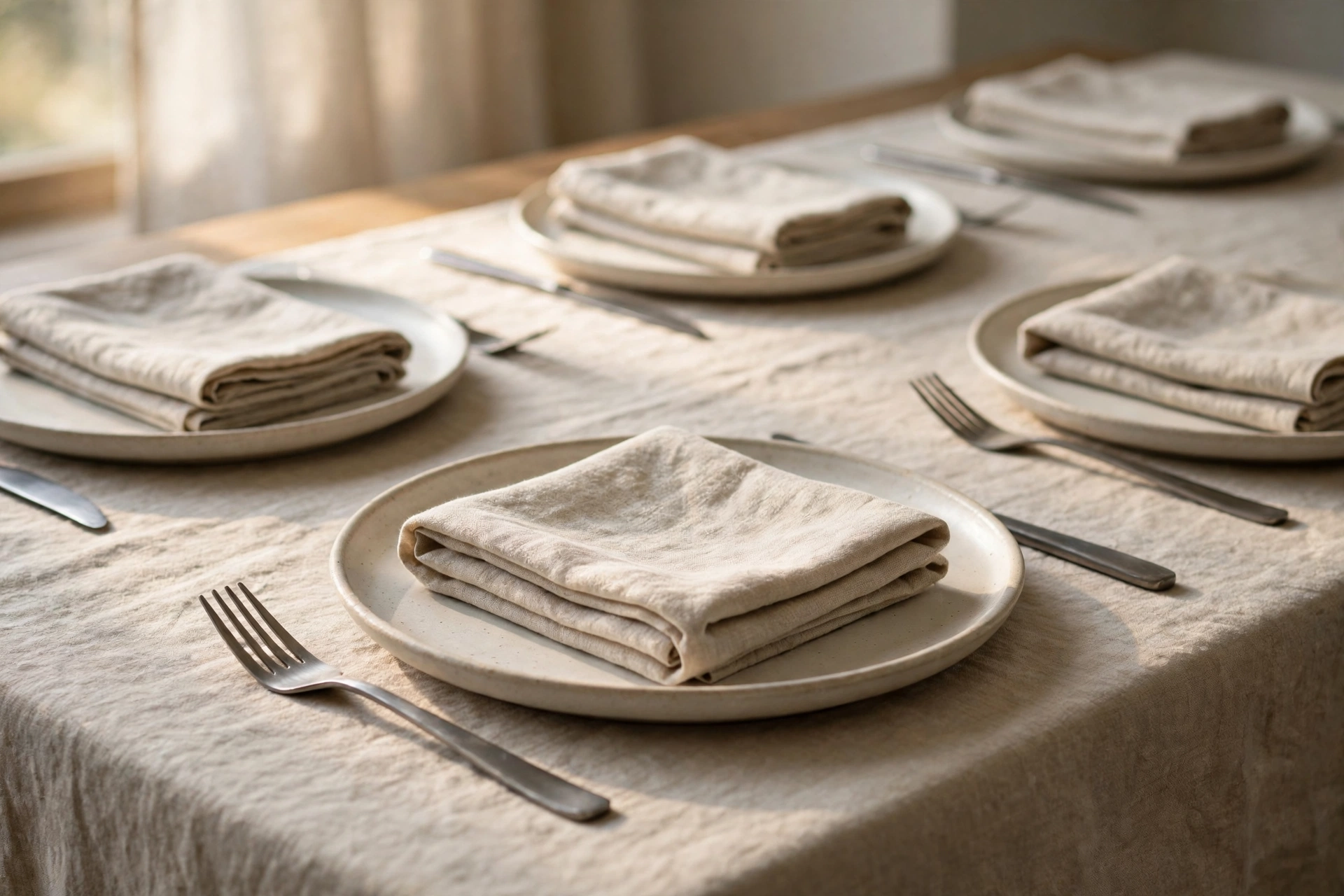
Napkin folding is one of the simplest ways to make a table feel cared for. A neatly folded napkin takes only a minute or two, yet it changes how a meal looks before anyone takes a bite. It can make a weekday dinner feel a little more special, and it can help a gathering feel warm and welcoming without extra decor or expense.
This guide covers cloth and paper napkins, a small set of classic folds explained step by step, presentation ideas, and care and storage tips.
What Napkin Folding Adds to a Table
A folded napkin does more than sit beside a plate. It gives the table a finished look and shows that thought went into the meal. Even a plain rectangle fold looks tidy and calm, while a fan or pocket fold adds a touch of ceremony for guests. The napkin also sets the tone. A soft, loose fold suits a relaxed family meal, while a crisp, pressed fold suits a more formal dinner.
A pocket fold can also hold cutlery, a menu card, or a small sprig of herbs, while a roll keeps cutlery together at a buffet or picnic table.
Cloth Napkins or Paper Napkins: How to Choose
Cloth napkins are heavier, hold creases better, and can be pressed for a sharp finish. They suit standing folds such as a fan, and they can be washed and used again. Linen and cotton are common choices because they feel soft and drape well. A larger square cloth napkin is usually easier to fold than a small one.
Paper napkins are lighter and best for flat or simple folds. Thick dinner napkins hold a shape better than thin cocktail napkins, and plain colors show fold lines more clearly than busy patterns. Paper napkins suit large groups, outdoor meals, and meals with children, because there is no laundry afterward.
Getting Ready to Fold: A Few Simple Habits
Good napkin folding starts before the first fold. Work on a clean, flat surface with enough room to open the napkin fully. Wash and dry your hands first, so you do not mark a clean napkin. If you are using cloth napkins, press them lightly if they are wrinkled. A smooth napkin folds more evenly, holds its shape longer, and looks neater on the table.
Start with the napkin fully open, unless a fold asks for a different start. Line up corners and edges before you press a crease, and smooth each fold as you go. Fold all the napkins for one meal in the same way, so the table looks balanced.
The Rectangle Fold
The rectangle fold is the easiest fold to learn, and it suits almost any meal. It is neat, flat, and quick, and it works with both cloth and paper napkins. Use it for weekday dinners, when you want a tidy table without extra fuss.
- Lay the napkin flat, with the smooth side up.
- Fold the napkin in half from top to bottom to make a rectangle.
- Fold it in half again in the same direction to make a slimmer rectangle.
- Smooth the edges, line up the corners, and place the napkin to the left of the plate or under the fork.
For a slightly dressier look, press a cloth napkin before folding and keep the folded edge facing outward.
The Pocket Fold
The pocket fold is one of the most useful folds for napkin folding, because it holds cutlery neatly in one place. It looks tidy on a plate, and it helps guests find everything they need without searching the table. It works best with a square cloth napkin, although a thick paper napkin can work too.
- Lay the napkin flat, then fold it in half from bottom to top.
- Fold it in half again from left to right, so the open corners sit at the top right.
- Fold the top layer down diagonally, stopping just past the center, and press flat.
- Fold the second layer down in the same way, leaving a small gap below the first fold.
- Fold the third layer down in the same way, leaving another small gap.
- Turn the napkin over, fold the right side under, then fold the left side under to make a neat rectangle.
Turn the napkin back over and slide cutlery into the pockets, or tuck in a menu card or herb sprig. If the pockets look uneven, adjust the diagonal folds before you add cutlery.
The Triangle Fold
The triangle fold is clean, simple, and slightly more formal than a rectangle. It suits dinners where plates are already set and napkins need to sit neatly on top. It also works well with a napkin ring, because the pointed shape adds interest without extra work.
- Lay the napkin flat, then fold one corner to the opposite corner to make a triangle.
- Place the triangle with the long edge at the bottom and the point facing away from you.
- Fold the right corner up to meet the top point, then fold the left corner up in the same way.
- Turn the napkin over, fold the bottom point up about halfway, and tuck the side corners under.
Set the finished shape on the plate with the point facing up, or to the left of the plate. Keep the folds even on both sides.
The Fan Fold
The fan fold adds height and drama to a table, and it is a good choice for a celebration or holiday meal. It looks more complex than it is, but it needs a napkin that holds a crease. Use a pressed cloth napkin, or a thick paper napkin, and work slowly through the pleats.
- Lay the napkin flat, then fold it in half from top to bottom.
- Starting at one short end, make accordion pleats about one to two inches wide.
- Keep pleating until about one quarter of the napkin is left unfolded.
- Fold the pleated napkin in half, with the pleats on the outside.
- Fold the unfolded corner diagonally and tuck it into the pleats to form a base.
- Stand the napkin upright on a plate and gently spread the pleats into a fan shape.
Space the pleats as evenly as you can, and press each fold before moving to the next one. A napkin ring around the base can help a fan stay upright.
The Roll and the Knot
The roll and the knot are relaxed folds for casual meals, buffets, and outdoor tables. They are fast, forgiving, and easy to repeat for many guests. Neither fold needs pressing, and both work with cloth or paper napkins.
For the roll, lay the napkin flat and fold it in half to make a rectangle. Roll it loosely from one end to the other, then slide a napkin ring over the center or tie it with ribbon or twine. Place the roll on the plate, beside the plate, or in a basket for a buffet. For a flatware roll, place cutlery near the bottom corner of an open napkin, fold the corner over the handles, and roll upward, tucking the top corner under at the end.
For the knot, fold a square napkin into a long strip by folding it into thirds, then tie a loose knot in the center and adjust the ends so they look even. Keep knots loose, and avoid pulling the fabric tight.
Napkin Folding for Paper Napkins
Paper napkins need a gentler touch than cloth, because they tear more easily and do not hold standing shapes as well. Stick to flat folds, pocket folds, and rolls, and avoid folds that need many tight pleats. Open a paper napkin fully before you start, because many paper napkins come folded into quarters and the old creases can pull the new fold off center.
Use dinner-size paper napkins for folding when you can. They give you more room to shape the fold, and they look more generous on the table. Choose solid colors for folds with diagonal lines or pockets, because patterns can hide the shape. If a paper napkin feels thin, fold it in a rectangle or triangle rather than trying a fan, which may flop or tear.
For a gathering, fold paper napkins in small batches, keep a few spares nearby, and place them where guests can reach them easily.
Presentation Ideas for Everyday Meals and Gatherings
Presentation is about balance. Let one detail stand out, and keep the rest of the table simple. If napkins are folded into fans, use plain plates and a low centerpiece. If napkins are folded flat, add a small herb sprig, a place card, or a single flower stem. Fresh herbs such as rosemary, thyme, or mint add scent and color.
Match the napkin fold to the size of the table. On a small table, flat folds and pocket folds save space. On a larger table, standing folds and rolls add shape. Leave enough room for serving dishes, glasses, and elbows.
Think about the flow of the meal. For a family dinner with shared dishes, keep napkins simple so serving stays easy. For a set menu, a pocket fold can hold cutlery and a menu card in one neat package. A guide to healthy dinner ideas can help you plan a balanced main meal. For lighter gatherings, healthy options for snacks offer simple foods that pair well with a relaxed table.
Matching Folds to the Meal and the Table
Different meals call for different folds, and the best choice is usually the simplest one that fits the moment. For breakfast or lunch, use a rectangle or triangle fold. These folds are quick, tidy, and easy to unfold. For a weekday dinner, a pocket fold keeps cutlery together and makes the table feel organized without extra effort.
For a holiday meal or a dinner with guests, a fan, a pocket fold with herbs, or a neat roll with a napkin ring can mark the occasion. For a pasta night with guests, knowing how much pasta per person helps you plan portions before you set the table. Keep the color of the napkins in step with the rest of the table. Neutral linen tones suit most meals, while a soft seasonal color can add warmth in fall or a fresh feel in spring.
For meals with children, choose simple, sturdy folds that are easy to open. For outdoor meals, use rolls or knots that stay in place if there is a breeze.
Care and Storage for Cloth and Paper Napkins
Care starts right after the meal. Shake cloth napkins over a bin to remove crumbs, then check for stains. Treat stains promptly with cold water and a small amount of mild soap, and avoid rubbing hard, which can spread a stain. Wash cloth napkins with similar colors, and dry them until they are just damp if you plan to press them. Pressing while slightly damp helps creases form smoothly.
Store cloth napkins flat or loosely folded in a clean, dry drawer or shelf. Avoid tight stacks that press deep creases into the fabric. If napkins have been stored for a while, press them lightly before folding.
Store paper napkins in their packaging or in a clean, dry container, away from moisture and direct sun. Keep different sizes separate, so you can find dinner napkins quickly.
Common Napkin Folding Mistakes to Avoid
The most common mistake in napkin folding is starting with a wrinkled or damp napkin. Wrinkles pull folds off center, and damp fabric loses its shape as it dries. Press cloth napkins first, and let them cool before folding. A second common mistake is choosing a fold that is too complex for the napkin. A thin paper napkin will not hold a standing fan, and a small napkin will not make a deep pocket. Match the fold to the napkin you have.
Another mistake is folding too tightly. Tight folds can crease fabric, tear paper, and make a napkin hard to open. Line up corners at the start, smooth each fold as you go, and refold if the first try looks crooked. Avoid overdecorating the table: one folded napkin, one small accent, and clear space for food usually look best.
For more ideas, see the cloth napkin guide from The Spruce, the collection from Real Simple, and the easy folds from The Kitchn.
Frequently Asked Questions
What is the easiest napkin folding style for beginners?
The rectangle fold is the easiest place to start. Fold the napkin in half, fold it in half again, smooth the edges, and place it beside the plate or under the fork. Once you feel confident, try the triangle fold or the pocket fold next.
Can I use napkin folding with paper napkins?
Yes, paper napkins work well for flat folds, triangle folds, pocket folds, and rolls. Use thick dinner-size napkins when you can, and avoid standing folds that need stiff fabric. Plain colors show the shape more clearly than busy patterns.
How do I keep a fan fold from falling over?
Use a pressed cloth napkin or a thick paper napkin, make even pleats, and tuck the base fold firmly into the pleats. Use a napkin ring around the base if it still leans. If the napkin is soft or damp, choose a flat fold instead.
Should napkins go on the plate or beside the plate?
Both placements work. Flat folds and fans look good on the plate, while rectangle folds and rolls work well beside the plate or under the fork. Keep the placement the same at every seat.
How many napkins should I set for a gathering?
Set one napkin per guest, and keep a small stack of spares nearby for spills or extra courses. For a buffet or a meal with messy foods, set out a few more than the guest count.
Conclusion
Napkin folding does not need fancy tools or long practice. Start with a clean, smooth napkin, choose a fold that fits the meal and the napkin you have, and keep the steps slow and even. A rectangle fold suits a weekday dinner, a pocket fold keeps cutlery neat, a triangle adds a formal touch, and a fan marks a special occasion. Paper napkins suit simple, flat folds, while cloth napkins hold crisper and taller shapes.
With a little practice, napkin folding becomes a quick habit that makes any table feel more welcoming. Fold one style until it feels easy, then try another. Keep presentation simple, store napkins well, and let the fold support the meal.