
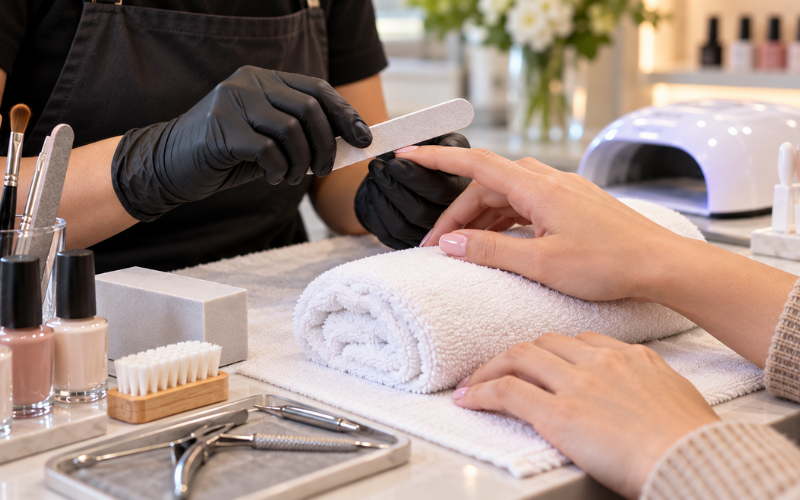
A nail technician is a trained beauty professional who cleans, shapes, decorates, and cares for fingernails and toenails. The work may look simple from the client’s chair, but it requires precision, creativity, good hygiene, and careful attention to detail.
Nail technicians commonly work in nail salons, beauty spas, hair salons, or private studios. Some provide mobile services or run home-based businesses where local rules allow them to do so.
The profession is about more than applying attractive colors. A responsible nail technician must use products correctly, keep tools clean, communicate with clients, and recognize when a nail problem should be examined by a healthcare professional. This article explains the services, skills, training, safety practices, costs, and career options connected with the role.
What a Nail Technician Does
A nail technician, also called a manicurist or pedicurist, works mainly on a client’s hands, feet, fingernails, and toenails. Common responsibilities include removing old polish, cleaning and shaping nails, caring for cuticles, applying nail products, and giving basic aftercare advice.
The technician may work with natural nails or add artificial enhancements for extra length, strength, or decoration. During an appointment, the goal is to produce a neat result without damaging the natural nail or surrounding skin.
This role differs from that of a general cosmetologist. A cosmetologist may be trained in hair, skin, makeup, and nails, depending on local regulations. A nail technician receives more focused training in nail services and usually works only within that professional area.
Services Nail Technicians Commonly Provide
Manicures and pedicures are the foundation of most nail technician services. A basic treatment usually includes cleaning, filing, shaping, cuticle care, moisturizing, and polish application. Pedicures may also involve gently smoothing rough skin on the feet.
Many technicians offer traditional polish and gel polish. Traditional polish dries in the air, while gel polish is normally cured under a suitable lamp. Clients often choose gel because it can provide a glossy, longer-lasting finish.
Artificial nail services may include acrylic, hard gel, soft gel extensions, dip systems, or nail tips. The exact options depend on the technician’s training and local rules. Technicians may also repair broken enhancements, remove old products safely, perform infills, or create nail art ranging from simple lines to detailed hand-painted designs.
A Typical Nail Appointment
An appointment usually begins with a short consultation. The nail technician asks what the client wants and looks at the condition of the nails and surrounding skin. This helps both people agree on the length, shape, color, service, and expected result.
The technician then prepares the nails. This may involve removing old product, filing the free edge, gently managing the cuticles, and preparing the nail surface. For an enhancement service, the technician may apply tips, forms, builder products, acrylic, or gel.
After the main product has been applied and shaped, the technician adds color or nail art. The service ends with finishing touches, such as cuticle oil or hand lotion, followed by simple aftercare instructions. Clients with enhancements are usually advised when to return for maintenance or removal.
Essential Nail Technician Skills
Good hand control is one of the most important skills in this profession. Nail technicians work on small surfaces and often use sharp tools, so every movement should be steady and controlled. Attention to symmetry, product thickness, shape, and surface finish helps create professional results.
Creativity is valuable, especially when clients request custom colors or decorative art. However, technical control matters just as much as artistic talent. A beautiful design will not last if the nail has been prepared poorly or the product has been applied incorrectly.
Communication also shapes the client’s experience. A technician should listen carefully, explain realistic options, discuss prices before starting, and respond politely when a client changes their mind. Time management, patience, cleanliness, and consistent service are equally important for building trust.
Training, Certification, and Licensing
Training requirements depend on the country, state, province, or city in which a person plans to work. In the United States, nail technicians usually complete an approved nail technology or cosmetology program and pass the examinations required by their state.
Training programs commonly combine classroom lessons with practical experience. Students may learn nail anatomy, product use, manicures, pedicures, enhancements, infection control, chemical safety, client consultation, and basic business practices.
According to the U.S. Bureau of Labor Statistics, state licensing requirements vary and may include minimum education and age requirements, completion of an approved program, and an examination. A license from one state may not automatically permit someone to work in another, although some states have transfer or reciprocity arrangements.
Because rules can change, future technicians should check directly with the licensing authority where they intend to work. Short online certificates may support learning, but they do not necessarily replace an approved program or professional license.
Tools and Products Used by Nail Technicians
A nail technician’s kit may include files, buffers, clippers, cuticle tools, brushes, dust-control equipment, lamps, and an electric file. Artificial nail services may also require tips, forms, adhesives, acrylic liquid and powder, builder gel, or other extension products.
The products used depend on the service. Common examples include base coats, colored polish, gel polish, top coats, primers, removers, cleansers, cuticle oil, and hand or foot moisturizers. Protective items such as gloves and suitable masks may be used when the task and product instructions call for them.
Safe storage matters because some nail products are flammable, irritating, or sensitive to heat and light. A technician should keep containers properly closed, follow manufacturer instructions, check product condition, and avoid mixing systems in ways their manufacturers do not recommend.
Hygiene and Client Safety
Clean work practices protect both the client and the technician. Hands should be washed or cleaned at appropriate times, and the table, lamp, chair, and other touched surfaces should be prepared between appointments.
Reusable tools must be cleaned and disinfected according to local regulations and product directions. Single-use items, such as certain files, buffers, or wooden sticks, should be discarded after one client when reuse is not permitted. Clean and used tools should be stored separately to reduce cross-contamination.
A nail technician should also examine the service area before beginning. Open wounds, unusual swelling, severe redness, pain, or signs of a possible infection may make the service unsafe. Technicians are not medical professionals and should not diagnose or treat disease. When there is a concern, the safest response is to postpone the service and recommend qualified medical advice.
Good airflow is also important. The U.S. Food and Drug Administration advises users to follow nail-product warnings and work with good ventilation. The agency notes that some products can cause irritation, infection, or allergic reactions, particularly when they contact the skin.
Nail Technician Workplaces and Schedules
Most nail technicians work in nail salons, spas, or hair salons. Others work in beauty schools, hotels, resorts, private studios, or wellness businesses. Mobile technicians travel to clients, while some professionals provide services from home where zoning, insurance, licensing, and sanitation rules permit it.
Schedules vary with the workplace and customer demand. Evening and weekend appointments are common because clients often book services outside normal working hours. Some technicians work full time, while others choose part-time schedules.
The job can be physically tiring despite being performed while seated. Technicians may spend long periods bending toward a table, holding tools, repeating small hand movements, or working with a client’s feet. Adjustable furniture, suitable lighting, short breaks, stretching, and good posture can reduce discomfort.
Employee, Independent, and Mobile Nail Technician Roles
An employee normally works for a salon that controls appointments, services, products, and workplace policies. Pay may be hourly, commission-based, or a combination of wages and tips. The salon may provide tools and supplies, although arrangements differ.
An independent technician has greater control but also more responsibility. Booth renters and studio owners may pay rent, buy products, manage bookings, keep business records, market their services, and handle taxes. They must also understand the difference between a true independent business and an employee relationship under local law.
Mobile technicians travel to homes, events, hotels, or care facilities. This arrangement can offer flexibility, but transporting products, creating a sanitary setup, managing travel time, and following location-specific rules can make the work more complex.
Nail Technician Earnings and Career Costs
A nail technician’s income can vary widely. Location, experience, employment type, prices, working hours, service speed, and customer demand all influence earnings. Tips, commissions, and retail product sales may add to regular pay.
The Bureau of Labor Statistics reported a median wage of $17.19 per hour for U.S. manicurists and pedicurists in May 2025. However, this figure does not represent every worker, and the agency’s wage data exclude self-employed people. Local wage information is therefore more useful when judging opportunities in a specific area.
New technicians must also consider expenses. Training fees, examinations, licensing, tools, products, insurance, table rent, travel, booking systems, and continuing education can reduce take-home income. Self-employed professionals should calculate these costs before setting prices instead of treating every client payment as profit.
Building Experience and a Loyal Client Base
Technical ability develops through regular, careful practice. Beginners can work on training hands, approved models, or clients under proper supervision. Taking clear photographs of completed work can help create a portfolio that shows different shapes, colors, and techniques.
Consistency often builds loyalty more effectively than following every trend. Clients value appointments that start on time, clear prices, hygienic tools, comfortable communication, and results that match what was agreed upon.
Photographs should only be shared with the client’s permission. A technician should respect privacy, avoid exposing personal details, and never make misleading claims about another professional’s work. Honest communication and dependable service create a stronger reputation than aggressive promotion.
Benefits and Challenges of the Profession
Nail technology can offer creative satisfaction and regular personal interaction. Technicians may enjoy helping clients express their style or feel more polished. Experienced professionals can sometimes choose flexible hours, specialize in a preferred technique, or build an independent business.
The work also has challenges. Repeated hand movements and poor posture can cause physical strain. Dust, vapors, and direct contact with products may create health concerns when safety instructions are ignored. The Occupational Safety and Health Administration recommends measures such as ventilation to help reduce chemical exposure in nail salons.
Client expectations can add pressure, particularly during busy periods. Maintaining professional boundaries, allowing enough time for each service, and refusing unsafe requests are important parts of a sustainable career.
Career Growth for Nail Technicians
A nail technician can grow by improving speed, consistency, design ability, and product knowledge. Some professionals specialize in detailed nail art, structured manicures, natural-nail care, pedicures, or particular enhancement systems.
With experience and the necessary qualifications, a technician may become a salon manager, business owner, educator, competition artist, brand representative, or product trainer. Each path requires different abilities. A strong nail artist, for example, may still need business and teaching skills before managing a salon or leading classes.
Continuing education helps technicians improve techniques and learn about new products. It should support—not replace—proper licensing, manufacturer instructions, and local safety rules.
Choosing a Qualified Nail Technician
Clients should look beyond attractive portfolio pictures. A qualified technician should follow applicable licensing rules, maintain a clean work area, use products responsibly, and explain the service clearly. Tools should be stored properly, and disposable items should not appear dirty or previously used.
Before booking, clients can ask whether the technician has experience with the requested service. They should also mention allergies, sensitivities, injuries, or previous reactions to nail products.
Strong odors alone do not prove that a salon is unsafe, but poor airflow, visibly dirty tools, rushed preparation, painful filing, bleeding skin, or unwillingness to discuss hygiene are warning signs. A professional should never promise to cure a nail disorder or continue a service when doing so could cause harm.
Is Becoming a Nail Technician the Right Choice?
This career may suit someone who enjoys detailed hands-on work, beauty services, creativity, and regular contact with clients. Patience is essential because learning clean application, balanced shapes, and efficient timing takes practice.
Future technicians should also consider the less glamorous parts of the role. The job involves cleaning, repeating small movements, managing difficult requests, and following detailed safety rules. Self-employed technicians must handle business duties as well as nail services.
Before enrolling, compare approved programs, total costs, course schedules, practical training, and local licensing requirements. Visiting a working salon or speaking with established professionals can also provide a realistic picture of daily life in the industry.
Conclusion
A nail technician combines practical skill, creativity, hygiene, and client care. The role covers much more than applying polish: it requires safe product use, precise technique, clear communication, and respect for professional limits.
For the right person, nail technology can lead to employment, flexible independent work, or long-term business opportunities. Success depends on approved training, continued practice, clean working habits, realistic financial planning, and a consistent experience that clients can trust.
FAQs
1. How long does it take to become a nail technician?
The time depends on local training and licensing requirements. A program may take several months, but schedules, required training hours, examinations, and application processing times vary. Check with the relevant licensing authority before choosing a course.
2. Does a nail technician need a license?
A license is required in many locations, including most parts of the United States. The exact rules are set by state or local authorities. Completing a private course does not always provide legal permission to work.
3. Can a nail technician treat nail fungus?
No. A nail technician is not qualified to diagnose or treat a fungal infection or another medical condition. A client with a suspected infection should seek advice from an appropriate healthcare professional before receiving cosmetic nail services.
4. What is the difference between a nail technician and a manicurist?
The terms are often used in similar ways. “Manicurist” may refer mainly to someone who cares for fingernails and hands, while “nail technician” often covers manicures, pedicures, artificial nails, and nail art. Legal job titles can vary by location.
5. Can a nail technician work from home?
Possibly, but permission depends on local licensing, zoning, sanitation, insurance, and business rules. A home-based technician may need a separate work area, inspections, permits, or additional coverage before accepting clients.