
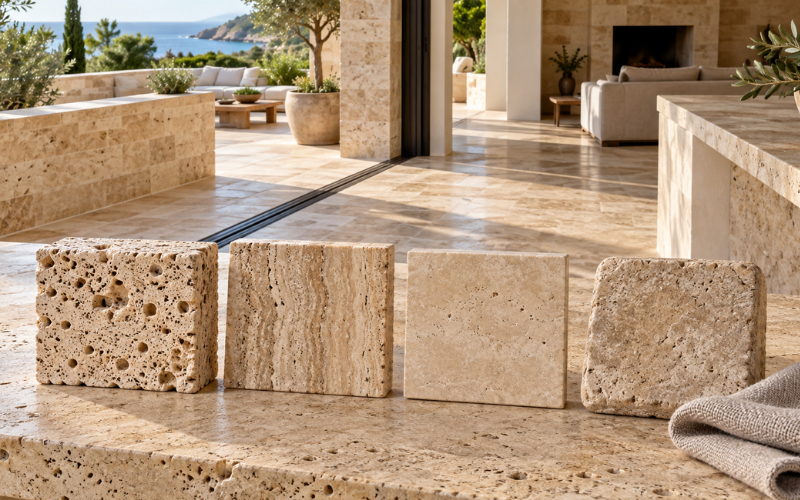
Travertine is a natural stone known for its warm colors, soft movement, and small holes across the surface. These pores are part of the stone’s character rather than manufacturing defects. Travertine appears in floors, bathrooms, fireplaces, patios, paths, and pool areas, where it can create a relaxed and timeless look. However, it is porous and needs thoughtful installation and care. This article explains how travertine forms, the colors and finishes available, its main benefits and drawbacks, where it works best, and how to choose, install, seal, clean, and repair it.
What Travertine Is
Travertine is a type of limestone created when calcium carbonate separates from mineral-rich water and builds up in layers. Its open pores distinguish it from many other decorative stones.
Calcium carbonate is its main material. Iron compounds and other minerals can add cream, brown, gold, red, or gray tones. Water movement, plant material, and gases may leave bands, cavities, and irregular markings. Therefore, no two pieces are exactly alike.
How Travertine Forms in Nature
Travertine forms where mineral-rich water reaches the surface or moves through natural systems, including hot springs, cooler springs, streams, and caves. As the water releases carbon dioxide, calcium carbonate is deposited and gradually hardens in layers.
Bubbles, plants, and moving water help create the holes and channels seen in cut stone. Turkey and Italy are among the best-known sources, while Iran, Mexico, Peru, and other countries also produce travertine. Its origin can influence color, pattern, density, and pore size.
Travertine Colors and Natural Variations
Travertine is closely linked with ivory, cream, and beige, but its range is wider. Walnut varieties have brown tones, gold stone may show honey or rust, and silver travertine often blends gray, beige, and brown.
Minerals and formation conditions affect color and veining. Some batches look calm and even, while others have bold bands. A small sample cannot show every variation, so buyers should view several pieces or photographs of the actual batch.
Popular Travertine Finishes
A finish changes how travertine looks and performs. Honed stone is smooth and matte, while polished stone is glossy but can show scratches and become slippery when wet.
Tumbled travertine has softened edges and a rustic surface. Brushed finishes add texture, while chiseled edges create an aged outline. Filled stone has holes closed with resin or cement-based material. Unfilled stone keeps its cavities, although installers may fill some with grout.
Where Travertine Works Best
Indoors, travertine is used for entryways, hallways, kitchens, living rooms, bathroom walls, shower surrounds, vanity backsplashes, and fireplaces. Its quiet earth tones can connect different spaces without making a room feel overly decorated. The right installation and sealer are especially important in kitchens, showers, and other areas exposed to spills or moisture.
Outdoors, thicker travertine pavers are popular for patios, paths, steps, courtyards, and pool decks. Textured finishes can provide useful grip. Travertine may be less practical on surfaces that receive frequent acidic spills, harsh chemicals, heavy impact, or severe freezing conditions without suitable installation. The final choice should match the location rather than appearance alone.
The Main Benefits of Travertine
Travertine’s strongest appeal is its natural warmth. Its colors, pores, and flowing lines offer depth that printed patterns may not reproduce. Different cuts and finishes suit rustic, traditional, and modern spaces.
Properly installed travertine can provide years of service. It comes as tiles, mosaics, slabs, wall pieces, and outdoor pavers. Minor wear may blend into its varied surface, while the patina that develops over time can add character.
Drawbacks to Consider Before Choosing Travertine
Unprotected travertine can absorb water, oil, colored liquids, and dirt. Acids such as lemon juice and vinegar can dull or etch it. Sealing reduces absorption but does not make the surface stain-proof.
It also needs more care than many porcelain tiles. Fillers can loosen, polished areas may scratch, and outdoor pieces can be affected by moisture or frost. Very open or weak pieces may not suit demanding locations.
Travertine Indoors Versus Outdoors
Indoor tiles are commonly thinner than outdoor pavers because a prepared base supports them. Smooth finishes suit dry rooms, but bathrooms and entrances need surfaces with suitable grip.
Outdoor travertine must handle rain, sunlight, temperature changes, and sometimes frost. It generally needs a textured finish, adequate thickness, and good drainage. In freeze-thaw climates, a local professional should assess the stone’s density, water absorption, base, and installation method.
Travertine Compared With Other Materials
Travertine and marble are calcium-based stones, but marble is transformed by heat and pressure and looks more crystalline. Travertine has more visible pores and an earthier texture. Both react to acids.
Travertine is a form of limestone, although sellers often separate it because of its formation and open structure. Porcelain is manufactured, more uniform, and usually easier to maintain. The choice depends on whether natural variation or simple upkeep matters more.
How to Choose Quality Travertine
Good travertine should be chosen for its intended use. Examine several pieces for cracks, weak edges, excessive cavities, inconsistent filler, and areas that appear fragile. A highly porous look is not automatically poor quality, but large open spaces can require more filling and may be unsuitable for heavy use.
Terms such as premium, standard, or commercial grade are not always applied consistently between sellers. Ask for clear information about thickness, finish, filling material, recommended application, and expected variation instead of relying on a grade name alone. Order samples where possible and inspect the actual batch before installation. Extra material should be purchased for cutting, accidental breakage, selection, and possible future repairs.
Travertine Cost and Pricing Factors
Travertine prices vary widely, so a single figure rarely tells the full story. Origin, color, pattern, density, thickness, tile size, finish, edge treatment, and the amount of factory filling can all affect the material price. Mosaics and detailed shapes may cost more per unit of area because they require additional processing.
The complete budget should also include delivery, surface preparation, mortar, grout, sealer, labor, waste, and future maintenance. Large or heavy pieces can increase handling and installation costs. A cheaper product may still be suitable for a low-demand wall, but weak or poorly filled stone can become expensive if it fails on a busy floor or exposed patio.
Travertine Installation Essentials
Travertine needs a clean, flat, stable base. Uneven support can contribute to cracking or loose tiles. Before fixing the pieces, installers often lay out material from several boxes to distribute light, dark, plain, and strongly patterned pieces naturally. This step is important because random installation can create unwanted patches of color.
Mortar and grout must suit natural stone and the installation area. Some light-colored travertine may need a white setting material to avoid visible discoloration. Joint size, movement joints, waterproofing, drainage, and sealing also require attention. Small wall projects may be manageable for an experienced homeowner, but large floors, showers, stairs, and exterior work usually benefit from professional installation.
Sealing Travertine Properly
A penetrating sealer enters the pores and slows the absorption of water and stains without creating a thick coating. An enhancing sealer can deepen the color and make the stone look richer, so it should be tested on a spare piece first. The desired appearance and location should guide the product choice.
Travertine is often sealed during or after installation, but the correct timing depends on the product, grout, and method being used. It may need resealing when water begins to darken the surface quickly instead of remaining in droplets. There is no universal schedule because traffic, cleaning, weather, stone density, and sealer quality all matter. Follow the manufacturer’s directions and remember that prompt spill cleanup is still necessary.
Everyday Cleaning and Maintenance
Regular care is usually straightforward. Remove loose grit with a soft broom, dust mop, or suitable vacuum attachment because sand can scratch the surface. Wipe the stone with clean water or a diluted pH-neutral cleaner made for natural stone, then dry areas where water marks are likely.
Avoid vinegar, lemon-based products, harsh bathroom sprays, abrasive powders, and rough scrubbing pads. Even sealed travertine may be etched by acid. Blot spills rather than spreading them, and clean them promptly. Showers need ventilation and routine removal of soap residue, while patios and pool areas should be kept free of leaves, soil, and standing water. Always test an unfamiliar product in a hidden spot.
Common Travertine Problems and Repairs
Stains, dull patches, scratches, chips, cracks, loose tiles, dark moisture marks, and failing filler are common concerns. A light surface mark may respond to stone-safe cleaning, while an absorbed stain may require a poultice designed for the specific substance. Acid etching is physical surface damage rather than a normal stain and may need honing or polishing.
Small holes can sometimes be refilled with a compatible repair product, but matching the color and finish takes care. Repeated cracks or loose tiles may point to movement or poor support beneath the stone, so covering the symptom alone will not solve the cause. White mineral deposits, known as efflorescence, can indicate moisture movement. Widespread damage is best assessed by a stone restoration professional.
Is Travertine the Right Choice for Your Space?
Travertine may be a strong choice if you value natural variation, warm color, and a surface that can develop character. It suits owners who are comfortable using stone-safe cleaners, wiping spills quickly, and checking the sealer when needed. It may be less suitable for someone seeking a perfectly uniform surface with almost no maintenance.
Before buying, consider the room, expected traffic, moisture exposure, climate, preferred finish, and total installed cost. Ask whether the surface will be slippery when wet and whether the selected product is approved for the planned application. If its care needs fit your household and the installation is sound, travertine can offer lasting beauty without feeling tied to a short-lived trend.
Conclusion
Travertine combines natural warmth, visible texture, and one-of-a-kind variation. It can bring lasting character to floors, walls, bathrooms, patios, and pool areas, but it is not a maintenance-free material. The right thickness and finish, a stable installation, suitable sealing, and gentle cleaning all influence how well it performs. Its pores and gradual patina are part of its identity, yet buyers should be realistic about stains, acid damage, and repairs. When travertine matches the space and the owner’s care expectations, it can remain both practical and attractive for many years.
FAQs
1. Is travertine a type of marble?
No. Travertine and marble are both natural stones largely made from calcium carbonate, but they form in different ways. Travertine is a type of limestone deposited from mineral-rich water. Marble forms when limestone changes under heat and pressure.
2. Does travertine always need to be sealed?
Sealing is generally recommended where the stone may meet water, food, dirt, or stains. The exact need depends on the stone’s density, finish, location, and desired appearance. A suitable sealer reduces absorption but cannot prevent every mark or acid etch.
3. Is travertine slippery around a swimming pool?
Slip resistance depends mainly on the finish, installation, and surface condition. Tumbled or textured outdoor pavers usually offer more grip than polished stone. Buyers should confirm that the selected product is suitable for wet pool areas and meets relevant local requirements.
4. Can travertine be used in a shower?
Yes, travertine can be used on shower walls and floors when the area is properly waterproofed, drained, installed, and sealed. A slip-resistant finish is important underfoot. Regular gentle cleaning and ventilation help control soap residue and moisture-related problems.
5. How long does travertine last?
Well-chosen travertine can last for decades when it has a stable base, correct installation, suitable protection, and regular care. Its actual lifespan depends on the quality of the stone, amount of traffic, climate, cleaning habits, and whether damage is repaired promptly.