
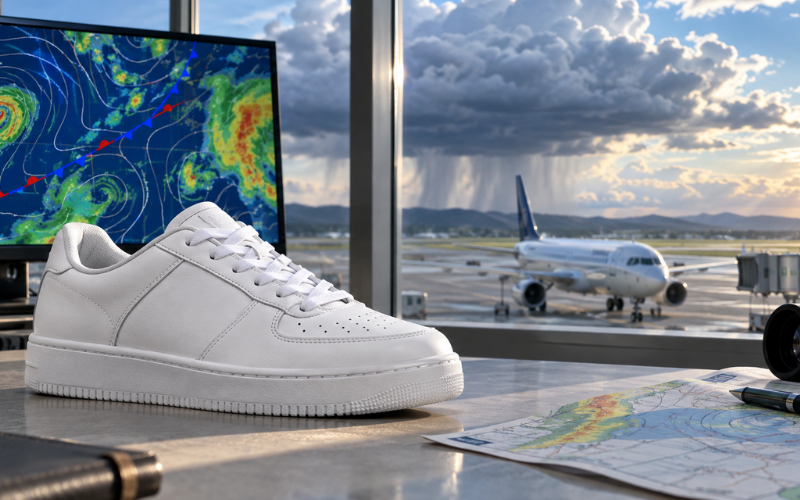
Arfors 1” is an unusual search term because it does not have one widely accepted definition. Depending on where it appears, it may be a misspelling of Nike Air Force 1 or a reference to ARFOR, an aviation abbreviation connected with area weather forecasts.
Small details make a major difference here. Lowercase “arfors 1” may result from words being combined or typed incorrectly. Capitalized “ARFOR” points more strongly toward aviation, while “Air Force 1” and “AF1” usually refer to Nike sneakers.
There is no clearly documented product, organization, or current aviation standard officially named “Arfors 1.” The surrounding words, source, capitalization, and country are therefore essential for understanding the intended meaning. This guide examines both likely interpretations and explains how to identify the correct one without relying on unsupported assumptions.
Arfors 1 at a Glance
The two likely meanings belong to completely different subjects. One concerns footwear and popular culture, while the other relates to aviation weather information. The following comparison provides a quick starting point.
| Written form | Likely subject | Meaning or possible use | Helpful context clues |
| Arfors 1 | Uncertain | A spelling error or combined search phrase | Check the original source |
| Air Force 1 | Footwear | Nike’s famous sneaker family | Nike, shoes, sneakers, Low, Mid |
| AF1 | Footwear | Common abbreviation for Air Force 1 | Colorways, sizing, styling |
| ARFOR | Aviation | Area forecast | Pilot, weather, clouds, flight |
| ARFOR 1 | Aviation training | Possibly a numbered example or exercise | Workbook, exam, chart, lesson |
| ARFORS | Aviation | Plural form of ARFOR | Forecast areas, older documents |
Searches involving prices, sizes, colors, clothing, or Nike almost certainly concern Air Force 1 shoes. References to pilots, weather reports, flight planning, or training material are more likely connected with aviation.
However, “Arfors 1” should not automatically be treated as an official name in either field. Confirming the intended spelling remains the safest approach.
Why the Arfors 1 Keyword Is Confusing
The main difficulty is that “arfors” looks like several familiar words compressed into one. A person searching quickly might leave out the spaces in “Air Force.” A typing error could also remove the letter “i” and the final “ce,” producing something close to “arfors.”
Search engines often try to interpret unclear queries by comparing them with more popular phrases. Because Nike Air Force 1 is an internationally recognized shoe, results may focus heavily on sneakers even when the user originally encountered ARFOR in an aviation document.
Capitalization creates another clue. Aviation abbreviations are normally written in capital letters, so “ARFOR” is more likely to appear in a forecast, pilot guide, or study book. “ARFORS” can be used as the plural, although “ARFORs” is also a natural way to write it in ordinary text.
The number adds further uncertainty. In the footwear meaning, “1” is part of the Air Force 1 name. In an aviation workbook, it could simply identify the first exercise, example, forecast, or question. Without the original context, the number alone cannot establish the meaning.
Arfors 1 as a Possible Misspelling of Air Force 1
For many general web searches, Arfors 1 is probably an incorrect spelling of Air Force 1. Nike introduced the original Air Force 1 in 1982. Designed by Bruce Kilgore, it was the first basketball shoe to use Nike Air cushioning technology, according to Nike’s official product history.
The shoe began as performance basketball footwear but later became closely associated with everyday fashion, music, streetwear, and sneaker culture. Its simple shape and large panels made it suitable for different materials and color combinations. The white low-top version became especially recognizable.
Air Force 1 shoes are commonly grouped into three main shapes. The Low sits below the ankle and is widely worn as a casual sneaker. The Mid rises around the ankle and usually includes a strap. The High provides more ankle coverage and has the closest visual connection to traditional basketball footwear.
Someone intending to find the sneaker should search with the complete name “Nike Air Force 1.” Adding details such as “Low,” “Mid,” “High,” “men’s,” “women’s,” “kids’,” or a color can make the results more useful. The abbreviation “AF1” is also common among retailers and sneaker enthusiasts.
Including the brand name is particularly helpful because “Air Force One” can also describe the aircraft carrying the president of the United States. Although the spoken words sound similar, the Nike shoe and the presidential call sign are separate subjects.
The Aviation Meaning Behind ARFOR
In aviation, ARFOR is an abbreviation for “area forecast.” An area forecast provides expected weather conditions across a broad region rather than at only one airport. Pilots can use this kind of information to understand weather they may encounter while traveling between departure and destination points.
A traditional ARFOR may contain information about cloud coverage, visibility, rain, storms, icing, turbulence, wind, and other conditions affecting a flight. Its exact format and contents depend on the country, aviation authority, period, and forecast system involved.
Area information is especially important when a flight passes through changing weather or operates away from major airports. An airport forecast may describe conditions near the destination, but it cannot by itself explain every condition expected along the route.
The abbreviation has a particularly clear historical connection with Australian aviation. Australia previously used text-based Area Forecasts known as ARFORs. On November 9, 2017, the Australian Bureau of Meteorology changed these forecasts to a graphical format called the Graphical Area Forecast, or GAF. The Bureau’s official GAF information explains that the graphical system combines a map with supporting text.
Pilots and aviation students may still encounter ARFOR in older manuals, archived forecasts, accident reports, or training exercises. Its appearance does not necessarily mean that the material is incorrect, but readers should check when it was published and whether a newer forecast product now applies.
What the Number 1 May Represent
“ARFOR 1” is not clearly documented as the universal name of one specific aviation forecast. If the phrase appears in a workbook, the number may simply identify the first practice exercise or example in a series.
For instance, training material might present several sample forecasts and label them ARFOR 1, ARFOR 2, and so on. In that setting, “1” belongs to the layout of the book rather than to the formal aviation abbreviation. Another document might use the number to identify a map, question, region, or footnote.
Older Australian ARFOR areas were identified by numbers, but that does not make the isolated phrase “ARFORS 1” an official forecast title. The former system included many numbered forecast areas, while the current Australian system uses ten named GAF regions.
The best way to understand the number is to return to the original page. Check its heading, legend, surrounding questions, publication date, and issuing organization. A number that makes sense inside one workbook should not be presented as a definition that applies everywhere.
ARFOR and Modern Aviation Forecasts
Area weather forecasting has changed as digital maps and graphical products have become easier to distribute. In Australia, the text-based ARFOR system was replaced by GAFs in 2017. The change reduced 28 ARFOR areas to ten broader GAF regions and moved wind and temperature information into a separate Grid Point Wind and Temperature forecast.
A GAF presents weather areas on a map and supports them with written details. It can include cloud, visibility, weather, icing, turbulence, and freezing-level information. This layout helps pilots connect forecast conditions with specific geographic areas.
Several related terms may appear beside ARFOR or GAF, but they do not mean the same thing. A TAF is a forecast for the area close to a particular aerodrome. The Australian Bureau of Meteorology defines that area as airspace within five nautical miles of the aerodrome reference point. A METAR, by contrast, reports weather that has been observed at an aerodrome rather than forecasting future conditions. These definitions are summarized in the Bureau’s TAF and METAR reference card.
An AIRMET provides information about certain en-route weather conditions that may affect low-level aircraft operations. In Australia, it supplements the routine GAF when specified conditions occur or are expected but are not already included in the valid forecast. Requirements and formats can differ between countries, so pilots must use information approved for their location and operation.
The important distinction is straightforward: an ARFOR or GAF covers a broad area, a TAF forecasts conditions near an aerodrome, a METAR reports observed aerodrome weather, and an AIRMET advises of certain significant en-route conditions.
How to Identify the Correct Arfors 1 Meaning
The words around the keyword usually reveal its meaning. If the page discusses leather, soles, sizing, colorways, outfits, or Nike, the intended term is almost certainly Air Force 1. A retail price or shoe photograph provides even stronger evidence.
Aviation-related words point in the other direction. References to clouds, visibility, wind, turbulence, flight planning, pilots, exams, or forecast charts suggest that ARFOR is the correct spelling. A numbered heading in a workbook may explain why “1” appears after it.
The source also matters. A sneaker store, fashion article, or Nike page supports the footwear meaning. A meteorological agency, aviation authority, accident report, or pilot-training guide supports the area-forecast meaning.
Readers should also inspect the date. A current Australian source is more likely to discuss GAFs, while an older document may use ARFOR. When safety or flight planning is involved, old educational material should never replace current official weather products and operational guidance.
Useful Spelling and Search Variations
Changing the search phrase can quickly separate the possible meanings. For footwear, useful wording includes “Nike Air Force 1,” “AF1 sneakers,” “Air Force 1 Low,” and “Air Force 1 sizing.” These phrases clearly signal shopping, history, or styling intent.
For aviation, more useful searches include “ARFOR area forecast,” “aviation ARFOR meaning,” “Australian ARFOR,” and “ARFOR aviation workbook.” If the material appears to be old, adding its publication year or country can help explain the terminology.
Searching “ARFOR 1” with the workbook title, page number, lesson name, or training provider may reveal whether the number is merely an exercise label. This is more reliable than searching the short phrase alone.
Spacing is equally important. “Arfors 1” is unclear, “Air Force 1” identifies the well-known sneaker name, and “ARFOR” identifies the aviation abbreviation. Correct spelling gives search engines enough context to return more relevant results.
Common Mistakes to Avoid
One frequent mistake is presenting Arfors 1 as an established brand, system, or technical standard without reliable evidence. The exact phrase is too ambiguous to support that conclusion on its own.
Another mistake is assuming that all results relate to Nike. Although Air Force 1 is often the strongest interpretation in general search results, uppercase ARFOR has a genuine aviation meaning. Ignoring the source could lead to an inaccurate explanation.
Within aviation, an area forecast should not be confused with an aerodrome forecast. ARFOR covers a wider region, while TAF focuses on expected conditions near a particular aerodrome. METAR is different again because it reports observed weather.
Older aviation material also requires care. Historical ARFOR exercises may still be useful for learning how weather information was interpreted, but their format may not match current services. Any article discussing them should clearly distinguish historical practice from today’s official system.
Conclusion
Arfors 1 does not have one confirmed meaning when it appears without context. In an everyday search, it is often a misspelling of Nike Air Force 1, the basketball shoe introduced in 1982 that later became a streetwear classic. In aviation material, it may refer to ARFOR, the abbreviation for an area weather forecast, with “1” possibly marking a numbered exercise or example.
Capitalization, spacing, nearby words, and the original source provide the strongest clues. Rather than treating Arfors 1 as an official name, readers should identify the subject first and then use the correct search phrase. This simple check leads to clearer results and prevents sneaker information from being confused with aviation weather guidance.
FAQs
1. Is Arfors 1 the same as Nike Air Force 1?
It may be. “Arfors 1” is not the official sneaker name, but it can result from misspelling or combining the words “Air Force.” If the surrounding context mentions Nike, shoes, sizes, colors, or fashion, Air Force 1 is almost certainly the intended term.
2. What does ARFOR mean in aviation?
ARFOR means “area forecast.” It refers to weather information covering a broad aviation region. Traditional forecasts could include cloud, visibility, weather, icing, turbulence, winds, and other conditions relevant to flight planning.
3. Is ARFORS 1 an official aviation term?
There is no clear evidence that “ARFORS 1” is a universal official aviation term. It may be a label for the first example or exercise in a workbook. ARFOR is the recognized abbreviation, while ARFORs is its plural form.
4. Why do searches for Arfors 1 show Air Force 1 shoes?
Search engines try to match unclear wording with familiar queries. Because Nike Air Force 1 is far more widely searched than ARFOR, the system may interpret “arfors 1” as a typing error and display sneaker-related results.
5. How can I confirm which meaning is correct?
Review the words, images, source, and date surrounding the phrase. Nike, sizing, and footwear indicate the sneaker meaning. Pilot training, weather, clouds, or forecast charts point toward aviation. If it appears in a workbook, check the page heading and exercise instructions.