
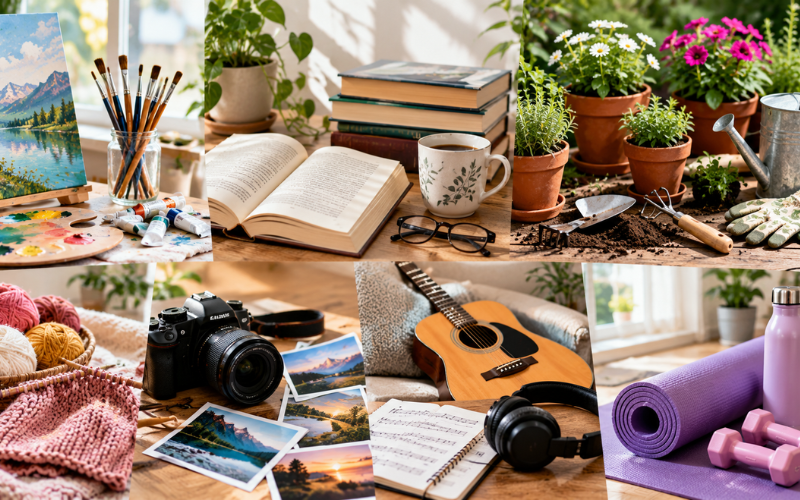
A hobby is something you choose to do because you enjoy it, outside work, household tasks, and other responsibilities. It gives part of your day a purpose that you decide for yourself, whether that means making something, learning a skill, or spending time outdoors.
Finding that activity can take a little experimenting. You might have limited time, a small budget, or no clear idea of what you would enjoy.
This guide to hobbies for women covers possibilities, from sketching and swimming to coding and woodworking. Your interests do not have to fit a stereotype. Below, you will find manageable starting points, practical considerations, and ways to try something without making a large commitment.
Find a Hobby That Fits Your Time, Budget, and Interests
Start by thinking about what you want your free time to feel like. After a busy day of conversation, you may prefer quiet reading. If you spend most of the week alone, a choir or beginner class might be more appealing.
Next, consider the practical details. A hobby that needs a permanent worktable may be difficult in a shared room. Solo hobbies usually offer more scheduling freedom, while groups provide company and guidance.
The comparison below uses relative costs rather than fixed prices. “Low” means basic supplies or borrowed resources; “moderate” usually involves equipment, admission, or lessons; “high” suggests larger purchases or regular specialist access. Actual costs depend on your location and what you already own.
| Hobby | Typical cost level | Basic needs | Scheduling flexibility |
| Drawing | Free–low | Pencil and paper | Short sessions |
| Watercolor | Low–moderate | Paint, brush, suitable paper | Flexible; cleanup needed |
| Crochet | Low | Hook and yarn | Short sessions |
| Pottery or clay modeling | Low–high | Clay; studio for fired pottery | Home projects or classes |
| Creative writing | Free–low | Notebook or device | Very flexible |
| Reading | Free–low | Borrowed or owned books | Very flexible |
| Journaling | Free–low | Notebook or device | Short sessions |
| Jigsaw puzzles | Low–moderate | Puzzle and flat surface | Easy to pause |
| Solo board games | Low–moderate | Game with solo rules | Depends on game length |
| Baking | Low–moderate | Ingredients and kitchen equipment | Longer sessions |
| Dancing | Free–moderate | Clear space; optional classes | Home practice or timetable |
| Swimming | Low–moderate | Swimwear and pool access | Pool opening hours |
| Cycling | Low–high | Suitable bicycle and helmet | Flexible; weather matters |
| Strength training | Free–moderate | Clear space; optional equipment | Home or gym sessions |
| Indoor climbing | Moderate–high | Gym access and suitable gear | Gym opening hours |
| Gardening | Low–moderate | Plants, growing medium, containers | Brief but regular care |
| Birdwatching | Free–moderate | Observation spot; optional binoculars | Short outings |
| Hiking | Low–moderate | Suitable footwear and supplies | Longer outings |
| Nature photography | Free–high | Existing phone or camera | Flexible |
| Stargazing | Free–high | Sky view; optional equipment | Clear evenings |
| Book club | Free–low | Book and meeting access | Scheduled meetings |
| Tabletop role-playing | Free–moderate | Rules, character sheet, dice or app | Group scheduling |
| Community choir | Free–moderate | Rehearsal access | Regular rehearsals |
| Amateur theater | Low–moderate | Rehearsal access and materials | Often fixed commitments |
| Pickleball | Low–moderate | Court, paddle, ball | Court or group availability |
| Language learning | Free–moderate | Learning materials | Short, regular sessions |
| Musical instrument | Low–high | Borrowed, rented, or owned instrument | Regular practice |
| Coding | Free–moderate | Computer and learning resources | Flexible |
| Woodworking | Moderate–high | Workspace, tools, safety equipment | Setup time needed |
| Chess | Free–low | Board or digital version | Short or longer games |
Before buying anything substantial, try a sample session, borrow equipment, or choose one small project. Include cleanup, storage, and travel in your decision.
Creative Hobbies for Making Something of Your Own
Drawing and sketching: A pencil and ordinary paper are enough to begin. Sketch a mug or a leaf, focusing on its overall shape. Uneven proportions are common at first; drawing the same object again can be more useful than starting an ambitious scene.
Watercolor painting: Start with a small paint set, one brush, and watercolor paper. Paint simple color patches before trying a postcard-sized landscape. Water control can be frustrating, so experiment with wetter and drier brushstrokes rather than expecting every edge to stay sharp.
Crochet: Choose one hook and a smooth, light-colored yarn that makes stitches easy to see. A small square is a manageable first project. Tight stitches and uneven edges are common learning challenges; counting stitches each row helps you notice changes early.
Pottery and clay modeling: Try an air-dry clay ornament at home or a beginner pottery class. Fired pottery needs suitable studio equipment and processes. Your first piece may slump or crack, so keep the shape simple and follow the material’s handling and drying instructions.
Creative writing: Use a notebook or document to write a short scene, poem, or fictional conversation. A single page is enough for a first project. If editing every sentence stops your progress, finish a rough draft before deciding what to change.
Quiet Hobbies for Enjoying Time at Home
Reading for pleasure: Choose a book that interests you, even if it feels very different from what you usually read. Short stories suit brief breaks. Library books and digital borrowing, where available, let you explore without accumulating books or paying for every experiment.
Journaling: Keep a notebook nearby and begin with a few lines about something you noticed. You can also record ideas, memories, or sketches. It takes little space, works in short sessions, and does not need a daily streak or a carefully decorated page.
Jigsaw puzzles: Start with a smaller puzzle and an image with clear areas of color. Check the finished dimensions before opening it. A board or tray can preserve progress when you need the table back, making ten-minute sessions easier to manage.
Solo board games: Look for a game with a dedicated solo mode and a playing time that suits you. Read the setup requirements before buying. Some games pack away quickly, while others occupy a table and require a full session to enjoy properly.
Baking: Choose a recipe you want to explore, such as a small batch of biscuits or a simple loaf. Allow time for preparation, baking, and cleanup. Baking feels more like a hobby when you can experiment freely, rather than treating it as another meal you must provide.
Active Hobbies for Women Who Enjoy Movement
Dancing: Try a beginner class or learn a short routine at home. Clear enough space to move comfortably and choose a style whose music you enjoy. Ask about pace, seated options, or quieter classes if those would make participation easier.
Swimming: A beginner adult lesson can be a useful starting point, especially if you lack confidence in water. Check pool access, changing facilities, and quieter session times. Swimwear is essential, while goggles may improve comfort; begin in a supervised setting suited to your ability.
Cycling: Start with a short, familiar route away from heavy traffic. Use a suitable bicycle and helmet, and check the bike’s condition before riding. Borrowing or renting can help you judge whether you enjoy cycling before paying for a bicycle and storage arrangements.
Recreational strength training: This can appeal if you enjoy learning movements and gradually developing a skill. Begin with introductory instruction and equipment suited to your ability. Home practice offers flexibility, while a welcoming gym may provide useful guidance and a clearer separation from household distractions.
Indoor climbing: Book an introductory session and ask what rental equipment is included. Climbing involves learning movement as well as handling equipment. Get the gym’s orientation and appropriate instruction before using its climbing systems; beginner routes offer a way to start without choosing difficult climbs.
Outdoor Hobbies for Spending More Time Outside
Gardening: Begin with one container of herbs or flowers suited to your light and climate. A balcony or small patio can be enough for container growing. Choose a pot with drainage and place it where you can reach it comfortably for regular care.
Birdwatching: Spend a few minutes observing birds from a window, bench, or nearby green space. Note their size, behavior, and markings before trying to identify them. A guide can help; binoculars are an optional addition once you know how you like to watch.
Hiking: Choose a short, clearly marked route with terrain you can manage. Check weather, access, and trail conditions, and bring water and suitable clothing. If steep paths are unsuitable, explore flatter routes and check surface information rather than relying only on a trail’s distance.
Nature photography: Use your phone to photograph leaves, clouds, or changing light in a nearby park. Give yourself one subject for each outing. Practicing composition with existing equipment is a useful first step, and familiar locations can offer new details throughout the year.
Stargazing: Start by finding the Moon and a few recognizable patterns of stars from a safe viewing spot. Choose a clear evening and dress for the temperature. A sky chart can guide you; wait until you understand your interests before considering a telescope.
Social Hobbies for Meeting People Through Shared Interests
Joining a book club: Ask about the reading schedule, book choices, and meeting style. A first visit might involve listening more than speaking, which is fine. Check whether books are easily borrowed and whether the group welcomes people arriving on their own.
Playing tabletop role-playing games: These games involve creating characters and making choices in a shared story. Look for a beginner session or a single-session game before joining a long campaign. Ask what rules, materials, fees, and preparation are expected.
Singing in a community choir: Look for a group that matches your experience and musical interests. Some welcome beginners without auditions; others expect previous experience. Ask about membership fees, rehearsal times, and performances, and whether you can attend a trial rehearsal alone.
Joining an amateur theater group: Acting is one option, but scenery, costumes, and backstage work can also be enjoyable. An introductory workshop helps you understand the group. Check the rehearsal schedule carefully because commitments may increase as a production approaches.
Playing recreational pickleball: Try a beginner lesson or a casual session with loan equipment. Ask whether players rotate partners and how beginners are included. Court fees, paddle costs, and the group’s pace matter more initially than buying specialist gear.
Hobbies for Learning, Building, and Solving Problems
Learning a language: Choose a language you are curious about and set a small goal, such as introducing yourself. Combine a beginner course or library resource with speaking practice. Short, regular sessions are easier to arrange than relying on occasional long study periods.
Playing a musical instrument: Borrow or rent before buying when possible. Learn a short melody or a few chords with beginner materials or a teacher. Consider noise, storage, and comfortable practice arrangements, especially if you share your home.
Coding small personal projects: Begin with one introductory course and build a simple webpage about something you enjoy. A suitable computer and free learning materials may be enough. Expect mistakes and test small changes; trying to build a large application immediately can become discouraging.
Woodworking: An introductory workshop offers access to tools and guidance before you set up at home. A small box can be a first goal under instruction. Learn safe tool use, dust control, and workspace requirements before attempting independent projects.
Playing chess: Learn how the pieces move, then practice simple puzzles or relaxed games. A basic board or digital version is sufficient. Give yourself time to think; understanding one missed opportunity can be more useful than rushing through several games.
Low-Cost Hobbies You Can Start With What You Have
Several hobbies for women require very little spending. Drawing, journaling, and creative writing can begin with spare paper. Reading may be free through a library, while birdwatching and stargazing can start with observation alone. An existing phone is enough to explore nature photography.
Borrowing helps with activities that need more equipment. Ask about instrument rentals, shared workshop tools, or introductory sessions with supplies included. Check local libraries and community centers for available resources rather than assuming every option requires a subscription.
Keep essentials separate from upgrades. A workable pencil matters more than a large drawing set. Your first goal is to discover whether you enjoy the activity enough to return to it.
Making Room for a Hobby in a Busy Week
Match the activity to the time you actually have. Reading, crochet, journaling, and language practice can fit into short breaks. Baking and board games may suit a longer evening, while hiking or a workshop can become an occasional weekend plan.
Reduce the effort of getting started. Keep a small project bag ready, leave your book within reach, or save the next lesson you want to try. For hobbies involving tools or shared space, include setup and cleanup in the time you reserve.
If your schedule changes often, choose flexible practice over a demanding class timetable. Missing a week does not erase your interest or progress. You can return when there is room.
Common Questions About Hobbies for Women
How do I find a hobby if nothing immediately interests me?
Try three small experiments with different experiences: making something, moving, and learning. Notice which activity holds your attention or leaves you curious. You do not need a strong passion before your first attempt.
Which hobbies are easiest to try as a complete beginner?
Reading, journaling, drawing, and phone photography have simple entry points. “Easy” means you can begin without extensive preparation; developing skill can still take time.
What hobbies can I enjoy without spending much money?
Start with writing, borrowed books, birdwatching, chess, or drawing. Existing supplies and free resources can keep costs low, although access varies by location.
Which hobbies help me meet people without a highly competitive setting?
Book clubs, community choirs, and beginner creative workshops are options to explore. Ask about the atmosphere beforehand, since individual groups can feel very different.
Can I start a new hobby later in life?
Yes. Choose an entry point that suits your interests, comfort, and access needs. A class designed for adult beginners can make unfamiliar activities feel more approachable.
How do I know whether to keep trying or choose something else?
Ask whether the activity interests you despite the learning curve. If the main problem is cost, teaching style, or scheduling, adjust that first. If the activity itself feels like a chore, try another.
Conclusion
The most suitable hobbies for women are the ones that fit individual interests and leave room for enjoyment. Choose one activity from this guide, give it a manageable first try, and notice how you feel about returning to it. There is no need to become highly skilled, earn money, or keep the same hobby forever. Your free time can change as you do.