
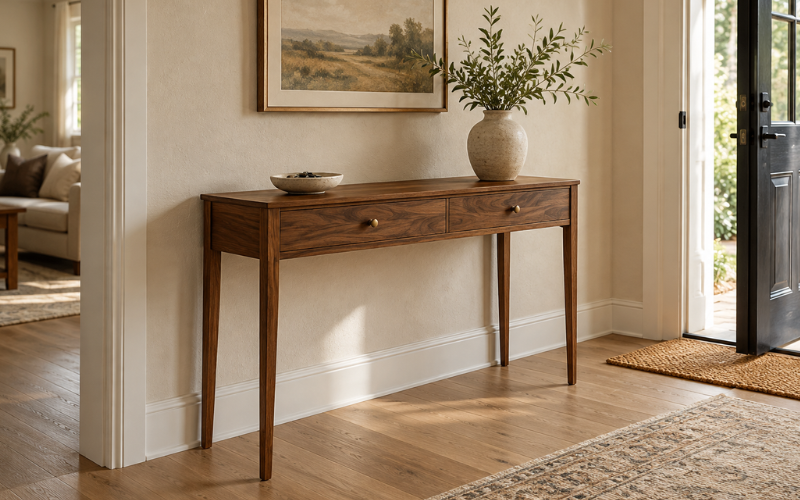
A console table is a relatively narrow table designed to provide a useful surface without taking up much floor space. It often sits against a wall, near an entrance, or behind a sofa. Some designs have only a top and legs, while others include drawers, shelves, or cupboards.
If you are searching for “furniture table console,” you will usually find these pieces listed as console tables. They can hold keys by the front door, support a lamp beside an empty wall, or provide storage in a living room. Their appeal comes from combining everyday function with a shape that fits where deeper furniture may feel awkward.
Choosing one involves more than finding a finish you like. Its depth affects the walkway, its height changes how it looks beside other furniture, and its storage determines what you can keep nearby. The right console table should suit both the available space and the way you use it.
Where a Console Table Works Best in Your Home
An entryway is a useful location because it often needs somewhere to put small belongings. A console table can provide a landing spot for keys, sunglasses, and incoming mail. A drawer keeps these items out of sight, while an open space underneath may accommodate a basket.
Position the table where you can reach it comfortably after entering. Check that the front door opens fully and that bags, coats, or shoes will not gather around its legs. A table that looks compact in an empty entrance may feel quite different during the morning rush.
Hallways require particular care because their main purpose is movement. A shallow console may work along an unused wall, but it should leave a comfortable route through the house. Consider people passing each other and carrying laundry baskets or shopping bags.
Behind a sofa, a console can support lamps and give the seating area a more finished appearance. This placement works especially well when the sofa stands away from the wall. Check the visible back of the table, since some furniture has unfinished rear panels intended to remain hidden.
An empty living room wall is another option. Before adding furniture, decide what the surface will do. Reading light, useful storage, or a place for a few photographs gives the table a clearer purpose.
Choosing the Right Height, Width, and Depth
Start by measuring the space where the table will stand. Width runs along the wall, depth projects into the room, and height determines the level of the surface. Check all three against the product’s overall measurements, including handles or other projecting details.
Depth is often the deciding factor in a narrow space. Mark the proposed footprint on the floor with removable tape, then walk past it as you normally would. Open nearby doors and imagine using the table while someone else moves through the room. This simple exercise can reveal problems that measurements alone miss.
Allow additional room for drawers and cabinet doors. A table may fit neatly when closed but become difficult to use once its storage is open. Skirting boards, sockets, and plugs can also prevent the furniture from sitting as close to the wall as expected.
For placement behind a sofa, a top around the same height as the sofa back or slightly lower often creates a comfortable visual relationship. Compare it with the actual sofa, including cushions that extend above its frame. Avoid choosing by a standard furniture height without checking your own seating.
Width should feel balanced against the surrounding space. A short table can look lost along a large wall, while an oversized piece may crowd a doorway. Leave some breathing room at the sides and choose enough surface area for the objects you genuinely need.
Console Table Styles That Suit Your Room
Modern console tables often have straight edges, simple shapes, and limited decoration. Slim frames and open bases can help a small room feel less crowded. However, a minimal appearance does not always mean a small footprint, so check dimensions before assuming a design will fit.
Traditional styles may feature curved legs, shaped edges, or decorative drawer fronts. These details can work well alongside classic upholstery and framed artwork. When the room already contains several decorative pieces, a quieter console design can help keep the overall arrangement balanced.
Rustic and farmhouse tables often use visible wood grain, textured finishes, and more substantial proportions. They can bring warmth to a plain room, although thick legs and heavy shelves may occupy more visual space than expected. Compare both the physical size and how solid the piece appears.
You do not need to match every item of furniture. Instead, repeat one or two existing features, such as a warm wood tone, dark metal finish, or gently curved shape. A console can feel connected to the room while still having its own character.
Think about how the style supports daily use, too. Decorative grooves may require more careful dusting, while an open frame leaves stored items visible. The best choice should feel comfortable to live with after the initial attraction has faded.
Comparing Wood, Metal, Glass, and Stone
Materials affect appearance, weight, cleaning, and how the surface responds to everyday use. When comparing console table furniture, look beyond the broad material name. Construction, coatings, and the manufacturer’s care instructions matter just as much.
Solid wood offers natural grain and variation. Some solid wood surfaces can be refinished, depending on their construction and finish, but they still need protection from spills and heat. Wood veneer uses a thin layer of real wood over another material. It can provide an attractive finish, though damage may be harder to repair, and deep sanding can wear through the veneer.
Metal frames can create a slim, open appearance. Their stability depends on the joints, design, and assembly rather than the material alone. Check how the finish should be cleaned and whether the feet have suitable protection for your flooring. Mixed-material tables, such as wood tops on metal legs, combine different looks and care needs.
Glass tops can make furniture appear less visually bulky, which may suit a compact room. They also reveal fingerprints, dust, and objects stored underneath. Check the glass specification and inspect the edges carefully. Avoid assuming that a light appearance means the table itself is lightweight.
Stone surfaces vary considerably. Marble, granite, and manufactured stone products do not all respond to spills or cleaning products in the same way. Some need sealing or particular cleaners. A stone top may also make the table difficult to move, so check the total weight and how the base supports it.
Choose with your household routine in mind. A frequently used entrance surface needs a finish you are comfortable maintaining, especially if it regularly holds wet umbrellas, drinks, or shopping bags.
Open Shelves, Drawers, or Cabinets?
Useful storage starts with the items you want to put away. Before choosing a console, gather or measure those belongings. Product photographs can make drawers and shelves appear more generous than their internal dimensions suggest.
Drawers suit small items such as keys, chargers, and spare glasses. Check their usable depth and height, especially when the table has a shallow frame. A drawer that looks wide from the front may offer limited space inside. A simple divider can prevent everyday objects from becoming mixed together.
Open shelves make baskets, books, and other frequently used items easy to reach. They also keep everything visible. If you want to use baskets, compare their measurements with the shelf opening and allow enough room to pull them out comfortably. Check whether support bars or legs restrict access.
Cabinets hide more visual clutter and may suit belongings you prefer to keep out of sight. However, enclosed designs can appear heavier in a small room. Hinged doors also need space to open without blocking a nearby doorway or striking other furniture.
An open console without storage can be the better choice when you only need a lamp or a small display surface. Extra compartments are useful when they solve a specific problem. Otherwise, they may simply add bulk and create another place for unused belongings to collect.
Construction Details to Check Before Buying
A console table should feel steady during normal use. If you can inspect it in person, check whether the frame rocks and whether the legs meet the floor evenly. Look closely at visible joints and connections. Movement may result from loose assembly, an uneven floor, or a weakness in the structure.
Open and close every drawer. It should move smoothly and sit properly when closed. Handles should feel secure, and cabinet doors should align without rubbing against the frame. For online purchases, look for detailed photographs, clear construction information, and reviews describing use over time.
Check the stated weight limits for the top and individual shelves. A heavy lamp, stack of books, or large decorative object can add more weight than expected. A table’s solid appearance does not establish how much it can support, particularly when a long surface has little support beneath its centre.
Assembly requirements also deserve attention. Find out whether the table arrives assembled, which tools are needed, and whether lifting or fitting the top requires two people. Follow the manufacturer’s anchoring instructions and use fixings appropriate for the wall. A wall-supported design must be installed as directed before use.
Finally, measure the delivery route, including doorways, stairs, and tight turns. Read the return terms and check possible delivery or return charges. Overall value includes useful dimensions, reliable construction, suitable storage, and manageable care—not just the initial price.
Styling a Console Table Without Crowding It
Start with the table’s main job. If it serves as an entryway landing spot, reserve a clear area for everyday belongings before adding decoration. If it supports a lamp behind the sofa, position the lamp first and check that its base fits securely.
One main focal point is usually enough to establish the arrangement. This might be artwork above the table, a mirror fixed to the wall, or a lamp with an interesting shape. Choose its size in relation to the table so the display feels balanced.
Smaller objects can add variety without covering the entire surface. A shallow dish, a short stack of books, or a modest vase may be sufficient. Different heights help individual pieces remain visible, but leave gaps between them. Empty space makes the surface easier to use and clean.
Consider how the arrangement looks from nearby seats and doorways. A tall vase behind a sofa may interrupt a view or sit awkwardly beside someone’s head. A large lampshade can extend beyond a narrow top even when the lamp base fits.
Keep cords away from walking routes and arrange them neatly along the back where possible. On lower shelves, use a few items or appropriately sized baskets. Styling should make the table feel settled in the room while preserving the function that justified buying it.
Common Console Table Mistakes to Avoid
The most common mistake is choosing a table that projects too far into the room. A few extra inches of depth can make a noticeable difference in a hallway. Check the footprint in the actual space and account for handles, skirting boards, and anything you plan to store underneath.
Height is another detail that is easy to overlook. A console that looks right against a wall may appear awkward behind a low sofa. Similarly, a high surface may be inconvenient for the person who uses it most. Compare the measurements with nearby furniture and everyday reach.
Storage can disappoint when it is chosen by appearance alone. A narrow drawer may not hold paperwork, and a lower shelf may be too short for the intended basket. Measure the belongings first, then compare them with internal storage dimensions.
Choosing a finish without considering maintenance can also create unnecessary work. A surface that shows every fingerprint or needs careful protection may be frustrating in a busy entrance. Read the care guidance and decide whether those requirements suit your routine.
Finally, avoid filling the top immediately. Live with the table for a few days and notice where keys, bags, or other essentials naturally land. Add decoration around those needs. This approach helps prevent a practical piece of furniture from becoming a display that is difficult to use.
Conclusion
Finding the right furniture table console starts with deciding where it will go and what it needs to do. A narrow entryway may benefit from a shallow table with a useful drawer, while a living room may need an open design that supports a lamp without adding much visual weight.
Measure the footprint, check access to storage, and compare materials according to the care you can realistically provide. Look closely at construction and leave enough room for comfortable movement around the piece.
A console table does not need elaborate styling or extensive storage to be worthwhile. When its proportions and purpose suit the room, it can make an overlooked area more useful while keeping the space comfortable and uncluttered.
FAQs
1. What is the difference between a console table and a sideboard?
A console table is typically narrower and may have an open base or limited storage. A sideboard generally provides more enclosed storage through cabinets and drawers. Product names vary, so compare the actual dimensions and layout rather than relying only on the description.
2. Can a console table work in a very small hallway?
Yes, provided it leaves enough room for comfortable movement and allows nearby doors to open fully. Mark its footprint on the floor before buying. If even a shallow table makes the route awkward, leaving that area unfurnished may be more practical.
3. Should a console table be taller than the sofa?
For placement behind a sofa, a console around the height of the sofa back or slightly lower often looks balanced. Check the sofa’s actual measurements and consider anything placed on the table. Lamps and decorations should not interfere with seating or nearby movement.
4. Can you use a console table as a desk?
Some console tables can support occasional laptop use, but many are too shallow or have drawers that restrict knee space. Check the height, legroom, surface depth, and chair clearance. For regular work, choose furniture that allows a comfortable position and holds your equipment securely.
5. Does a console table need to be attached to the wall?
Follow the manufacturer’s installation and anchoring instructions. Some tables require wall support, while freestanding models may include anti-tip fittings. The appropriate attachment depends on the furniture and wall construction. Do not assume that a heavy table is automatically stable or safe without the specified installation.