
Introduction
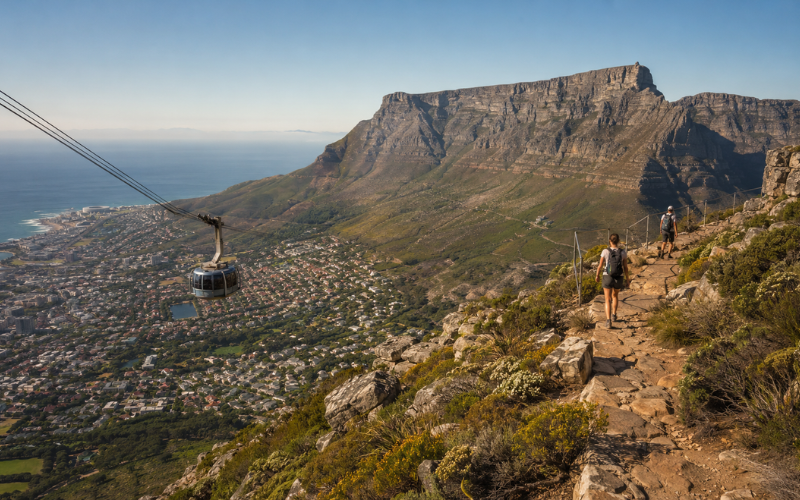
Cape Town Tafelberg is the Afrikaans name for Table Mountain, the famous flat-topped mountain overlooking Cape Town in South Africa. Rising above the city and Table Bay, it forms part of the natural landscape that makes Cape Town easy to recognize.
Tafelberg is more than a beautiful background. It is an important natural area, a symbol of the city, and one of South Africa’s best-known visitor attractions. People can reach its upper slopes by cable car or follow one of several hiking routes.
The Story Behind the Name Tafelberg
The Afrikaans word “Tafelberg” means “Table Mountain.” The name describes the mountain’s long, level summit, which looks like the top of a giant table when seen from Cape Town.
However, the mountain’s history began long before Afrikaans and European names appeared. Indigenous communities lived around the Cape Peninsula for thousands of years. A well-known Khoekhoe name for the mountain is Huriǂoaxa, often translated as “mountain emerging from the sea.”
Today, people searching for Cape Town Tafelberg are generally looking for information about Table Mountain, including how to visit it and what they can experience there.
How Cape Town Tafelberg Was Formed
Tafelberg developed through geological changes that took place over hundreds of millions of years. Sand was once deposited on an ancient seabed. Over time, pressure turned these layers into hard sandstone.
Movement beneath the Earth later lifted and folded the rock. Wind, rain, and changing temperatures slowly wore away the softer material. The harder sandstone resisted erosion, leaving behind the mountain’s broad plateau and steep cliffs.
Although its top looks completely flat from a distance, the summit has slopes, valleys, rocky paths, and several high points. Maclear’s Beacon, at approximately 1,086 metres above sea level, marks the mountain’s highest point.
Tafelberg’s Place in Cape Town’s History and Identity
Table Mountain has guided travellers approaching the Cape for centuries. Portuguese sailor António de Saldanha completed the first recorded European climb in 1503, although local communities had known and used the mountain long before his arrival.
As Cape Town developed, Tafelberg remained at the centre of the city’s identity. It appears in photographs, local artwork, tourism material, and stories about the Cape. Its slopes have also provided walking routes, water sources, grazing land, and places of cultural importance.
The opening of the cableway in 1929 made the summit more accessible. Since then, Cape Town Tafelberg has become both a much-loved local landmark and an internationally recognized natural attraction.
Wildlife, Plants, and the Mountain’s Unique Natural Environment
Tafelberg forms part of Table Mountain National Park and the wider Cape Floral Region. This region is globally important because it supports an unusually large number of plants within a relatively small area. UNESCO notes that the Cape Floral Region contains nearly 20 percent of Africa’s plant life while covering less than 0.5 percent of the continent’s land area.
The main vegetation is fynbos, which includes proteas, ericas, restios, and many smaller flowering plants. Some species grow naturally nowhere else in the world.
Visitors may also see rock hyraxes, commonly called dassies, along with lizards, tortoises, mongooses, porcupines, and many birds. Wild animals should never be touched or fed.
The Table Mountain Aerial Cableway Experience
The Table Mountain Aerial Cableway provides the quickest way to reach the western side of the summit. The lower station is on Tafelberg Road, while the upper station opens onto walking paths and viewing areas.
Modern cable cars have rotating floors, allowing passengers to enjoy changing views during the short journey. From the summit, visitors can look across the City Bowl, Table Bay, the Atlantic coast, Lion’s Head, and Robben Island when visibility is clear.
Cableway operations depend on wind, cloud, and maintenance conditions. Visitors should check the official Table Mountain Aerial Cableway website for live operating information before travelling.
Popular Hiking Routes on Cape Town Tafelberg
Cape Town Tafelberg has several hiking routes, but none should be treated as a casual walk. Platteklip Gorge is the most direct and widely used path to the summit. It is easy to follow, but the long, steep climb requires good fitness and offers little shade.
India Venster includes exposed sections and rock scrambling, making it unsuitable for inexperienced hikers without a qualified guide. Skeleton Gorge begins inside Kirstenbosch and climbs through a forested area before reaching the higher mountain. Rocks and wooden ladders along this route can become slippery after rain.
Kasteelspoort, on the Twelve Apostles side, offers wide coastal views but is longer and more remote. Route choice should always match the hiker’s fitness, experience, and the day’s weather.
Scenic Viewpoints and Landmarks Around the Mountain
The upper cable station provides some of the most accessible views from Tafelberg. On a clear day, visitors can see Cape Town’s city centre, the harbour, Table Bay, Lion’s Head, Signal Hill, and the Atlantic Ocean.
Short summit paths lead to different viewpoints, while longer walks continue toward Maclear’s Beacon. The Twelve Apostles stretch along the mountain’s western side above Camps Bay. Each viewpoint reveals a different connection between the mountain, city, coastline, and surrounding peninsula.
Weather Conditions and the Famous Tablecloth Clouds
Weather on Cape Town Tafelberg can change quickly. Clear skies at street level do not guarantee good visibility or calm conditions at the summit.
The famous tablecloth forms when moist air is pushed up the mountain’s slopes. As the air rises, it cools and creates cloud, which appears to spill over the flat summit like fabric covering a table. This is a beautiful sight from below, but it can bring cold temperatures, strong wind, and poor visibility to people on the mountain.
The Best Time to Visit Cape Town Tafelberg
Tafelberg can be visited throughout the year when conditions are safe. Cape Town’s summer, from roughly December to February, usually brings warmer and drier weather. However, summer days can also be hot, windy, and crowded.
Winter often brings rain, low cloud, and cooler temperatures, although clear winter days can provide excellent views. Spring and autumn may offer mild weather and colourful plant life.
Practical Planning for a Tafelberg Visit
Before visiting, check the cableway status, weather forecast, route information, and closing times. Wear firm, comfortable footwear and carry water, sun protection, a warm layer, and a charged phone.
Anyone planning to hike up and take the cable car down should remember that the cableway may close because of high winds. A safe alternative plan is therefore essential.
Parking near the lower cable station can become busy. Allow extra time for transport, ticket checks, and changing conditions, particularly during weekends and holiday periods.
Safety and Responsible Mountain Exploration
SANParks warns that Table Mountain is a serious mountain with difficult routes and unpredictable weather. Hikers should avoid walking alone, choose a route suited to their ability, and tell someone where they are going.
Stay on marked paths and turn back if cloud, wind, heat, darkness, or tiredness makes the journey unsafe. Do not rely only on a phone for navigation.
Protect the environment by carrying out all litter, leaving plants and rocks in place, and never lighting fires outside approved areas. Animals must not be fed, even when they approach visitors.
Photography and Sunset Views from Tafelberg
Cape Town Tafelberg offers excellent photography in clear weather. Morning light can reveal details across the City Bowl, while late-afternoon light adds warm colours to the Twelve Apostles and Atlantic coast.
Sunset visits require careful timing. Confirm the last cable-car departure and avoid beginning an unfamiliar descent after dark. Cloud may hide the sun or city within minutes, so visitors should enjoy changing conditions rather than expect one guaranteed view.
Nearby Attractions Around Cape Town Tafelberg
Several natural attractions are closely connected to the mountain. Lion’s Head and Signal Hill provide different views of Tafelberg, the city, and the ocean. Kirstenbosch National Botanical Garden, on the mountain’s eastern slopes, offers walking paths through indigenous plants.
The Twelve Apostles overlook Camps Bay on the western side. These nearby places help visitors understand how Table Mountain connects with the wider Cape Peninsula landscape.
Conclusion
Cape Town Tafelberg is not simply a viewpoint above the city. Its unusual shape, long history, rich plant life, walking routes, and changing clouds make it an important part of Cape Town’s natural and cultural identity.
Whether visitors use the cableway or climb with proper preparation, respecting the weather and environment is essential. A carefully planned visit offers a memorable way to see how closely Cape Town is connected to its famous mountain.
FAQs
1. Is Tafelberg the same as Table Mountain?
Yes. Tafelberg is the Afrikaans name for Table Mountain in Cape Town. Both names refer to the same flat-topped mountain.
2. How high is Cape Town Tafelberg?
The highest point is Maclear’s Beacon, which stands approximately 1,086 metres above sea level. The upper cable station is slightly lower.
3. Can beginners hike up Tafelberg?
Beginners can consider Platteklip Gorge, but it remains a steep and physically demanding climb. Inexperienced visitors should hike with capable companions or a qualified local guide.
4. Does the Table Mountain cableway operate every day?
The cableway normally operates throughout the year, but strong wind, poor weather, or planned maintenance can interrupt service. Check its live status before visiting.
5. How much time is needed to visit Cape Town Tafelberg?
A cableway visit commonly needs a few hours, depending on queues and time spent exploring. Hiking trips require longer and should include extra time for rest and unexpected weather changes.