
Dinner arrives at the worst possible moment for good intentions. The day has been long, everyone is hungry, and the easiest option is often the one that needs the least thought. That is why so many searches for healthy dinner ideas end in frustration. The ideas sound wonderful in the morning and feel impossible at half past six, when there is little time, little energy and a cabinet that does not quite match the recipe.
A healthy dinner does not need to be perfect, and it does not need to be a project. In most cases it needs to be balanced enough, satisfying enough and simple enough to happen again tomorrow. The aim of this article is to make that kind of dinner the normal one, not the exception. You will find a simple way to judge a plate at a glance, ideas that work on busy weeknights, meat-free meals that still feel substantial, and straightforward ways to cook fish, chicken and lean meat without fuss. There are also ideas for flavor without relying on salt, sugar or a great deal of fat, and for cooking ahead so that a busy evening does not undo a good week.
Please read this article as general information only. It is not medical advice, it does not diagnose or treat any condition, and it is not a personal eating plan. If you have a medical condition, a food allergy or intolerance, or a special dietary need, speak to your GP or a registered dietitian before making a major change to what you eat. The guidance here is for most healthy adults and follows the general balanced-eating advice published for the UK, which is a useful starting point rather than a rule for every person.
What Makes a Dinner Healthy Without Making It Complicated
A healthy dinner is easier to recognize when you stop thinking about single foods and start thinking about the whole plate. A meal built around vegetables or salad, a starchy food, a source of protein and a little unsaturated fat usually covers the main food groups in a natural way. That pattern leaves room for the foods you enjoy, and it avoids the feeling that dinner has to be built from a long list of special ingredients. The NHS Eatwell Guide makes the same point in a helpful way, explaining that balance does not need to be achieved at every single meal, but can be reached over a day or even a week.
That idea matters on a busy evening. If lunch was light, dinner can carry a little more. If one dinner is simple, the next one can be more varied. What matters most is the pattern over time, not whether one plate ticks every box. A dinner of beans on whole-wheat toast with a side salad, for example, can be a perfectly reasonable evening meal, even though it looks nothing like a formal dinner. A large bowl of pasta with a rich sauce and very little else, eaten most nights, is a different pattern, because the balance is missing night after night.
It also helps to think about how a dinner makes you feel afterwards. A meal that leaves you comfortably full, steady and ready for the evening is usually doing its job. A meal that leaves you still hungry an hour later, or heavy and sluggish, may need a little more fiber, protein or vegetables, or a smaller portion of the richer parts of the meal. Hunger is useful information, not a failure of willpower, and a healthy dinner should respect it rather than fight it.
The Simple Plate That Takes the Guesswork Out of Dinner
If you remember one image from this article, make it the plate. Guidance from the British Heart Foundation suggests aiming to fill about half the plate with vegetables at main meals, about a quarter with a source of protein such as beans, pulses, fish, eggs or lean meat, and about a quarter with starchy foods such as potatoes, bread, rice or pasta, choosing wholegrain versions where possible. That picture is not a strict rule, and it does not need a measuring jug, but it gives the eye something to check before you sit down.
Vegetables do a lot of the quiet work in a healthy dinner. They add bulk, color, fiber and flavor, and they help a plate feel generous without making the meal heavy. Fresh, frozen and canned vegetables all count, and frozen vegetables are often a sensible choice on a weeknight because they keep well, cook quickly and reduce waste. The NHS Eatwell Guide advises at least five portions of a variety of fruit and vegetables a day, and dinner is a natural place to add two or three of those portions without trying very hard. A handful of salad leaves, a portion of peas or green beans and a few roasted peppers can do it between them.
Starchy foods deserve a fair place too. Potatoes with their skins on, brown rice, whole-wheat pasta and whole-wheat bread provide energy and fiber, and they help a meal feel complete. The key is proportion rather than avoidance. A modest mound of rice beside a generous portion of vegetables and a good source of protein usually feels more balanced than a plate dominated by rice alone. Protein, in turn, helps a meal feel satisfying. Beans, lentils and chickpeas are useful here because they provide protein and fiber together, and they are low in fat. Fish is another helpful choice, and the Eatwell Guide advises at least two portions of fish a week, with each portion weighing about 140g, and one of those portions being oily fish such as salmon, sardines or mackerel. Dairy foods and fortified alternatives can also play a part, with lower-fat and lower-sugar options often a sensible choice, and a little unsaturated oil, such as olive, rapeseed or sunflower oil, used in small amounts for cooking or dressing.
Healthy Dinner Ideas for Busy Weeknights
The best healthy dinner ideas for a weeknight are the ones you can cook when you are tired. That usually means one pan, one tray or one pot, a short list of ingredients, and very little standing over the stove. A tray bake is a good example. Chicken thighs or tofu, new potatoes, carrots, peppers and red onion can go onto one tray with a little oil, garlic and herbs, and roast together while you do something else. The vegetables soften and sweeten, the potatoes crisp at the edges, and the whole meal arrives at the table in one dish. A sheet of baking paper under the food makes the washing up easier, which matters more than it sounds on a school night.
A stir-fry is another fast option, and it is forgiving about what goes into it. Start with onion, garlic and ginger if you have them, add whatever vegetables are in the fridge, then add a protein such as strips of chicken, shrimp, tofu or cashew nuts, and finish with noodles or rice. A simple sauce made from soy sauce, lime juice, a little honey and chili can lift the whole dish, although it is worth checking the label for salt and sugar and using a small amount. Frozen stir-fry vegetables are a genuine help here, and there is no need to feel that fresh vegetables are the only acceptable choice. A stir-fry that happens is better than a perfect meal that never gets cooked.
Soup and stew also earn their place on a busy night, especially when the weather turns colder. A pot of lentil and vegetable soup with whole-wheat bread can be ready in well under an hour, and it reheats well the next day. A bean chili made with canned tomatoes, kidney beans, peppers, sweet corn and mild spices can be served with rice one evening and spooned over a baked potato the next. These are the kinds of healthy dinner ideas that reward a little batch cooking, because the second meal takes almost no effort at all. The NHS Healthier Families collection of healthy recipes is a useful place to look for more everyday dinners of this kind, with recipes developed to be lower in salt, saturated fat and sugar.
Meat-Free Dinners That Still Feel Filling
Meat-free dinners sometimes get a reputation for being light, but that usually comes down to what replaces the meat rather than the absence of meat itself. A plate of plain pasta with a thin tomato sauce will leave most people hungry again soon, while a plate of whole-wheat pasta with lentils, mushrooms, spinach and a little grated cheese feels like a proper meal. The difference is protein, fiber and substance, and beans, pulses, lentils, tofu, eggs and dairy foods can all provide them.
A bean and vegetable chili is a good place to start. Kidney beans, black beans or a mixed tin of beans, cooked with onion, garlic, peppers, canned tomatoes and mild chili powder, make a rich and filling sauce for rice or a baked potato. A chickpea and spinach curry, made with canned tomatoes, garlic, ginger and garam masala, works in a similar way and needs no cream to taste generous. A simple dhal of red lentils, onion, garlic, turmeric and a little lemon juice is gentle, warming and inexpensive, and it freezes well in portions. These dishes also suit a varied household, because the same base can be served mild for children and spiced up at the table for adults who want more heat.
Eggs are another useful meat-free option for dinner, and they are often overlooked once breakfast is over. A vegetable frittata, made with eggs, potatoes, peppers, zucchini and a little cheese, can be cooked in one pan and served warm or cold. Shakshuka, which is eggs poached in a spiced tomato and pepper sauce, needs little more than bread for dipping and a simple salad on the side. If you eat dairy, a little cheese can add flavor, but it works best as an accent rather than the main event, because cheese is high in fat and salt. A small amount, grated finely so it spreads further, usually gives more flavor than a large block melted over everything.
Fish, Chicken and Lean Meat Dinners Done Simply
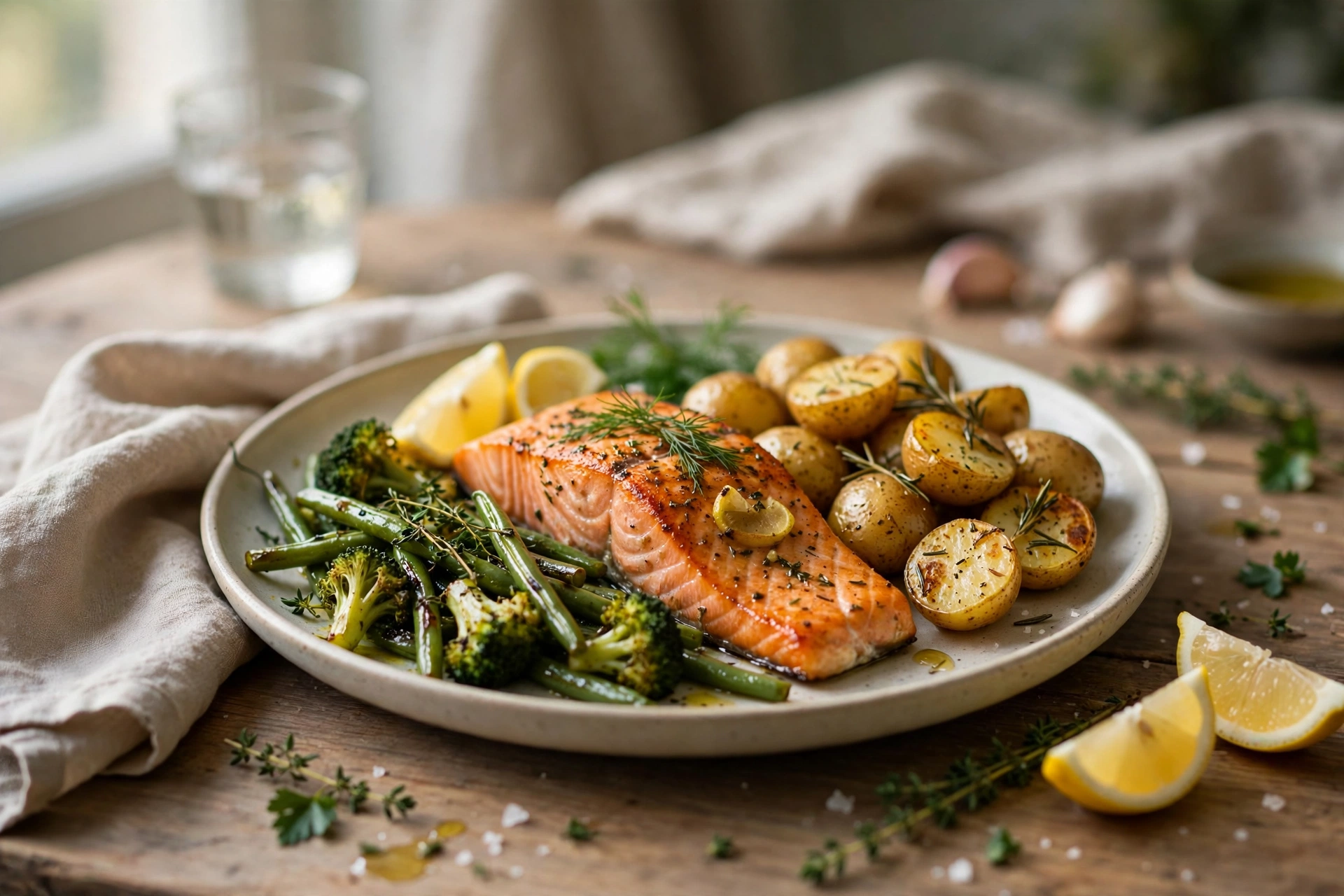
Fish is one of the simplest healthy dinners of all, because it cooks quickly and needs very little added to it. A fillet of salmon or trout, baked with lemon and herbs and served with new potatoes and green beans, can be on the table in about twenty minutes. Canned fish is just as useful on a night when fresh fish is not available. Tuna and bean salad, sardines on whole-wheat toast with tomato, or a tuna and sweet corn pasta bake all make a satisfying dinner without much cooking. The important habit is variety over the week, so that fish appears regularly but does not have to appear every night.
Chicken suits a similar approach. A plain chicken breast can be dry and dull, but chicken thighs, a whole spatchcocked chicken roasted with vegetables, or strips of chicken in a stir-fry or a tray bake stay juicy and need little attention. The skin and visible fat can be removed if you prefer, and the flavor can come from herbs, lemon, garlic and spices rather than from a sugary glaze. Serving chicken with a generous portion of vegetables and a modest portion of rice, potatoes or couscous keeps the plate balanced without making the meal feel small.
Lean meat can also fit into a healthy pattern when it is used in proportion and prepared simply. A small portion of lean ground meat in a bolognese sauce that is rich in vegetables, mushrooms and lentils can stretch further and taste just as satisfying as a meat-heavy version. A pork stir-fry with plenty of vegetables, or lean lamb chops with roasted root vegetables and a green salad, can work well as an occasional dinner. Processed meats such as bacon, ham and sausages are best kept as an occasional addition rather than the center of the meal, because they tend to be high in salt and saturated fat. Choosing lean cuts, trimming visible fat, grilling or baking rather than frying, and letting vegetables take up the largest part of the plate will usually do more good than any single rule about one food.
How to Keep Flavor High and Salt, Sugar and Fat in Check
Healthy food has an unfair reputation for being bland, and most of the time the problem is not the food but the seasoning. Herbs, spices, citrus juice, vinegar, garlic, ginger and chili can give a dinner a clear identity without adding salt or sugar. A squeeze of lemon over fish, a handful of fresh basil stirred through pasta, smoked paprika on roasted chickpeas, or cumin and coriander in a bean stew can change a meal completely. It helps to keep a small set of dried herbs and spices that you actually use, rather than a cabinet full of jars that never get opened.
Salt needs a little care because so much of it is already present in the foods we buy, in bread, sauces, ready meals and processed meat. The British Heart Foundation notes that much of the salt we eat comes from food already bought, and suggests checking labels and using herbs and spices for flavor instead. Cooking from scratch gives you more control, and tasting before adding salt, rather than salting by habit, is a small change that adds up. Sugar needs similar attention, especially in sauces, dressings and marinades, where a sweet glaze can quickly turn a simple dinner into a sugary one. A little sweetness from roasted vegetables, caramelized onion or a piece of fruit in a salad is usually enough.
Fat is not something to fear, but amount and type still matter. Unsaturated oils are a healthier choice than butter, lard or ghee for most everyday cooking, and a small amount goes a long way when a pan is hot and food is not crowded. Roasting, grilling, steaming and baking usually need less added fat than shallow frying, and they keep vegetables and fish in good shape. Creamy sauces can be lightened with natural yogurt, a little milk or a blended bean base, although it is worth checking that the substitute suits the dish and anyone eating it. The goal is not a fat-free dinner, which would rarely be satisfying, but a dinner where fat is used for flavor and cooking rather than allowed to dominate the plate.
Cooking Ahead, Leftovers and Eating Well on a Budget
Healthy dinner ideas become much easier when some of the work is already done. Cooking a large pot of rice, a tray of roasted vegetables or a batch of tomato sauce at the weekend can turn three weeknight dinners into simple assemblies. Cooked grains keep well in the fridge for a few days, roasted vegetables can be stirred through pasta or piled onto toast, and a basic tomato sauce can become a pasta sauce, a pizza topping or the base for shakshuka. The trick is to cook components rather than whole meals, so that the same ingredients can appear in different forms and do not become boring.
Leftovers deserve the same respect. A roast chicken on Sunday can become a chicken and vegetable soup on Monday and a chicken salad wrap on Tuesday, and none of those meals needs to feel like a repeat. A chili made in a large batch can be frozen in portions and reheated on a night when cooking from scratch is not realistic. Food safety matters here, so cool cooked food reasonably quickly, store it in clean containers, label it with the date, and reheat it until it is piping hot throughout. If you are unsure whether a leftover is still safe, it is better to throw it away than to take a risk.
Budget is a real part of healthy eating, and the cheapest dinners are often among the healthiest. Dried and canned beans, lentils, eggs, frozen vegetables, canned tomatoes, oats, rice and potatoes are inexpensive, keep well and form the base of many satisfying meals. Buying vegetables in season, choosing frozen fish and vegetables when fresh ones are expensive, and planning dinners around what is already in the cabinet can reduce both cost and waste. A smaller amount of meat, used as part of a vegetable-rich dish, can also stretch the budget further than a large portion of meat with very little else. Planning the week loosely, even if it is only a short list on the fridge, usually saves more time and money than shopping day by day without a plan.
When a Healthy Dinner Needs a Different Approach
Most healthy dinner ideas can be adapted, but some people need a different approach altogether, and that is normal. A person with celiac disease needs gluten-free meals, a person with a nut allergy needs to check every label and sauce, and a person with diabetes, kidney disease, high blood pressure or another long-term condition may have been given specific advice that differs from general guidance. In those cases, the general pattern in this article is only a starting point, and personal advice from a GP or a registered dietitian should take priority. The same applies to children, to people who are pregnant, and to older adults, whose needs can differ from those of other adults.
It is also worth remembering that a healthy relationship with food matters as much as the nutrients on the plate. A dinner eaten together, without rushing, is often more satisfying than the same food eaten quickly over the sink. If healthy eating starts to feel rigid, anxious or punishing, that is a sign to step back and seek support rather than to add more rules. A single takeout, a birthday meal or a tired evening with a ready meal does not undo a generally balanced pattern, and there is no need to make up for it with a strict day afterwards. The habit that matters is the ordinary one, repeated most nights, not the exceptional one.
Frequently Asked Questions
Can a healthy dinner still be filling?
Yes, provided the plate has enough substance. Vegetables and salad add bulk, starchy foods such as potatoes, rice or whole-wheat bread add energy, and protein from beans, lentils, fish, eggs or lean meat helps the meal feel satisfying. A dinner that is mostly salad with very little else may leave you hungry, while the same salad beside a baked potato and a bean stew will usually feel like a proper meal. Drinking water with dinner, and eating slowly enough to notice when you are full, also help.
How can I make healthy dinners faster on weeknights?
Choose meals with few steps, such as a tray bake, a stir-fry, soup or a one-pot bean dish, and keep a small set of quick ingredients ready, including frozen vegetables, canned beans, canned tomatoes, eggs, rice and pasta. Cooking components ahead, such as rice, roasted vegetables or tomato sauce, can turn assembly into a ten-minute job. A short weekly plan, even if it only covers three or four dinners, removes the daily decision that often leads to a takeout.
Are meat-free dinners healthy enough on their own?
They can be, when they include a source of protein and enough variety. Beans, lentils, chickpeas, tofu, eggs, nuts, seeds and dairy foods or fortified alternatives can all contribute protein, and wholegrains and vegetables add fiber and other nutrients. A meat-free dinner built only from refined pasta and sauce may be less satisfying, while one built around lentils, vegetables and wholegrains usually is. If you follow a vegetarian or vegan diet, it is worth checking general guidance on iron, calcium, iodine and vitamin B12 with a GP or a registered dietitian, rather than guessing.
Do I need to count calories at dinner?
Not necessarily. The British Heart Foundation explains that you do not need to count calories to maintain a healthy weight, and that paying attention to portion sizes, the balance of the plate and how your weight and clothes fit over time can be enough for many people. If you do want a reference point, its guidance gives average daily needs of about 2,500 calories for men and 2,000 calories for women, while stressing that individual needs vary with age, body size and activity. Focusing on the pattern of the meal, rather than on a single number, is usually more sustainable.
What if I have an allergy or a medical condition?
Check labels carefully, ask about ingredients when eating out, and follow the advice you have been given for your own situation. This article gives general information only and cannot replace personal advice. If you have a food allergy or intolerance, a digestive condition, diabetes, heart disease or any other medical condition, speak to your GP or a registered dietitian before changing your diet in a major way. If a food has ever caused a serious reaction, seek urgent medical advice rather than testing it at home.
Conclusion
Healthy dinner ideas work best when they are simple enough to use on a tired evening and good enough to look forward to. Start with the plate, fill half of it with vegetables, add a modest portion of starchy food and a good source of protein, and let flavor come from herbs, spices and citrus rather than from extra salt, sugar or fat. Cook a little ahead when you can, keep a few quick ingredients ready, and let the pattern over the week carry the odd simple night. A healthy dinner is not a test to pass, but a habit to build, one evening at a time, and the next good dinner is usually closer than it looks.