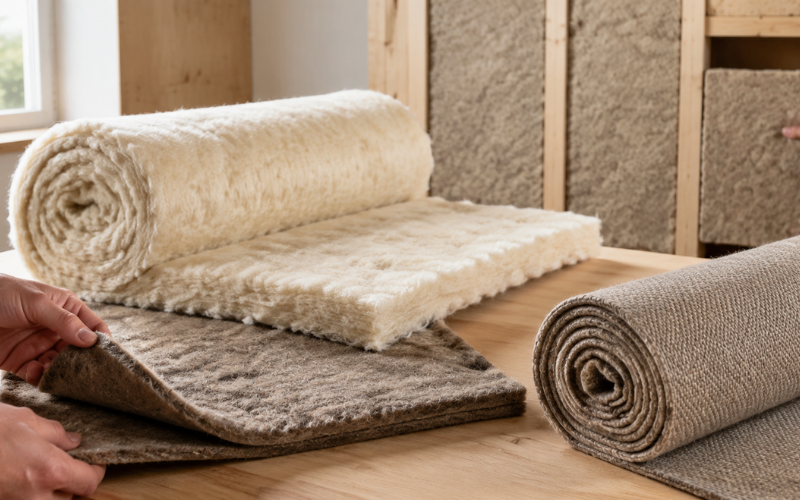
Wollmatten are flexible mats or rolls made entirely or partly from wool. The word is German: Wollmatte means “wool mat,” while Wollmatten is the plural form. Depending on the product, these mats may be used as soft floor coverings, furniture pads, craft material, building insulation, sound-control layers, or natural covers for garden soil.
Although these products share a similar name, they are not all designed for the same job. A thin felt mat for a table is very different from a thick insulation roll placed inside a wall. A biodegradable garden mat also has different requirements from a decorative mat used indoors. This is why buyers should look beyond the word wool and check the product’s purpose, material blend, thickness, density, treatment, and care instructions.
What Wollmatten Are Made From
Many Wollmatten are made from sheep’s wool. The raw wool is cleaned to remove dirt, grease, and other unwanted material. The fibers are then arranged into a layer and joined together. Manufacturers may use felting, heat, pressure, stitching, or needle punching, a process that locks fibers together without weaving them into fabric.
Some products contain pure new wool, while others use recycled wool or a blend of wool and synthetic fibers. Added fibers can help a mat keep its shape or improve its strength. Building products may also receive treatments for insects, fire performance, or long-term protection. Garden mats may include natural support fibers, such as jute, so that the product stays together during placement but can break down over time.
The material label matters because “wool mat” does not always mean 100 percent untreated wool. A mixed-fiber mat may work indoors but be unsuitable for composting, while craft felt should never replace approved building insulation.
Different Types of Wollmatten
Wollmatten are available in several types, and each one is designed for a different purpose. Some provide insulation, while others are used for gardening, decoration, crafts, or surface protection. Understanding these types makes it easier to choose the right product.
1. Felted Wollmatten
Felted Wollmatten are made by pressing and locking wool fibers together. They usually have a smooth, dense surface and are available in different colors, sizes, and thicknesses. These mats are commonly used for crafts, desk pads, drawer liners, furniture protection, and interior decoration.
2. Thermal Insulation Wollmatten
Thermal insulation Wollmatten are thick mats or rolls designed to reduce heat transfer. They may be installed in walls, roofs, ceilings, floors, and timber frames. Their trapped air pockets help buildings remain warmer during cold weather and cooler in hot conditions. Only properly tested and approved products should be used for construction.
3. Acoustic Wollmatten
Acoustic Wollmatten are designed to absorb sound and reduce echo. They may be installed inside walls, ceilings, studios, offices, or entertainment rooms. Their effectiveness depends on factors such as thickness, density, placement, and the overall construction of the room.
4. Garden Wollmatten
Garden Wollmatten are placed over soil and around plants. They help retain moisture, limit the growth of small weeds, and protect the soil from temperature changes. Some garden mats are biodegradable and slowly release nutrients as the wool fibers break down. Buyers should check whether the product contains synthetic backing or added treatments before composting it.
5. Decorative Wollmatten
Decorative Wollmatten include small rugs, table mats, wall coverings, and other interior accessories. They are mainly selected for their appearance, softness, warmth, and texture. These mats are available in natural wool shades as well as dyed colors, but their resistance to stains and everyday wear can vary.
6. Furniture and Surface-Protection Wollmatten
These Wollmatten are used beneath furniture, ornaments, electronics, tools, or delicate objects. They create a soft barrier that helps prevent scratches, marks, and minor impact damage. Some versions also reduce noise when chairs or other objects are moved. The mat should be colorfast, stable, and suitable for the surface underneath it.
7. Craft Wollmatten
Craft Wollmatten are thin, flexible sheets used for sewing, model making, ornaments, toys, storage inserts, and handmade accessories. They are easy to cut and shape, making them suitable for both simple and detailed projects. However, craft mats should not be used as building insulation because they normally do not have the required performance or safety certification.
Common Uses of Wollmatten
Inside the home, Wollmatten can protect tables, shelves, drawers, and delicate objects from scratches. Decorative mats add warmth and texture, while wall-mounted felt may help soften mild echo.
In craft and design work, wool felt is easy to cut and shape. It can be used for sewing projects, model making, storage inserts, ornaments, and handmade accessories. Dense mats are also useful on work surfaces because they provide a soft layer between tools and finished objects.
In construction, approved sheep-wool mats can provide thermal and sound insulation. In gardens, wool mats may be laid around trees, vegetables, or ornamental plants. Like other mulch covers, a close-fitting mat can help retain soil moisture and limit unwanted growth by blocking light. BUND’s gardening guidance explains these basic functions of mulch.
Key Features and Natural Properties
Wool fibers have a natural wave or crimp that helps them trap air. In a thick, well-made mat, these air spaces can slow heat movement and support thermal comfort. The fiber structure also helps absorb sound, especially when the material has enough depth and is placed correctly.
Wool can take in and release moisture vapor as conditions change, but this does not make it waterproof. A soaked mat can become heavy, develop an odor, or lose its shape. Natural wool is also flexible and resilient. However, construction buyers still need tested products with verified fire and performance ratings. Color, texture, and softness may vary with the wool and processing method.
Main Benefits of Using Wollmatten
One major benefit is versatility. Wollmatten can provide a protective surface, decorative finish, insulating layer, or garden cover. Flexible versions are usually easy to cut and can follow uneven shapes. Wool also feels warm and pleasant. Thick mats may soften impact noise, while approved insulation products can help control heat flow in a correctly designed building.
Natural and recycled options may reduce the need for new synthetic material. Sheep’s wool grows again after shearing, and lower-grade fiber can be useful in insulation or garden products. The total environmental benefit still depends on processing, transport, treatments, lifespan, and disposal.
Possible Disadvantages to Consider
Wool-based products often cost more than basic synthetic mats. Natural wool may also vary slightly in shade, surface, or thickness, which can be a disadvantage when an exact finish is required.
Moths and other textile pests can damage untreated wool. Some products use protective treatments, while others depend on clean, dry storage and regular inspection. Wool can also felt, shrink, or distort when exposed to heat, strong movement, or the wrong cleaning method. Certain mats have a natural smell, especially when damp or newly unpacked.
Not every product is biodegradable. Synthetic support fibers, dyes, glues, backing, and pest treatments can change how a mat should be used and discarded. Anyone sensitive to dust or animal fibers should follow the product’s handling guidance.
Choosing the Right Wollmatten for Your Needs
Begin with the intended use. A decorative mat needs a pleasing, durable finish. A furniture pad should not stain or slip, while craft material should cut cleanly without falling apart.
For building work, check the intended area, thermal value, fire classification, density, pest treatment, moisture guidance, and approvals. Insulation must suit the complete roof, wall, or floor design. Ask a qualified professional if local requirements are unclear.
Garden Wollmatten should be safe for outdoor use and the plants being grown. Check whether the product is compostable, contains added fibers or fertilizer, lets water pass through, and can be secured against wind.
Understanding Size, Thickness, and Quality
Measure before buying and allow a little extra for cutting and fitting. Plan how separate pieces will meet because gaps can weaken weed control or insulation. Large rolls cover space quickly, while small sheets are easier to handle in tight areas.
Thickness affects cushioning, warmth, sound absorption, flexibility, and price, but thicker is not always better. Density also matters: two mats with the same thickness may perform differently when one contains more tightly packed fiber.
Good Wollmatten normally have an even surface, stable edges, and consistent thickness. Labels should state the fiber content, dimensions, recommended use, and care method. Technical data and certificates matter more than marketing claims.
How to Install or Place Wollmatten Correctly
The surface should be clean and dry. Indoor mats must lie flat without causing a slip or trip risk. Any adhesive should be compatible with wool and tested first on a hidden area.
Place garden mats on prepared, moist soil after removing larger weeds. Cut close-fitting openings around plants without pressing on their stems. Overlap adjoining pieces, secure the edges, and make sure water can reach the soil.
Insulation Wollmatten should fit without gaps, heavy compression, or folds. Electrical fittings, heat sources, ventilation, and moisture-control layers require care. Follow the instructions and local building rules, and use a professional for complex work.
Cleaning, Care, and Proper Storage
Routine care usually starts with gentle vacuuming, shaking, or brushing. Blot fresh spills instead of rubbing them. Use cool or lukewarm water and a wool-safe cleaner only when the care label allows it.
Hot water, strong detergent, twisting, and heated drying can cause shrinkage or felting. A washable mat should normally be reshaped and dried flat. Large, backed, or fixed mats may require professional cleaning.
Store reusable Wollmatten clean and completely dry. Keep them in a breathable cover in a cool area, away from leaks, direct sunlight, and pests. Inspect stored wool from time to time so that insect activity or dampness can be handled before serious damage develops.
Common Buying and Usage Mistakes
A common mistake is choosing by price alone. A low-cost mat may contain a high share of synthetic fiber, have weak edges, or lack the performance information needed for the project. Another mistake is assuming that every wool mat is natural, compostable, washable, fire-rated, or suitable for outdoor use.
Other mistakes include ignoring density and backing, ordering without accurate measurements, leaving mats wet, using harsh cleaners, placing indoor felt outside, and installing insulation without considering moisture or fire safety.
Match the product label to the exact job. Clear instructions, complete material details, and realistic claims are signs of a dependable choice.
Lifespan, Reuse, and Disposal
The lifespan of Wollmatten depends on their construction, location, care, and level of use. A protected indoor felt mat may last for years, while a garden mat is often designed to break down. Insulation can remain useful for a long period if it stays correctly installed, dry, and protected from pests.
Clean offcuts may be reused for crafts, drawer liners, packing, or small repairs. Avoid material affected by mold, insects, chemicals, or building dust.
Disposal depends on the full product. Pure untreated wool may suit certain composting or textile routes, but synthetic fibers, glue, backing, dyes, and treatments can change the correct method. Check local rules before composting or recycling.
Sustainability and Environmental Impact
Wool is renewable, and durable Wollmatten may reduce frequent replacement. Products made from local or lower-grade wool can give useful value to fiber with limited demand. Compostable garden mats may also reduce the need for plastic weed-control sheets.
Natural does not mean impact-free. Sheep farming uses resources and produces emissions. Processing, dyes, treatments, binders, packaging, and transport add further effects. Environmental value should be judged across the product’s full life.
Choose the correct size, durable construction, and clear material details. Repairable, reusable, recycled-content, or compostable mats may offer advantages when those qualities fit the intended use.
Conclusion
Wollmatten are wool-based mats with uses ranging from home protection and crafts to gardening, sound control, and building insulation. Their main strengths include softness, flexibility, natural warmth, and the ability of wool fibers to manage moisture vapor. Yet no single type is suitable for every purpose.
Before buying Wollmatten, consider where the product will be used, what it contains, how thick and dense it is, and whether it has the required care guidance or technical approval. A well-matched wool mat can be comfortable, useful, and long-lasting. The best choice is not simply the most natural or the thickest option, but the product that safely meets the needs of the specific project.
FAQs
1. What are Wollmatten?
Wollmatten are flexible mats made entirely or partly from wool. They can be used for decoration, insulation, gardening, crafts, sound control, and surface protection.
2. What are the main benefits of Wollmatten?
Wollmatten are soft, flexible, warm, and naturally able to manage moisture vapor. Depending on their design, they may also provide cushioning, insulation, or sound absorption.
3. Can Wollmatten be used outdoors?
Garden Wollmatten are designed for outdoor use. They can cover soil, reduce moisture loss, and limit weed growth. Indoor wool mats should not be used outside unless the manufacturer approves it.
4. How should Wollmatten be cleaned?
Follow the product’s care label. Most indoor Wollmatten should be gently vacuumed or brushed. Avoid hot water, strong detergents, hard rubbing, and heated drying because they may cause shrinking or felting.