
Introduction
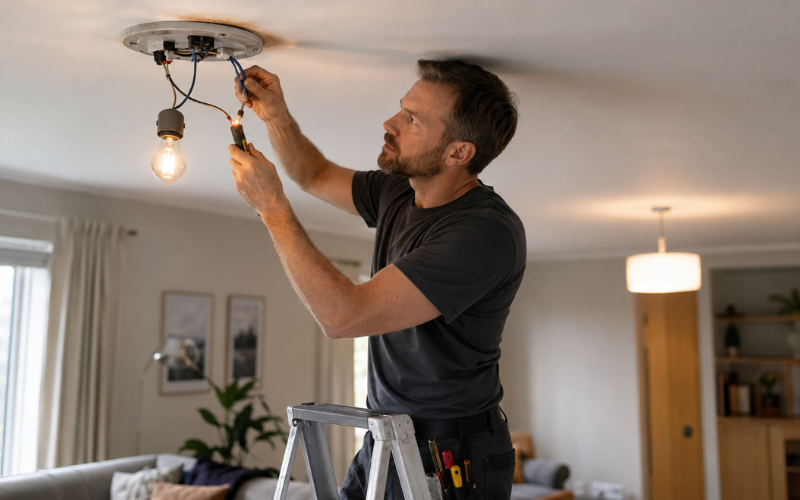
An electrician for flickering lights can determine whether an unsteady light is a minor bulb problem or a warning sign of a larger electrical fault. Flickering happens when a light’s power supply changes or becomes unstable. The light may blink, dim, pulse, or briefly switch off before returning to normal.
An occasional blink from one lamp may come from a loose bulb or a poor connection inside the fixture. Repeated flickering, especially across several rooms, can point to damaged wiring, an overloaded circuit, an aging electrical panel, or a problem with the utility supply.
The cause is not always visible. A qualified electrician can inspect the affected fixtures, test voltage, examine circuits, and check the electrical panel. This guide explains what different flickering patterns may mean, which checks are safe for homeowners, when professional help is needed, how the problem may be repaired, and what the service could cost.
What Flickering Lights May Reveal About Your Electrical System
The number and location of the affected lights provide useful clues. When only one light flickers, the issue is often limited to its bulb, socket, switch, dimmer, or fixture. If several lights on the same circuit flicker together, the problem may be a loose connection or excessive demand on that circuit.
Flickering in different rooms is more concerning because it may involve the electrical panel, main service connection, or incoming power supply. The timing also matters. A light that briefly dims when an air conditioner starts may be reacting to the appliance’s sudden demand for electricity. Strong, frequent, or worsening brightness changes are less likely to be normal.
Homeowners should also notice whether flickering happens during windy or rainy weather. The U.S. Consumer Product Safety Commission explains that bad contacts near a home’s service connection can sometimes cause lights to flicker, particularly when outside conditions move the service cable. That equipment should only be handled by the utility company or another authorized professional.
Safe Checks to Make Before Calling an Electrician
Begin with the simplest possible cause if only one light is affected and there are no signs of heat, smoke, sparks, or burning. Turn the light off and allow the bulb to cool. After confirming that the power is off, check whether the bulb is loose, cracked, darkened, or damaged. Tighten it gently or replace it with a suitable bulb.
Make sure the bulb matches the fixture’s required type and maximum wattage. If the light uses an LED bulb with a dimmer, confirm that both products are designed to work together. LED performance can depend heavily on compatibility between the bulb’s internal driver and the dimmer, according to guidance hosted by ENERGY STAR.
Pay attention to whether the flickering begins when a large appliance starts. Record which appliance is running, how long the flickering lasts, and which rooms are affected. This information can help an electrician find the cause faster.
Do not remove the electrical panel cover, touch exposed wires, open outlets, or attempt to tighten electrical connections. These areas may remain dangerous even when a switch appears to be off.
Signs You Need an Electrician for Flickering Lights
It is time to call an electrician for flickering lights when a new bulb does not solve the problem or when the flickering returns repeatedly. Professional inspection is also appropriate if several lights flash together, brightness changes occur in multiple rooms, or the problem has become more frequent.
Sounds and smells are especially important. Buzzing, sizzling, or crackling from an outlet, switch, fixture, or panel can suggest a poor connection or electrical arcing. A burning-plastic smell, brown marks, melted material, or unusual warmth may indicate overheating.
Frequently tripped circuit breakers should not simply be reset again and again. The breaker may be responding to an overload, short circuit, damaged device, or wiring fault. The Electrical Safety Foundation International identifies flickering lights, buzzing, discoloration, warm outlets, and burning smells as warning signs that require inspection by a qualified electrician.
When Flickering Lights Become an Electrical Emergency
Flickering lights require urgent attention when they appear with smoke, visible sparks, a burning smell, intense buzzing, or hot electrical surfaces. Sudden flickering throughout the house can also be serious, particularly when some lights become unusually bright while others become dim.
If smoke or fire is present, leave the home and contact emergency services from a safe location. Do not use water on an electrical fire. If there is no fire but a fixture, outlet, or switch is sparking or overheating, stop using that part of the electrical system. Turn off the affected circuit only if the panel is safe to approach and you know which breaker controls it.
Never touch a hot, wet, smoking, or sparking panel. Keep other people away from the area and contact an emergency electrician or utility provider. Flickering may seem harmless, but the National Fire Protection Association includes flickering or dimming lights and outlet sparks among home electrical warning signs.
Common Electrical Causes an Electrician Will Investigate
A loose bulb is one of the simplest causes, but connections can also loosen inside a socket, switch, junction box, outlet, or electrical panel. A poor connection can interrupt the flow of power and may produce heat or arcing.
Worn switches and fixtures can create similar symptoms. LED bulbs may flicker when used with older or incompatible dimmers. In other cases, too many devices on one circuit can cause lights to dim or flicker when demand increases.
Voltage changes may come from a large appliance, a failing connection, the electrical panel, or the utility supply. Older panels may contain worn breakers, corrosion, heat damage, or loose internal parts. Problems can also develop where the utility line connects to the home. Because these causes can produce similar symptoms, proper testing is more reliable than guessing.
How an Electrician Diagnoses Flickering Lights
The electrician will normally begin by asking where the flickering occurs, how often it happens, and whether appliances are operating at the same time. Details about recent renovations, new equipment, storms, outages, or electrical repairs can narrow the search.
Next, the electrician may inspect the bulb, socket, fixture, switch, and accessible connections. Testing equipment can be used to measure voltage and check whether power remains stable when appliances start. The electrician may also examine the breaker panel for loose parts, damaged breakers, corrosion, overheating, or signs of an unsuitable load.
If the issue appears near the meter, service cable, or incoming utility line, the electrician may recommend contacting the power company. This process helps separate a household wiring fault from a supply-side problem that falls under the utility provider’s responsibility.
Repairs That May Be Recommended
The required repair depends entirely on the diagnosis. A minor problem may only require a new bulb, socket, switch, dimmer, or light fixture. Loose or damaged connections may need to be secured or replaced using approved components.
If a large appliance is placing too much demand on a shared circuit, the electrician may recommend moving it to a suitable dedicated circuit. Damaged wiring may need partial replacement. A severely outdated or defective panel could require new breakers, internal repairs, or a complete upgrade.
Not every case leads to major work. A trustworthy electrician should explain what caused the flickering, which repair is necessary, what can wait, and whether permits or further inspections are required.
Electrician Costs for Flickering-Light Problems
The cost of hiring an electrician varies by location, the time required for diagnosis, and the repair involved. Many electricians charge a service-call fee that covers travel and part or all of the first hour. Current U.S. pricing guides commonly place this initial charge around $100 to $200, while standard labor often ranges from about $50 to $130 per hour.
A simple bulb, switch, socket, or dimmer issue may remain relatively inexpensive. Costs rise when troubleshooting takes longer or when the electrician finds damaged wiring, overloaded circuits, service problems, or a panel that needs repair or replacement.
Emergency visits during evenings, weekends, or holidays usually cost more than scheduled daytime service. Local labor rates, permits, materials, home accessibility, and the electrician’s experience also affect the total. Ask whether the diagnostic fee is separate or will be applied toward the repair. An exact quote usually cannot be provided until the electrical system has been inspected.
Choosing the Right Electrician for Flickering Lights
Choose an electrician who is licensed where required, properly insured, and experienced in residential troubleshooting. Flickering lights can have several possible causes, so diagnostic skill is more important than simply replacing the first component that appears suspicious.
Before approving work, ask what the inspection covers, how charges are calculated, and whether you will receive a written estimate. The electrician should be able to explain the problem in clear language and describe why the proposed repair is appropriate.
Be cautious if someone recommends expensive work without testing the system, refuses to provide basic business or licensing information, asks for full payment before inspection, or pressures you into an immediate non-emergency upgrade. For larger repairs, it may be reasonable to obtain another professional opinion.
Preparing for the Electrician’s Visit
Good notes can reduce the time needed to find an intermittent problem. Record when the flickering happens, which rooms and fixtures are affected, how long it lasts, and whether any appliance starts at the same moment. A short video may also help if the issue does not occur during the appointment.
Tell the electrician about recent storms, outages, renovations, new appliances, or previous electrical repairs. Move stored items away from the panel so it can be reached safely, but do not remove its cover. Make sure the electrician can access affected switches and fixtures.
Preventing Flickering Lights from Returning
Use bulbs that match the fixture and dimmers that are compatible with the chosen bulb type. Avoid placing several high-demand appliances on the same circuit, and do not depend on extension cords as permanent wiring.
Replace worn switches, cracked outlets, damaged cords, and failing fixtures promptly. In an older home, a professional electrical inspection can identify deterioration or capacity problems before they become more serious.
After a repair, continue watching the affected lights. If flickering returns, changes location, or becomes stronger, contact the electrician again. A recurring symptom may mean the original issue was only one part of a larger problem.
Conclusion
Hiring an electrician for flickering lights is the safest response when basic bulb checks do not solve the problem or when several lights are affected. While some flickering comes from a loose bulb or incompatible dimmer, other cases involve overloaded circuits, loose wiring, panel faults, or utility-supply problems.
Notice where and when the flickering happens, avoid opening electrical components, and act quickly when warning signs appear. A qualified electrician can identify the actual cause, recommend the right repair, and help keep the home’s electrical system safe and dependable.
FAQs
1. Can a loose bulb cause repeated flickering?
Yes. A loose bulb may lose contact with the socket and blink as the connection changes. Turn the light off, allow the bulb to cool, and tighten it gently. If the flickering continues, the socket, fixture, switch, or wiring may need inspection.
2. Why do lights flicker when an appliance starts?
Large appliances can draw extra power while starting, causing a brief change in brightness. Strong or repeated flickering may suggest an overloaded circuit, voltage problem, loose connection, or inadequate electrical service.
3. Should I call an electrician if only one light flickers?
Try a compatible replacement bulb first if there are no other warning signs. Call an electrician if the new bulb also flickers or if the fixture buzzes, smells unusual, becomes hot, or shows discoloration.
4. Can flickering lights indicate faulty wiring?
Yes. Loose, worn, damaged, or overheating wiring connections can cause flickering. Because hidden wiring cannot be assessed safely through appearance alone, repeated flickering should be professionally diagnosed.
5. Is whole-house flickering a utility problem?
It can be, but it may also involve the home’s main panel or service connection. Ask whether nearby homes are affected and report possible supply problems to the utility company. An electrician can help determine whether the fault is inside the property.