
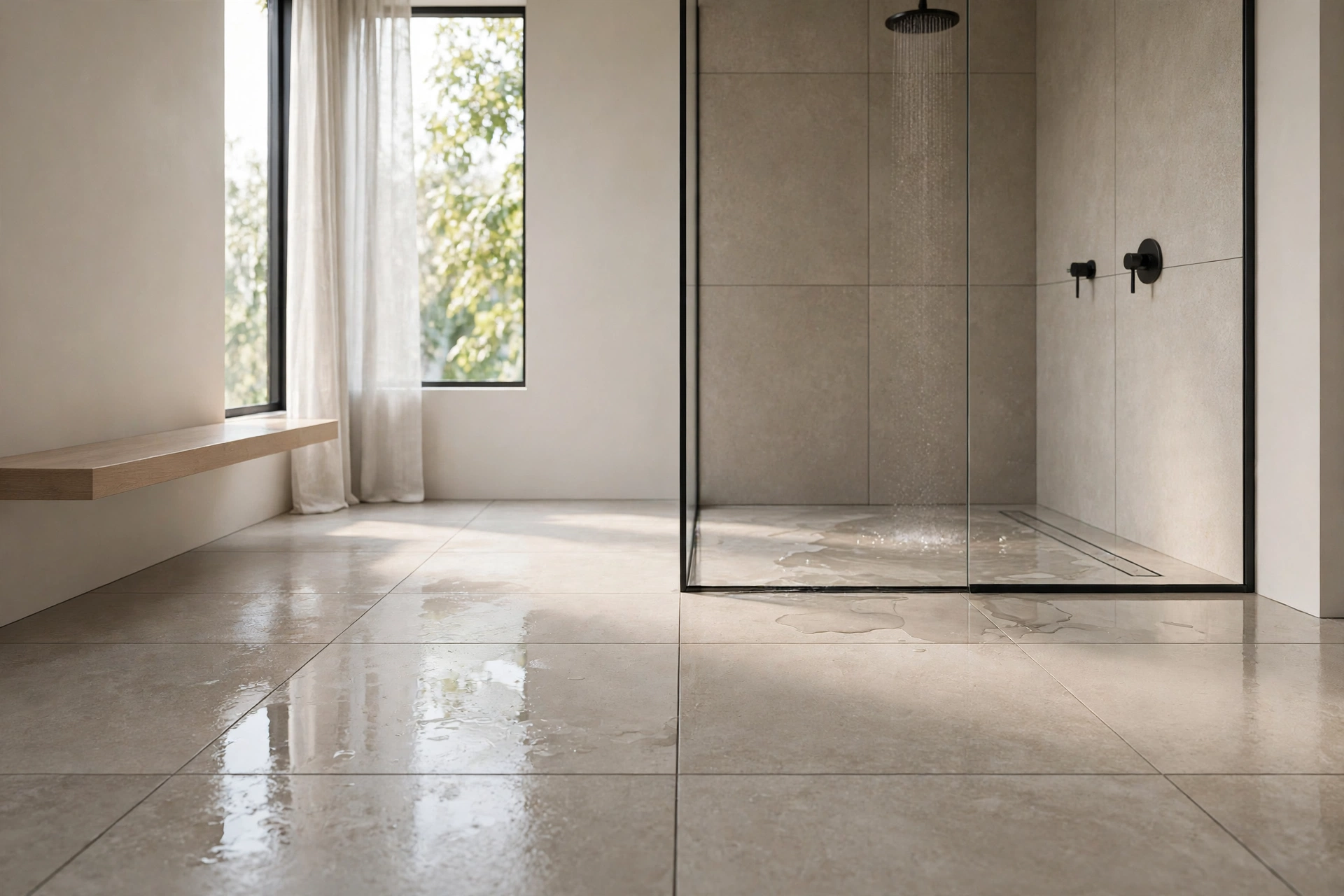
A bathroom floor has a harder job than most floors in a home. It faces splashes, steam, bare feet, cleaning products, and frequent temperature changes. The right bathroom flooring balances waterproofing, safety underfoot, comfort, and cleaning, rather than focusing on appearance alone.
What a bathroom floor has to cope with
Water is the main challenge. A floor that looks good when dry may become slippery when wet, and water that gets under a floor can damage the layers beneath it. Ventilation, sealing around baths and showers, and proper drainage all affect how well a floor performs, so flooring choice should be considered alongside the rest of the bathroom, not in isolation.
Comfort matters too. A cold, hard floor can be unpleasant first thing in the morning, while a textured floor that is safer when wet may feel rough underfoot. Cleaning is the third factor: a floor with many grout lines or deep textures will need more regular attention to stay fresh.
Tile flooring
Ceramic and porcelain tiles are a popular bathroom choice because they cope well with water when correctly sealed and grouted. Porcelain tiles are generally denser than ceramic tiles, which can make them a good option for busy bathrooms, but the exact product and its suitability for floors, rather than walls, should be checked.
Tiles come in many sizes and finishes. Smaller tiles and textured finishes can offer more grip, while large, smooth tiles can look sleek but may feel slippery when wet. Grout colour also matters for cleaning: a very light grout in a busy bathroom will show marks sooner than a mid-tone grout.
Tile installation needs care around edges, drains, and the base of a bath or shower. Good sealing and correct falls towards a drain, where one is present, help water drain away rather than pooling.
Vinyl and sheet flooring
Vinyl flooring, including sheet vinyl and luxury vinyl tiles, is designed to cope with moisture and is often warmer underfoot than tile. Sheet vinyl has fewer joints, which can reduce places where water can get through, while vinyl tiles offer more design choice but need careful fitting at joints and edges.
Vinyl is generally easy to clean, which suits family bathrooms. It can be softer underfoot than tile, and it comes in a wide range of colours and patterns, including wood and stone looks. Check that the specific product is recommended for bathroom use, as not every vinyl floor is suitable for wet areas.
Wood-look and laminate options
Wood-look flooring can make a bathroom feel warm and calm, but real timber needs careful protection in a wet room and is not suitable for every bathroom. Engineered wood and water-resistant laminate products are made to cope better with moisture, but they still need correct fitting, sealing at edges, and prompt cleaning of standing water.
If you like a wood look, consider where water is most likely to land. Around a bath or a walk-in shower, a more water-resistant option may be safer, while a wood-look floor in a drier part of a larger bathroom may work well. Always follow the manufacturer’s guidance for bathroom use, and do not assume a product made for a living room is suitable for a bathroom.
Stone and other natural materials
Natural stone can look striking in a bathroom, with varied colour and texture. Stone floors need sealing to protect against water and staining, and that sealing may need to be repeated over time. Some stone finishes are smooth and can be slippery when wet, while honed or textured finishes can offer more grip.
Stone is also hard and cold underfoot, which some people like and others do not. If you are considering stone, think about underfloor heating, rugs that are safe for wet areas, and how much maintenance you are willing to do.
Slip resistance, comfort and cleaning compared
When comparing options, look at slip resistance in wet conditions, not just how a floor feels when dry. A floor that is described as slip-resistant should be checked for bathroom use specifically, and textured finishes should be tried barefoot if possible in a showroom.
Comfort is personal. Tile and stone feel cool and firm, vinyl feels softer and warmer, and wood-look options sit in between. Cleaning varies too: smooth vinyl and large tiles are quick to wipe, while small tiles with many grout lines and textured stone need more time.
A simple way to compare is to list, for each option you like: how it handles water, how it feels wet and dry, how easy it is to clean, and what maintenance it needs over time. That list often makes the choice clearer than appearance alone.
Choosing for your bathroom
Start with how your bathroom is used. A family bathroom with a shower over a bath needs a floor that copes with frequent splashes. A small cloakroom with only a basin needs less waterproofing, but still benefits from a floor that is easy to clean. A wet room needs a floor system designed for that purpose, including drainage and waterproofing beneath the surface.
Next, consider the rest of the room. Floor colour and pattern should work with wall tiles, sanitaryware, and lighting, but do not let appearance override safety. A beautiful floor that is slippery when wet will not feel good to live with.
Finally, think about fitting. Bathroom flooring often needs careful cutting around pipes, sanitaryware, and door thresholds, and sealing at every edge. A well-fitted floor in a simpler material will usually perform better than a premium material fitted poorly.
The best bathroom flooring is the one that suits your bathroom’s water exposure, your household, and your willingness to clean and maintain it. Compare waterproofing, slip resistance, comfort, and cleaning side by side, and choose the floor that balances those needs, rather than the one that simply looks best in a photograph.