
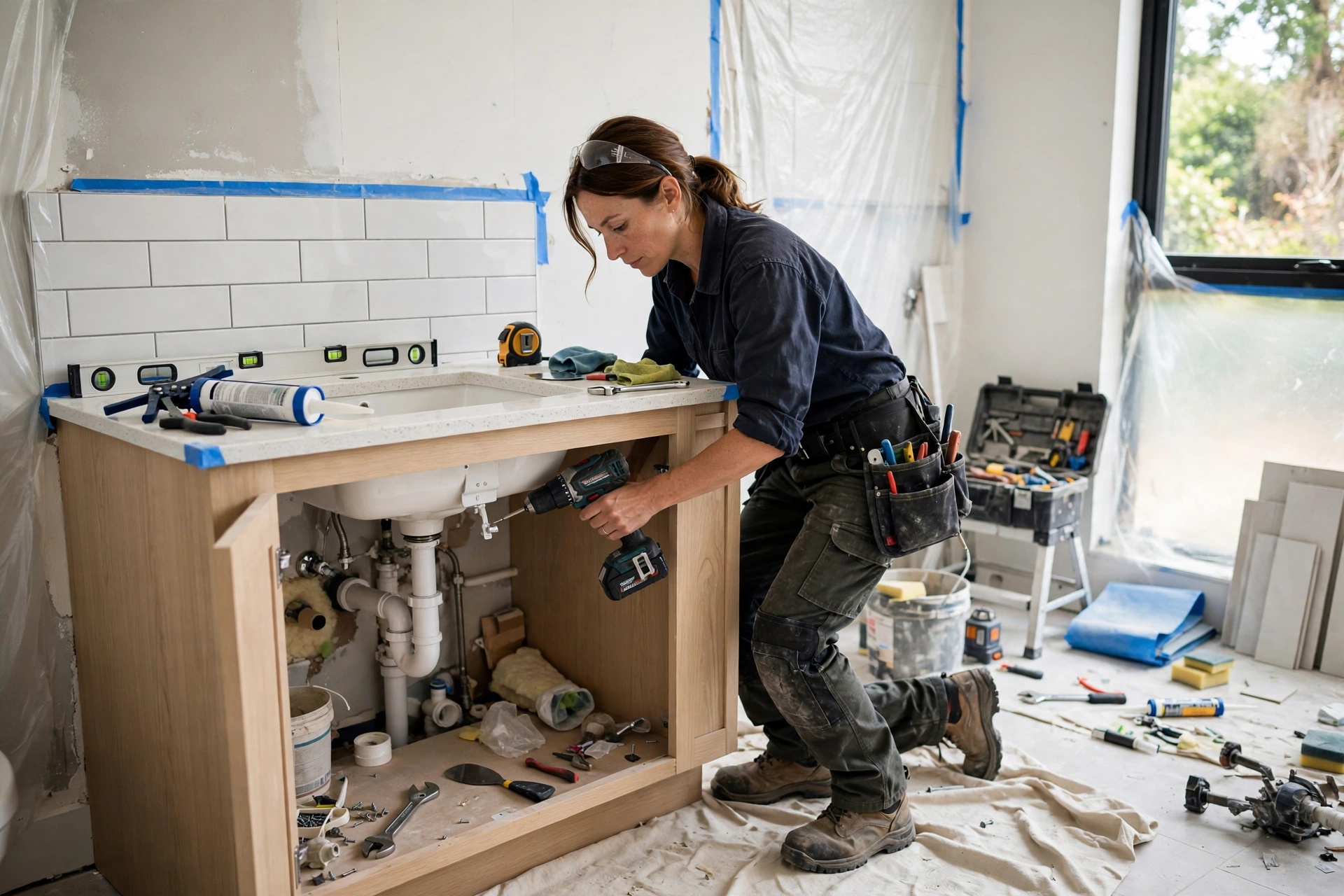
A bathroom refit touches plumbing, tiling, electrics, and joinery, often in a small room with little room for error. Choosing a bathroom fitter near you is therefore about more than finding someone local. It is about finding someone who plans the sequence carefully, explains the details, and leaves you with a bathroom that works well long after the last tile is fitted.
Define the scope before you invite quotes
Start by deciding what is changing. Are you replacing a suite in the same positions, moving a bath or shower, changing a layout, or adding features such as a walk-in shower? Note anything you want to keep, such as existing tiles or a bath, and anything that must change, such as a leaking pipe or poor ventilation.
A clear scope helps fitters quote fairly. If one fitter prices a like-for-like replacement and another prices a full reconfiguration with moved plumbing, the totals will differ for good reason, and comparing them directly will be misleading.
Finding fitters and checking past work
Local fitters are practical for bathroom work, because they need to visit, measure, and return for snagging. Recommendations from friends, neighbours, or local trades directories can be a good starting point, but check the work itself rather than relying on a single recommendation.
Ask to see photographs of completed bathrooms, ideally with a note of what was done in each one. Look for tidy tiling, neat sealant lines, well-fitted sanitaryware, and finishes around pipes and edges. Read reviews for patterns around communication, tidiness, and how problems were handled, rather than focusing on one very positive or very negative comment.
Shortlist two or three fitters for a visit. That gives you comparison without a long process that repeats the same questions many times.
Questions about plumbing, waterproofing and ventilation
These three areas decide whether a bathroom lasts. Ask how the fitter will waterproof a shower area, how joints and corners will be sealed, and how the floor and walls will be prepared before tiling. Ask about plumbing routes if a bath, shower, or basin is moving, and whether any existing pipework needs attention.
Ventilation is often overlooked. Ask how steam will be extracted, whether an existing fan is adequate, and where a new fan would vent to. Good ventilation helps prevent damp and mould, and it protects paint, grout, and woodwork over time.
Also ask who will carry out electrical work, such as lighting or a heated towel rail, and whether that work is included in the quote. Electrical work in a bathroom needs particular care, and it should not be treated as an afterthought.
Understanding the sequence of work
A bathroom refit usually follows a sequence: strip-out, first-fix plumbing and electrics, preparation of walls and floors, waterproofing, tiling, second-fix fitting of sanitaryware, and finishing touches. Understanding that order helps you see why some stages cannot be rushed.
For example, tiling should not start before waterproofing and preparation are complete, and a worktop or glass screen should not be templated until the relevant surfaces are finished. Ask your fitter to explain the sequence for your bathroom and what could cause delay, such as a delivery or a hidden problem found during strip-out.
Quotes, payment stages and written agreement
Compare quotes line by line. Check whether each quote includes strip-out and disposal, plumbing, electrics, tiling, sanitaryware, shower enclosure or screen, flooring, painting or finishing, and sealant. A quote that omits disposal or tiling may look cheaper at first, but the final cost may be similar once those items are added.
Ask which products are included and whether you can change them, and get any change priced in writing before work starts. Payment in stages, linked to completed work, is a common and fair arrangement. Be cautious about a very large upfront payment with no stage plan, and ask for an explanation if that is proposed.
Agree the work in writing before starting. That agreement should cover layout, products, plumbing and electrical work, tiling, ventilation, disposal, expected timescale, payment stages, and how snags will be handled. Keep copies of quotes, drawings, and messages about changes.
Checking work as it progresses
Do not wait until the end to check the work. Agree checkpoints with your fitter, such as after waterproofing, after tiling, and before final fitting. At each stage, check that lines are straight, tiles are level, sealant is neat, and fittings are secure.
Test the bathroom before final payment: run showers and taps, check drainage, test lights and fans, and look for leaks around baths, showers, and basins. A good fitter will welcome that check and will address snags promptly, rather than rushing to finish.
Choosing a bathroom fitter near you well takes a little time at the start, but it pays off in a bathroom that is planned properly, fitted in the right order, and easy to maintain. Define your scope, check real past work, ask about plumbing, waterproofing and ventilation, compare written quotes fairly, and check the work at each stage. That approach gives you the best chance of a refit you will be happy with for years.