
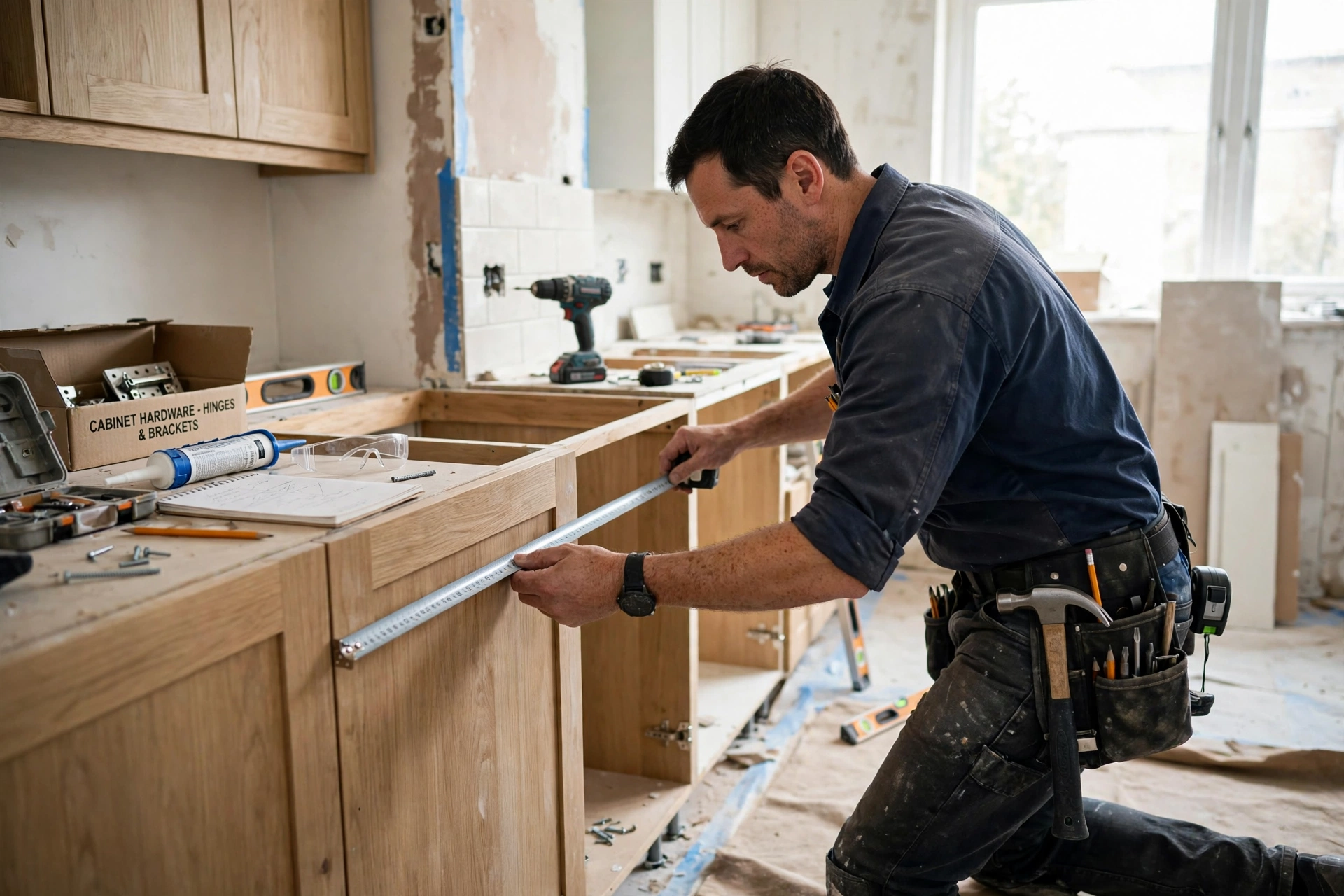
Searching for kitchen fitters near you is often the easy part. Choosing the right one is harder, because a kitchen fit involves measuring, plumbing, electrics, tiling, and joinery, all in a room you use every day. A careful shortlist and clear questions will help you find a fitter who understands your kitchen, communicates well, and completes the work to a standard you can check.
Start with a clear brief before you search
Before you contact anyone, write down what you want. Are you replacing units and worktops only, or are you changing the layout, moving plumbing, or adding new appliances? Note the size of the room, any awkward corners or sloping ceilings, and whether you want to keep any existing features.
A clear brief helps fitters give realistic advice and comparable quotes. If one fitter is pricing a simple replacement and another is pricing a full reconfiguration, their quotes will not be comparable, and the cheaper option may not include the work you actually need.
How to shortlist local fitters
Local knowledge matters for kitchens, because fitters need to visit, measure, and return if adjustments are needed. Ask friends or neighbours for recommendations, and look for fitters who show recent kitchen work with photographs and details about the scope, not just finished shots.
When you look at reviews, read them for patterns rather than single comments. Look for mentions of communication, tidiness, punctuality, and how problems were handled. A fitter who explains delays and resolves snags promptly is often a safer choice than one who only shows perfect projects.
Shortlist two or three fitters to visit. That gives you enough comparison without turning the process into a long series of visits that all cover the same ground.
What to ask at the first visit
A first visit should be a conversation, not a sales pitch. Ask how the fitter will measure the room, how they handle uneven walls or floors, and what happens if a unit does not fit as planned. Ask who will carry out the plumbing and electrical work, and whether those trades are included in the quote or arranged separately.
Ask to see examples of similar kitchens, and ask about lead times for units, worktops, and appliances. A good fitter will explain what could cause delay, such as a worktop template that can only be made once units are fitted, rather than promising an exact finish date with no caveats.
Also ask about insurance and guarantees. You want to know, in general terms, what is covered if something goes wrong during fitting, and what guarantee applies to the fitting work itself, separate from any manufacturer guarantee on units or appliances.
Comparing quotes fairly
Compare quotes line by line, not just by the total. Check whether each quote includes removal of the old kitchen, disposal, plumbing and electrical work, tiling, worktop templating and fitting, and finishing touches such as sealant and trims. A quote that leaves out disposal or tiling will look cheaper at first, but the final cost may be similar.
Be wary of a quote that is vague about materials. Ask which units, hinges, worktop material, and sink are included, and whether the price allows for any changes you might make. If you change a worktop or appliance after the quote, ask for the revised price in writing before the work starts.
Payment stages should also be clear. It is common to pay in stages as work progresses, rather than paying the full amount upfront. If a fitter asks for a very large upfront payment with no clear stage plan, ask why and consider whether that is acceptable to you.
Red flags worth taking seriously
Some warning signs are worth pausing over. Pressure to decide on the spot, a refusal to provide a written quote, no clear address or contact details, and a reluctance to show previous work are all reasons to step back. So is a quote that is far lower than others with no explanation of what has been left out.
A fitter who dismisses questions about plumbing, electrics, or ventilation, or who suggests major changes without explaining them, may not be planning the work carefully. A kitchen that looks good on day one still needs sound plumbing, safe electrics, and proper ventilation to work well over time.
Agreeing the work in writing
Before work starts, agree the scope in writing. That should include the layout, units and worktops, appliances, plumbing and electrical work, tiling, disposal, start and finish expectations, payment stages, and what happens if extra work is needed. Keep a copy of the quote, any drawings, and any messages about changes.
Agree how you will check progress. For example, you might check that units are level, doors close evenly, worktops are sealed, and appliances are tested before final payment. A written agreement protects both sides and makes it easier to resolve any snag without argument.
Finding kitchen fitters near you is not just about proximity. It is about a clear brief, a shortlist based on real work and communication, fair comparison of written quotes, and an agreement that covers the details. Take time at the start, and you are more likely to end up with a kitchen that is fitted well and pleasant to use.