
A blocked drain rarely arrives at a convenient time. Water drains slowly, a sink starts to gurgle, or an unpleasant smell lingers after use. A drain unblocker can help in some cases, but the right approach depends on the cause, and working in the wrong order can make the problem worse. This guide works through the options from the simplest checks to the point where a professional is the safer choice.
What kind of blockage are you dealing with?
Before you reach for any tool, it helps to notice where the problem is. If only one sink or bath is slow, the blockage is often close to that outlet, for example hair, soap residue, or food debris caught in the trap. If several outlets are affected at once, or water comes up in a bath when a toilet is flushed, the problem may be further along the pipework. That difference matters, because a local blockage is often manageable at home, while a wider problem usually needs proper inspection.
Also notice what has changed. A gradual slowing over weeks points to a build-up. A sudden blockage after something was dropped down a drain points to an object caught in the pipe. Trying to force an object further along rarely helps.
Start with the simplest checks
Remove any visible debris from a plug hole or shower drain cover, and clean the cover itself. In a kitchen sink, check whether the problem is in the trap, the curved section of pipe under the sink. Place a bucket underneath, unscrew the trap carefully if you are confident doing so, and clear it out before refitting it firmly. Keep towels nearby, and do not force a fitting that feels stuck.
If a bath or shower is slow, hair is a common cause. A small drain cover or strainer can catch hair before it enters the pipe, and cleaning it regularly prevents many repeat blockages.
Using a plunger correctly
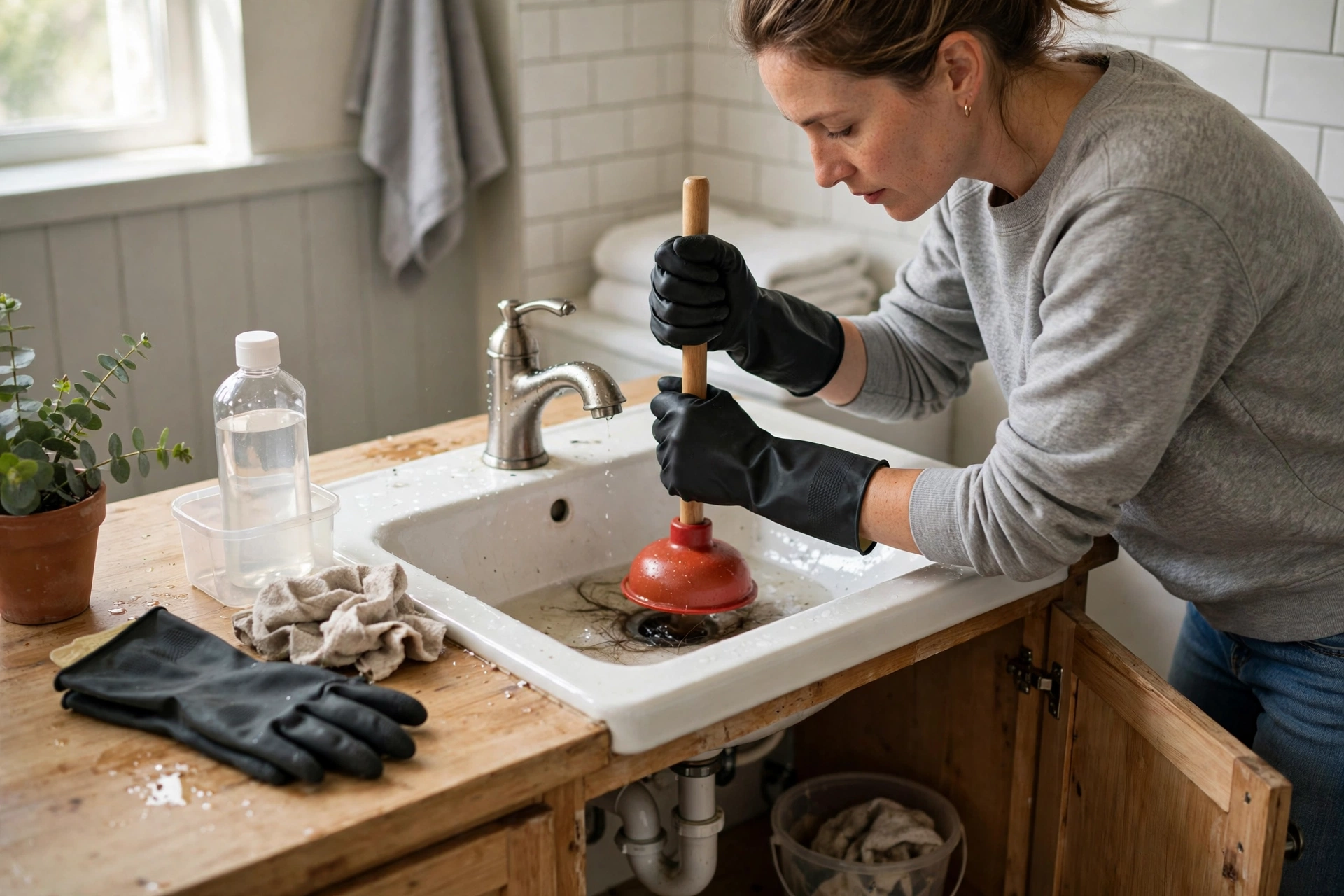
A plunger is often the most useful first tool for a drain unblocker, provided it is used properly. Choose a plunger that fits the outlet well, and make sure there is enough water in the sink or bath to cover the cup. That water helps create the seal that makes plunging work.
Press down gently at first to remove air, then plunge with steady, even strokes. The aim is to move the blockage back and forth so it loosens, not to force it hard in one direction. After several strokes, lift the plunger and see whether water starts to drain. If it does, run clean water through for a short while to flush loosened debris away.
If you have a double sink, block the second outlet with a damp cloth while you plunge the first, otherwise pressure escapes through the other side.
When a drain snake makes sense
If plunging and cleaning the trap have not helped, a drain snake, also called a drain auger, may reach a blockage further along the pipe. Feed it in slowly and turn it gently as directed for the tool you are using. Do not force it around a sharp bend, and stop if it feels firmly stuck. Pulling hard can damage a pipe or break the tool inside it.
A drain snake is best for soft build-ups and small obstructions near the outlet. It is not the right tool for every problem, and it cannot fix a collapsed pipe, tree roots in an outside drain, or a blockage caused by a structural fault.
About chemical drain unblockers
Chemical drain unblockers are sold for many household drains, but they need care. Always read the instructions for the product, wear gloves, protect your eyes, and make sure the room is well ventilated. Never mix different drain products, and never mix a drain product with bleach or another cleaner, as this can create harmful fumes.
Chemical products also have limits. They may soften some build-ups, but they do not remove solid objects, and repeated use can be harsh on older pipework and on septic systems. If a product has not worked after the time stated on its instructions, do not simply add another product on top of it. At that point, a mechanical method or professional help is safer.
What not to do
Do not pour boiling water into a toilet, and be cautious with very hot water in plastic pipes and around ceramic fittings, which can crack with sudden temperature change. Do not use a high-pressure jet or a tool you are not confident with on a drain you cannot see. Do not ignore a smell of sewage or water appearing where it should not, as that can point to a problem beyond a simple blockage.
If you are renting, check your tenancy agreement before carrying out work beyond basic cleaning and plunging, as some repairs are the landlord’s responsibility.
When to call a professional
Call a professional plumber if more than one outlet is affected, if water is backing up, if the blockage returns quickly after clearing, or if you suspect a damaged pipe, a shared drain, or an outside drain problem. A professional can inspect the pipe, identify the cause, and clear it with the right equipment, rather than guessing.
It is also worth seeking help early if you have already tried a chemical product, because the plumber needs to know what has been used in the drain for safety.
A blocked drain is frustrating, but a calm, step-by-step approach usually gives the best result. Start simple, use a plunger correctly, consider a drain snake only for a suitable local blockage, treat chemicals with caution, and call a professional when the problem is wider, repeated, or unclear. That order protects your pipes and saves you from turning a small blockage into a larger repair.