
Introduction
Learning how to wash a wool sweater correctly can help it stay soft, clean, and well-shaped for many years. Wool is different from everyday fabrics such as cotton and polyester. Its natural fibers can react badly to heat, strong detergent, rough movement, and sudden changes in water temperature.
Incorrect washing may cause a wool sweater to shrink, stretch, fade, or become felted. Felting happens when the fibers lock together, making the fabric thicker, smaller, and less flexible. Hanging a wet sweater can also pull it out of shape because wet wool becomes heavy.
Fortunately, most washable wool sweaters can be cleaned safely at home. The key is to check the care label, use a gentle detergent, handle the garment carefully, and dry it flat. Depending on the instructions, you can either hand-wash the sweater or use a suitable washing-machine cycle.
Read the Care Label Before Washing
Always check the care label before putting a wool sweater in water. The label contains instructions chosen for that garment’s exact material, color, construction, and finish. These directions should take priority over general washing advice.
A symbol showing a hand inside a basin means the sweater should be hand-washed. A basin with a temperature such as 30°C usually means machine washing is allowed at or below that temperature. Lines beneath the basin indicate that a gentle cycle is required. A crossed-out basin means the garment should not be washed in water.
A circle often relates to professional dry cleaning, while the words “dry clean only” mean the sweater should be taken to a qualified cleaner. A crossed-out tumble-dryer symbol means it should not be placed in a dryer. A square containing a horizontal line tells you to dry the garment flat.
Some sweaters contain wool mixed with cotton, acrylic, silk, or other fibers. Even with a blend, follow the care label rather than assuming that the sweater can be washed like ordinary clothing.
What You Need to Wash a Wool Sweater Safely
Before you begin, gather a wool-safe liquid detergent, a clean sink or basin, cool or lukewarm water, and two clean towels. You will also need a clean, flat surface where the sweater can dry.
If the care label allows machine washing, a mesh laundry bag is useful. It protects the sweater from unnecessary friction and prevents sleeves from becoming wrapped around other garments. Avoid powdered detergents that may not dissolve fully, as well as bleach and heavy-duty laundry products.
Prepare the Sweater for Washing
Empty the pockets and remove any detachable belts, pins, or decorations. Turn the sweater inside out to reduce rubbing on the visible surface. This can help protect its color and limit pilling.
Check the garment for stains, loose threads, open seams, and small holes. Repair serious damage before washing because movement and water may make it worse. Treat visible stains gently before cleaning the whole sweater.
Wash light and dark colors separately. If you are uncertain whether the dye is stable, test a hidden area with a clean, damp white cloth. If color transfers to the cloth, wash the sweater alone or consider professional cleaning.
How to Hand-Wash a Wool Sweater
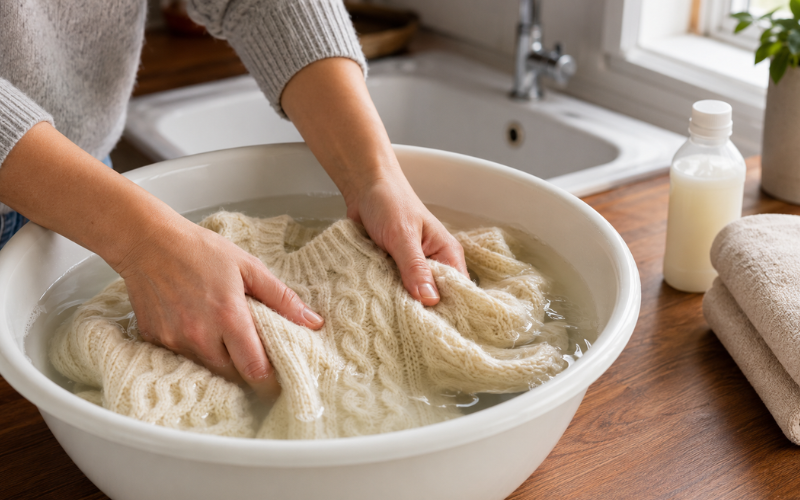
Hand washing is often the safest answer when deciding how to wash a wool sweater at home. Begin by cleaning the sink or basin so that no soap, grease, or cleaning-product residue remains. Fill it with enough cool or lukewarm water to cover the sweater.
Add a small amount of wool-safe detergent according to the product directions. Using too much detergent does not improve cleaning and can make rinsing more difficult.
Lower the sweater into the water and press it down gently. Move it slowly through the water without rubbing, scrubbing, or twisting it. Allow it to soak for about 10 minutes, unless the detergent label recommends a different time. A long soak is usually unnecessary.
Drain the dirty water while supporting the sweater. Refill the basin with water at a similar temperature and gently press the garment to release the detergent. Repeat if needed until the water is clear. A sudden temperature change can stress wool fibers, so avoid moving the sweater directly from warm water into very cold water.
How to Wash a Wool Sweater in a Washing Machine
Only use a washing machine when the care label clearly permits it. Turn the sweater inside out and place it in a mesh laundry bag. Select the wool, hand-wash, or delicate cycle, using cold water and the lowest practical spin speed.
Add a small amount of wool-safe liquid detergent. Do not use a standard heavy-duty detergent, fabric bleach, or a product containing strong enzymes unless its label specifically says it is suitable for wool.
Wash the sweater alone or with a few lightweight, similar-colored items. Avoid including jeans, towels, garments with zippers, or other heavy and rough materials. These can create friction and place stress on the wool.
Remove the sweater as soon as the cycle ends. Leaving damp wool twisted inside the machine may create wrinkles, unpleasant odors, and changes in shape.
Treating Stains Without Damaging Wool
Treat stains as soon as practical, but do not scrub them. Use a clean cloth to blot fresh liquid from the outside toward the center of the mark. Rubbing can push the stain deeper and roughen the wool fibers.
Apply a small amount of diluted wool-safe detergent to the stained area. Let it sit briefly, then blot or press gently. Test any cleaning product on a hidden part of the sweater first.
For oily marks, absorb as much as possible with a clean cloth before using detergent. Food, makeup, coffee, and other drink stains should also be blotted rather than rubbed. Avoid chlorine bleach, strong stain removers, hot water, and stiff brushes. If a stain is old, large, or difficult to identify, professional cleaning may be the safer choice.
Remove Excess Water Without Stretching the Sweater
After rinsing, gather the sweater with both hands and lift it while supporting its full weight. Press it gently against the basin to release some water. Do not twist or wring it.
Lay the sweater on a clean towel, arrange it roughly into shape, and roll the towel from one end. Press the roll gently so that the towel absorbs moisture. Unroll it and repeat the process with a dry towel if the sweater is still very wet.
Reshape and Dry the Sweater Flat
Place the damp sweater on a dry towel or a breathable flat drying rack. Smooth it carefully and restore its original shape. Straighten the sleeves, align the shoulder seams, and adjust the neckline, cuffs, sides, and hem.
If you know the sweater’s original measurements, use them as a guide. Avoid pulling one area too strongly, as this can make the garment uneven.
Leave the sweater in a well-ventilated place away from direct sunlight, radiators, heaters, and other strong heat sources. Turn it over or replace the damp towel during drying if necessary.
Never hang a wet wool sweater on a clothes hanger or washing line. The weight of the water can stretch the shoulders, sleeves, and body. Do not tumble-dry it unless the care label specifically allows this method.
Common Wool-Washing Mistakes to Avoid
Hot water, strong detergent, and rough movement are among the main causes of damaged wool. Using too much detergent can also leave residue that makes the sweater feel stiff or uncomfortable.
Do not scrub, twist, or wring the garment. Avoid changing the water temperature suddenly, using a high-speed spin cycle, or washing wool with heavy clothing. These actions increase friction and may lead to shrinking or felting.
Tumble-drying without label approval is especially risky because heat and movement can reduce the sweater’s size quickly. Hanging the garment while wet may cause the opposite problem by stretching it. Gentle washing followed by flat drying offers the safest balance.
What to Do If a Wool Sweater Shrinks or Stretches
A slightly shrunken sweater may sometimes be improved while it is damp. Soak it briefly in lukewarm water with a small amount of wool-safe wash, then remove excess water using the towel method. Place it flat and gradually ease it toward its original measurements. Work slowly and avoid pulling hard.
If the shoulders, sleeves, or hem have stretched, dampen the affected area and guide it gently back into shape. Allow the sweater to dry flat in the corrected position.
These methods may help with minor changes, but they cannot guarantee full recovery. Severely felted wool has fibers that have become tightly locked together, so stretching may not restore its original texture or size. Valuable, delicate, or badly damaged sweaters should be taken to a textile-care professional.
How Often Wool Sweaters Should Be Washed
Wool sweaters usually do not need to be washed after every wear. The right schedule depends on body contact, stains, odor, activity level, and how long the garment was worn.
Air the sweater after wearing it and wash it when it is visibly dirty or no longer smells fresh. Wearing a clean shirt or base layer underneath can reduce direct contact with sweat and skin oils. Small marks can often be spot-cleaned, avoiding an unnecessary full wash.
Keeping a Wool Sweater Fresh Between Washes
After wearing the sweater, lay it flat or place it over a chair in a well-ventilated room for a short time. Make sure it is completely dry before putting it away.
Remove lint and hair gently with a soft clothing brush or lint roller. If pills appear, use a wool comb or fabric shaver carefully. Apply very little pressure and keep the tool away from loose threads, seams, and thin areas.
Fold wool sweaters instead of hanging them, as long-term hanging can create shoulder bumps and stretch the fabric. Store clean sweaters in a dry, breathable space. For seasonal storage, clean the garment first because food marks and body oils can attract fabric pests.
Conclusion
Knowing how to wash a wool sweater is mainly about using cool water, a suitable detergent, and gentle handling. Start by reading the care label, choose hand washing or an approved machine cycle, and avoid heat, rubbing, twisting, and sudden temperature changes.
After washing, remove moisture with clean towels, reshape the sweater, and allow it to dry flat. With this simple routine, you can reduce the risk of shrinking, stretching, fading, and fabric damage while keeping your wool sweater soft and comfortable.
FAQs
1. Can I wash a wool sweater with regular detergent?
Regular detergent may be too strong for natural wool fibers. A liquid detergent marked as safe for wool or delicate garments is a better choice. Always follow both the sweater’s care label and the detergent directions.
2. Can I wash a wool sweater in cold water?
Yes, cold water is generally suitable for a washable wool sweater. More importantly, keep the water temperature consistent throughout the process. Sudden changes between warm and cold water may place stress on the fibers.
3. How long does a wool sweater take to dry flat?
A wool sweater commonly needs between 24 and 48 hours to dry, although thick garments may take longer. Room temperature, airflow, humidity, and the amount of water left in the sweater will affect the drying time.
4. Can I put a wool sweater in the dryer for a few minutes?
Only do so if the care label clearly permits tumble-drying. Even a short period of heat and movement can shrink or felt some wool sweaters. Flat drying is the safer option for most garments.