
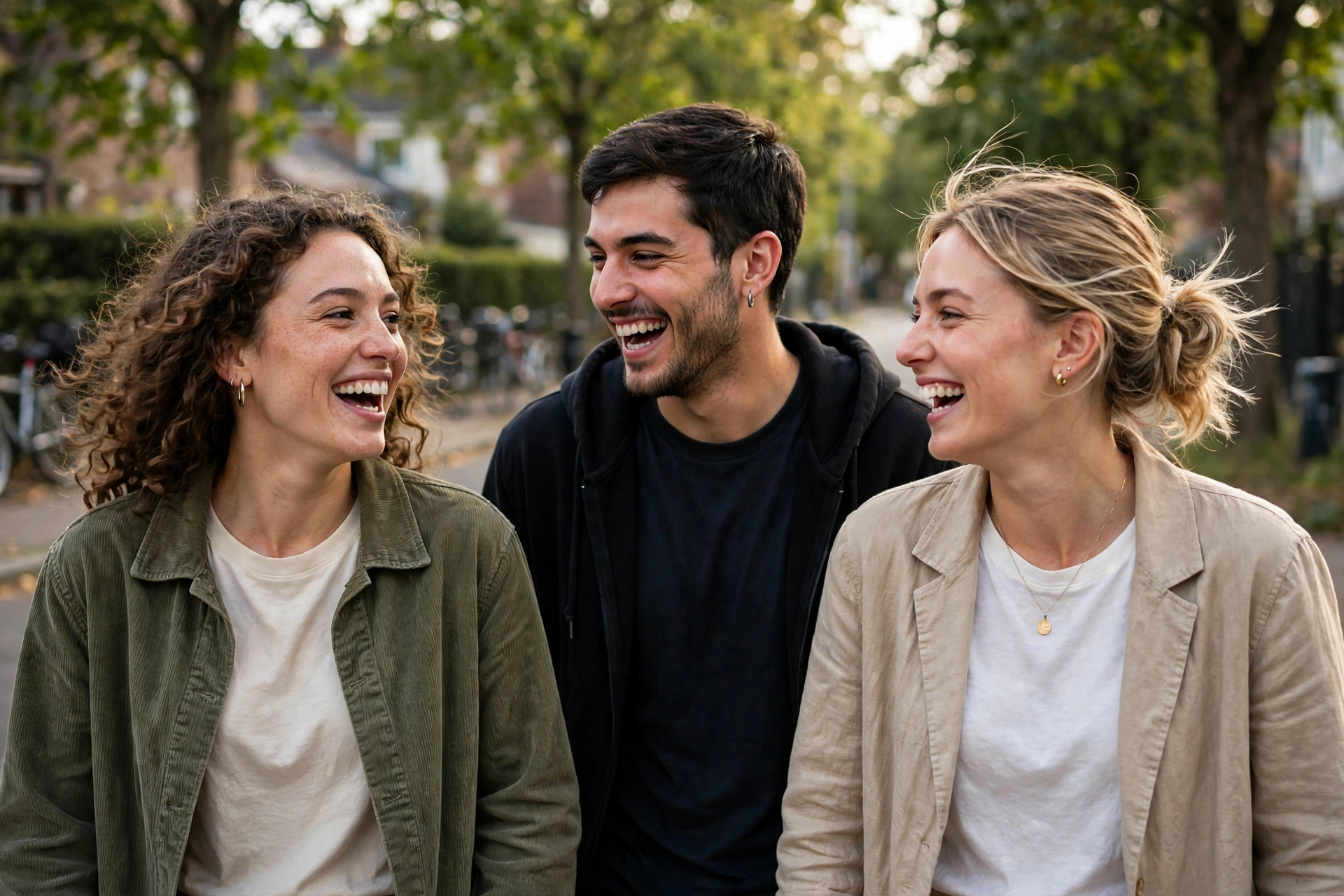
Spontaneity often arrives quietly. It is the decision to take a different turning on a familiar walk, to ring a friend you have not spoken to for weeks, or to cook something new with whatever is already in the cupboard. Nothing about the moment is grand or dramatic, and yet afterwards the day feels a little brighter, a little more your own. Spontaneity is not about throwing away every plan or living without any routine at all. It is about leaving a small gap in the day for something unplanned, and then having the courage to step into it when it appears.
Many of us know this feeling from memory rather than from recent experience. We can remember a summer evening that was never planned, a conversation that went on longer than expected, or a rainy afternoon that turned into an unexpected adventure. Those memories tend to stay with us, not because everything went perfectly, but because they felt alive. This article looks at spontaneity in that everyday sense. It explores what spontaneity really means, why it so easily slips away, and how to welcome more of it back in ways that are gentle, affordable, and kind to yourself and the people around you.
What Spontaneity Really Means
Spontaneity is often misunderstood. We tend to picture someone who is always ready for anything, who books a last-minute trip or says yes to every invitation, and who never seems to worry about the consequences. Real spontaneity is usually much quieter than that. It is the willingness to respond to the moment in front of you, rather than always following the plan you made earlier. It can be as small as choosing to sit in the garden for ten minutes instead of going straight back indoors, or deciding to try a new route home simply because the evening light looks beautiful.
At its heart, spontaneity is about paying attention. When we are fully present, we notice opportunities that we might otherwise walk straight past. We notice that a friend looks as though they could do with a cup of tea and a chat, that the local park is especially lovely today, or that we feel like dancing in the kitchen while dinner is cooking. Spontaneity grows from that noticing. It is less about being impulsive and more about being open. An impulsive choice is often made in a rush, without thinking about how it will affect us or anyone else. A spontaneous choice can still be thoughtful. It can be a small, deliberate yes to something good that was not in the diary, made with full awareness of what else is going on in the day.
It also helps to remember that spontaneity looks different for different people. For one person, it might mean striking up a conversation with a stranger at a community event. For another, it might mean quietly changing their own plans, reading in a different room, or spending an hour on a hobby they had almost forgotten. There is no single right version. Spontaneity is personal, and it works best when it fits the life you actually have, rather than an idea of a life you think you ought to be living.
Why So Many of Us Have Lost the Habit
If spontaneity sounds appealing but also slightly out of reach, there is usually a good reason. Modern life asks a great deal of our time and attention. Work, family responsibilities, messages, appointments, and household jobs fill the day, and by the evening there can be very little energy left for anything unplanned. When every hour has a purpose, an unplanned moment can start to feel like an interruption, or even like a waste of time. We begin to value efficiency over enjoyment, and we forget that a day does not have to be perfectly productive to be a good day.
There is also a quiet fear that can hold us back. A spontaneous choice carries a small amount of uncertainty, and uncertainty can feel uncomfortable. We might worry that we will look foolish, that we will disturb someone, that we will spend money we should not spend, or that the plan will not work out. It can feel safer to stay with what is familiar, even when the familiar has become a little dull. Over time, that caution can become a habit. We stop noticing the small invitations in the day because we have trained ourselves to keep moving, to keep the schedule intact, and to postpone anything that does not have a clear reason behind it.
Tiredness plays a part too. When we are tired, the easiest choice is usually the one we have made before. We watch the same programmes, eat the same meals, and take the same walk, not because we love them more than anything else, but because they ask very little of us. There is nothing wrong with comfort and familiarity. They help us rest and recover. The difficulty comes when comfort becomes the only option, and we lose the habit of trying something even slightly different. Spontaneity does not need to compete with rest. It can sit alongside it, in a small and manageable way, and it often brings a surprising amount of energy with it.
The Quiet Joy of an Unplanned Afternoon
Some of the happiest days are the ones that were never meant to be special. An unplanned afternoon has a particular kind of freedom to it. There is no timetable to keep, no list to complete, and no expectation that every minute should lead somewhere. That freedom can feel strange at first, especially if we are used to filling every gap. Yet it is often in those unfilled moments that we notice things we would otherwise miss. We hear birdsong we had tuned out, we notice how the light changes across a room, or we remember a song we have not heard for years and find ourselves humming along.
An unplanned afternoon does not need to be long to matter. An hour is enough, and sometimes even twenty minutes can change the shape of a day. The joy often comes from following a small curiosity rather than a grand plan. You might wander into a charity shop you have passed a hundred times, sit on a bench and watch the world go by, or take a notebook to a café and write down whatever comes to mind. None of these things needs to be impressive. Their value lies in the fact that you chose them in the moment, because they appealed to you then and there.
There is a gentle connection here with time spent outdoors and with paying attention to the present moment. Mind’s ideas for using nature to support wellbeing include simple, unplanned pleasures such as taking a walk in a green space, noticing what you can see, hear, and touch, and bringing nature indoors on days when going out is harder. A spontaneous walk, a few minutes watching wildlife from a window, or a picnic eaten somewhere new can all count. The point is not to turn nature into another task. It is to let a small, unplanned moment outdoors remind you that the day holds more than the list you wrote that morning.
Spontaneity at Home, Without Spending a Fortune
Spontaneity does not need to cost anything, and some of the loveliest spontaneous moments happen at home. A different meal made from what is already in the fridge can feel like a small adventure. Rearranging a corner of a room, lighting a candle you usually save for special occasions, or reading a book in the bath instead of scrolling on a phone can all break the pattern of an ordinary evening. These are not dramatic changes, but they are choices, made in the moment, that say this evening does not have to be exactly like yesterday.
Music is a wonderful starting point. Put on a song you loved years ago and let yourself listen properly, without doing three other things at the same time. Cook with a child or a partner and let them choose an ingredient, even if the result is slightly unusual. Clear the table after dinner and play a board game that has been sitting in a cupboard. Write a short note to someone you care about, just because you thought of them. Each of these moments is small, but together they build a feeling that home is not only a place for chores and routines. It can also be a place for play, curiosity, and gentle surprise.
It can help to keep a few simple things ready for such moments, without turning readiness into another project. A blanket by the door for a sudden decision to sit outside, a sketchbook left open on the table, or a list of films you have been meaning to watch can all make a spontaneous choice easier when the moment arrives. The aim is to lower the effort involved, so that saying yes feels simple. If spontaneity requires a great deal of preparation, it stops feeling spontaneous. Keep it light, keep it local, and let the moment itself do most of the work.
Spontaneity With the People You Love
Spontaneity becomes even richer when it is shared. A surprise visit, an unexpected phone call, or a last-minute invitation for a walk can mean a great deal to someone who was not expecting it. We often assume that the people closest to us know how much we care, and in many cases they do, but an unplanned gesture can say it in a fresh way. It shows that you were thinking of them in that moment, not simply remembering a birthday or an anniversary because the calendar reminded you.
Shared spontaneity does not need to be elaborate. It might mean suggesting a different café on the way home, stopping to watch a street musician for a few minutes, or deciding together to have breakfast for dinner. It might mean saying yes to a child’s request to build a den in the living room, even though tidying up will take a little longer afterwards. It might mean sending a voice message instead of a text, so that a friend can hear the smile in your voice. These small, shared surprises build connection because they are personal. They come from noticing what the other person might enjoy, and acting on it straight away, rather than filing the idea away for another time.
It is also worth remembering that spontaneity with other people works best when it respects their needs as well. A surprise should feel kind, not demanding. If a friend is tired, a quiet, unplanned cup of tea may be far more welcome than a noisy outing. If a family member has had a difficult day, the most spontaneous thing you can do might be to offer help without being asked. Good spontaneity listens first. It pays attention to how the other person is feeling, and it leaves room for them to say no, or to suggest something else, without any awkwardness. That generosity is what turns a spontaneous moment into a memory that both people treasure.
When Spontaneity Feels Hard — and How to Begin Gently
For some people, spontaneity does not come easily, and that is completely understandable. If you are someone who finds comfort in routine, who likes to know what is happening next, or who feels anxious when plans change, the idea of being more spontaneous can feel more stressful than joyful. That does not mean spontaneity is not for you. It means that a gentler approach will suit you better. You do not need to become a different person. You only need to make a little more room for the unexpected, at a pace that feels safe.
A helpful way to begin is to choose one small, low-risk change and try it once. Take a different street on your usual walk, try a new flavour of tea, or read a chapter of a book you would not normally choose. Notice how it feels afterwards, without judging yourself. If it felt enjoyable, you might try another small change another day. If it felt uncomfortable, that is useful information too. You can choose something even smaller next time, or you can return to your routine and try again when you feel more rested. Spontaneity is not a test, and there is no prize for doing the most daring thing. The goal is to feel a little more alive and a little more connected to your own choices, not to prove anything to anyone else.
It can also help to separate spontaneity from pressure. Social media can make spontaneity look like a constant stream of exciting trips, parties, and adventures, and that image can make ordinary life feel dull by comparison. Real spontaneity is rarely photogenic in that way. It is often quiet, private, and a little untidy. A spontaneous afternoon might involve getting slightly lost, changing your mind halfway through, or deciding that the original idea was not as enjoyable as you hoped. All of that is normal. The value lies in having tried, in having listened to yourself in the moment, and in having given the day a chance to be different. If a spontaneous choice does not work out, you can simply return to what you know, a little wiser and no worse off.
Keeping Room for Surprise in a Busy Week
The hardest part of spontaneity is often not the moment itself, but making room for it in the first place. A week that is planned down to the last detail leaves no space for surprise, however much we might want it. One gentle solution is to protect a small amount of unplanned time, without filling it in advance. This might be an hour on a Saturday morning, a free evening after work, or even the gap between two appointments. Treat that time as belonging to the future version of you, the one who will know, when the moment arrives, what would feel good then. It is not wasted time. It is breathing space, and breathing space has a value of its own.
Within that protected time, it helps to have a light starting point rather than a blank page. You might keep a short mental list of things you enjoy but rarely make time for, such as visiting a local market, trying a new recipe, calling an old friend, or exploring a nearby village. When the free moment comes, you can choose from that list, or you can ignore it completely and follow whatever catches your attention instead. Either way, you have made spontaneity easier without turning it into another obligation. The list is there to help, not to control.
This balance between routine and surprise is reflected in wider advice about looking after our wellbeing. The NHS five steps to mental wellbeing include connecting with other people, being physically active, learning new skills, helping others, and paying attention to the present moment. Spontaneity can touch each of those steps in a natural way. A spontaneous walk with a friend, a new skill tried on a whim, a kind act offered without planning, or a few minutes spent truly noticing the world around you can all be spontaneous and supportive at the same time. This article is general information only and is not medical advice. If low mood, anxiety, or other difficulties persist, speaking to a GP or another trusted health professional is a sensible next step.
Frequently Asked Questions
What does spontaneity mean in everyday life?
In everyday life, spontaneity means responding to the moment with openness, rather than always following a fixed plan. It can be as small as taking a different walk, trying a new recipe, ringing a friend without warning, or spending an unplanned hour doing something you enjoy. It is not about being reckless or abandoning all routine. It is about leaving a little room for choice, curiosity, and surprise in an ordinary day.
Do I need to be spontaneous all the time?
No, and trying to be spontaneous all the time would quickly become exhausting. Routine brings comfort, stability, and rest, and those things matter a great deal. Spontaneity works best as a small, regular addition to a settled life, not as a replacement for it. One or two unplanned moments in a week can be enough to make life feel fresher, without making it feel chaotic or uncertain.
What if I like routine?
Liking routine is not a problem, and it does not mean you cannot enjoy spontaneity. You can keep the routines that help you feel calm and organised, and simply leave a small gap for something different. Try changing one tiny detail, such as where you sit, what you eat, or which route you take, and notice how it feels. Gentle, small changes often suit people who love routine far better than sudden, dramatic ones.
Can spontaneity help when I feel low or stuck?
A small, spontaneous change can sometimes lift a low or stuck feeling, especially when it involves fresh air, movement, connection with another person, or trying something new. It is not a treatment for a mental health difficulty, and it will not solve every problem on its own. If you feel low for a while, or if the feeling is getting worse, please consider speaking to a GP, a trusted health professional, or a reputable support service for advice suited to your own situation.
How do I start being more spontaneous without spending money?
Start at home and close to home. Take a walk somewhere new, cook with ingredients you already have, listen to music you have not heard for years, rearrange a small corner of a room, or invite a friend for a walk instead of meeting somewhere that costs money. Keep a simple list of free or low-cost ideas you enjoy, protect a short amount of unplanned time in your week, and choose one small idea when the moment arrives.
Conclusion
Spontaneity does not ask us to change everything about our lives. It asks us to notice the small openings that appear in ordinary days, and to step through one of them now and then with an open heart. A different walk, an unexpected call, a meal cooked on a whim, or an hour left deliberately unplanned can be enough to remind us that life is not only a list of tasks to complete. It is also a series of moments to be lived, noticed, and shared.
If you take one idea from this article, let it be this simple one. Leave a little room for surprise, and be kind to yourself when you try something new. You do not need a perfect plan, a large budget, or a dramatic gesture. You only need a moment, a small amount of curiosity, and the willingness to say yes. Over time, those small, unplanned moments add up. They become the stories you tell, the memories you treasure, and the gentle proof that even in a busy life, there is still room for spontaneity to find you.