
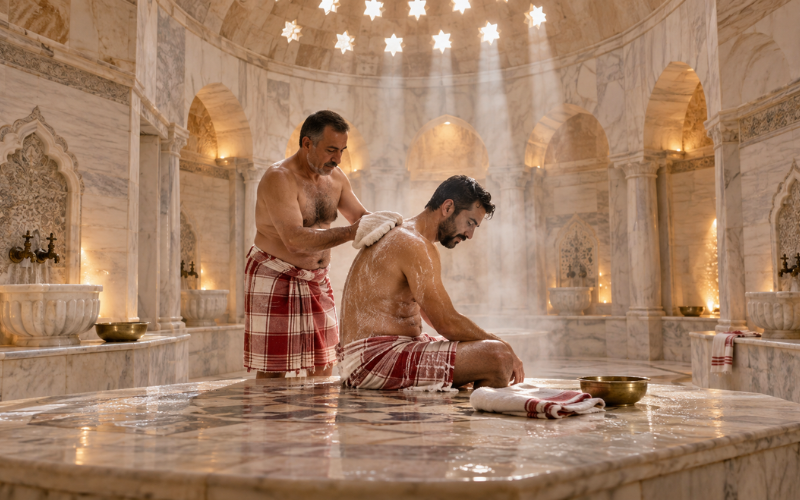
A Turkish bath is a traditional bathing experience built around warmth, water, deep cleansing, and rest. Also known as a hammam or hamam, it is different from taking an ordinary bath or shower. Visitors spend time in heated rooms, wash with water, and may receive a firm body scrub and a soft foam wash from an attendant.
The hammam has been part of Turkish culture for centuries. Historically, it provided a place where people could maintain personal hygiene, meet others, and prepare for important religious or social occasions. Today, Turkish baths range from simple neighborhood facilities to restored historic buildings and luxury hotel spas.
For first-time visitors, the customs can seem unfamiliar. Understanding the history, rooms, equipment, etiquette, possible benefits, and safety precautions can make the experience more comfortable and meaningful.
What a Turkish Bath Is
The word “hammam” refers to a public bathhouse associated with bathing traditions across the Middle East, North Africa, and parts of Europe. In modern Turkish, the usual spelling is “hamam.” The phrase “Turkish bath” commonly describes the Ottoman form of this wider bathing tradition.
A Turkish bath uses heated rooms and warm water to help bathers relax and cleanse their bodies. Unlike a swimming pool, it is not designed for swimming or soaking. People usually sit or lie on warm marble, pour water over themselves from stone basins, and wash with soap.
Traditional hammams often have high domed ceilings, marble surfaces, small glass openings that allow light into the building, and separate areas with different temperatures. Water and humidity make the hot room feel warm and moist, although the experience may not be as misty as a modern steam room.
The History and Cultural Roots of the Hammam
The hammam did not appear from a single source. Its design developed through centuries of contact between different bathing cultures. Roman and Byzantine public baths strongly influenced the arrangement of rooms, heating methods, and communal nature of later bathhouses. The history of the hammam in the Mediterranean can be traced partly to Roman bathing traditions, according to the Metropolitan Museum of Art.
As Islamic societies grew, public baths were adapted to suit local customs and religious ideas about cleanliness. Running water became especially important because washing in clean water was preferred to sitting in shared pools.
Hammams became a major part of urban life under the Ottoman Empire. Many were built near mosques, markets, and residential areas. Some were supported by charitable foundations, and their income could help maintain religious or public buildings.
The Turkish bath was also a social space. People gathered there for conversation, relaxation, and special traditions connected with marriage, birth, and other life events. Women, in particular, could use the hammam as an important place to meet outside the home.
Private bathrooms eventually became common, reducing the daily need for public bathhouses. However, the tradition did not disappear. Some historic hammams continue to operate, while others have been restored as museums, cultural sites, or modern wellness facilities.
What Happens During a Traditional Turkish Bath
A visit normally begins in a reception or changing area. Guests store their clothes and belongings in a locker or private cubicle. They receive a peştemal, which is a thin cotton towel wrapped around the body. Disposable underwear or slippers may also be provided.
The bather then enters a warm or hot room. Time spent in this area allows the body to adjust to the heat. The skin becomes moist, which prepares it for washing and exfoliation. Visitors may sit beside a marble basin and pour water over themselves using a small bowl.
In an attendant-led treatment, the guest lies or sits on the heated central platform. After warming up, an attendant uses a coarse mitt to remove dead skin. The scrub can feel surprisingly firm, so guests should speak up if the pressure is uncomfortable.
The next stage is usually a foam wash. An attendant creates a large amount of lather with soap and a cloth or foam bag, spreads it over the body, and performs a short washing massage. The guest is then rinsed with clean water.
Some packages include hair washing, oil massage, face treatments, or other spa services. These are additions rather than essential parts of the traditional hammam ritual. After bathing, visitors move to a cooler area, dry themselves, drink water, and rest.
Essential Turkish Bath Items and Their Purpose
Several traditional objects shape the Turkish bath experience. The peştemal is a light, quick-drying cotton wrap used for modesty and drying. It is normally worn around the waist or body while moving through shared areas.
A kese is a rough exfoliating mitt. It removes loose dead skin when rubbed over warm, wet skin. Because the material is coarse, it should be used carefully rather than as an everyday washing tool.
The tas is a small bowl used to scoop water from a marble basin and pour it over the body. Traditional examples may be made of metal, while modern bathhouses may use lighter materials.
Soap is central to the washing stage. Olive-oil soap is closely linked with traditional hammam care, although the exact product varies. A special fabric bag may be used to fill the air with foam before the attendant washes the guest.
Traditional raised wooden clogs are known as nalın, while takunya is another term used for wooden bath slippers. Modern hammams usually provide safer rubber or disposable footwear because wet marble can be slippery.
Traditional Hammam Rooms and Layout
A classic hammam guides visitors through rooms with different temperatures. The entrance area, often called the camekân, is used for changing, resting, and cooling down. In historic buildings, this may be a large domed room with seating around its edges.
From there, bathers move through a cooler or warm transition area. This space helps the body adjust gradually rather than moving directly into intense heat.
The main hot room is commonly called the sıcaklık or hararet. At its center is the göbek taşı, meaning “belly stone.” This large heated marble platform is where bathers rest before being scrubbed or washed.
Marble basins line the walls around the room. Visitors mix hot and cold water in these basins and use a tas to rinse themselves. Some historic hammams also contain small private bathing spaces. Many Ottoman buildings were designed as double hammams, with separate sections for men and women.
Turkish Bath Etiquette for First-Time Visitors
Rules differ between bathhouses, so checking the establishment’s policy before arriving is important. Traditional hammams may have separate sections for men and women or operate at different times for each group. Modern facilities sometimes offer mixed or private sessions.
Guests usually keep the lower body covered with a peştemal in shared areas. Full nudity may be discouraged or prohibited, especially in traditional establishments. Some facilities require disposable underwear during attendant-led treatments.
Speak quietly, avoid splashing other people, and do not occupy a basin longer than necessary when the bath is busy. Phones and cameras are generally inappropriate in bathing and changing areas because visitors expect privacy.
Let the attendant know about sensitive skin, injuries, or areas that should not be scrubbed. It is also acceptable to request lighter pressure or stop a treatment.
Tipping customs and service charges vary. Ask whether gratuity is included in the price and whether attendants are usually tipped. Keeping some local currency available can be helpful, but visitors should never assume that every hammam follows the same practice.
Turkish Bath Benefits and Realistic Expectations
A Turkish bath can leave the skin feeling smoother because the kese removes surface layers of dead skin. Washing also removes sweat, oil, and dirt. However, harsh or repeated exfoliation can damage the skin, so stronger scrubbing is not always better.
Warmth may help people feel relaxed and can temporarily ease the feeling of tight muscles. Quiet surroundings, slow bathing, and a period of rest can also support a sense of calm. For many people, the cultural setting makes the experience more memorable than an ordinary spa visit.
These effects should be kept in perspective. A hammam is a bathing and wellness tradition, not a medical treatment. It has not been proven to remove unspecified “toxins,” cure illness, or produce lasting weight loss. Sweating mainly causes the body to lose water, which is replaced after drinking fluids.
Possible Risks and Who Should Be Careful
Heat and humidity can cause dehydration, dizziness, or a temporary fall in blood pressure. Drink water before and after the session, avoid alcohol, and leave the hot room if you feel weak, sick, confused, or unusually uncomfortable.
People with heart problems, unstable blood pressure, fever, active infections, or conditions that affect heat tolerance should seek medical advice before using a Turkish bath. Certain medicines may also change how the body responds to heat.
Pregnant visitors should speak with a healthcare professional before entering a hot hammam. The American College of Obstetricians and Gynecologists warns that saunas and hot tubs raise core body temperature and that overheating can harm a developing fetus. The temperature and conditions in a hammam differ, but the need for caution remains.
People with sunburn, open wounds, inflamed skin, or recent cosmetic treatments should avoid firm exfoliation. A personal or newly cleaned kese is also preferable for hygiene.
Turkish Bath vs Sauna, Steam Room, and Spa
A sauna usually provides strong dry heat in a wood-lined room. Water may occasionally be poured over hot stones, but washing is not the main activity. A steam room creates very high humidity and is often filled with visible mist.
A Turkish bath combines warmth with active washing. Marble basins, flowing water, exfoliation, and foam cleansing are central to the ritual. Its temperature may feel gentler than that of a sauna, although the humid setting can still place stress on the body.
A modern spa is a wider category. It may offer massages, facials, pools, saunas, or hammam-inspired treatments. Some spas use the name “Turkish bath” for a foam massage in a heated room, even if the building does not follow a traditional hammam layout.
The best choice depends on personal comfort. Those seeking dry heat may prefer a sauna, while people interested in cleansing and cultural tradition may find a hammam more rewarding.
How to Prepare for a Turkish Bath
Before visiting, confirm what the price includes. Some hammams offer self-service entry, while others sell packages containing a scrub, foam wash, massage, or private room. Ask how long the experience lasts and whether advance booking is required.
Bring clean underwear, dry clothes, water, and basic toiletries unless the bathhouse provides everything. A swimsuit may be required at mixed facilities. Valuable items are best left at your accommodation when secure lockers are unavailable.
Avoid eating a large meal immediately before entering the hot room. Arrive hydrated, but do not drink alcohol before the visit. Remove jewelry because metal can become uncomfortable in heat and may be difficult to keep secure.
Tell staff if it is your first Turkish bath. Clear communication about heat, pressure, privacy, and attendant preference can prevent discomfort and make the visit more enjoyable.
Choosing an Authentic Turkish Bath Experience
An authentic hammam does not need to be old or luxurious. More useful signs include a clear bathing process, clean facilities, trained attendants, marble washing areas, water basins, and respect for traditional customs.
Historic hammams offer impressive architecture and a strong connection with Ottoman culture. Neighborhood bathhouses may provide a simpler, more local experience. Luxury facilities often add private treatments, scented products, robes, drinks, and longer massages.
Read recent visitor information, but also contact the hammam directly. Check current prices, session times, gender policies, accessibility, hygiene practices, and what each package includes. A tourist-focused hammam can still provide a respectful and enjoyable experience if its services are explained honestly.
Turkish Baths in Modern Turkey
Modern Turkey offers many types of hammams. Istanbul is known for grand Ottoman bathhouses with domes, marble interiors, and centuries of history. Other cities also have historic and neighborhood baths, each shaped by local habits and demand.
A modest local hammam may focus mainly on washing and community use. A restored historic property may combine traditional architecture with reservation systems and services designed for international visitors. Hotels often provide private hammam treatments as part of a larger spa.
Customs can differ even within the same city. One bathhouse may welcome walk-in customers, while another may require advance booking. Some allow long periods of self-service bathing, whereas others guide guests through a fixed treatment. Checking the exact rules is more reliable than expecting every Turkish bath to work in the same way.
Creating a Turkish Bath-Inspired Ritual at Home
A home bathroom cannot fully reproduce the architecture, social meaning, or atmosphere of a traditional hammam. It can, however, borrow the basic rhythm of warmth, cleansing, gentle exfoliation, and rest.
Begin with a warm shower to soften the surface of the skin. Use mild soap and rub gently with a clean exfoliating cloth. Do not scrub painful, irritated, or recently treated skin. Rinse well, dry yourself, apply moisturizer if needed, and take time to rest.
Keep the bathroom safely ventilated and avoid making it dangerously hot. A hammam-inspired routine should feel calm and comfortable, not exhausting.
Common Turkish Bath Myths and Misunderstandings
One common myth is that every hammam requires complete nudity. In reality, modesty rules vary, and many Turkish baths expect guests to remain covered with a peştemal or wear underwear.
Another misunderstanding is that sweating “detoxifies” the body. The liver and kidneys perform the body’s main waste-removal work. Sweat contains mostly water and salts, so heavy sweating should not be treated as proof that harmful substances have left the body.
Any immediate drop in body weight after heat exposure mainly reflects lost fluid, not lost body fat. That weight normally returns after proper hydration.
Finally, not every service advertised as a Turkish bath represents a complete historic ritual. Some modern spas borrow selected features, such as heated marble or foam washing. These treatments may still be pleasant, but they should be understood as hammam-inspired experiences.
Conclusion
A Turkish bath is more than a hot room or spa treatment. It is a centuries-old ritual that brings together warmth, water, cleansing, architecture, rest, and social tradition. Its links with earlier Roman and Byzantine baths were reshaped through Islamic and Ottoman culture, creating the hammam experience recognized today.
Knowing what to wear, what happens during the treatment, and how to communicate with an attendant helps first-time visitors feel prepared. It is equally important to remain hydrated, respect local customs, and approach health claims realistically.
FAQs
1. How long does a Turkish bath take?
A basic visit may take around 45 to 90 minutes. Packages with massages, private treatments, or longer rest periods can take more time. Ask the hammam when booking because service lengths vary.
2. What should I wear in a Turkish bath?
Most guests wear a peştemal around the body, often with underwear or disposable briefs underneath. Mixed facilities may require swimwear. Follow the bathhouse’s specific dress and modesty rules.
3. Is a Turkish bath painful?
It should not be painful, but the kese scrub can feel firm. Tell the attendant immediately if the pressure is too strong or your skin feels sore. You can request gentle exfoliation or skip the scrub completely.
4. Should I shower before visiting a hammam?
Arriving clean is considerate, although washing is part of the ritual. Some facilities ask guests to rinse before entering shared areas. Follow any hygiene instructions provided by the staff.
5. How often can you have a Turkish bath?
There is no single schedule that suits everyone. People with healthy, tolerant skin may enjoy occasional visits, but frequent strong exfoliation can cause dryness and irritation. Give the skin time to recover and reduce the pressure or frequency if sensitivity develops.