
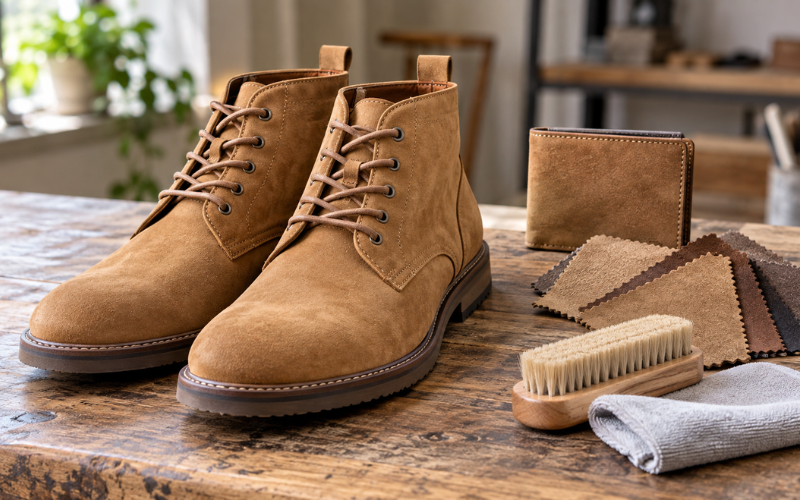
Nubuck is a type of genuine leather known for its soft, velvety surface. It has an elegant appearance that feels warmer and more natural than smooth, polished leather. You can find it in footwear, jackets, bags, furniture, and other products designed to combine comfort with a premium finish.
The distinctive texture of nubuck comes from gently sanding or buffing the outside of an animal hide. This process creates a very short, fine nap—the tiny raised fibers that give the material its smooth, suede-like feel. The surface may change shade when brushed in different directions, adding to its natural character.
Although nubuck can be strong and long-lasting, its open surface needs thoughtful care. Water, oil, dirt, and incorrect cleaning products can leave marks or change its texture. This guide explains how nubuck is made, how it compares with other leathers, where it is used, and how to clean and protect it properly.
What Nubuck Is
Nubuck is real leather made by lightly sanding the outer surface of an animal hide. Most nubuck comes from cattle because cowhide offers a useful balance of size, strength, and durability. Other hides can also be used, although they are less common.
The outer side of a hide is often called the grain side. It is generally stronger and denser than the inner side. When manufacturers buff this outer surface with fine abrasives, they raise very short fibers. These fibers create the smooth, matte finish associated with nubuck leather.
This treatment can also reveal small natural features in the hide, including variations in grain and color. Such details are not always defects. In many cases, they show that the material came from genuine leather rather than a perfectly uniform synthetic surface.
How Nubuck Leather Is Made
Production begins with preparing and tanning the hide. Tanning helps preserve the material and prevents it from breaking down. Manufacturers may use different tanning methods depending on the appearance, performance, and color they want to achieve.
After tanning, the outer grain is carefully sanded or buffed. This stage must be controlled because too much sanding can weaken the surface, while too little may not produce an even nap. The aim is to create a consistent, fine texture without removing the natural strength of the grain layer.
The material may then be dyed and treated with protective finishes. Some nubuck is dyed all the way through, while other products receive additional color treatments at the surface. Oils or waxes may also be used to create special effects. For example, oiled nubuck often looks slightly darker and develops visible changes in shade when bent or rubbed.
These finishing choices affect how the leather feels, ages, and responds to moisture. However, even treated nubuck usually remains more sensitive to stains than smooth, heavily coated leather.
Nubuck vs Suede
Nubuck and suede look similar, but they usually come from different parts of the hide. Nubuck is made by sanding the stronger outer grain, while suede is commonly made from the softer inner layer or split portion of the hide.
Because the outer grain is denser, nubuck is generally stronger and more durable than suede of a similar thickness and quality. Its nap is also shorter and finer, giving it a smooth, almost velvet-like finish. Suede often has a looser, fuzzier texture.
Price varies according to the quality, thickness, brand, and manufacturing process. However, good-quality nubuck is often more expensive because it uses the more valuable outer section of the hide.
To tell them apart, examine the surface closely. Nubuck usually has a very fine and even nap, while suede tends to feel softer and more visibly fuzzy. Labels provide the most reliable guidance because visual differences can be difficult to identify on heavily treated products.
Nubuck vs Other Types of Leather
Full-grain leather keeps its natural outer surface with minimal correction. It may show pores, lines, and other features from the original hide. Nubuck also uses the grain side, but its surface is sanded to create a soft nap. It can therefore be considered related to full-grain or top-grain leather, depending on how deeply it has been processed.
Smooth top-grain leather is often sanded to remove imperfections and then finished with color or a protective coating. Unlike nubuck, it is usually polished or coated rather than left with a velvety texture. Corrected-grain leather receives more extensive surface treatment and may be embossed with an artificial grain pattern.
Synthetic materials can imitate nubuck’s appearance, but they are not genuine nubuck. Artificial versions are normally made from microfiber, polyester, or other manufactured materials. They may offer easier maintenance or lower prices, but their breathability, aging, and feel can differ from real leather.
The Main Qualities of Nubuck
The most noticeable quality of nubuck is its pleasant texture. Its short nap feels smooth and warm, while its matte finish creates a softer appearance than shiny leather. Brushing the fibers in different directions can produce subtle changes in shade.
Genuine nubuck may show natural variations in color and grain. It can also develop a patina as it ages. Areas that receive frequent contact may become darker or smoother because oils and pressure flatten the nap. Some owners appreciate this changing appearance, while others prefer to maintain a more even finish.
Nubuck is breathable and can be durable when made well. These qualities make it especially suitable for boots, shoes, and clothing. However, the raised fibers can trap dust and absorb moisture more easily than a sealed leather surface.
Water may produce temporary or lasting marks, while oil can create dark stains. Scratches and rubbed areas may also become visible. Many light marks can be reduced with a proper brush, but deep damage may require professional attention.
Common Uses of Nubuck
Footwear is one of the most common uses of nubuck. Casual shoes, walking boots, work boots, and sandals benefit from its combination of flexibility, strength, and comfort. Some outdoor footwear uses treated nubuck for improved resistance to damp conditions, although it still needs regular care.
Nubuck is also used for jackets, handbags, backpacks, belts, watch straps, and other accessories. Its rich texture can give everyday items a refined but relaxed appearance. Because the material shows handling and dirt, products used frequently may need more maintenance.
Furniture manufacturers sometimes use nubuck for sofas and chairs. Its softness makes upholstery comfortable, but households with young children or pets may find it difficult to keep clean. Vehicle manufacturers may also use nubuck or similar materials in interior details, although synthetic microfiber is common in modern automotive interiors.
The material works best for products where appearance, touch, and breathability matter. It may be less suitable for items that face frequent spills, heavy rain, grease, or rough treatment.
Benefits and Drawbacks of Nubuck
Nubuck offers a premium look without the shine of polished leather. Its soft surface is comfortable against the skin, and its natural texture can make each product look slightly different. Quality nubuck is also stronger than its delicate appearance may suggest.
Footwear and clothing made from it can remain comfortable because genuine leather allows some movement of air and moisture. With suitable maintenance, well-made products may last for years and develop an attractive, personal character.
Its main disadvantage is the amount of care it requires. The surface can collect dust, and liquid spills may soak in before they can be removed. Oil, mud, salt, and unsuitable cleaning chemicals can be particularly troublesome.
Nubuck may also cost more than suede, coated leather, or synthetic alternatives. Whether it is practical depends on how the product will be used. Someone who values texture and is willing to maintain it may find nubuck worthwhile. A person who wants a low-maintenance material for wet or messy conditions may prefer another option.
How to Identify Genuine Nubuck
Start by examining the texture. Genuine nubuck should have a very short, soft nap that changes direction when you move a finger across it. The color may appear slightly lighter or darker along the brushed path.
Natural leather is rarely perfectly uniform. Small changes in grain or color can be signs of a genuine hide, although they do not prove authenticity on their own. Artificial microfiber can now copy the look of leather very closely.
Read the product label carefully. Terms such as “nubuck effect,” “nubuck-style,” “vegan nubuck,” or “synthetic nubuck” usually indicate that the material is not animal leather. A clear label should state whether the item is genuine leather and identify the upper, lining, or upholstery material.
Before buying an expensive item, ask the seller what type of hide was used, whether the material has a protective treatment, and which care products are recommended. A trustworthy manufacturer should provide clear information rather than relying on vague terms such as “premium material.”
How to Clean Nubuck Safely
Regular light cleaning is safer than waiting for heavy dirt to build up. Use a brush made for nubuck or suede to lift dust and restore the nap. Brush gently and follow the manufacturer’s directions, especially when treating delicate or lightly colored products.
A nubuck eraser may help remove dry marks and small scuffs. Test it first on a hidden area and avoid rubbing too hard. For a stain, use a cleaner specifically labeled as safe for nubuck. General leather creams, household soap, detergents, and wet wipes can darken the material or flatten its texture.
Do not soak nubuck in water. Too much liquid can spread a stain, create a water ring, or affect the shape of the item. Direct heat from a hair dryer, heater, or radiator may cause leather to become stiff, shrink, or crack.
Deep oil stains, widespread discoloration, mold, or damage to valuable products should be handled by a leather-cleaning professional. Professional help is also sensible when the care label gives special instructions or when a hidden-area test causes a color change.
Protecting and Maintaining Nubuck
A simple maintenance routine can keep nubuck looking good for longer. Brush the surface occasionally to remove dust and prevent the fibers from becoming flat. Always use a clean brush so that dirt or polish from another material is not transferred.
A protective spray designed specifically for nubuck can improve resistance to water and stains. Test it on a hidden spot first because some products can change the color. Apply it in a well-ventilated place and follow all instructions concerning distance, drying time, and repeat applications.
Store nubuck items in a cool, dry location away from strong sunlight. Breathable fabric bags are often better than sealed plastic because trapped moisture can encourage odors or mold. Shoes and bags can be lightly filled with clean, unprinted paper to help them retain their shape.
Protection does not eliminate the need for care. Remove dirt promptly, allow damp items to dry naturally, and reapply protective treatment when recommended by the product manufacturer.
Can Nubuck Get Wet?
Nubuck can get wet, but untreated material may absorb water quickly. Moisture can temporarily darken the surface, flatten the nap, or leave visible marks after drying. Repeated soaking may eventually make the leather stiff or misshapen.
If a nubuck item becomes wet, gently blot excess moisture with a clean, absorbent cloth. Do not rub the surface because rubbing may push water and dirt deeper into the fibers. Let the item dry naturally at room temperature, away from radiators, open flames, and direct sunlight.
For wet shoes, remove the laces and insoles if the manufacturer allows it. Fill the shoes loosely with plain absorbent paper and replace the paper when it becomes damp. Once the leather is completely dry, use a nubuck brush to lift the nap.
Water-resistant spray can reduce the speed at which moisture enters the surface, but it does not make nubuck fully waterproof. Even protected items should not be treated as suitable for prolonged soaking unless the manufacturer specifically designed them for those conditions.
Choosing the Right Nubuck Product
Quality depends on more than the surface material. Check the stitching, lining, soles, fasteners, frame, or other parts of the product. A fine piece of nubuck cannot make up for weak construction.
Consider where and how often you will use the item. Nubuck footwear may be a good choice for dry daily conditions, but it will need protection in a wet climate. A nubuck sofa can feel luxurious, yet it may not be the easiest choice for a room where food and drinks are regularly served.
Color also matters. Pale shades may show dirt and water marks sooner, while very dark colors can reveal dust or faded areas. Oiled or treated nubuck may be better for frequent use because its finish often hides small marks more effectively.
Balance the purchase price against maintenance and expected lifespan. If you want a natural, breathable material with a rich texture, nubuck can be an excellent choice. If easy cleaning and strong water resistance are more important, smooth coated leather or a quality synthetic material may be more practical.
Conclusion
Nubuck is genuine leather with a finely buffed outer surface that gives it a soft, velvety feel. It combines comfort, natural beauty, breathability, and useful strength, making it popular for footwear, clothing, accessories, and furniture.
Its attractive finish also makes it more sensitive to water, grease, dust, and improper cleaning than many smooth leathers. Gentle brushing, suitable cleaning products, careful storage, and a nubuck-safe protective spray can help preserve its appearance.
For buyers who enjoy natural texture and do not mind regular maintenance, nubuck can be a durable and rewarding choice. Understanding its needs before purchasing is the best way to decide whether it suits your lifestyle and intended use.
FAQs
1. Is nubuck real leather?
Yes. Genuine nubuck is real leather produced by sanding or buffing the outer grain of an animal hide. Products described only as “nubuck-style” or “nubuck effect” may be synthetic, so always check the label.
2. Does nubuck scratch easily?
Its soft surface can show scuffs, pressure marks, and changes in the direction of the nap. Many light marks can be reduced with a nubuck brush or eraser. Deep scratches that damage the leather itself are harder to repair.
3. Is nubuck more durable than suede?
Nubuck is generally stronger than suede because it normally comes from the dense outer grain of the hide. Actual durability still depends on the hide’s quality, the product’s construction, its thickness, and how it is maintained.
4. Can nubuck be waterproofed?
A nubuck-safe protective spray can make the material more water-resistant, but it cannot guarantee complete waterproofing. Treatments wear down and need to be renewed according to the manufacturer’s instructions.
5. Does nubuck become smoother or darker over time?
Yes, it can. Pressure, friction, moisture, and natural oils from hands or skin may flatten the nap and darken frequently touched areas. Regular brushing can improve minor changes, but some aging is a normal feature of genuine leather.