
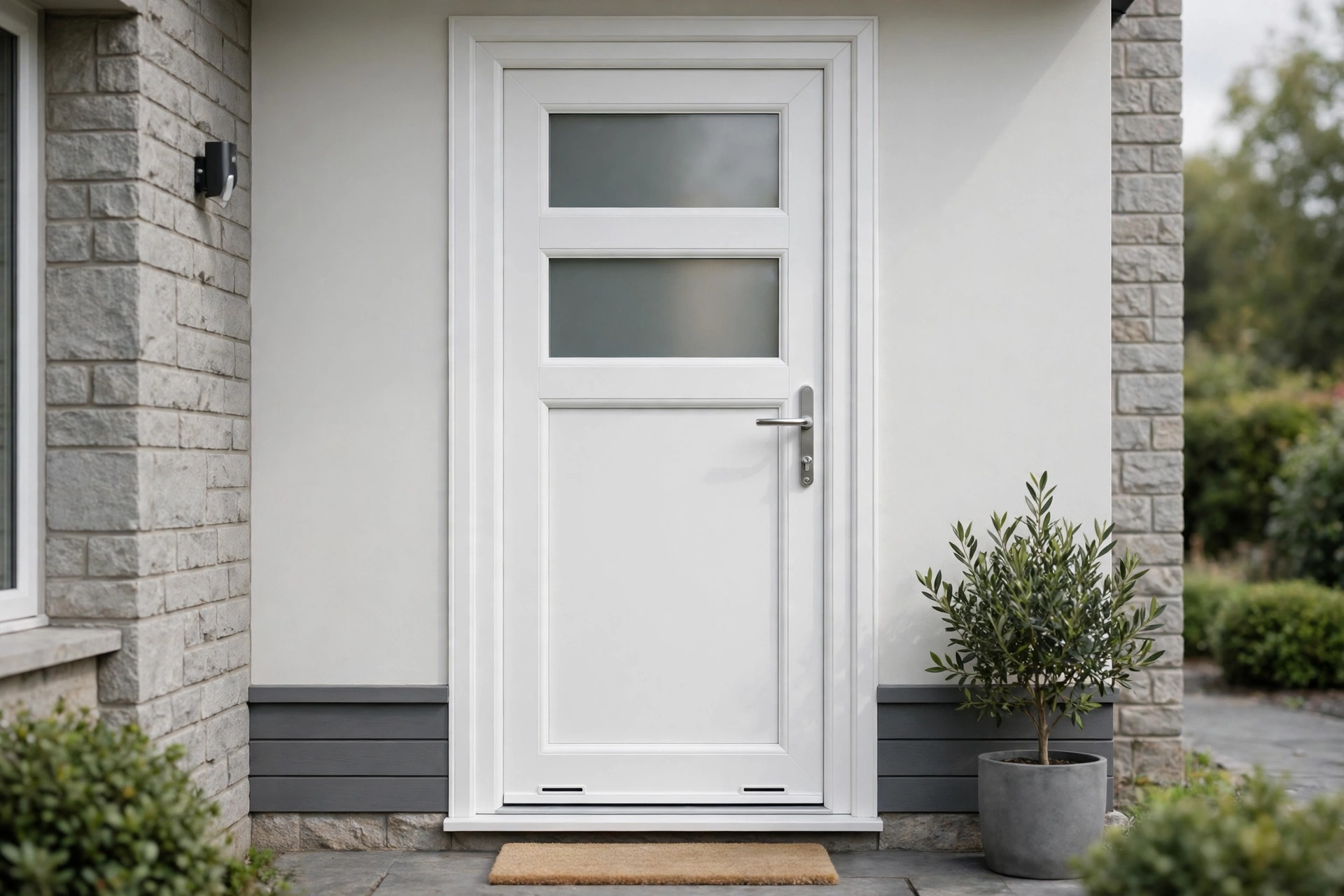
Choosing a new front or back door involves more than picking a colour. uPVC doors are a common choice because they are practical, low maintenance, and available in a wide range of styles, but the details still matter. Glazing, locks, threshold, and fitting all affect how the door feels day to day, how secure it is, and how long it lasts.
What uPVC means in practice
uPVC stands for unplasticised polyvinyl chloride, a rigid plastic material used for door frames. Unlike timber, it does not need regular painting to protect it from weather, and it does not swell and shrink in the same way when it gets wet. That makes it a straightforward choice for many homes, especially where a door is exposed to rain and wind.
That does not mean every uPVC door is the same. Frame quality, reinforcement inside the frame, glazing, and hardware can all vary, so it is worth comparing the whole door, not just its appearance in a photograph.
Door styles and where they suit
uPVC doors come in several forms. A solid panel door gives privacy and a clean, simple look. A partly glazed door lets light into a hallway while keeping the lower part solid. A fully glazed door can brighten a dark entrance, but it offers less privacy unless the glass is obscured.
French doors and patio-style doors are also available in uPVC, and they suit openings onto a garden or terrace where light and access matter. For a front door, think about how the door will be used: who passes through it, whether deliveries arrive there, and how much light you want in the hall.
Colour and finish are worth considering carefully. White remains a simple, bright choice, while wood-effect finishes and darker colours can suit period or modern homes. A finish that looks good in a showroom may look different in your own hallway light, so ask to see a sample in place if you can.
Glazing and light
Glazing affects light, privacy, and insulation. Clear glass lets in the most light. Obscured or frosted glass keeps privacy while still allowing daylight. Decorative glass can add character, but check that it still gives the level of privacy you want from the street.
Double glazing is standard for most modern uPVC doors, and the type of glass, frame seals, and overall construction all contribute to how draughty a door feels. If your current door lets in cold air around the edges, seals and fitting are often as important as the glass itself.
Locks and security features to ask about
Security is not about a single lock. Ask about the locking system as a whole, including the number of locking points, the cylinder, the hinges, and how the door sits in its frame when closed. A door that is well fitted, with no large gaps and a frame that is firmly fixed, will generally perform better than a door with impressive hardware but poor fitting.
Other features to discuss include a letterbox with a draught flap, a viewer or spyhole if you want one, and handles that feel solid in use. For a front door, think about how you will use it at night and whether you want additional lighting near the entrance, which is a separate decision from the door itself.
Measuring and fitting: why accuracy matters
Accurate measuring is essential. A door that is slightly too large or too small can be difficult to open, hard to lock, or draughty. A professional fitter will measure the opening in several places, check whether it is square, and allow for the threshold and any floor covering.
Fitting also includes sealing around the frame, adjusting hinges so the door closes smoothly, and checking that locks engage without forcing. If a new door sticks, catches, or needs a hard push to lock, ask the fitter to adjust it before accepting the work as finished. Small adjustments at fitting stage prevent larger problems later.
Keeping a uPVC door in good condition
uPVC doors need less care than timber, but they still benefit from simple maintenance. Clean the frame with warm soapy water and a soft cloth, and avoid abrasive cleaners that can scratch the surface. Wipe down seals and check them for damage, as worn seals can let in draughts and water.
Lubricate locks and hinges occasionally with a suitable product recommended for the hardware, and keep the threshold clear of dirt and grit. If a door starts to drop or becomes hard to lock, it may need hinge adjustment rather than replacement, so ask for advice before assuming the door has failed.
A good uPVC door is one that suits your home, fits properly, locks smoothly, and is easy to live with. Take time over style and glazing, ask clear questions about locks and fitting, and keep up with simple cleaning and checks. That approach will help you choose a door that looks right and continues to work well.