
Introduction
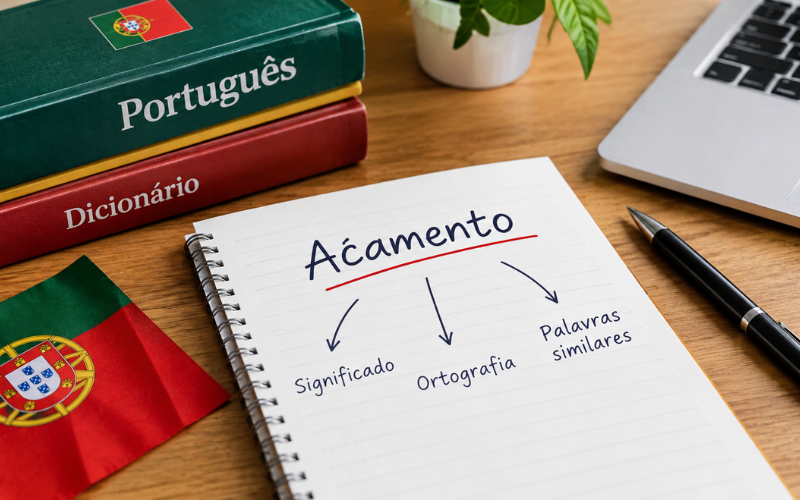
The word acamento sometimes appears in search results, social media captions, product descriptions, and informal online messages. However, its meaning is not immediately clear. Unlike a standard dictionary word, acamento may represent a spelling mistake, a shortened form, a name, or a term that only has meaning within a particular context.
In many cases, people searching for acamento may be looking for one of several Portuguese words. These include acabamento, meaning a finish or final touch; acampamento, meaning a camp or campsite; and casamento, meaning marriage or a wedding. Although these words look similar, they refer to completely different subjects.
What Acamento Means—and What Can Be Verified
There is no strong evidence that acamento has one widely accepted definition in standard English, Portuguese, or Spanish. It does not appear to function as an established general term with a consistent meaning across reliable language sources.
That does not mean every use of acamento is automatically wrong. It could be a business name, username, product label, family name, or locally created expression. Proper names do not always appear in dictionaries, and companies sometimes invent distinctive terms for branding purposes.
However, acamento should not be presented as a standard Portuguese, Spanish, or English word unless the source provides clear supporting information. A repeated definition on several websites is not necessarily reliable, especially when those pages do not cite a dictionary, official organization, or original source.
The safest conclusion is that the meaning of acamento depends on where it appears. In ordinary writing, it is often reasonable to check whether another word was intended.
The Most Likely Words Behind Acamento
Several established Portuguese words resemble acamento. The most likely match depends on the surrounding topic.
If the text discusses the quality, appearance, or final stage of a product, the intended word may be acabamento. If it refers to tents, outdoor activities, or temporary accommodation, acampamento is a more likely choice. In content about relationships, ceremonies, or married life, the writer may have meant casamento.
Small typing errors can create these differences. A person may leave out letters while using a phone, type quickly, or depend on voice recognition that does not understand the intended language. Autocorrect can also replace an unfamiliar foreign word with an incorrect spelling.
Acamento could still be a deliberate name in some situations. Before correcting it, readers should check whether it appears as a capitalized title, account name, trademark, or organization.
Acamento and Acabamento: Understanding the Difference
The closest match in many product and design contexts is acabamento. It is a recognized Portuguese noun connected to the verb acabar, which can mean to finish or complete something. The Priberam Dictionary defines acabamento in terms of finishing, completion, refinement, and the final part of a process.
In English, the best translation depends on the sentence. It may mean “finish,” “finishing,” “final touch,” or “workmanship.” For example, a furniture description may use acabamento for the treatment applied to a wooden surface. A clothing seller may use it when discussing seams, stitching, or other final details.
The word is also common in construction, printing, interior design, metalwork, and manufacturing. It can describe both the final process and the visible quality of the completed work.
When acamento appears in one of these settings, it may be a misspelling of acabamento caused by the omission of the letters “ba.” Still, the intended meaning should be confirmed from the complete sentence rather than assumed from the similar spelling alone.
Acamento and Acampamento in Travel or Outdoor Contexts
In travel or outdoor content, acamento may be an incomplete version of acampamento. This Portuguese word refers to the act of camping, a place where people camp, or a temporary area containing tents or other basic accommodation.
Words such as “tent,” “forest,” “camping,” “trail,” “summer,” “group,” or “outdoor” provide useful clues. A caption inviting visitors to an acamento near a waterfall, for example, probably intends to say acampamento.
The error may happen because several middle letters are missed while typing. It may also result from unclear speech-to-text conversion. Since acampamento is much longer than acamento, readers should avoid treating the shorter spelling as a formal abbreviation unless the writer explains that usage.
Acamento and Casamento in Relationship Contexts
Another possible match is casamento, the Portuguese word for marriage. It can refer to the act of marrying, the legal or social union between two people, or the wedding ceremony itself. It may also describe a close combination of two things in a figurative sense.
If acamento appears near words such as “bride,” “groom,” “couple,” “ceremony,” “rings,” “anniversary,” or “relationship,” casamento may be the intended term.
The difference is more than simply dropping the first letter. Removing the first letter from casamento would produce asamento, not acamento. The spelling acamento would require letters to be omitted or rearranged. This detail matters because similar-looking words should not be treated as exact variations without checking their spelling.
How Context Reveals the Intended Meaning
Context is the most useful tool for interpreting acamento. Instead of examining the word by itself, readers should look at the subject of the complete sentence, page, or conversation.
In a construction description, phrases such as “smooth surface,” “paint,” “tiles,” or “final quality” point toward acabamento. Fashion and product listings may also use acabamento when describing stitching, edges, polish, coating, or workmanship.
Travel content creates a different set of clues. References to tents, cabins, campfires, hiking, forests, or outdoor stays suggest acampamento. Wedding dates, invitations, spouses, ceremonies, and celebrations make casamento the more likely word.
Sometimes none of these interpretations fits. Acamento may be part of a username, website address, company name, or creative project. In that case, it should be treated as a proper name until the owner or original source explains it. A name does not need to follow normal dictionary rules, but it also should not be given an invented definition.
Language is another important clue. If the rest of the material is written in Portuguese, the similar Portuguese words deserve close attention. If the text is in English or Spanish, acamento may have been copied from another language, entered incorrectly, or used as a name.
Why Acamento Appears in Online Searches
Unusual search terms often become visible because people want to understand something they have seen elsewhere. A single misspelled social media post, product listing, or blog title can encourage many users to search for the same spelling.
Mobile typing is one possible cause. Letters may be skipped when someone types quickly on a small screen. Voice search can create similar errors when it processes Portuguese pronunciation incorrectly or when the device is set to another language.
Search suggestions may also keep an unusual spelling in circulation. Once enough people enter acamento, search systems may begin showing related predictions even if the term has no established meaning. Other websites may then publish pages about it after noticing the search activity.
This process does not turn the spelling into a standard word. Search popularity shows that people are curious about a term; it does not prove that every explanation attached to it is correct.
Common Claims About Acamento That Need Caution
Some online pages may describe acamento as a cultural idea, design method, lifestyle trend, technical process, or ancient expression. Such claims require evidence. A convincing explanation should identify the language, provide a reliable definition, and show genuine examples of the term being used in that way.
Readers should be especially careful when several articles repeat almost identical claims without naming an original source. Repetition can make an unsupported idea appear established. In reality, the pages may simply be copying one another.
Claims about the history or origin of acamento also need caution. A word’s origin cannot be confirmed merely because it resembles another word. Reliable etymology normally requires documented forms, historical examples, and respected language references.
It is equally misleading to insist that every appearance of acamento is a mistake. A person or company may intentionally use it as a name. The balanced approach is to separate recognized vocabulary from private, local, or branded usage.
A Simple Method for Interpreting Acamento Correctly
Begin by reading the entire sentence rather than relying on the keyword alone. Identify the main subject and note any words that suggest finishing, camping, marriage, or a proper name.
Next, determine the language of the source. Compare the spelling with established words in a dependable dictionary. If acabamento, acampamento, or casamento fits both the spelling pattern and the subject, it is probably the intended term.
The original source should have priority over copied pages. A company profile, product manufacturer, event organizer, or account owner may explain exactly how the name is used. If the meaning still remains uncertain, ask the writer for clarification instead of presenting a guess as fact.
Conclusion
Acamento is an unclear online term that should not be assigned one fixed meaning without supporting evidence. It may be a misspelling of acabamento, acampamento, or casamento, although it can also function as a name or locally created expression.
The most reliable way to understand acamento is to examine the surrounding topic, identify the language, compare established spellings, and consult the original source. This context-based approach provides a more accurate answer than repeating an unsupported definition found online.
FAQs
1. Is acamento a real word?
Acamento does not have a widely recognized general definition in standard English, Portuguese, or Spanish dictionaries. It may be a typing error, informal spelling, shortened form, or proper name. Its exact status depends on the source in which it appears.
2. Is acamento Portuguese or Spanish?
The spelling resembles several Portuguese words, but acamento itself should not automatically be identified as standard Portuguese. It should not be assumed to be a standard Spanish word either. The surrounding language and subject are needed to understand its likely purpose.
3. Does acamento mean finishing?
Not by itself. The recognized Portuguese word commonly used for finishing, finish, final details, or workmanship is acabamento. Acamento may be a misspelling of acabamento when it appears in construction, fashion, manufacturing, furniture, or design content.
4. Can acamento refer to camping?
It may refer to camping if the writer intended to type acampamento, the Portuguese word associated with a camp, campsite, or the act of camping. Outdoor references such as tents, trails, forests, and temporary accommodation support this interpretation.
5. Is acamento related to casamento?
Acamento and casamento look similar, but they are not interchangeable. Casamento is the established Portuguese word for marriage or a wedding. If acamento appears in relationship or wedding content, it may be a spelling error, but the full context should confirm that conclusion.