
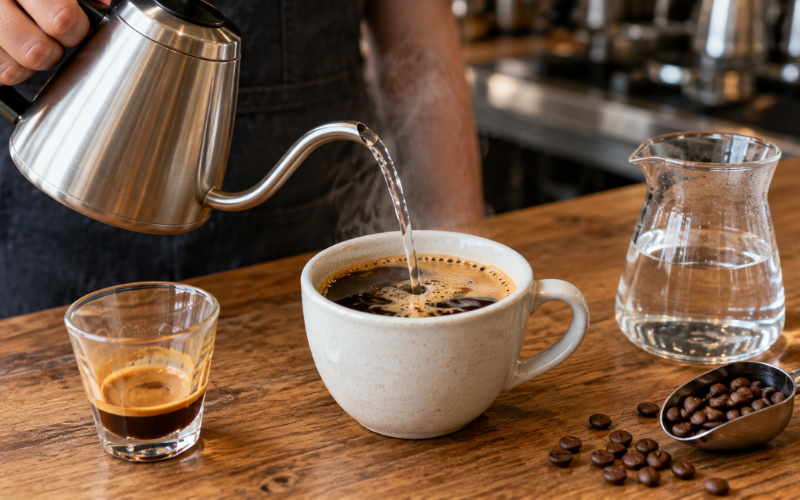
Americano coffee is a simple drink made by combining espresso with hot water. It contains no milk, foam, or sweetener unless the person drinking it chooses to add them. Despite this simplicity, an Americano can offer a wide range of flavors, from rich chocolate and roasted nuts to fruit, caramel, and gentle citrus.
The drink remains popular because it provides the character of espresso in a larger, less concentrated cup. It is easy to customize, can be served hot or iced, and is widely available in coffee shops around the world.
What Americano Coffee Is
An Americano is an espresso-based coffee made with two main ingredients: espresso and water. A barista first prepares one or more shots of espresso and then combines them with hot water. For an iced version, cold water and ice are used instead.
Adding water makes espresso less concentrated, but it does not turn it into brewed coffee. The drink still begins with espresso, which is prepared by pushing pressurized hot water through finely ground coffee. This brewing method gives espresso its concentrated taste, rich aroma, and distinctive texture.
Dilution softens the intensity of the espresso and creates a longer drink that can be enjoyed more slowly. However, the water does not remove the espresso’s natural flavors. A well-made Americano should still reflect the beans, roast, and quality of the original shot.
The Origin of Americano Coffee
A popular story connects Americano coffee with American soldiers stationed in Italy during World War II. According to the story, the soldiers found Italian espresso stronger than the coffee they usually drank at home. They added hot water to make it taste more familiar, and the drink became known as caffè Americano, meaning “American coffee.”
This explanation is repeated widely, but clear historical evidence is limited. Available language records suggest that the exact development of the name may be more complicated than the familiar wartime story. It is therefore better to describe the World War II account as a popular origin story rather than a fully proven fact.
Whatever its exact beginnings, the Americano eventually became a standard item on international café menus. Its simple recipe also made it easy for coffee shops to adjust the drink to different cup sizes and customer preferences.
What an Americano Tastes Like
Americano coffee usually has the main flavor qualities of espresso but with less concentration. It may taste bold, smooth, bitter, bright, sweet, smoky, or slightly fruity, depending on the coffee and preparation.
Adding water can make certain flavors easier to notice. A concentrated espresso may feel heavy or intense, while the same espresso in an Americano can reveal more delicate notes. The body is generally lighter than straight espresso but often fuller than regular filter coffee.
A fresh espresso shot may produce a golden-brown layer called crema. Some of this crema may remain on an Americano, although its appearance depends on the pouring order, beans, and freshness of the coffee.
Roast level also matters. Dark-roasted beans often produce deeper chocolate, nutty, smoky, or bittersweet flavors. Medium roasts may offer a balance of sweetness and acidity. Light roasts can taste brighter and may contain floral, citrus, or fruit-like notes.
This is why an Americano can taste very different from one café to another. Each shop may use different beans, espresso recipes, water amounts, machines, and cup sizes.
The Best Espresso-to-Water Ratio
There is no single ratio that every café follows. A practical starting point is one part espresso to two or three parts water. For example, a double espresso of about 60 milliliters can be combined with 120 to 180 milliliters of hot water.
A smaller amount of water creates a stronger drink with more body. More water produces a lighter and milder cup. Adding too much, however, can make the coffee taste thin and hide the espresso’s more interesting qualities.
Cup size also affects the ideal recipe. A small Americano may contain one or two shots, while a large serving may need two or three shots to keep the flavor balanced. Simply filling a large cup with extra water without increasing the espresso can result in a weak drink.
The best ratio ultimately depends on personal taste. Start with a 1:2 ratio, taste the drink, and add water gradually until it reaches the strength you enjoy.
How to Make Americano Coffee at Home
To make a traditional Americano, you need fresh coffee beans, clean water, an espresso machine, and a suitable cup. A coffee grinder is also useful because freshly ground beans normally give better results.
Begin by heating the water. It should be hot but does not need to remain at a hard boil. Water around 90–96°C, or 194–205°F, is commonly used for coffee preparation. The Specialty Coffee Association publishes standards and educational resources covering coffee quality and preparation.
Next, grind the beans finely and prepare one or two espresso shots. The shot should flow evenly and have a balanced taste. If it runs too quickly, the coffee may taste weak or sour. If it takes too long, it may become dry or overly bitter.
Once the espresso is ready, combine it with the hot water. A straightforward home recipe is:
- Prepare a double shot of espresso.
- Heat 120 to 180 milliliters of fresh water.
- Pour the espresso into a cup.
- Add the water slowly.
- Taste and adjust the amount of water if needed.
Filtered water can improve the drink when tap water has a strong odor or mineral taste. It is also helpful to warm the cup before serving so the Americano stays hot for longer.
Espresso First or Water First?
The order of the ingredients can change the drink’s appearance and texture. In many Americano recipes, espresso goes into the cup first and hot water is added afterward. This process may disturb or break apart some of the crema.
A long black is commonly prepared in the opposite order. Hot water is placed in the cup first, and espresso is poured over it. This method can preserve more crema and may produce a slightly stronger aroma at the surface.
However, drink names and preparation styles are not completely consistent across countries or coffee shops. Some cafés use “Americano” and “long black” almost interchangeably. Neither pouring order is automatically better, so the choice can be based on taste and texture.
Iced Americano Coffee
An iced Americano contains espresso, cold water, and ice. It offers the bold flavor of espresso in a refreshing drink without the milk found in an iced latte.
For a balanced version, add cold water to a glass, include enough ice to chill the drink, and then pour fresh espresso over it. Another option is to mix the espresso with cold water before adding ice. Both methods work, although the appearance and initial temperature may differ.
Too much ice or water can quickly weaken the coffee. Using two espresso shots usually gives a better flavor in a medium or large glass. Larger ice cubes also melt more slowly than crushed ice.
For a gentler taste, add a little more water. For greater sweetness without syrup, try beans with natural chocolate, caramel, or nutty notes.
Americano Coffee vs. Other Popular Drinks
An Americano and brewed coffee may look similar, but they are prepared differently. An Americano starts with espresso, while brewed coffee is made by allowing water to pass through or remain in contact with ground coffee. Brewed coffee often has a lighter body and a different aroma, even when the cup sizes are equal.
Straight espresso is smaller and more concentrated. An Americano contains the same espresso shot but spreads its flavors through a larger amount of water. Adding water changes the intensity, not the original brewing method.
A long black is generally made by pouring espresso over hot water. It is often smaller and stronger than an Americano, with more crema on top. However, recipes vary between cafés.
Cold brew is made by soaking coffee grounds in cool or room-temperature water for several hours. An iced Americano uses hot-brewed espresso combined with cold water and ice. As a result, the two drinks have different flavor profiles even though both are served cold.
A latte combines espresso with a much larger amount of steamed milk and usually has a thin layer of foam. It is creamier and softer than an Americano. People who prefer a clear coffee flavor without much milk may find the Americano more suitable.
Caffeine and Calories in an Americano
The caffeine in an Americano mainly depends on the number of espresso shots. Adding water increases the drink’s volume but does not remove caffeine. A double-shot Americano therefore has roughly the same total caffeine as the double espresso used to make it.
Exact amounts vary because bean type, serving size, coffee dose, and brewing method all affect caffeine. A large café Americano with three or four shots may contain much more than a small one-shot serving.
For most healthy adults, the U.S. Food and Drug Administration says up to 400 milligrams of caffeine per day is generally not associated with negative effects. Personal sensitivity varies, however, and people who are pregnant, taking certain medicines, or managing a health condition may need individual medical guidance. See the FDA’s caffeine guidance for current information.
A plain Americano has only a few calories because espresso and water contribute very little energy. Milk, cream, sugar, and flavored syrups can increase its calorie and sugar content considerably.
Choosing the Right Coffee Beans
A medium or dark roast is a comfortable starting point for people who enjoy a traditional, full coffee taste. These beans often provide chocolate, caramel, toasted nut, or bittersweet notes. Light-roasted coffee can create a brighter Americano with more noticeable fruit or floral qualities.
Espresso blends combine beans selected to create a balanced and dependable flavor. Single-origin coffee comes from one country, region, producer, or lot and may offer more distinctive characteristics. Neither option is automatically superior.
Freshness and grinding are just as important as roast level. Buy freshly roasted beans when possible, store them in an airtight container away from heat and light, and grind only what you need. The correct fine grind helps the espresso extract evenly and prevents unpleasant sourness or bitterness.
Common Americano-Making Mistakes
Stale beans and poorly prepared espresso cannot be corrected by adding water. Because an Americano has so few ingredients, weaknesses in the coffee remain easy to notice.
Using too much water is another common mistake. It creates a large cup but may leave the drink empty and watery. Begin with a smaller amount and add more only after tasting.
Incorrect grind size can also cause problems. Coffee that is too coarse may produce a fast, sour shot. An extremely fine grind can slow the flow and create harsh bitterness.
Very hot water may reduce the pleasure of the drink and make delicate flavors harder to notice. Allow freshly boiled water to settle briefly before using it. Finally, serve the Americano soon after preparation rather than leaving it on a hot plate or desk for a long period.
Easy Ways to Customize an Americano
The easiest way to customize an Americano is to change its water-to-espresso ratio. This adjusts the strength without covering the character of the coffee.
A small splash of milk, cream, oat milk, soy milk, or almond milk can soften bitterness. Sugar, honey, or flavored syrup can add sweetness, although small amounts help prevent the coffee flavor from disappearing.
Cinnamon can provide warmth without much added sweetness. A narrow piece of orange or lemon peel may complement bright, fruit-forward beans, but avoid adding too much because strong citrus can dominate the cup.
Is Americano Coffee Right for You?
Americano coffee may suit people who enjoy the flavor of espresso but want a larger, less concentrated drink. It can also be a useful choice for someone who prefers black coffee but wants a different body and aroma from filter coffee.
At a café, specify the cup size, number of shots, and whether you want room for milk. If you prefer a stronger result, request less water or an extra shot. For a milder cup, ask for more water rather than assuming every café uses the same recipe.
Conclusion
Americano coffee shows how two basic ingredients can create a surprisingly varied drink. Espresso provides the aroma, body, and flavor, while water controls its concentration and drinking experience.
A good Americano depends on fresh beans, balanced espresso, clean water, and a ratio suited to personal taste. Whether served hot, iced, black, or with a small addition, it remains one of the simplest ways to enjoy espresso in a longer cup.
FAQs
1. Is Americano coffee stronger than regular coffee?
An Americano often tastes bolder because it is based on espresso, but “stronger” can refer to flavor or caffeine. Total caffeine depends on the number of espresso shots and the size and brewing method of the regular coffee being compared.
2. Does an Americano contain milk?
A traditional Americano contains only espresso and water. Milk or a plant-based alternative may be added according to personal preference, but it is not part of the basic recipe.
3. Is an Americano the same as black coffee?
An Americano is a type of black coffee when nothing else is added, but it is not the same as drip or filter coffee. It is made by diluting espresso, while regular brewed coffee uses a different extraction process.
4. Can Americano coffee be made without an espresso machine?
A traditional version requires espresso. A moka pot or concentrated AeroPress brew can create a similar home drink, but the result will not be true machine-made espresso because it uses a different brewing process and pressure.
5. Why does my Americano taste watery?
The most likely causes are too much water, too little espresso, stale beans, or a poorly extracted shot. Try reducing the water, using a double shot, grinding fresh beans, and improving the espresso before changing other ingredients.