
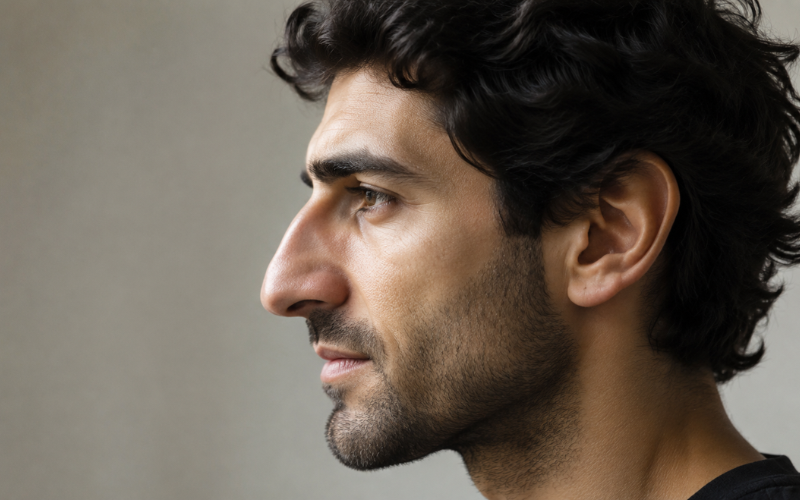
An aquiline nose is a distinctive nose shape known for its prominent, gently curved bridge and strong side profile. Rather than following a completely straight line from the forehead to the tip, the bridge usually has a visible outward curve or raised area.
This nose shape is also commonly associated with the term Roman nose, although the two descriptions are not always used in exactly the same way. Aquiline noses occur naturally in people around the world and can vary greatly in size, width, projection, and degree of curvature.
Understanding an aquiline nose involves more than simply identifying its shape. Genetics, facial proportions, cultural ideas about beauty, and individual preferences all affect how this feature is viewed. This guide explains its defining characteristics, origins, natural variations, health considerations, and common misconceptions.
Aquiline Nose Shape and Defining Features
The curved or prominent nasal bridge
The most recognizable feature of an aquiline nose shape is its bridge. It may be slightly raised, strongly projected, or gently curved outward. Some people have only a small bump, while others have a more noticeable arch.
The tip of the nose can be straight, slightly downward-facing, or naturally projected. There is no single measurement that determines whether a nose is aquiline.
Typical side-profile appearance
An aquiline nose is often easiest to recognize from the side. Its prominent bridge can create a strong and clearly defined profile. From the front, however, the nose may appear relatively straight or look similar to many other nose shapes.
Natural variation from person to person
Not every aquiline nose looks alike. One person may have a long, narrow nose with a gentle curve, while another may have a wider nose with a more obvious bridge. These differences are part of normal human facial variation.
Why It Is Called an Aquiline Nose
Origin and meaning of the word “aquiline”
The word aquiline comes from the Latin word aquilinus, meaning “eagle-like,” which itself relates to aquila, the Latin word for eagle.
The eagle-beak comparison
The name refers to the curved appearance of an eagle’s beak when viewed from the side. It is a visual comparison rather than a medical classification. Having an aquiline nose does not suggest anything about a person’s health, character, or background.
Historical use of the term
Descriptions such as aquiline and Roman nose have been used for generations in art, literature, and discussions of facial appearance. Historical labels, however, often came with cultural assumptions that should not be treated as scientific facts today.
Aquiline Nose vs. Roman Nose and Other Nose Shapes
Aquiline nose vs. Roman nose
Aquiline nose and Roman nose are often treated as similar terms. Both generally describe a prominent bridge that curves outward. “Aquiline” emphasizes the curved profile, while “Roman nose” is a traditional descriptive label rather than a statement about someone’s ancestry.
Aquiline nose vs. hooked nose
A hooked nose usually has a more noticeable downward curve, particularly toward the tip. An aquiline nose may have a prominent bridge without having a strongly downward-pointing tip. Because nose shapes exist on a spectrum, the descriptions can sometimes overlap.
Aquiline nose vs. straight nose
A straight nose generally has a bridge that follows a relatively even line from its upper part toward the tip. An aquiline nose has more visible projection or curvature along that line.
Where these descriptions overlap
Terms used to describe nose shapes are based mainly on appearance rather than strict medical categories. The same nose might reasonably be described in different ways depending on its bridge, tip, proportions, and viewing angle.
Genetics and How an Aquiline Nose Develops
The role of inherited facial features
Like many facial characteristics, nose shape is influenced by genetics. A person may inherit features related to nose size, bridge shape, width, or projection from different parts of their family.
This does not mean one gene creates an aquiline nose. Facial appearance develops through many inherited traits working together.
Bone, cartilage, and facial growth
The visible shape of the nose is formed by bone, cartilage, soft tissue, and skin. These structures develop along with the rest of the face. Growth, aging, and previous injury can also influence how the nose eventually looks.
Why family members can have different nose shapes
Siblings can inherit different combinations of traits from their parents. As a result, one family member may have an obvious aquiline profile while another has a straighter or less prominent bridge.
Aquiline Noses Across Different Populations
Natural variation among individuals and populations
Aquiline noses can occur in people from many geographic and ancestral backgrounds. Human facial features show enormous variation, both between populations and among individuals within the same population.
Why nose shape should not be used to determine ethnicity
A nose alone cannot reliably establish a person’s ethnicity or ancestry. Similar facial traits can appear in people from very different backgrounds, so assumptions based only on physical appearance can easily be inaccurate.
Moving beyond outdated facial stereotypes
Older writings sometimes connected nose shapes with personality, intelligence, social status, or ethnic stereotypes. Such ideas should not be confused with modern scientific understanding. A person’s nose shape does not reveal their character or abilities.
Facial Balance and the Aquiline Nose Profile
How the bridge influences the side profile
Because an aquiline nose often projects farther from the face, it can become a noticeable element of the side profile. A stronger curve may appear dramatic, while a smaller curve can provide subtle definition.
Relationship with the chin, forehead, and other facial features
A nose is never viewed completely in isolation. The chin, jaw, forehead, cheekbones, lips, and overall face shape all influence how prominent the nose appears.
Why the same nose shape can look different on different faces
Two people can have similarly curved bridges yet look completely different because their other facial proportions are different. This is one reason simple labels such as “aquiline” describe only part of someone’s appearance.
Cultural Perceptions of the Aquiline Nose
Historical associations and changing beauty standards
Ideas about attractive nose shapes have changed significantly across cultures and historical periods. Features praised in one setting may receive less attention in another, demonstrating that beauty standards are not universal or permanent.
Aquiline noses in art, portraiture, and popular culture
Strong profiles have appeared frequently in sculpture, paintings, portrait photography, film, and fashion. In some artistic traditions, a prominent nose has been used to create a recognizable or expressive profile.
Modern attitudes toward distinctive facial features
Today, beauty discussions increasingly include individual and distinctive facial characteristics rather than focusing on a single ideal. Some people appreciate an aquiline nose precisely because it gives the face a recognizable profile.
Aquiline Nose in Men and Women
Shared anatomical characteristics
An aquiline nose can appear in people of any sex or gender. The basic characteristic—a prominent or curved nasal bridge—is the same.
Differences created by overall facial proportions
The nose may appear stronger, softer, larger, or smaller depending on the person’s overall facial proportions. These differences are individual rather than rules that apply to all men or women.
Why gender does not define the nose shape
An aquiline nose is simply a variation in facial anatomy. It should not be considered exclusively masculine or feminine.
Does an Aquiline Nose Affect Breathing?
Appearance versus nasal function
Having an aquiline nose does not automatically mean someone has breathing problems. The outside profile and the structures controlling airflow inside the nose are related but are not the same thing.
For example, a deviated septum can narrow a nasal passage and reduce airflow, regardless of whether the outside of the nose is aquiline. Mayo Clinic explains that significant septal deviation can make breathing through the nose more difficult.
When nose shape is simply a cosmetic characteristic
If a person breathes normally and has no troublesome symptoms, an aquiline profile by itself is not a medical problem requiring treatment.
Signs that may justify a medical evaluation
Persistent nasal blockage, repeated nosebleeds, ongoing difficulty breathing through one or both nostrils, or other concerning nasal symptoms are reasonable reasons to speak with a qualified healthcare professional. The cause should be properly evaluated instead of being assumed from the nose’s external shape.
Changing the Appearance of an Aquiline Nose
Hairstyle, makeup, and photography considerations
People who want to change how prominent their nose looks in photographs can experiment with lighting, camera angles, hairstyle, or makeup. These options change visual emphasis without physically altering the nose.
Of course, there is no requirement to make an aquiline nose look smaller or straighter. Whether someone likes a strong profile is entirely personal.
What rhinoplasty can potentially change
Rhinoplasty is surgery that can alter the structure and appearance of the nose. Depending on an individual’s anatomy and goals, it may involve changes to the bridge, tip, size, or overall proportions. MedlinePlus provides a medical overview of rhinoplasty and how the procedure is performed.
Functional versus cosmetic reasons for nasal surgery
Some people consider rhinoplasty because of appearance, while others seek nasal surgery because of structural problems affecting airflow. Cosmetic and functional goals can sometimes be addressed together. The American Society of Plastic Surgeons notes that breathing-related procedures require an evaluation of the nasal structures involved in airflow.
Setting realistic expectations about facial proportions
Changing one part of the nose can affect how the whole face appears. Anyone considering surgery should discuss realistic outcomes, potential risks, healing, and functional concerns with an appropriately qualified medical professional.
Common Myths About Aquiline Noses
Nose shape and personality
There is no sound basis for deciding that someone is powerful, stubborn, intelligent, trustworthy, or has any other personality trait simply because they have an aquiline nose. Physical appearance does not provide a reliable guide to personality.
Ethnicity and ancestry assumptions
An aquiline profile is sometimes linked with particular ethnic or regional groups. In reality, this nose shape can occur across many populations. It should not be used as a shortcut for identifying someone’s heritage.
Beauty and attractiveness stereotypes
There is no objectively “best” nose shape. Individual tastes, cultural influences, fashion, and overall facial balance all affect perceptions of attractiveness.
Appearance versus health
A prominent bridge does not by itself indicate a nasal disorder. Health concerns depend on function and symptoms, not whether a nose fits a particular visual description.
Understanding and Appreciating Natural Nose Shapes
Individual variation in facial anatomy
Human faces naturally differ in bridge height, nose length, width, tip shape, projection, and countless smaller details. The aquiline nose is one expression of this normal variation.
The role of personal preference in attractiveness
People respond differently to facial features. One person may prefer a straighter profile, while another may find a prominent bridge distinctive and attractive. Neither opinion creates a universal beauty standard.
Viewing an aquiline nose as a normal facial characteristic
Rather than treating it as a flaw that needs correction, it is more accurate to understand an aquiline nose as a natural facial characteristic. Whether someone chooses to embrace or cosmetically alter it remains a personal decision.
Conclusion
The aquiline nose is best known for its prominent, curved bridge and distinctive side profile. Although it is sometimes called a Roman nose, the feature occurs naturally across many backgrounds and varies considerably between individuals.
Its appearance is shaped by genetics, growth, facial proportions, and other individual factors. Most importantly, an aquiline profile is simply one of the many normal ways a human nose can look. Cultural preferences may change, but no single nose shape defines beauty, personality, ancestry, or health.
FAQs
1. What does an aquiline nose look like?
An aquiline nose usually has a prominent bridge that curves slightly outward, creating a distinctive side profile. The amount of curvature can range from subtle to pronounced.
2. Is an aquiline nose the same as a Roman nose?
The terms are often used interchangeably because both usually describe a prominent or curved bridge. However, they are informal appearance-based descriptions rather than precise medical classifications.
3. Is an aquiline nose genetic?
Genetics can play an important role in nose shape, including bridge height and projection. However, facial features result from many inherited characteristics, so even close family members can have noticeably different noses.
4. Can an aquiline nose cause breathing problems?
Not simply because it is aquiline. Breathing difficulties are more closely related to internal issues such as nasal obstruction or a significantly deviated septum. Persistent problems should be evaluated by a healthcare professional.
5. Can an aquiline nose be changed?
Yes. Its appearance can be visually emphasized or softened through styling, makeup, lighting, and photography. Permanent structural changes may be possible through rhinoplasty, but surgery requires individualized medical assessment and careful consideration of its benefits and risks.