
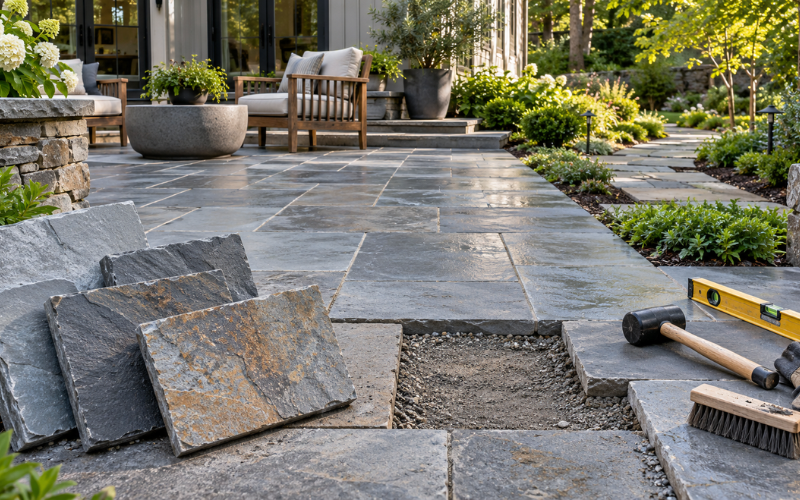
Bluestone is a popular natural stone used in patios, garden paths, steps, walls, pool areas, and buildings. Its rich colors and natural texture can give a space a strong, timeless appearance. However, the word “bluestone” can be confusing because it does not describe one specific type of rock.
In the northeastern United States, bluestone usually means a durable form of sandstone quarried in Pennsylvania and New York. In parts of Australia, especially Victoria, the same name commonly refers to a fine-grained volcanic rock with a basaltic composition. Other regions may use the term for different stones with a blue or blue-gray appearance.
These differences affect how the stone looks, feels, performs, and should be maintained. This guide explains the main types of bluestone, available finishes, common uses, advantages, possible drawbacks, installation methods, and care requirements.
What Bluestone Actually Is
Bluestone is a commercial or trade name used for several kinds of natural stone. It is not one universal geological classification. This means two products carrying the bluestone name may have different origins and physical qualities.
Pennsylvania bluestone is generally a type of sandstone. It formed from layers of sand and other material that were pressed together over a very long period. Australian bluestone is usually a dense volcanic stone related to basalt. Resources Victoria describes bluestone as an industry name for blue-gray, fine-grained igneous rock that typically has a basaltic composition.
Bluestone can contain shades of gray, blue, green, brown, rust, and purple. These natural variations do not automatically indicate poor quality. Quality is better judged by factors such as strength, thickness, surface condition, and suitability for the intended use.
Main Types of Bluestone
Pennsylvania and New York bluestone are among the best-known varieties in the United States. This material is a dense sandstone found mainly in the northeastern part of the country. It can be split into relatively flat pieces, which makes it useful for patios, paths, steps, and wall caps. It is available in both mixed colors and more consistent blue-gray selections.
Australian bluestone is different. It is commonly a basaltic volcanic stone, particularly when it comes from Victoria. This material is often dark gray or blue-gray and may contain small natural holes created by gas in ancient lava. It has been widely used in Australian streets, buildings, curbs, and outdoor paving.
The word may also be applied to limestone, slate, dolerite, or other blue-colored building stones in certain markets. Buyers should confirm the geological type, quarry location, expected color range, and recommended application before ordering.
Bluestone Colors, Textures, and Natural Variations
Despite its name, bluestone is not always blue. Some pieces have a cool blue-gray shade, while others include green, tan, brown, purple, or rusty orange. Mineral content, quarry location, moisture, surface treatment, and weather exposure can all influence its appearance.
Natural cleft bluestone often has visible layers and a lightly uneven texture. Basaltic bluestone may appear smoother and darker, sometimes with small surface holes. Veins, spots, fossil-like markings, and color bands may also be present.
A small sample can show the general character of a product, but it cannot represent every piece in a large order. Natural stone is expected to vary. Anyone seeking a consistent look should inspect several samples or request photographs of the current batch. Mixing pieces from different pallets during installation can also distribute color variation more evenly.
Popular Bluestone Finishes and Cuts
The finish affects the appearance, feel, safety, and maintenance of bluestone. Natural cleft stone is split along its natural layers, leaving a textured and slightly uneven surface. Its informal appearance works well in gardens and traditional outdoor settings.
A thermal or flamed finish uses intense heat to create a more even but textured surface. It is often selected for patios, walkways, and steps because it can provide useful grip. Not every stone responds to heat in the same way, so the finish must suit the exact material.
Honed bluestone has a smooth, matte surface. Polished stone has a glossier finish that can bring out deeper color, although it may be less suitable for wet outdoor areas. Tumbled pieces have softened edges and a worn appearance.
Bluestone is also sold as irregular flagstone or cut into squares, rectangles, coping pieces, stair treads, and other uniform shapes. Irregular pieces create an organic look, while cut pavers produce cleaner lines.
Common Uses for Bluestone
Bluestone is widely used for patios because it combines natural character with a solid walking surface. It can complement garden plants, timber, brick, and many architectural styles. Cut pavers suit formal layouts, while irregular flagstone creates a more relaxed design.
Garden paths, stepping stones, entryways, terraces, and outdoor steps are also common applications. Thick slabs may be used for stair treads, wall caps, benches, or large landscape features. Thin pieces can sometimes be used as wall cladding or building facades.
Selected bluestone products may be suitable for pool surrounds, but the surface should provide enough grip when wet. The stone and any sealer must also be appropriate for regular contact with pool water.
Bluestone can be used indoors for floors, fireplaces, and feature walls. However, the correct thickness, finish, and installation system will depend on the location and expected traffic.
Benefits of Using Bluestone
One of bluestone’s main benefits is its natural appearance. Each piece has its own color, pattern, and texture, allowing the finished surface to feel distinctive rather than factory-made.
Bluestone can also be strong and long-lasting when the correct product is selected and properly installed. It works in traditional gardens, rustic homes, modern patios, and commercial spaces. Buyers can choose between irregular slabs, formal pavers, smooth finishes, textured surfaces, and several color ranges.
The stone generally ages with character. Minor changes in tone and surface texture can help it blend naturally with its surroundings. Individual dry-laid pieces may also be lifted and replaced if underground work or repairs become necessary.
Its practical value still depends on the stone type, grade, climate, and installation quality. The bluestone name alone is not a guarantee that every product will perform equally well.
Drawbacks to Consider Before Buying
Bluestone can become hot in strong sunlight, especially when it has a dark color. This matters on patios and pool decks where people may walk barefoot. Viewing a sample outdoors during the warmest part of the day can help buyers judge whether it is suitable.
Natural stone may also absorb spills or develop stains. Leaves, soil, oil, food, metal furniture, and standing water can leave marks if they remain on the surface. Some finishes show scratches or weathering more easily than others.
Variation is another consideration. Pieces may differ in thickness, texture, and color, particularly with natural cleft or irregular stone. Installation can require more time and skill than laying uniform concrete pavers.
Bluestone is heavy, and shipping it over long distances can increase the total cost. Availability may also depend on the region, quarry production, and chosen size or finish.
Bluestone Compared With Other Paving Materials
Bluestone and slate can look similar, but slate is a different rock that naturally splits into thin layers. Some slate products can flake over time, while suitable bluestone is often chosen for thicker paving and steps.
Flagstone is not one rock type. It is a general term for flat pieces of natural stone used in paving. Bluestone can therefore be sold as flagstone when it has an irregular, flat shape.
Limestone usually has softer beige, cream, or gray colors. Its appearance can be warmer and more uniform, but some varieties are more sensitive to acidic substances. Bluestone often creates a darker, bolder look.
Concrete pavers are manufactured and usually offer more consistent sizes and colors. They may be easier to replace or install in repeating patterns. Bluestone provides greater natural variation, but it can cost more and require careful fitting.
Choosing the Right Bluestone for Your Project
Begin by confirming exactly what the supplier means by bluestone. Ask about the rock type, quarry region, grade, thickness, finish, and recommended uses. Product test information may be useful for demanding projects or harsh climates.
Consider where the stone will be installed. Outdoor paving needs to handle weather, drainage, foot traffic, and temperature changes. Indoor flooring may require a smoother surface and easier cleaning. Pool surrounds should have suitable slip resistance and be comfortable under bare feet.
Color should be viewed in both dry and wet conditions because moisture often makes bluestone appear darker. It is also helpful to inspect several full-size pieces instead of one small sample.
Order enough material to cover cutting, fitting, and possible breakage. Keeping a few unused pieces can make future repairs easier, especially if the same batch becomes unavailable.
What Affects the Cost of Bluestone
Bluestone prices vary widely, so there is no single reliable price for every project. The type of stone, quarry location, grade, color selection, thickness, and finish all affect the material cost.
Irregular flagstone may require less factory cutting, but fitting it together can increase labor time. Uniform pavers often cost more to produce, although they can create a faster and more predictable installation. Custom stair treads, coping, large slabs, and specialty finishes usually carry higher prices.
Delivery can form a large part of the budget because natural stone is heavy. Site access, excavation, drainage work, base preparation, cutting, mortar, joint materials, and labor must also be considered.
How Bluestone Is Installed
A successful bluestone surface begins with stable ground and good drainage. Weak base preparation can allow stones to sink, shift, or collect water, even when the material itself is strong.
In a dry-laid installation, pieces are placed over a prepared base without being permanently fixed in mortar. The joints may be filled with stone dust, sand, gravel, or another suitable material. This method can create a natural appearance and allows individual pieces to be adjusted later.
Mortar-set bluestone is fixed to a firm base, often concrete, using materials selected for natural stone. This method can produce a more solid surface but requires careful planning for drainage, movement, and weather conditions.
The surface should slope gently away from buildings so water does not collect near walls or foundations. A professional installer may be worthwhile for large patios, steps, pool areas, structural work, and sites with drainage problems.
Cleaning and Maintaining Bluestone
Regular care is usually simple. Sweep away dirt, leaves, and grit before they stain the surface or cause scratches. Wash the stone with clean water and use a soft brush when necessary.
For deeper cleaning, choose a pH-neutral cleaner made for natural stone. The Natural Stone Institute recommends neutral cleaners, stone soap, or a mild liquid dishwashing detergent with warm water. Strong acids, harsh chemicals, and unsuitable pressure-washing methods can damage the stone, joints, or sealer.
Spills should be blotted rather than spread across the surface. Moss and algae often indicate damp, shaded conditions, so improving drainage and sunlight may help prevent their return.
Loose or uneven pieces should be repaired promptly because they may become trip hazards. The cause, such as a weak base or poor drainage, should also be corrected.
Does Bluestone Need to Be Sealed?
Bluestone does not always need to be sealed. The decision depends on the stone type, location, finish, stain risk, and desired appearance. A sealer may help reduce absorption in dining areas, busy walkways, and places exposed to oil, food, leaves, or pool water.
Some sealers leave a natural-looking finish, while others darken the stone or create a wet appearance. The wrong product may trap moisture, become cloudy, change slip resistance, or make later maintenance more difficult.
Before treating the entire surface, test the sealer on a small hidden area and allow it to dry fully. Follow the stone supplier’s advice and the product instructions.
There is no universal resealing schedule. Climate, traffic, cleaning habits, stone porosity, and the sealer itself determine how long the protection lasts.
Common Bluestone Buying and Installation Mistakes
A common mistake is assuming that all bluestone products are the same. A sandstone from Pennsylvania and a basaltic stone from Australia can have different textures, finishes, and care needs. Confirming the exact material prevents confusion later.
Another mistake is choosing stone only by appearance. A glossy surface may look attractive but provide less grip around water. Thin pieces may be unsuitable for certain installation methods or heavy loads.
Poor drainage and rushed base preparation can lead to movement, cracking, staining, or standing water. Buyers should also accept reasonable natural variation rather than expecting every piece to match a sample exactly.
Finally, cleaners and sealers should never be selected by guesswork. Products should be compatible with the specific stone and tested before widespread use.
Conclusion
Bluestone is a versatile natural material, but its name can refer to more than one kind of rock. Pennsylvania and New York bluestone are generally forms of sandstone, while Australian bluestone is commonly basaltic volcanic stone. Their different origins can affect color, texture, finishing options, and maintenance.
The right choice depends on more than appearance. Buyers should consider the exact stone type, climate, location, surface finish, drainage, installation method, and long-term care. Examining several samples and asking clear questions about the stone’s source can prevent costly misunderstandings.
When properly selected and installed, bluestone can provide a durable and attractive surface with natural character. Understanding what is being sold is the most important step toward choosing bluestone that suits both the project and the people who will use it.
FAQs
1. Is bluestone a type of granite?
No. Bluestone is not generally granite. In the northeastern United States, it is usually sandstone, while Australian bluestone commonly refers to basaltic volcanic rock. Always check the product description because regional use of the name varies.
2. Is bluestone suitable for cold climates?
A suitable grade of bluestone can perform well in cold climates, but correct installation is essential. Good drainage helps prevent water from remaining beneath the stone, where freezing and expansion could cause movement or damage.
3. Does bluestone become slippery when wet?
It can, depending on its finish, slope, maintenance, and surface buildup. Textured finishes usually provide more grip than polished surfaces. Moss, algae, or a glossy sealer may also make the stone more slippery.
4. Can bluestone be used around a swimming pool?
Yes, selected bluestone products are used around pools. Choose a finish with appropriate slip resistance and ask whether the stone, joint material, and sealer are suitable for the pool’s water treatment system.
5. Does bluestone fade or change color over time?
Bluestone may develop a softer or weathered appearance as it is exposed to sunlight, rain, dirt, and regular use. Sealing can also deepen or alter its color. These changes are often part of the natural aging process rather than a sign of failure.