
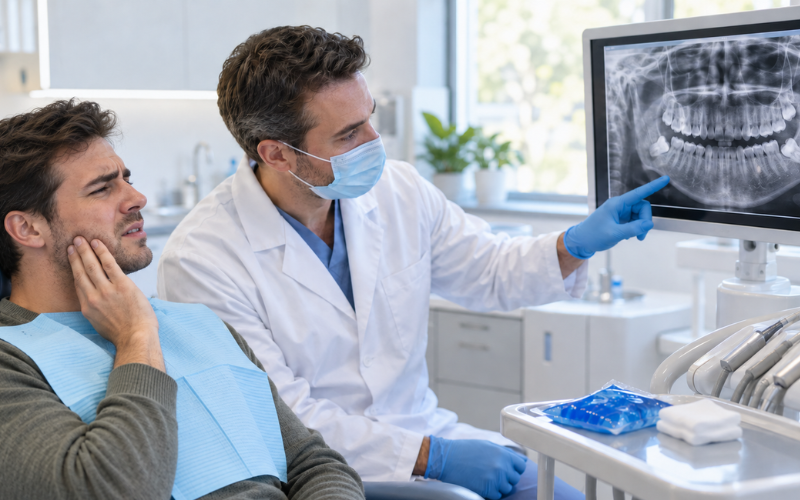
Wisdom teeth are the last adult teeth to develop at the back of the mouth. They are also called third molars because they sit behind the first and second sets of molars. Many people have four wisdom teeth, but some have fewer, extra teeth, or none at all.
For some people, wisdom teeth grow normally and never cause trouble. For others, there is not enough space in the jaw, so the teeth become trapped, grow at an angle, or only partly emerge. These problems may lead to pain, infection, or damage to nearby teeth.
This guide explains when wisdom teeth usually appear, the symptoms they may cause, how dentists examine them, when removal may be considered, and what to expect during recovery.
What Wisdom Teeth Are
Wisdom teeth are the final molars on the upper and lower sides of the mouth. A person can have one in each back corner, giving a usual total of four. However, the number varies because not everyone develops every third molar.
Molars have broad surfaces that crush and grind food. Wisdom teeth may once have been more useful when people ate rougher foods and experienced greater tooth wear. Today, many jaws do not have enough room for another set of large teeth.
Having no wisdom teeth is not a health problem. Likewise, wisdom teeth that grow into a healthy position can sometimes remain in place without treatment.
When Wisdom Teeth Usually Erupt
Wisdom teeth commonly emerge during the late teenage years or early twenties, often between ages 17 and 25. Some appear earlier or later, and others never break through the gums.
Eruption can happen slowly. A tooth may emerge fully, remain partly covered by gum tissue, or stay completely beneath the gum and jawbone. Timing can differ even among wisdom teeth in the same mouth.
Genetics, jaw size, tooth position, and the available space can all influence eruption. A dental X-ray may show wisdom teeth before they become visible in the mouth.
Why Wisdom Teeth Can Become Impacted
An impacted wisdom tooth cannot grow fully into its expected position. This usually happens because the jaw does not provide enough space or another tooth blocks its path.
Some impacted teeth point toward the second molar. Others tilt backward, lie almost sideways, or remain upright but trapped below the gum. A soft-tissue impaction means the tooth is mainly covered by gum. A bony impaction means part or all of it remains within the jawbone.
A partially impacted tooth has broken through the gum to some degree. A completely impacted tooth remains hidden. Impaction does not always cause immediate symptoms, but the area should still be assessed by a dentist.
Common Signs and Symptoms
Wisdom tooth trouble may cause aching or pressure at the back of the jaw. The gum around the tooth can become red, swollen, tender, or prone to bleeding. Some people find it uncomfortable to bite, chew, or open their mouths fully.
A partly erupted tooth can create a small gum flap where food and bacteria collect. This may produce bad breath, an unpleasant taste, or repeated gum inflammation.
Symptoms can disappear and return, especially when a tooth is slowly erupting. However, similar symptoms can also come from decay, another tooth, or a jaw condition. A dental examination is needed to identify the actual cause.
Problems Wisdom Teeth May Cause
Wisdom teeth can be difficult to brush and floss because of their position. Plaque and trapped food may increase the risk of decay in the wisdom tooth or the molar beside it.
Partially erupted teeth may also cause pericoronitis, which is inflammation or infection of the surrounding gum. Repeated episodes can become painful and interfere with eating. An impacted tooth may press against or damage the nearby second molar.
Less commonly, a fluid-filled cyst can form around an unerupted tooth and affect the surrounding bone or teeth. Even pain-free wisdom teeth may need regular checks because certain problems can develop without clear early symptoms.
How Dentists Examine Wisdom Teeth
A dentist begins by asking about pain, swelling, previous infections, medical conditions, and medicines. They then check whether each wisdom tooth has erupted, how it is positioned, and whether the surrounding gum looks healthy.
Dental X-rays help show teeth hidden beneath the gums. They can also reveal decay, bone changes, root shape, and the distance between lower wisdom teeth and nearby nerves. For upper teeth, the dentist may consider their position near the sinuses.
A complicated case may be referred to an oral and maxillofacial surgeon. This specialist can assess surgical difficulty, explain possible risks, and recommend an appropriate treatment plan.
Keeping Wisdom Teeth or Having Them Removed
Not every wisdom tooth needs to be removed. A fully erupted tooth may be kept if it is healthy, useful, easy to clean, and surrounded by healthy gum. A symptom-free impacted tooth may sometimes be monitored through examinations and X-rays.
Removal may be recommended when a wisdom tooth causes repeated infection, decay, gum disease, a cyst, damage to another tooth, or pain linked to confirmed disease. Guidance can vary between health systems, but routine removal of healthy, disease-free impacted teeth is not recommended by the UK’s National Institute for Health and Care Excellence.
Patients should ask what the examination shows, what could happen without surgery, and what risks removal may involve. The best decision depends on the tooth’s position, current health, future risk, and the patient’s overall condition.
Preparing for Wisdom Teeth Removal
Before removal, tell the dental team about medical conditions, allergies, pregnancy, and every medicine or supplement you take. Some medicines can affect bleeding, healing, or the type of anesthesia used. Do not stop prescribed medicine unless a qualified professional tells you to do so.
Instructions about eating and drinking depend on whether the procedure uses local anesthesia, sedation, or general anesthesia. Follow the clinic’s directions exactly.
If sedation or general anesthesia is planned, arrange for a responsible adult to take you home. It is also sensible to prepare soft food, cold packs, and a comfortable recovery area in advance.
What Happens During the Removal Procedure
A simple extraction may be possible when the wisdom tooth is fully visible. The dentist loosens the tooth and removes it from its socket after numbing the area.
Impacted wisdom teeth may require surgery. The dentist or surgeon can make a small opening in the gum, remove a limited amount of surrounding bone, and divide the tooth into smaller pieces. This allows the tooth to be removed with less pressure on nearby tissue.
Stitches may be used to close the area, and many are designed to dissolve on their own. Local anesthesia is common, while sedation or general anesthesia may be considered for difficult procedures or severe anxiety. The NHS overview of wisdom tooth removal explains that most patients go home on the same day.
Wisdom Teeth Recovery Timeline
During the first 24 hours, mild bleeding, soreness, swelling, and jaw stiffness are common. A blood clot forms inside the empty socket and protects the healing tissue underneath.
Swelling may become more noticeable during the first two or three days before gradually improving. Bruising, tenderness, and difficulty chewing can continue for several days. Some people return to usual activities the next day, while those who have a difficult extraction may need more time.
Many symptoms improve clearly within a week, although complete comfort may take up to two weeks. Recovery time varies with the number and position of the teeth removed, the type of procedure, personal health, and aftercare.
Aftercare That Supports Healing
Protecting the blood clot is an important part of recovery. Avoid forceful rinsing, spitting, or disturbing the socket on the day of surgery. Follow the dental team’s instructions about when to begin gentle salt-water rinses or use a prescribed mouthwash.
Choose soft foods that require little chewing. Yogurt, soup that is not hot, mashed vegetables, eggs, and soft pasta may be suitable. Avoid hard, sharp, sticky, or seedy foods that could irritate the wound.
Smoking and vaping can slow healing and increase the risk of complications. Drinking through a straw may create suction that disturbs the clot, so it is usually best avoided early in recovery. Strenuous activity can also restart bleeding.
Use pain medicine only as directed by the dentist, pharmacist, or product label. Continue brushing the rest of the mouth, but be gentle around the surgical site.
Possible Complications After Removal
Dry socket occurs when the protective blood clot is lost or does not form properly. It often causes strong, worsening pain a few days after extraction, sometimes with bad breath or a bad taste. A dentist can clean the socket and place a soothing dressing if needed.
Infection may cause increasing pain, swelling, fever, discharge, or difficulty opening the mouth. Bleeding that does not stop with the pressure method recommended by the dental team also requires prompt advice.
Lower wisdom tooth roots can sit close to nerves that supply feeling to the tongue, lip, and chin. Nerve irritation may cause numbness or tingling, which is often temporary but can occasionally last longer. Upper tooth roots may be close to the sinus, creating a small risk of sinus-related complications.
Contact the dental team urgently if pain or swelling becomes worse instead of better, bleeding continues, numbness concerns you, or you develop signs of infection. Seek emergency help for serious breathing or swallowing difficulty.
Wisdom Teeth Removal Costs and Practical Considerations
The cost of wisdom teeth removal varies widely by country, clinic, and case complexity. A simple extraction usually costs less than surgery for a deeply impacted tooth. X-rays, consultations, anesthesia, medicines, and follow-up care can also affect the total.
Before agreeing to treatment, request a written estimate that explains what is included. If you have dental coverage, check whether there are limits, waiting periods, approved providers, or costs you must pay yourself.
Price matters, but the decision should also consider the clinician’s experience, the planned anesthesia, aftercare access, and how complications would be handled.
Common Wisdom Teeth Myths and Misunderstandings
One common myth is that everyone must have their wisdom teeth removed. In reality, healthy teeth that are well positioned and easy to clean may remain in place with regular monitoring.
Another belief is that wisdom teeth always push the front teeth together. Dental crowding has several possible causes, and removing wisdom teeth solely to prevent crowding may not produce the expected result.
Extraction is also not always extremely painful. Anesthesia is used during the procedure, and postoperative discomfort can often be managed with suitable aftercare and pain relief. However, experiences differ, especially when teeth are deeply impacted.
Finally, a lack of pain does not prove that a wisdom tooth is healthy. Dental checks can find decay, gum problems, or damage before obvious symptoms develop.
Conclusion
Wisdom teeth do not cause trouble for everyone. Some erupt normally and remain healthy, while others become impacted, difficult to clean, or painful. Regular dental examinations help identify changes before they become serious.
Removal should be based on an individual assessment rather than a general rule. If you notice pain, swelling, bad taste, jaw stiffness, or another change near your wisdom teeth, arrange a dental appointment. Clear information from a qualified dental professional can help you choose the safest next step.
FAQs
1. Can wisdom teeth grow back after removal?
No. Once a wisdom tooth has been completely removed, it does not grow back. Rarely, a person may have an extra tooth that later becomes visible and is mistaken for regrowth.
2. Can wisdom teeth cause headaches or jaw pain?
Wisdom tooth problems can cause jaw pain that spreads toward the ear, temple, or surrounding area. However, headaches have many possible causes, so they should not automatically be blamed on wisdom teeth.
3. How long does wisdom tooth pain last?
Pain from eruption may come and go. After removal, discomfort is often strongest during the first few days and should then improve. Pain that suddenly becomes severe or worsens after several days may indicate dry socket or another problem.
4. What can you eat after an extraction?
Soft, mild foods are usually most comfortable at first. Food should not be extremely hot, crunchy, sharp, or likely to become trapped in the socket. Normal foods can be added gradually as chewing becomes comfortable.
5. How many wisdom teeth can be removed at once?
One, several, or all four can be removed during one appointment. The choice depends on their position, the reason for removal, procedure difficulty, anesthesia plan, and the patient’s health.
6. Can impacted wisdom teeth remain safely in place?
Some can remain safely if they are free from disease and monitored regularly. Others may need removal because of infection, decay, cyst formation, or damage to nearby teeth. A dentist should make this assessment using an examination and appropriate imaging.