
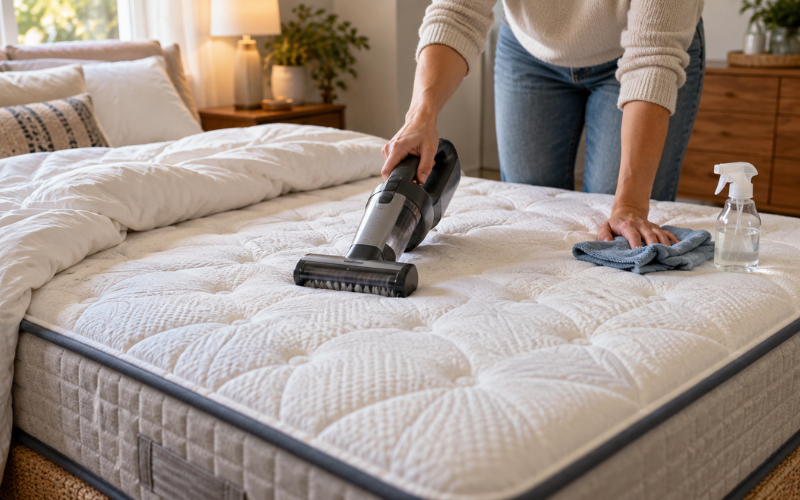
A mattress collects more than the sheets and blankets that cover it. Dust, skin flakes, sweat, small spills, and everyday odors can build up on its surface over time. Knowing how to clean a mattress can help you freshen it and deal with stains while protecting its fabric and filling.
The safest approach is usually a gentle one: check the care instructions, remove the bedding, vacuum the mattress if the manufacturer allows it, and spot-clean marks with as little moisture as possible. Let the mattress dry completely before putting the sheets back on. The right method can vary by model and material, so check the label or manufacturer’s guidance before using water or a cleaning product. Some mattress covers are spot-clean only and should not be removed or washed.
Check the Mattress Care Label and Gather Supplies
Before cleaning, look for a care label on the mattress or check the manufacturer’s website for instructions for your specific model. This matters because covers that look similar may have different care requirements. One may allow gentle spot-cleaning, while another may be damaged by water, strong cleaners, or removal.
Gather a vacuum with an upholstery attachment, a few clean white cloths, and a small bowl of cool water. If the care instructions allow a cleaning product, choose a mild one made for the type of fabric or stain you are treating. Avoid spraying a product directly over a large area. Instead, follow its directions and test it on a small, hidden spot first. Wait for the test area to dry and check for color changes, texture changes, or other damage.
You may also want clean towels to absorb moisture and a fan to improve airflow while the mattress dries. Avoid assembling a collection of strong cleaners “just in case.” More products do not necessarily mean a cleaner mattress, and the wrong product can leave a residue or harm the cover.
Prepare the Mattress for Cleaning
Take off sheets, blankets, pillows, and the mattress protector. Put washable bedding aside and check each item’s own care label before laundering it. The protector may need a different wash setting from the sheets, and a foam or quilted topper may have its own cleaning instructions.
Clear the space around the bed so you can reach the mattress edges and sides. If possible, open a window or make sure the room has good airflow. Then inspect the mattress in natural or bright light. Look for spills, stains, discoloration, and areas that have collected dust. A quick inspection helps you decide whether routine vacuuming is enough or whether you need to spot-clean a particular area.
If the mattress has a removable cover, do not assume it can go in the washing machine. Check the manufacturer’s instructions first. Some covers are designed to stay on the mattress and can only be spot-cleaned.
Vacuum the Mattress to Remove Dust and Debris
Vacuuming can remove loose dust, crumbs, and other debris before you use a damp cloth. Attach an upholstery tool or another attachment the mattress maker recommends. Work slowly across the top in overlapping passes, then clean the seams, edges, and sides where debris can settle.
Use gentle pressure and avoid forcing the attachment into the fabric. Mattress guidance differs: some manufacturers recommend a non-bristled attachment or advise against placing the vacuum directly on the mattress. Follow the instructions for your model, and skip vacuuming if its care guidance says not to.
Vacuuming is not a substitute for treating a stain, but it gives you a clean starting point. If there are crumbs or grit on the surface, removing them first also reduces the chance of rubbing them into the fabric while you clean a mark.
Treat Mattress Stains Without Soaking the Fabric
For a fresh spill, act as soon as you can. Press a clean, dry cloth against the area to absorb liquid, then lift it away. Repeat with a fresh part of the cloth. Blotting helps draw up moisture; rubbing can spread the stain and wear the fabric.
If a stain remains, check the care label and use only a product permitted by the manufacturer. Apply a small amount to a cloth rather than pouring or spraying it over the mattress. Dab the spot gently, working from the outer edge toward the center to limit spreading. Use a separate cloth lightly dampened with clean water only if the product directions call for it, then press with a dry towel to absorb as much moisture as possible.
Different stains may need different treatment, and a method that works on one mattress may not be safe for another. For a drink spill, start by blotting away liquid before treating any remaining mark. For sweat discoloration or older spots, avoid mixing household ingredients or applying bleach or other harsh products unless the manufacturer specifically approves them. For urine, remove as much liquid as possible with dry cloths and follow a mattress-safe cleaning product’s instructions. If a strong odor remains after the mattress dries, check the manufacturer’s guidance before repeating the treatment or trying another product.
Mattresses are thick, and moisture that reaches deeper layers may take a long time to dry. Some manufacturers specifically advise keeping the mattress from becoming wet and recommend gentle spot-cleaning only. A stain may not come out completely, especially if it is old or has soaked in. It is safer to accept a faint mark than to keep adding liquid and risk leaving the inside damp.
Freshen Mattress Odors and Surface Areas
If the mattress has a mild stale smell but no clear spill, first remove the bedding and let the room air out. Vacuum the mattress if its care instructions allow it. Fresh airflow and a clean bed frame can help with everyday odors without adding another product.
Some cleaning guides suggest sprinkling a light layer of baking soda over the mattress, leaving it for a short time, and then vacuuming it up. This may help with mild surface odors, but it is not right for every mattress. Check the manufacturer’s instructions first, keep the powder away from openings and mechanical parts, and vacuum it thoroughly. Casper’s general mattress guidance includes baking soda as an optional freshening step, while manufacturers also emphasize following the care requirements for the specific mattress.
Do not use fragrance sprays to cover a persistent or unfamiliar odor. A lasting smell may come from a spill that has soaked into the mattress, a damp area, or another issue that surface freshening will not resolve. If you suspect moisture or see signs of mold, do not keep wetting or deodorizing the area. Follow the manufacturer’s advice and consider getting help from a professional cleaner.
Let the Mattress Dry Completely
After spot-cleaning, press a dry towel against the treated area to absorb remaining moisture. Leave the mattress uncovered and allow air to move around it. Open a window when weather allows, use a room fan, or run a dehumidifier if the room feels damp. Keep the mattress flat and avoid placing it in direct sunlight or applying a hair dryer, heater, or iron unless the manufacturer specifically permits it.
Drying time depends on how much moisture was used, the room’s airflow, and the mattress construction. Check the cleaned area by touch and give it more time if it still feels cool or damp. Do not put sheets or a protector back on until the surface is fully dry. Covering a damp mattress can slow drying and trap moisture.
If you used only a small amount of cleaner, the surface may dry fairly quickly, but do not rely on a fixed number of minutes. A mattress can feel dry on top while moisture remains beneath the fabric. When in doubt, let it air longer.
Clean Different Mattress Materials Carefully
Memory foam, latex, innerspring, and hybrid mattresses do not all respond to cleaning in the same way. The outer cover, seams, and inner layers may each have different limits. The care label and manufacturer’s instructions should guide your method, especially before using liquid.
Foam mattresses are often best treated with minimal moisture because liquid can be difficult to remove from a thick interior. Do not remove a foam mattress cover unless the maker says it is removable and washable. For latex mattresses, check the product instructions before applying water or household cleaners; avoid assuming that a method for an innerspring mattress will also be suitable.
Innerspring and hybrid mattresses still have fabric covers and internal materials that can be affected by excess liquid. Spot-clean the cover only as directed, and do not pour cleaner through seams or quilting. If your mattress has an adjustable or powered component, follow its care guide and keep liquids away from controls, plugs, and mechanical parts.
A removable cover is washable only if its care label or manufacturer says so. Tempur-Pedic, for example, states that some of its mattress covers are spot-clean only and should not be removed for washing. When you cannot find instructions, contact the manufacturer before trying a deep-cleaning method.
Common Mattress-Cleaning Mistakes to Avoid
The most common mistake is using too much water. A mattress is not like a bedsheet: you usually cannot put it in a washer or rinse it out. Excess moisture may linger inside and create a bigger problem than the original stain.
Avoid scrubbing hard, which can spread a mark or damage the fabric. Do not apply several cleaners one after another without checking whether they are compatible or suitable for the mattress. Never mix cleaning products, and keep them away from children and pets while you work. Do not use bleach, strong solvents, or heat unless the manufacturer clearly approves them.
Another mistake is removing a zippered cover without permission from the care instructions. A zipper does not necessarily mean the cover is designed to be washed or removed. Finally, do not make the bed while the cleaned area is damp. Give the mattress time to dry fully.
How Often to Clean a Mattress
There is no single schedule that suits every household. Vacuum the mattress when you change the bedding or as part of a regular room-cleaning routine if the manufacturer permits it. Freshen or spot-clean it when you notice an odor or spill, rather than waiting until marks have set.
Homes with pets, young children, allergies, or frequent spills may need more regular attention. A washable mattress protector can help keep everyday dirt and liquid away from the mattress, as long as it fits properly and is laundered according to its label. Wash sheets and the protector regularly, and deal with spills promptly.
Between cleanings, keep the bedroom aired out and avoid eating or drinking on the bed if spills are a concern. These small habits can reduce how often you need to clean the mattress itself.
Conclusion
Learning how to clean a mattress is mostly about using a gentle method and knowing when to stop. Check the care instructions, strip and prepare the bed, vacuum only if allowed, blot stains with minimal moisture, and let the mattress dry completely. The safest cleaner and method depend on the mattress, so follow its manufacturer’s guidance whenever you are unsure. Regular bedding care and a suitable protector can also help keep the mattress fresher between cleanings.
FAQs
1. Can you wash a mattress with water?
Usually, you should not soak or rinse a mattress. Some covers can be spot-cleaned with a small amount of water or an approved cleaner, but the care instructions for your model should decide what is safe.
2. Is baking soda safe to use on a mattress?
It may be suitable for some mattresses as a light surface freshener, but check the manufacturer’s directions first. If allowed, use a small amount and vacuum it up thoroughly.
3. How do you clean urine from a mattress?
Blot up as much liquid as possible with dry cloths, then follow the mattress maker’s instructions for spot-cleaning. Use only a permitted product, apply it sparingly, and allow the area to dry fully.
4. How do you remove a stain from a mattress without damaging it?
Blot rather than rub, test an approved cleaner on a hidden spot, and apply a small amount to a cloth. Avoid soaking the fabric, scrubbing hard, or using a product the manufacturer has not approved.
5. How long should a mattress dry after cleaning?
Drying time varies with the amount of moisture, airflow, and mattress construction. Keep the bed uncovered until the treated area feels completely dry, and allow more time if you are unsure.