
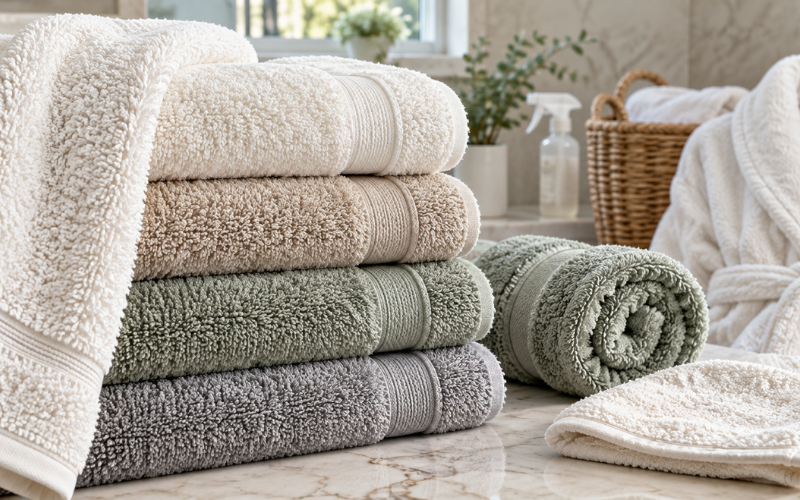
Terry cloth is a soft fabric covered with small raised loops. These loops give the material its familiar texture and help it absorb water. It is most commonly used for towels, washcloths, bathrobes, cleaning products, and comfortable clothing.
The fabric may look simple, but its performance depends on several details. The fibers, loop size, fabric weight, and manufacturing method can all affect how soft, absorbent, durable, and quick-drying it feels. This is why two terry cloth towels can perform very differently even when they look similar.
What Terry Cloth Is
Terry cloth is a fabric made with a surface of uncut loops. These loops may appear on one side or both sides of the material. In traditional terry toweling, the loops stand above the base fabric and create a thick, textured surface.
The word “pile” refers to the raised fibers on a fabric’s surface. Terry is therefore often described as a loop-pile fabric. Unlike velvet or velour, its loops are normally left uncut. This construction creates more surface area than a flat piece of cloth, helping the fabric collect moisture.
A smooth woven fabric has a relatively flat surface. Terry cloth has many loops that can touch water from different directions. This makes it especially useful for drying skin, hair, dishes, and other surfaces.
Although cotton is the material most closely associated with terry cloth, the name describes the fabric’s construction rather than one particular fiber. Terry can also be made from bamboo-derived rayon, polyester, microfiber, or blended materials.
How Terry Cloth Is Made
Traditional terry cloth is woven using two sets of warp yarns. Warp yarns run lengthwise through the fabric. One set forms the stable base, while the other creates the raised loops. A separate yarn runs across the width and helps hold the structure together.
During weaving, the loom controls the tension and movement of the yarns so that some of them rise above the base. The resulting loops can cover one or both surfaces. Different settings allow manufacturers to change their height, number, and firmness.
Terry fabric can also be knitted. Knitted terry is generally more flexible than woven terry and is often used for clothing. French terry is a familiar example. It normally has a smooth outer face and soft loops on the inside.
Loop construction strongly affects performance. Longer and denser loops provide more surface area and can improve absorbency, but they can also make the fabric heavier and slower to dry. Shorter loops may feel less plush, yet they can produce a lighter and more practical material.
Fabric weight matters as well. Heavy terry often feels luxurious and holds more water, while lightweight terry dries more quickly and is easier to pack. Neither option is automatically better; the right choice depends on how the fabric will be used.
Why Terry Cloth Is So Absorbent
Terry cloth absorbs moisture effectively because its loops create a large working surface. Each loop can come into contact with water, and the spaces between the fibers help draw moisture into the material.
The fiber itself is also important. Cotton is naturally absorbent, which is one reason it remains a popular choice for towels. It can hold a useful amount of water and generally feels comfortable against the skin.
A dense cotton terry towel will often absorb more water than a thin synthetic one. However, greater absorbency can mean a longer drying time. A heavy towel may feel rich and soft after bathing but remain damp for many hours in a poorly ventilated room.
Synthetic fibers behave differently. Polyester does not absorb water in the same way as cotton, but specially made microfiber can lift and hold moisture in the tiny spaces between its fine fibers. Microfiber terry is usually lightweight and quick-drying, making it useful for travel, sports, and cleaning.
Fabric treatments can also change performance. Some finishes make new terry cloth feel unusually smooth, but they may temporarily reduce absorbency. Washing the item before its first use can help remove some manufacturing residue.
Common Terry Cloth Materials
Cotton is the most common material used for terry cloth. It offers a good balance of softness, absorbency, comfort, and durability. Cotton terry is widely used for bath towels, robes, washcloths, baby products, and household textiles.
Some products are sold as bamboo terry. These fabrics usually contain rayon or viscose produced from bamboo rather than raw bamboo fibers. They are often blended with cotton for strength and may feel smooth and soft. Shoppers should read the fiber label because the phrase “bamboo terry” does not always describe the exact composition.
Microfiber terry is made from very fine synthetic fibers, commonly polyester and polyamide. It can absorb or collect moisture efficiently while remaining relatively light. It also dries faster than thick cotton, although some people prefer the natural feel of cotton against their skin.
Polyester may be added to cotton terry to improve strength, control shrinking, reduce drying time, or lower production costs. A cotton-rich blend can still feel soft and absorbent, but a high synthetic content may change how the fabric handles moisture.
The best material depends on the purpose. Cotton is a dependable option for everyday bath products, while microfiber works well when low weight and quick drying are priorities. Blends can provide a useful middle ground.
Main Types of Terry Cloth
Terry toweling is the thick, highly absorbent fabric commonly used for bath towels and robes. It usually has loops on both sides, giving it a plush texture and plenty of surface area.
French terry is different. It is generally a knitted fabric with a smooth face and loops on the reverse side. It is softer and more flexible than traditional towel fabric but is not usually as absorbent. Sweatshirts, shorts, joggers, and casual tops are common French terry products.
Double-sided terry has loops on both surfaces. It can absorb moisture from either side and is useful for towels, bath linens, and cleaning cloths.
Velour terry begins with a looped surface, but the loops on one side are cut or brushed to produce a smooth finish. That side feels soft and displays colors or printed designs clearly. The uncut side remains more suitable for drying. Beach towels often use this construction.
Stretch terry contains an elastic fiber such as elastane. It offers more movement than standard woven terry and may be used for fitted clothing, headbands, spa wraps, or reusable personal-care products.
Terry Cloth vs. French Terry
Terry cloth and French terry share a looped construction, but they are designed for different purposes. Traditional terry cloth usually has visible loops on both sides and is woven to maximize absorbency. French terry is knitted, with a smooth outer face and small loops on the inside.
Standard terry toweling tends to be thicker and more textured. It is ideal for products that need to collect water, such as towels and bathrobes. French terry is lighter, smoother, and more flexible, making it better suited to clothing.
French terry provides moderate warmth without the thick, fuzzy interior of fleece. It can absorb some perspiration, but it should not be expected to work like a bath towel. Its main strengths are comfort, breathability, and ease of movement.
Choose traditional terry cloth when drying performance is the priority. Choose French terry when you want a comfortable fabric for sweatshirts, shorts, joggers, or lightweight layers.
Everyday Uses of Terry Cloth
Bathrooms are the most familiar setting for terry cloth. Bath towels, hand towels, washcloths, bath mats, and robes all benefit from its absorbent surface. Hotels, gyms, salons, spas, and healthcare settings also use it because it is comfortable and can withstand regular washing when properly made.
Terry is common in baby products such as hooded towels, bibs, burp cloths, and reusable wipes. Softness matters for these items, but buyers should also check the fiber content, seams, dyes, and washing instructions.
In the home, terry cloth can be used for dish towels, cleaning pads, mop covers, and reusable cloths. Microfiber terry is especially effective for collecting moisture and fine dust from many surfaces.
Clothing uses include beach cover-ups, robes, shorts, shirts, and loungewear. French terry is particularly popular for casual clothing because it is more flexible and less bulky than towel-style fabric.
Benefits of Terry Cloth
The main benefit of terry cloth is its ability to absorb moisture. Its loops collect water efficiently, making it one of the most practical fabric constructions for towels and related products.
It can also feel soft and comforting against the skin. Good-quality cotton terry often becomes more absorbent after a few washes as surface finishes are removed. With sensible care, it can remain useful through frequent washing and drying.
Versatility is another advantage. Manufacturers can adjust the fiber, weight, loop height, and construction to create anything from a light cleaning cloth to a thick hotel-style towel.
There are some limitations. Long loops can snag on jewelry, hooks, or rough surfaces. Heavy terry may take a long time to dry and can develop an unpleasant smell if stored while damp. Some products also release lint when new. These issues can usually be managed through careful selection and proper care.
How to Recognize Good-Quality Terry Cloth
Fiber content is a useful starting point. Cotton-rich terry is often a strong choice when softness and water absorption are important. However, fiber content alone does not guarantee quality. The yarn, construction, finishing, and stitching also matter.
Look at the loops closely. They should appear reasonably even and secure, without large bare areas. Dense loops often make the material feel fuller, but extremely long or loose loops may snag more easily.
Fabric weight can indicate how substantial a towel will feel. Weight is often shown in grams per square metre, or GSM. A higher GSM generally means a thicker and heavier towel, while a lower GSM indicates a lighter product. Higher numbers do not always mean better quality because some users need a towel that dries rapidly.
Examine the hems and edges as well. Straight, secure stitching helps a terry cloth item survive repeated washing. Weak seams, loose threads, uneven loops, and poorly finished edges may suggest that the product will wear out quickly.
Choosing the Right Terry Cloth
Start by considering the intended use. A plush cotton terry is suitable for a comfortable bath towel, while a lighter version may be better for the gym or travel. A cleaning cloth may benefit from quick-drying microfiber, and French terry is the more suitable option for casual clothing.
Think about the balance between thickness and drying speed. A heavy towel can absorb plenty of water, but it may be inconvenient in a humid bathroom. Lightweight terry is less luxurious but can be easier to wash, carry, and dry.
People with sensitive skin may prefer a soft, minimally treated fabric. For babies, choose products with smooth seams and clear care labels. Any fabric that touches delicate skin should be washed before its first use.
Frequent washing also influences the choice. Strong hems, secure loops, colorfast material, and a suitable fiber blend can make everyday items easier to maintain.
How to Wash and Care for Terry Cloth
Always check the product’s care label because recommendations differ by fiber and finish. Most cotton terry items can be machine washed with a normal amount of detergent. Using too much detergent may leave residue that makes the fabric feel stiff and less absorbent.
Fabric softener can coat the fibers and reduce their ability to take in water. Occasional use may not ruin a towel, but regular heavy use can affect its performance. Dryer sheets may create a similar coating.
Wash light and dark colors separately, especially when the fabric is new. Avoid washing terry cloth with garments that have exposed hooks, sharp zippers, or rough fasteners because these can catch the loops.
Dry the fabric thoroughly before folding or storing it. A damp towel left in a basket or closed cupboard can develop a stale smell. Moderate tumble drying can help keep cotton terry soft, while air-drying saves energy. Avoid excessive heat if the care label warns about shrinking.
If a loop is pulled, do not tug it. Carefully trim the loose loop level with the surrounding surface without cutting into the fabric’s base. Because terry is constructed from many separate loops, trimming one snag usually prevents further catching.
Common Questions About Terry Cloth
Does terry cloth shrink?
Cotton terry cloth can shrink, particularly during its first few washes or when exposed to high heat. The amount depends on the fiber, construction, and any pre-shrinking treatment. Following the care label and using moderate temperatures can reduce unwanted shrinkage.
Is terry cloth suitable for hot weather?
It can be, depending on its weight and construction. Lightweight French terry is often comfortable in mild or warm conditions because it is breathable and can manage some moisture. Heavy towel-style terry may feel too warm and bulky for hot weather clothing.
Is all terry cloth made from cotton?
No. Cotton is the traditional and most common choice, but terry cloth can also contain polyester, microfiber, bamboo-derived rayon, or blended fibers. The term refers mainly to the looped fabric structure.
Why does new terry cloth sometimes shed lint?
New towels may release short, loose fibers left from manufacturing. Shedding often decreases after several washes. Excessive or continuing lint can be a sign of weak yarn, aggressive drying, or poor construction.
Can terry cloth be used for sewing projects?
Yes. It works well for robes, towels, bibs, reusable wipes, beachwear, and household items. Its edges can fray, and its loops may catch during sewing, so sharp tools, suitable needles, secure seams, and careful handling are helpful.
Conclusion
Terry cloth is a practical loop-pile fabric valued for softness and moisture absorption. Its raised loops create extra surface area, while its fiber content and weight influence how it feels, performs, and dries.
Cotton terry is a reliable choice for towels and robes, microfiber suits lightweight or quick-drying products, and French terry works well for comfortable clothing. By checking the loops, fabric weight, fiber label, and stitching, buyers can select terry cloth that fits its intended purpose.