
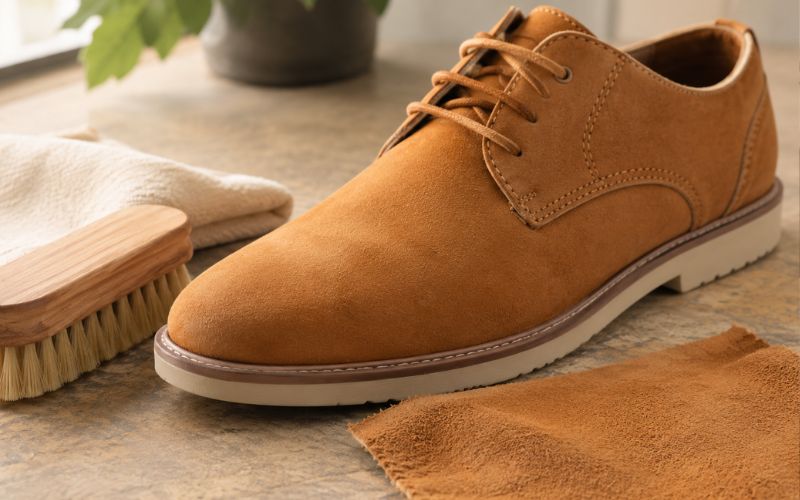
Nubuck is real leather with a soft, velvety surface. It is usually made from the strong outer side of an animal hide. The maker lightly sands or buffs this surface to raise very short fibers, creating a smooth feel and rich, slightly shaded appearance.
It is used for shoes, boots, bags, jackets, belts, gloves, and furniture. People often confuse it with suede because both feel soft, but they come from different parts of the hide. This leather can be durable and attractive, yet its brushed surface collects dust and absorbs moisture more easily than smooth leather. Understanding its texture, uses, and care needs will help you decide whether it suits your lifestyle.
What Nubuck Is and How It Gets Its Distinctive Texture
This leather is commonly produced from top-grain hide, which comes from the outer part of the animal skin. This area has tightly packed fibers and is generally stronger than the inner split used for many types of suede. Cattle hide is a common source, although the animal source can vary.
Manufacturers gently sand the grain surface to raise tiny fibers. The resulting texture is called a nap. Moving a finger across it changes the direction of the fibers and the way they reflect light, creating light and dark shading. Small natural variations may remain and can be part of the finished material’s character.
Nubuck vs. Suede: The Differences That Matter
Nubuck and suede look similar, but their construction is different. The first is normally made by sanding the outer grain side of a hide. Suede usually comes from the softer inner split. Because the outer fibers are tighter, a good nubuck product is often stronger than suede of a similar thickness.
Nubuck usually has a short, fine nap with an almost peach-like feel. Suede often has longer, more noticeable fibers. It may cost more because it requires a suitable piece of hide and careful finishing. Both materials can absorb stains and moisture, so both need approved brushes and cleaners rather than routine smooth-leather products.
Nubuck Compared With Other Popular Leather Types
Full-grain leather keeps its natural grain surface and is not sanded to create a nap. It may develop a rich patina over time. The sanded material feels softer and has a more casual finish, but it usually needs greater protection from stains.
Top-grain leather is a broad term for leather from the outer section of a hide after the surface has been corrected or finished. Nubuck can belong to this group, but the sanded face makes it distinct. Smooth top-grain leather is generally easier to wipe clean.
Faux suede and synthetic nubuck use human-made fibers. They can provide a similar look, a lower price, or an animal-free choice, but their breathability, feel, and aging vary. A synthetic material should not be sold as genuine nubuck leather.
Why Nubuck Is Considered a Premium Material
Nubuck balances softness with the strength of outer-hide leather. Its fine nap gives plain colors depth, while its matte surface creates a relaxed but refined appearance. It may also breathe better than materials covered with a heavy artificial coating.
With careful use, this leather can age attractively. Its color may deepen, and areas touched often may become smoother. The grade and thickness of the hide, evenness of sanding, quality of dye, stitching, and overall construction all affect the finished product. Price alone does not prove that an item is well made.
Common Uses of Nubuck Leather
Footwear is one of its most common uses. Boots benefit from the strong base, while sneakers and casual shoes use the soft texture for a comfortable, premium appearance. Some outdoor footwear uses treated nubuck, although treatment does not make every pair waterproof.
The material also appears in handbags, backpacks, belts, jackets, gloves, and small accessories. Handles and corners may darken through frequent contact. In the home, it can cover chairs and sofas, creating a warm natural finish. Light-colored upholstery may require extra attention, especially in homes with pets or young children.
The Main Advantages and Drawbacks of Nubuck
Nubuck offers a soft touch, natural character, and stylish matte finish. Good-quality material can be strong, breathable, and comfortable. Its shifting nap also makes color appear deeper than it does on many flat surfaces.
Its main weakness is sensitivity. Water can leave marks, oil can enter the fibers, and dust can flatten the nap. Light colors show dirt quickly, and ordinary leather creams can damage the finish. With frequent use, high-contact areas may darken or become smooth. It performs best when brushed gently, protected correctly, and cleaned soon after a spill.
How to Identify Genuine, High-Quality Nubuck
Genuine nubuck usually feels soft and slightly dry rather than slick or plastic-like. Brushing the nap in another direction should change its shade a little. The surface may contain small natural variations instead of a perfectly repeated pattern. When visible, the reverse should look like leather rather than woven fabric.
The label is more reliable than touch alone. Look for “genuine nubuck leather” in the product details. Terms such as “nubuck effect” or “nubuck-style” may describe a synthetic material. Even coloring, a consistent nap, secure stitching, and neat edges are positive quality signs. Peeling layers or printed texture may point to an imitation.
Essential Nubuck Care for Everyday Use
Regular light care is easier than removing heavy dirt later. Once the item is dry, use a clean nubuck brush to lift dust and keep the nap even. Brush gently; strong pressure can wear the surface. Footwear used often may benefit from quick brushing after every few wears.
Choose products clearly marked safe for nubuck or suede. Standard polish, wax, oil, and smooth-leather conditioner can darken the material and flatten its texture. Test every new product on a hidden area. Store it in a cool, dry place away from sunlight and heaters. Use shoe trees or plain paper to support its shape, and avoid sealed plastic during long storage.
How to Clean Nubuck Without Damaging the Surface
Check the care label and let the item dry before cleaning. Brushing wet dirt can push it deeper into the nap. Start gently: loosen dry soil with a nubuck brush and use a nubuck eraser on small marks. Stop if the color begins to change.
Water rings, salt, and food marks may need a dedicated nubuck cleaner. Oil stains should be treated quickly with an absorbent product recommended for leather. Avoid strong soap, bleach, and homemade mixtures. Test any treatment on a hidden spot first.
Never soak the material. Blot extra moisture with a clean, pale cloth and allow the item to dry naturally in moving air. Keep it away from hair dryers, radiators, and strong sunlight. Brush the fully dry surface to lift the nap again.
Protecting Nubuck From Water and Stains
A nubuck-safe protector spray can slow the absorption of moisture and stains. Apply it outdoors or in a well-ventilated space, following the instructions for distance and drying time. Light, even coats are safer than one heavy coat. Test first because some sprays can deepen the color.
If it becomes wet, blot it gently without rubbing. Support wet shoes or bags with plain, color-free paper and allow slow natural drying. A protector can improve water resistance, but it cannot make all seams, linings, and untreated areas waterproof. Heavy rain, deep puddles, mud, and oil can still cause damage.
Restoring Scuffed, Flattened, or Faded Nubuck
A clean nubuck brush can often lift flattened fibers. Use short, gentle strokes in different directions. A nubuck eraser may reduce light scuffs, but hard rubbing can create a pale patch or remove dye.
Faded material may improve with a color-restoring spray made for nubuck. Matching the shade can be difficult, so test it in a hidden place and protect nearby trim. Seek professional help for valuable items, large stains, severe fading, mold, tears, or deep scratches. A leather-care specialist may clean and match color more safely than a home treatment.
Nubuck Care Mistakes That Can Cause Permanent Damage
Ordinary leather polish and oily conditioner can create dark, smooth patches by binding the fine fibers together. Too much water may spread dye or leave rings, while direct heat can make leather stiff, warped, or cracked.
Hard brushes, rough sponges, and forceful scrubbing may remove color and wear down the nap. Bleach, alcohol, strong soap, and general stain removers can also cause lasting damage. Even a product labeled for leather is not automatically suitable for this finish. Avoid wearing untreated items in heavy rain, deep mud, or oily work areas when possible.
Is Nubuck the Right Material for You?
This material is a good choice if you value natural texture, comfort, and a premium appearance. It suits people willing to brush it gently and apply protection when needed. Care may be fairly simple in a dry climate or for items mainly used indoors.
It may be less practical in constant rain, muddy settings, or places where spills are common. Smooth leather may be better when quick cleaning is the priority, while synthetic alternatives can suit buyers seeking an animal-free option. A quality item can last for years, but its life depends on construction, use, storage, and care.
Conclusion
Nubuck combines the strength of outer-hide leather with a soft, velvety finish. Its fine nap gives footwear, bags, clothing, and furniture a rich appearance, but it also makes the material sensitive to moisture, oil, and unsuitable cleaners.
Gentle brushing, suitable products, natural drying, and sensible protection can preserve its color and texture. For anyone who values the character of real leather and accepts some regular care, nubuck can remain attractive and useful for many years.
FAQs
1. Is nubuck real leather?
Yes. Genuine nubuck is real leather made by lightly sanding the outer grain surface of a hide. Products described only as “nubuck-style” or “nubuck effect” may be synthetic, so always check the material label.
2. Does nubuck last a long time?
It can last for years when it is well constructed and cared for correctly. Regular brushing, suitable protection, careful storage, and quick stain treatment can extend its useful life.
3. Can nubuck be worn in the rain?
Light moisture may be manageable when the material is protected, but heavy or repeated rain can cause marks and stiffness. Protector spray improves resistance; it does not make every item waterproof.
4. Is nubuck difficult to maintain?
It needs more care than wipe-clean smooth leather, but maintenance is not complicated. A suitable brush, approved protector, and careful handling are enough for most everyday items.
5. Can damaged nubuck be repaired?
Minor scuffs, flat fibers, and light fading can often be improved with suitable products. Deep stains, tears, severe color loss, or mold are better handled by a professional leather cleaner or repair specialist.