
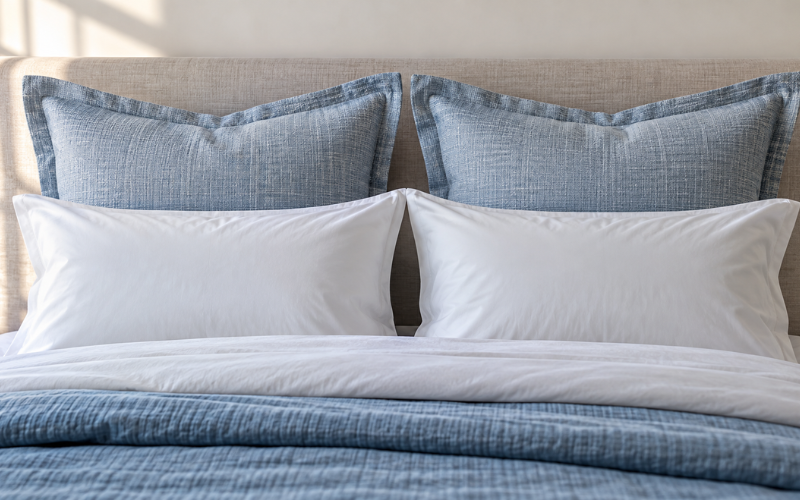
A pillow sham is a decorative cover designed to make an ordinary pillow look more attractive. It is often made to match a comforter, quilt, duvet cover, or other bedroom fabrics. Unlike a regular pillowcase, which is mainly used to protect a sleeping pillow, a sham is usually chosen for its appearance.
Pillow shams commonly feature wide fabric borders, stitched patterns, textured materials, or hidden openings. They are normally arranged in front of the headboard or behind the pillows used for sleeping. This gives the bed a finished and carefully styled appearance.
If you are wondering what is a pillow sham and whether you need one, the answer depends on how you want your bed to look and function. This article covers the features, common sizes, available styles, placement ideas, everyday use, and proper care of pillow shams.
What Is a Pillow Sham?
A pillow sham is a removable decorative fabric covering for a pillow. The word “sham” refers to the cover rather than the pillow placed inside it. The inner pillow is normally called a pillow insert.
Most pillow shams have a decorative front and an opening at the back. This opening may use overlapping fabric to keep the insert hidden. Some designs include buttons, ties, or zippers instead.
The edges of a sham may be plain, piped, ruffled, or surrounded by a wide fabric border called a flange. These details create a more formal and structured appearance than a standard pillowcase.
Pillow shams are frequently included in coordinated bedding collections. For example, a quilt set may contain one quilt and two matching shams. This allows the colors, patterns, and materials across the bed to work together.
Although pillow shams are mostly decorative, they can still serve a practical purpose. They protect pillow inserts from dust and help turn unused pillows into part of the room’s design.
Pillow Sham vs. Pillowcase: The Key Differences
A pillowcase is primarily made for sleeping. It usually has a simple opening on one side and is made from a soft, breathable, and washable material. Its job is to protect the pillow from skin oils, sweat, hair products, and everyday dirt.
A pillow sham is primarily decorative. Its opening is often located at the back, where overlapping pieces of fabric hide the pillow insert. A sham may also include borders, embroidery, quilting, ruffles, or other visual details that are uncommon on basic pillowcases.
Their placement on the bed is also different. Sleeping pillows in regular pillowcases are usually placed where they are easy to reach at night. Decorative shams are commonly arranged against the headboard or in front of the sleeping pillows during the day.
You can sleep on a pillow sham, especially if it is made from soft cotton or linen. However, raised stitching, buttons, thick borders, and textured fabrics may make it less comfortable than an ordinary pillowcase.
The Main Parts of a Pillow Sham
The front panel is usually the most decorative part of a pillow sham. It may feature a printed pattern, embroidery, quilting, pleats, or textured fabric. In coordinated bedding, the front often matches or complements the main bed covering.
Many shams use an envelope-style opening on the back. Two fabric panels overlap to create a hidden space where the pillow insert can be added or removed. This design prevents the end of the pillow from showing.
The edges can vary significantly. A flanged sham has a flat border extending around its sides. A piped sham uses a narrow cord covered in fabric to create a neat outline. Tailored shams have cleaner, straighter edges, while ruffled designs create a softer and more traditional appearance.
Some pillow shams have buttons, ties, or zippers. These closures help keep the insert in place, but they should be checked before sleeping on the sham because hard closures may feel uncomfortable.
The sham and its insert are normally separate products. When buying one, it is important to confirm whether the listing includes only the decorative cover or both pieces.
Standard Pillow Sham Sizes
A standard pillow sham is commonly around 20 by 26 inches. It is designed to hold a standard pillow and is widely used on twin, full, and queen beds. Some brands also offer a queen sham measuring approximately 20 by 30 inches.
A king pillow sham is usually about 20 by 36 inches. Its longer shape works well across the width of a king or California king bed.
A Euro sham is square rather than rectangular. The most common size is approximately 26 by 26 inches. Euro shams are often placed upright against the headboard to add height and create a layered arrangement.
Smaller decorative options include boudoir shams, which commonly measure around 12 by 16 inches, although specialty sizes differ. These small shams are usually placed at the front of a larger pillow arrangement.
Always check the actual measurements before buying. Manufacturers may include or exclude decorative borders when listing a sham’s dimensions. A properly sized insert should fill the corners without stretching the cover excessively.
Common Types and Styles of Pillow Shams
Standard and king shams are rectangular and usually match the shape of traditional sleeping pillows. They are practical choices for adding decoration without introducing another pillow shape.
Euro shams are large, square covers that add height to a bedding arrangement. They can also provide support when sitting up in bed to read or watch television.
Quilted shams feature layers of fabric held together with visible stitching. They often coordinate with quilts or coverlets and can add texture without making a room feel overly formal. Matelassé shams create a similarly raised appearance, although the texture is woven or designed to resemble hand quilting.
Flanged shams have a wide, flat border, while ruffled shams offer a softer look. Tailored designs have clean lines that suit simple or modern bedrooms. Piped edges create a defined outline and may use a contrasting color for added visual interest.
Reversible shams provide two designs in one cover. Patterned options can introduce color and character, while plain or lightly textured shams are easier to combine with different bedding.
How a Pillow Sham Fits Into a Bedding Set
A pillow sham helps connect the different parts of a bedding set. It may repeat the color, pattern, stitching, or fabric used on a comforter, quilt, duvet cover, or coverlet. This repetition makes the bed look coordinated.
Some bedding sets include matching shams, but the number depends on the package and bed size. A twin set may contain one sham, while full, queen, and king sets often include two. However, there is no universal rule, so the product description should always be checked carefully.
Shams may also be sold separately. This gives you more control over the number, size, and style used on your bed. It can also be helpful if you want to mix solid colors with patterns or combine materials such as linen, cotton, and velvet.
How to Put a Pillow Into a Sham
Begin by checking that the insert matches the sham’s size. If the insert is too small, the sham may look flat and loose. If it is too large, the seams and closures may be placed under unnecessary pressure.
Open the back of the sham and fold the pillow insert slightly in the middle. Guide one end into the cover, followed by the other. Push the insert gently into each corner before allowing it to return to its full shape.
If the sham has overlapping back panels, pull them over the insert so that the pillow is completely covered. Fasten any buttons, ties, or zippers carefully.
Finish by smoothing the front panel and adjusting the edges. Flanges and ruffles should be straightened so they frame the pillow evenly. For a fuller appearance, some people use an insert that is slightly larger than the sham, but the fabric and seams must be strong enough to hold it comfortably.
Where Pillow Shams Should Go on the Bed
There is no single correct way to arrange pillow shams, but they are often placed against the headboard. Sleeping pillows can then sit in front of them or lie flat behind the decorative arrangement.
On a twin bed, one standard sham may be enough. A full or queen bed usually looks balanced with two standard or queen shams. A king bed can hold two king shams or three standard shams, depending on the desired look.
Euro shams are commonly placed in the back row because their square shape adds height. Standard or king shams can form the middle layer, followed by a smaller decorative cushion at the front.
The arrangement should suit the size of the bed and remain practical. Too many pillows can make the bed feel crowded and create unnecessary work each morning and evening.
Choosing the Right Pillow Sham
Start by selecting a sham that fits your pillow insert. Review both the cover measurements and the seller’s sizing instructions, especially when purchasing online.
Next, consider the room’s existing colors and patterns. A solid sham can balance a detailed comforter, while a patterned sham can add interest to plain bedding. Texture is another useful design element. Velvet feels rich, linen offers a relaxed appearance, and quilted cotton creates a cozy look.
Material also affects comfort and maintenance. Cotton is generally soft, breathable, and easy to wash. Linen has a natural texture but may wrinkle easily. Velvet can create a warm, elegant appearance but may require careful cleaning. Silk feels smooth and luxurious, although it is often delicate. Synthetic fabrics can be durable and affordable, but their softness and breathability vary.
Check the care label and product description before buying. Confirm whether the sham is machine washable and whether the pillow insert must be purchased separately.
Can You Sleep on a Pillow Sham?
You can sleep on a pillow sham, but it may not provide the same comfort as a regular pillowcase. A soft, washable cotton sham may feel perfectly comfortable, while one with beads, buttons, thick seams, or rough embroidery may irritate the skin.
Regular pillowcases are usually more practical because they are designed for frequent washing. They are also less likely to have decorative parts that press against the face or neck.
If you occasionally sleep on a sham, you can keep a regular pillowcase on the insert underneath it. The pillowcase adds another layer of protection, while the sham provides the decorative outer finish.
Cleaning and Caring for Pillow Shams
Always begin with the care label. Cotton and many synthetic shams may be suitable for machine washing, while silk, velvet, embroidery, and delicate trims may require hand washing or professional cleaning.
Remove the pillow insert before cleaning the cover. Close any zippers or buttons to reduce the chance of damage. Gentle detergent and cool or warm water are usually safer for colors and decorative stitching, but the manufacturer’s directions should take priority.
Air-drying can help protect the shape and fabric. If machine drying is allowed, use the recommended temperature and remove the sham promptly to reduce wrinkles. Decorative borders should be reshaped while the fabric is still slightly damp.
Shams used only for decoration generally need less frequent washing than pillowcases. Clean them when they collect dust, develop marks, or begin to smell stale. Shams used for sleeping should be washed more regularly.
Conclusion
So, what is a pillow sham? It is a decorative pillow cover that helps make a bed look coordinated and complete. Unlike an everyday pillowcase, it often features a hidden back opening, decorative borders, textured fabric, or detailed stitching.
The right sham depends on the size of your insert, the style of your bedding, and how much maintenance you prefer. Standard and king shams offer a familiar rectangular shape, while Euro shams add height and structure.
Pillow shams are not essential for sleeping, but they can transform the appearance of a bedroom with very little effort. By choosing the correct size, suitable material, and balanced arrangement, you can create a comfortable bed that also looks polished and inviting.
FAQs
1. Does a pillow sham come with a pillow?
Usually, a pillow sham is sold as a cover without an insert. However, some bedding packages may include decorative pillows. Read the product description to see exactly what is included.
2. Are pillow shams only decorative?
Decoration is their main purpose, but shams also protect pillow inserts from dust. Soft shams can provide support while sitting in bed and may be used for occasional sleeping.
3. What size insert should go inside a sham?
Choose an insert that matches the listed sham size. A slightly larger insert can create a fuller look, but it should not strain the seams or distort the cover.
4. How many pillow shams should be placed on a bed?
A twin bed often uses one sham, while full and queen beds commonly use two. King beds often have two king shams. You may add Euro shams if you want more height and layering.
5. What is the difference between a Euro sham and a standard sham?
A Euro sham is typically a large square cover measuring about 26 by 26 inches. A standard sham is rectangular and commonly measures around 20 by 26 inches.