
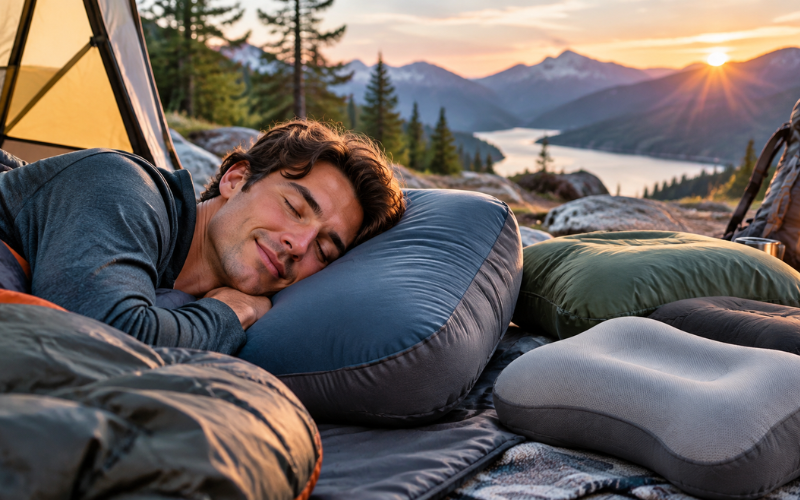
A good night outdoors depends on more than a warm sleeping bag and supportive pad. Your head and neck also need a comfortable place to rest. The best camping pillows provide that support without taking up the space of a normal bedroom pillow. They are usually lighter, smaller, easier to pack, and better suited to outdoor conditions.
Choosing the right pillow can reduce the strain caused by sleeping with your head at an awkward angle. It can also help you relax after a long day of hiking, driving, or setting up camp. However, comfort is personal. A pillow that feels perfect to a back sleeper may be too low for a side sleeper or too firm for a stomach sleeper.
Camping pillows come in inflatable, compressible, and hybrid styles. Each balances comfort, weight, and packed size differently. This article explains how to match these designs and their main features to your sleeping position and camping style.
Best Camping Pillows at a Glance
This comparison provides useful reference points rather than a universal ranking. Measurements refer to the stated size and may change after product updates.
| Camping pillow | Type | Listed weight | Packed size | Support | Best for |
| NEMO Fillo Elite Regular | Hybrid air and insulation | 3 oz | Smaller than a soda can | Soft and adjustable | Lightweight comfort |
| Sea to Summit Aeros Premium Regular | Hybrid air and foam | 3.7 oz packed | 4 × 3 × 3 inches | Adjustable and shaped | Backpacking and mixed sleeping positions |
| Therm-a-Rest Compressible Pillow Cinch Small | Compressible foam | 7 oz | Self-stowing but bulkier | Soft and familiar | Car camping and comfort |
| Trekology Aluft 2.0 | Inflatable | 3.9 oz | About 5 × 2 inches | Adjustable firmness | Budget-focused campers |
These examples show the main trade-off: inflatable models save room, while compressible models generally provide a softer, more familiar surface. The measurements above are based on current specifications for the listed sizes.
How We Evaluate the Best Camping Pillows
A useful comparison should look beyond price and brand recognition. A pillow should feel comfortable while keeping the head in a natural position rather than forcing the neck upward or allowing it to drop too low.
Weight and packed size matter most for backpackers because every item must be carried. Car campers have more freedom to choose a heavier pillow if it feels better. Inflation and adjustment also affect the experience. A good valve should be easy to use, hold air through the night, and allow small changes in firmness.
Fabric deserves attention because it touches the face for several hours. Durability, cleaning instructions, and repair support also influence value. These factors provide a helpful buying framework, but personal testing remains important because comfort varies between sleepers.
Inflatable, Compressible, and Hybrid Camping Pillows
Inflatable pillows use an air chamber to create height and support. They pack small, weigh little, and offer adjustable firmness. However, some can feel bouncy or less natural than a bedroom pillow. Serious air-chamber damage can also leave them unusable.
Compressible pillows contain foam, synthetic fill, or a mixture of both. Their soft surface feels familiar and requires no inflation. However, these pillows take up more room, weigh more, and may need time to expand after being stored.
Hybrid pillows combine an air chamber with foam or insulation. They offer a useful middle ground for backpackers who want cushioning without carrying a large pillow. The main disadvantage is that they often cost more than basic inflatable models.
Comfort and Support Matter More Than Thickness
A thick pillow is not automatically comfortable. The right height keeps the neck close to its natural line with the spine. Too much or too little height can lead to stiffness.
Inflatable pillows make height and firmness easy to adjust, but filling one completely can make it feel hard and unstable. Releasing a small amount of air often creates a softer surface that holds the head more securely.
A sleeping pad also changes how a pillow feels. A soft pad allows the shoulders to sink farther than a firm pad, changing the pillow height needed. Test your camping pillow with the sleeping pad and sleeping bag you plan to take on your trip.
Choosing a Camping Pillow for Your Sleeping Position
Stomach sleepers generally need a low-profile pillow because excessive height can turn the neck at an awkward angle. A lightly inflated air pillow or thin compressible model often works well.
Back sleepers usually need moderate height and gentle support beneath the neck. A contoured, adjustable pillow can keep the head centered without feeling restrictive.
Side sleepers need more height to fill the space between the shoulder and head. They often benefit from a wider surface with stable edges. People who change positions throughout the night should favor medium height and easy firmness adjustment.
Test the pillow at home for at least one complete night. A few minutes of lying down may not reveal pressure, slipping, noise, or gradual air loss. Home testing also gives you time to replace an unsuitable pillow before your trip.
The Best Camping Pillows for Backpacking
Good backpacking pillows weigh only a few ounces and compress into a small stuff sack. Inflatable and lightweight hybrid designs leave more room for food, clothing, and essential safety equipment.
Do not focus on weight alone. Look for a reliable valve, adjustable pressure, a shape that holds the head, and comfortable face fabric. An integrated stuff sack is useful because a separate small bag can be easy to lose.
Durability becomes particularly important on longer routes. Keep your pillow inside the tent and away from sharp equipment. Carry a compatible repair patch when possible. A removable or washable cover is also valuable on multi-night trips.
Comfortable Options for Car Camping
Car camping makes weight less important, so larger compressible and hybrid pillows become practical. These models can provide a broader and softer surface that feels closer to a bedroom pillow.
A compressible foam pillow is suitable for campgrounds, road trips, festivals, and extended stays. It requires no inflation and cannot lose support because of a leaking valve. However, its bulk can become a problem when several people need their own pillows.
A larger hybrid pillow can save more space than many foam models while still providing comfortable cushioning. Before buying, check that it fits inside your sleeping-bag hood or remains stable on your sleeping pad.
Important Features to Compare Before Buying
Start with the inflated dimensions rather than judging a pillow by its product photo. A narrow design may save weight but leave little room for movement. Side sleepers and people who move frequently may benefit from extra width.
The pillow’s shape matters as well. A curved lower edge can make room for the shoulders, while a shallow dip in the middle may help hold the head in place.
Compare weight and packed measurements in the context of your trip. A difference of several ounces matters more during a long backpacking journey than at a drive-in campsite.
The valve should allow quick inflation and controlled air release. Soft fabric and a removable cover improve comfort and make cleaning easier. A textured base, elastic strap, or connection system can prevent the pillow from sliding across the sleeping pad.
Finally, check the care instructions, repair options, and warranty terms. A durable pillow that can be cleaned or repaired may provide better long-term value than a cheaper model that must be replaced after one problem.
Camping Pillows for Hot, Cold, and Humid Conditions
For warm-weather camping, choose breathable face fabric. Slick materials can feel warm or sticky, so a thin pillowcase or clean shirt may improve comfort.
In cold conditions, a foam or insulated upper layer usually feels warmer than an unpadded air chamber. Keep the pillow dry because damp fabric feels colder and takes longer to become comfortable.
In humid conditions, choose materials that dry quickly. Never leave a wet pillow sealed inside its storage sack. Trapped moisture can cause unpleasant odors, damage materials, and shorten the pillow’s useful life.
Common Problems With Camping Pillows
Slow air loss may come from a valve problem, small puncture, or falling temperature that causes the air inside to contract. Check the valve first and then inspect the pillow if it continues to soften.
Some lightweight fabrics make a crinkling sound when they rub against hair or sleeping bags. A soft cover can reduce the noise. Testing the pillow at home can also reveal raised or uncomfortable seams.
Camping pillows may slide on smooth sleeping pads. A strap, textured backing, attachment system, or sleeping-bag hood can improve stability.
Other possible problems include excessive height, uneven foam, slow-drying covers, and chemical odors when a product is new. Open and air out a new pillow before traveling to reduce packaging odors.
Making a Camping Pillow More Comfortable
Do not assume an inflatable pillow should be filled as firmly as possible. Start with moderate inflation, lie down, and slowly release air until your head rests in a stable position. This simple adjustment can make an air pillow feel less like a balloon.
If the pillow is too low, place folded clothing underneath it instead of overinflating it. A clean T-shirt, neck gaiter, or small pillowcase can make the surface softer. Keep any loose fabric away from your nose and mouth.
Use a sleeping-bag hood, elastic strap, or pad attachment to stop the pillow from moving. Test the complete setup at home because the pillow, sleeping pad, and sleeping bag all work together.
Camping Pillow Size, Weight, and Packability
Packability requires balance. Ultralight inflatable pillows occupy very little room, while a slightly larger hybrid may provide better rest. Foam pillows use far more space but usually feel softer.
Backpackers often focus on pillows weighing around three to five ounces. Casual campers can consider heavier choices without much concern. Treat this range as a reference rather than a strict rule.
The inflated pillow must also fit your sleeping pad and tent without pushing your head against the tent wall. Side sleepers and people with broader shoulders may need additional width and height.
The smallest pillow is not always the best choice. A camping pillow should be compact when stored but large enough to support your head after it has been unpacked or inflated.
Care, Cleaning, and Storage
Follow the manufacturer’s care instructions because materials and construction vary. Some pillows have machine-washable covers, while their inflatable inner sections must be cleaned by hand. Sea to Summit, for example, advises hand washing its current Aeros Premium and allowing it to air-dry instead of placing it in a dryer.
Check inflatable pillows for leaks before traveling. Store compressible pillows loosely when possible so their filling can maintain its shape. Keep every model in a clean, dry place away from direct sunlight, high heat, pets, and sharp objects.
When a Camping Pillow Is Worth Carrying
A rolled jacket can raise your head, but clothing shifts, zippers create pressure, and cold nights may require you to wear those extra layers. A dedicated pillow provides more consistent support.
A camping pillow is especially useful on multi-night trips and after demanding hikes. Backpackers may accept a few extra ounces in exchange for better rest, while strict ultralight hikers may prefer a clothing bag that serves more than one purpose.
Consider the likely benefit across the whole trip. If better sleep improves your comfort, mood, recovery, and enjoyment, a small pillow can earn its place in your pack. If you already sleep comfortably on folded clothing, buying another piece of equipment may not be necessary.
Conclusion
The best camping pillows are not simply the lightest, thickest, or most expensive models. They are the ones that match the camper’s sleeping position, support needs, travel style, and available pack space. Inflatable pillows suit people who prioritize low weight and compact storage. Compressible designs favor softness and simplicity, while hybrid pillows balance portability with cushioning.
Compare the inflated dimensions, packed size, fabric, adjustment method, stability, and cleaning needs before making a choice. Then test the pillow with your complete sleeping setup at home. A carefully chosen pillow may be a small piece of camping gear, but the comfort it provides can make sleeping outdoors much easier.
FAQs
1. What type of camping pillow is most comfortable?
Compressible pillows usually feel most like bedroom pillows, while hybrid models offer a good balance between softness and packability. Comfort ultimately depends on your sleeping position, preferred firmness, and sleeping pad.
2. Are inflatable camping pillows good for side sleepers?
Yes, provided the pillow offers enough height to fill the space between the shoulder and head. Side sleepers should look for a stable, wider shape and avoid inflating it so firmly that it creates pressure.
3. How much should a backpacking pillow weigh?
Many lightweight options weigh approximately three to five ounces. A slightly heavier pillow can still be worthwhile if it provides noticeably better sleep. Consider your total pack weight and trip length.
4. How do I stop my camping pillow from sliding?
Use an attachment strap, textured base, or compatible pad-locking feature. Placing the pillow inside your sleeping-bag hood can also help. A thin shirt around the pillow may add friction on a smooth pad.
5. Can I use a normal pillow for camping?
Yes, especially when space and weight are not limited. A bedroom pillow is usually too bulky for backpacking and may absorb moisture more easily, but it can be comfortable for car camping in dry conditions.