
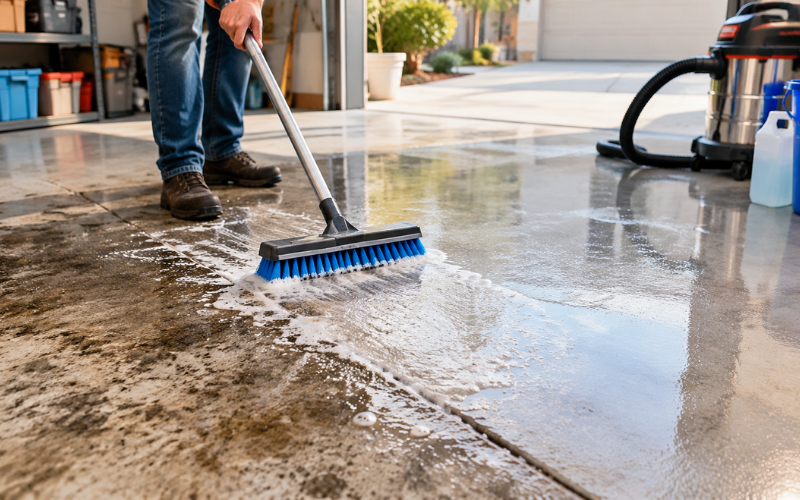
Concrete is a tough flooring material used in basements, garages, patios, workshops, entryways, and living spaces. However, it is not maintenance-free. Dust settles into its texture, grease leaves dark patches, and spills can soak into unfinished surfaces. Even sealed concrete becomes dull when dirt and cleaner residue build up.
Learning how to clean concrete floors begins with identifying the finish. Sealed, polished, painted, and unfinished concrete do not respond to cleaning products in the same way. A strong chemical that seems useful on an outdoor slab could discolor an indoor coating or dull a polished surface. Using the safest suitable method protects both the appearance and condition of the floor.
Most routine cleaning requires a broom or vacuum, microfiber mop, warm water, and mild cleaner. Older stains may need targeted treatment. This article covers the tools, cleaning steps, stain treatments, common mistakes, and maintenance habits that protect concrete floors.
Know Your Concrete Floor Before Cleaning
Before placing any cleaner on the floor, look closely at its finish. Sealed concrete usually has a clear protective layer that helps prevent water and stains from soaking in. Water often forms beads on a healthy sealer instead of darkening the surface immediately. A mild, pH-neutral cleaner is normally the safest choice because strong acids, alkaline products, and abrasive tools may weaken or cloud the coating.
Unsealed concrete is porous, so water, grease, and other liquids can penetrate it. It may need more scrubbing, but aggressive treatment can still etch it or create uneven coloring.
Polished concrete has a dense, glossy finish. Remove grit often, use a soft mop, and avoid products that reduce its shine. Painted or coated concrete also needs gentle care because harsh brushes and chemicals can scratch or peel it.
Indoor floors require limited water and good ventilation. Outdoor concrete can usually be rinsed more freely if water drains safely. When uncertain about a finish, test the cleaner in a hidden corner.
Essential Supplies for Cleaning Concrete Floors
You do not need a large collection of special tools for ordinary cleaning. A basic kit should include:
- A soft-bristle broom or vacuum suitable for hard floors
- A microfiber mop and clean bucket
- Warm water and a mild, pH-neutral floor cleaner
- A nylon scrub brush for difficult marks
- Absorbent cloths or paper towels for spills
- Protective gloves and access to fresh air
For a large unfinished garage floor, a wet-and-dry vacuum or floor squeegee can help. Use separate clean and dirty water buckets on heavily soiled surfaces. Always confirm that the cleaner suits both concrete and its sealer, paint, or coating.
Preparing the Floor for a Thorough Clean
Clear furniture, boxes, pots, rugs, and mats from the area. Protect the bases of items that cannot be moved. Sweep edges and corners carefully because grit can scratch a polished or coated floor when dragged by a mop.
Vacuum or sweep away hair, dust, soil, and stones so they do not become mud. Check for cracks, loose paint, flaking coating, and worn sealer. Large cracks or moisture coming through the slab may need repair instead of stronger cleaning.
Test the solution in a hidden area, follow the recommended contact time, and let the spot dry. Check for fading, dullness, or discoloration. Open windows and keep children and pets away until the floor is dry.
How to Clean Concrete Floors Step by Step
For general cleaning, follow this simple process and avoid flooding the floor:
- Dilute the cleaner exactly as the label directs. More product does not usually mean better cleaning because it can leave a sticky film.
- Start in the corner farthest from the exit. Work in small sections so the solution does not dry before you can remove it.
- Apply the solution with a damp microfiber mop. On rough, unfinished concrete, use a nylon brush with light, even pressure.
- Allow the cleaner to remain for the stated contact time without letting it dry. Give greasy or heavily tracked areas extra attention.
- Rinse the mop, replace dirty water, and go over the floor with clean water if the product requires rinsing.
- Remove standing water and let the surface dry completely. Use fans or natural airflow indoors if necessary.
Inspect the dry floor because damp concrete can hide stains. Treat remaining spots individually. Streaks on sealed or polished concrete often indicate excess cleaner or dirty water. A second pass with a clean, well-wrung mop may remove them.
Cleaning Sealed and Polished Concrete Safely
Sealed and polished surfaces resist absorption, but scratches, harsh chemicals, and residue can damage their appearance. Sweep regularly, then wash with a microfiber mop, warm water, and a pH-neutral cleaner.
Keep the mop damp rather than dripping wet. Although a sealed floor resists water, liquid can enter through scratches, joints, or worn sections. Clean spills promptly and do not allow puddles to remain around furniture legs or along walls.
Avoid metal brushes, abrasive pads, scouring powder, acidic descalers, and strong degreasers unless approved by the floor manufacturer. Confirm that any wax or new sealer is compatible with the existing finish. A floor that stays dull after gentle cleaning may need refinishing.
Deep-Cleaning Unsealed Concrete Floors
Unfinished concrete holds dirt and absorbs spills. Remove dry debris, then pre-treat visible marks with a tested product made for bare concrete. Do not cover the whole floor with concentrated stain remover when only a few areas need treatment.
Apply diluted cleaner to one section at a time. Work it into the texture with a stiff nylon brush, using overlapping movements for even results. A wet-and-dry vacuum can lift dirty water from large floors.
Rinse carefully and collect runoff rather than pushing it into a street, garden, or storm drain. Follow local disposal rules for water containing oil, paint, or chemicals. Stop treatment if the concrete lightens or becomes rough, and let it dry fully.
Removing Common Stains From Concrete Floors
Treat stains quickly by blotting liquids rather than rubbing them outward. Match the treatment to the stain and floor finish, and test it first.
For fresh oil or grease, absorb as much as possible with towels or spill-absorbent material. Dispose of it appropriately, then use a concrete-safe degreaser on unfinished concrete or an approved mild cleaner on sealed floors. Deep, old marks may not disappear completely.
Rust usually needs a concrete-specific remover. Because many such products are acidic, check compatibility with polished, painted, or sealed finishes. Follow the label and never mix the product with another cleaner.
Blot food and drink spills, then wash the area with warm water and mild detergent. For mold or mildew, correct the moisture source first. Wear suitable protection, ventilate indoor spaces, and use a product approved for both the affected surface and indoor location. Widespread or recurring growth may indicate a leak or humidity problem that needs professional attention.
Blot wet paint without spreading it. Dried paint may need a plastic scraper and compatible remover, although solvents can damage coatings. Tire marks often respond to mild degreaser and a nylon brush. Blot pet accidents quickly and use an enzyme cleaner labeled safe for the floor finish.
How to Clean Indoor Concrete Floors
Indoor concrete requires moisture control. Sweep or vacuum, then use a well-wrung microfiber mop with diluted, low-odor cleaner. Keep water away from walls, wood trim, electrical equipment, rugs, and stored items.
Open windows or use fans. Never combine cleaning products, as mixtures can create dangerous fumes or reactions.
Basement moisture deserves special attention. If the floor remains damp long after cleaning, shows pale mineral deposits, or repeatedly develops a musty smell, cleaning alone may not solve the problem. Check for plumbing leaks, poor drainage, or moisture passing through the slab. Addressing the source helps prevent stains, odors, and mold from returning.
How to Clean Outdoor Concrete Floors
Outdoor patios, paths, and garage floors collect soil, leaves, algae, and vehicle residue. Sweep first, soften dried dirt with water, and scrub with a concrete-safe cleaner and nylon deck brush. Work toward suitable drainage and keep runoff away from doors and neighboring property.
A garden hose is often enough for rinsing. Keep contaminated runoff out of storm drains. Pressure washing can help on sound, uncoated slabs, but excess pressure can mark concrete, expose aggregate, widen cracks, and strip finishes.
If using a pressure washer, begin low, test a hidden area, maintain an even distance, and keep the nozzle moving. Avoid pressure-washing weak, painted, repaired, or badly cracked concrete without expert guidance.
Natural Cleaning Options for Concrete Floors
Warm water with a small amount of mild dish soap can handle light soil on many unfinished surfaces. However, dish soap may leave film on polished or sealed floors, so use very little and rinse well. A paste of baking soda and water may help lift a light mark from bare concrete when applied gently and tested first. It should not be treated as a universal solution because even mild abrasives may change the sheen of a finished surface.
Vinegar is commonly promoted as a natural cleaner, but its acidity can react with concrete and damage some sealers or coatings. Repeated use may make the surface rough or dull. Lemon juice and other acidic homemade mixtures carry similar risks.
Natural does not automatically mean safe for every finish. Always test a homemade solution and choose a manufacturer-approved pH-neutral product when caring for sealed, polished, or painted concrete.
Cleaning Products and Chemicals to Avoid
Avoid highly acidic cleaners unless a specific treatment requires one. Acids can etch bare concrete and harm decorative finishes. Undiluted bleach is also a poor everyday cleaner because it may discolor finishes, irritate skin and lungs, and damage nearby materials.
Do not use ammonia-based products without checking compatibility, and never mix ammonia with bleach. In fact, never mix any cleaning products unless their labels specifically state that it is safe. Abrasive powders, steel wool, and metal brushes may scratch coatings or leave metal particles that later rust.
Strong solvents and degreasers can soften paint, cloud sealer, or create hazardous fumes. Choose the least aggressive effective product and follow all safety and disposal directions.
Common Concrete Floor Cleaning Mistakes
One common mistake is using the same method on every type of concrete. Bare garage concrete may tolerate a treatment that ruins a polished living-room floor. Another mistake is adding too much cleaner. Excess soap attracts dirt and creates streaks rather than improving the result.
Skipping the dry-cleaning stage turns loose dust into muddy residue. Failing to rinse a product that requires rinsing can leave a sticky or cloudy film. Harsh tools may scratch coatings, while prolonged soaking can carry moisture into cracks and edges. Allowing dirty water to dry on the surface can also create new marks.
Do not apply sealer to concrete that is dirty or damp. Trapped moisture and residue can cause poor adhesion, uneven color, cloudiness, or peeling. Follow the sealer manufacturer’s preparation and drying requirements. Seek expert advice if the floor has ongoing moisture problems.
Keeping Concrete Floors Cleaner for Longer
Regular light care is easier than occasional aggressive cleaning. Sweep, vacuum, or dust-mop often enough to prevent grit from accumulating. Place mats at entrances to catch soil, but use breathable products suitable for the floor so moisture does not remain trapped underneath.
Blot spills immediately and use the mildest suitable treatment. Mop based on traffic and use rather than waiting for visible grime. A quiet living space may need washing less often than a garage, workshop, or busy entrance.
Inspect sealed and painted surfaces for dull areas, scratches, peeling, and places where water begins to darken the concrete. These signs may show that the protective layer is wearing out. Reapply sealer only after proper preparation and according to product instructions. Furniture pads and clean wheels on movable equipment can also reduce scratches and tracked-in dirt.
How Often Concrete Floors Should Be Cleaned
There is no single schedule for every concrete floor. Sweep a busy indoor area several times a week or whenever grit is visible. Lower-traffic rooms may need dry cleaning weekly. Mop indoor floors every one to four weeks, depending on use, spills, pets, and outdoor soil.
Garages and workshops should be swept regularly and cleaned promptly after oil, chemical, or paint spills. Patios and paths may need seasonal deep cleaning, with extra attention after storms, falling leaves, or long periods of wet weather.
Clean immediately if the floor becomes slippery, develops an odor, shows mold-like growth, or receives a spill that could stain or create a safety risk. Gentle maintenance at shorter intervals normally protects concrete better than waiting for heavy buildup and then using aggressive products.
Conclusion
Knowing how to clean concrete floors safely is mostly about matching the method to the surface. Identify whether the concrete is unfinished, sealed, polished, painted, or coated before selecting a product. Remove loose grit first, use a mild cleaner in the correct amount, treat stains individually, and rinse only when required.
Avoid harsh chemicals, abrasive tools, and standing water unless the floor and product instructions clearly allow them. Give the surface enough time to dry, especially indoors and on porous concrete. With prompt spill cleanup and regular light maintenance, concrete floors can remain clean, attractive, and durable without unnecessary scrubbing or damage.
FAQs
1. What is the best cleaner for concrete floors?
For routine cleaning, choose a mild pH-neutral product labeled safe for concrete and its finish. Unfinished concrete may need a specialized degreaser or stain remover, but use stronger products only where needed.
2. Can I mop a concrete floor with dish soap?
You can use a little mild dish soap in warm water on many bare concrete floors. Rinse away residue. For polished, sealed, or coated concrete, use an approved pH-neutral cleaner.
3. Is vinegar safe for cleaning concrete floors?
Vinegar is acidic and can etch concrete or dull certain sealers and finishes. It is not a good general-purpose choice for concrete flooring. Use a suitable pH-neutral cleaner instead, especially on decorative, polished, sealed, or painted surfaces.
4. Can I use bleach on concrete?
Bleach is not ideal for routine cleaning and may discolor finishes or create irritating fumes. Use it only when specifically recommended, and never mix it with ammonia, acids, or other cleaners.
5. Why does my concrete floor look cloudy after mopping?
Cloudiness often comes from too much cleaner, dirty mop water, or residue that was not rinsed away. Try mopping again with clean water and a clean microfiber mop if the product allows it. If the dull appearance remains after drying, the sealer or polished finish may be worn or chemically damaged.