
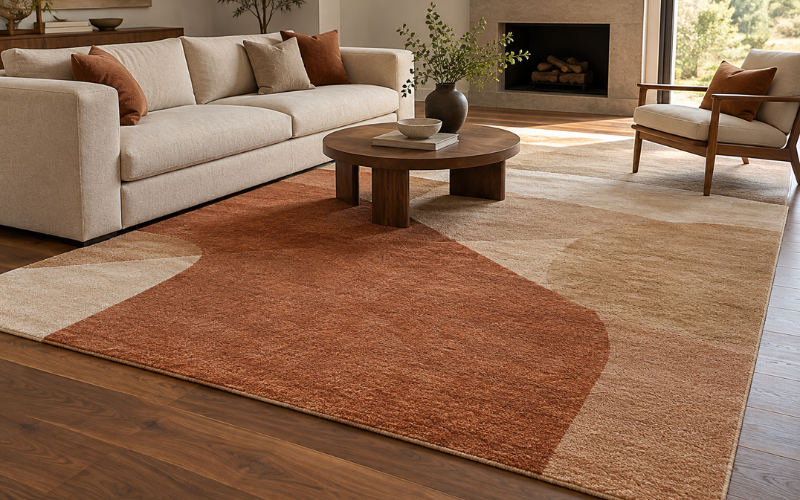
Contemporary area rugs bring current design influences into a room through color, pattern, shape, and texture. Some feature loose, abstract designs or crisp geometric lines. Others use soft neutral shades and textured surfaces to create interest without drawing too much attention.
Choosing one involves more than finding a pattern you like. The rug needs to fit your furniture arrangement, work with the colors already in the room, and handle everyday use. A pale, plush rug may suit a quiet bedroom, while a dining space needs something that allows chairs to move easily and can cope with occasional spills.
What Gives an Area Rug a Contemporary Look?
A contemporary rug reflects current decorating styles rather than one fixed design period. Common features include abstract markings, simple geometry, uneven lines, subtle color changes, and surfaces with different levels of texture. The design may be bold, but it can also be restrained.
Contemporary and modern are often used interchangeably in rug listings. In design terms, modern usually refers to established styles associated with the early and middle twentieth century. Contemporary is broader and changes over time. Traditional rugs often feature detailed borders, floral motifs, or repeating patterns rooted in older weaving traditions.
These categories overlap, so the label alone should not guide your purchase. Look at the actual design and how it relates to your furniture.
Contemporary area rugs also work in homes with traditional features. A quiet abstract rug can soften the formality of classic furniture, while a simple geometric design can connect older wood pieces with newer seating.
Contemporary Rug Styles to Consider for Your Space
Abstract rugs use flowing shapes, scattered markings, or blended colors. They can introduce movement into a room filled with straight-edged furniture. Some resemble soft brushstrokes, while others create stronger contrasts between light and dark areas.
Geometric rugs offer a more structured look. Grids, stripes, circles, and angular shapes can echo the lines of shelves, tables, or window frames. Consider the scale of the pattern: small, repeated shapes may look busy, while larger designs can feel more open.
Neutral rugs rely on texture as much as color. A cream or gray rug with raised sections, woven variation, or a subtle pattern can add depth to a room without competing with artwork or upholstery.
Bold colors and oversized motifs make the rug a clear focal point. These designs work best when nearby furnishings give the pattern some visual space.
Sculpted surfaces and irregular shapes offer another approach. Their interest comes from changing pile heights or an unusual outline. Check how those features will work beneath furniture and along walking routes.
Choosing Colors and Patterns That Work With Your Room
Start with the finishes and furniture you plan to keep. Look at the flooring, sofa, curtains, wall color, and larger wood pieces. Your rug does not need to match every element, but repeating one or two existing shades can help the room feel connected.
Decide whether you want the rug to attract attention or provide a quiet foundation. A colorful abstract design can give neutral furniture more character. A muted rug may be a better fit when the room already contains strong artwork or patterned seating.
When combining patterns, vary their scale. A sofa with a small repeating print may sit comfortably above a rug with larger, more open shapes. Two dense patterns of similar size can be harder to balance.
Check colors in the room itself whenever possible. Daylight and evening lighting can change how warm, cool, bright, or muted a rug appears. A sample can also reveal texture and sheen that photographs miss. View it beside your furniture at different times of day before committing.
Getting the Size and Shape Right
Measure the furniture arrangement before browsing rugs. The goal is to connect the pieces that belong together, so measuring the room alone is not enough. Mark the proposed rug edges with painter’s tape that is suitable for your floor, then check the layout from several positions.
A 5 × 8-foot rug may suit a compact seating group or a smaller bedroom arrangement. An 8 × 10-foot rug often provides more room beneath a sofa and nearby chairs. A 9 × 12-foot rug can accommodate a larger furniture group. These are starting points; the best size depends on your actual layout.
Rectangular rugs generally suit sofas, beds, and long dining tables. Round rugs can work beneath round tables or within compact seating areas. Irregular shapes need closer attention because their widest dimensions may not reflect the usable space beneath furniture.
Avoid choosing a rug that holds only the coffee table while leaving the seating disconnected. In many living rooms, bringing at least the front legs of the main seating onto the rug creates a more settled arrangement.
Placing Contemporary Area Rugs in Different Rooms
Living Room Seating Arrangements
Place the rug around the seating group rather than automatically centering it in the room. The sofa, chairs, and coffee table should feel like one connected area.
With a large rug, all the seating legs may fit on it. In a smaller arrangement, placing the front legs of the sofa and chairs on the rug can work well. Keep the placement consistent where possible so one piece does not look separated from the others.
Check the space beside the seating, too. A rug that barely reaches the sofa’s ends may feel narrow once chairs and side tables are included.
Bedroom Layouts and Bedside Coverage
A bedroom rug should provide comfortable coverage where you step out of bed. Positioning it beneath the lower portion of the bed can leave useful rug space along both sides and at the foot.
Measure the bed frame rather than relying only on mattress dimensions. Upholstered frames can take up more space than expected.
If a large rug does not suit the layout, smaller bedside rugs are another option. Make sure they remain secure and do not interfere with doors or drawers.
Dining Rooms and Chair Clearance
A dining rug needs to accommodate chairs when people pull them out. Room & Board recommends allowing at least 24 inches of rug beyond the table on every side. Test your own chairs, since their size and how far they move can require more space.
Measure an extendable table in the configuration you regularly use. A rug that fits the closed table may be too small when extra seats are added.
Flatweave and low-pile options generally make chair movement easier than deep, plush surfaces. Also consider how easily you can remove crumbs.
Open Living Spaces and Separate Furniture Groups
In an open layout, contemporary area rugs can define separate seating and dining areas. Each rug should fit its furniture group instead of covering an arbitrary section of floor.
The rugs do not have to match. Shared colors or a similar level of contrast can connect them while allowing different patterns.
Leave clear walking routes between the groups. Before buying, check that rug corners will not sit awkwardly across frequently used paths.
Rug Materials, Construction, and Pile Height
Material affects how a rug feels and how much care it needs. Wool often offers a comfortable surface and good resilience, although some wool rugs shed, particularly when new. It usually costs more than basic synthetic options.
Cotton is common in lighter rugs and flatwoven designs. Some cotton rugs are washable, but this depends on their backing, construction, and care instructions. A lightweight rug may also need a suitable pad to keep it steady.
Synthetic fibers include polypropylene, polyester, and nylon. Their performance varies, so avoid assuming that every synthetic rug is equally durable or easy to clean. Check the specific product details.
Viscose blends can provide a silky appearance, but they deserve careful consideration in spill-prone rooms. Safavieh advises gentle vacuuming for viscose rugs and recommends keeping them in a cool, dry location.
Construction matters as well. Hand-knotted rugs are made by tying individual knots onto a foundation. Hand-tufted rugs have yarn inserted through a backing and commonly use adhesive to hold the structure together. Machine-made rugs are produced with automated equipment. No single method guarantees quality; the fibers, density, backing, and finish also matter.
Pile means the raised fibers on the rug’s surface. Flatweave rugs have little or no raised pile. Low-pile rugs offer a relatively smooth surface, while plush rugs provide more cushioning. Choose the feel you enjoy while considering furniture movement, cleaning, and door clearance.
Contemporary Rugs for Pets, Kids, and Busy Households
Think about what happens in the room on an ordinary day. A family living room may need to handle snacks, muddy shoes, pet hair, and frequent vacuuming. A guest bedroom may have much lighter use.
Medium tones and varied patterns can make everyday marks less noticeable than a plain, very light surface. However, hiding dirt does not reduce the need for cleaning. Also consider pet hair color when choosing between a dark and light rug.
For pets with claws, inspect loops and loosely woven areas that might catch. A shorter, tighter surface may be easier to manage, although performance depends on the individual rug.
Read “washable” claims carefully. Some systems have a removable cover, while others allow the whole rug to be washed. Washer capacity and drying instructions also matter. Ruggable’s care guidance, for example, directs buyers to verify machine capacity for their rug type and size.
Choose care requirements you can maintain. A rug that needs specialist attention may be reasonable in a quiet room but inconvenient where spills happen often.
What to Check Before Buying
Read the fiber composition closely, including percentages in blends. A product described as a wool blend may contain substantial amounts of other fibers. Check the construction and backing details alongside the decorative description.
Confirm the actual dimensions. Size categories are sometimes rounded, and small differences can matter in a tight layout. Include the rug pad when assessing thickness beneath doors.
Close-up photographs can help you inspect texture, edges, and pattern definition. Room photographs show the overall effect, but they may not reveal shedding, surface sheen, or how raised sections feel underfoot. Request a sample when available.
Review return terms before ordering a large rug. Check any return shipping charges, packaging requirements, and restrictions on opened or used products.
Choose a pad approved for both the rug and your flooring. Flooring manufacturers may have restrictions on backing materials, particularly for certain finishes or vinyl products.
Finally, compare the total cost. Include the pad, possible delivery charges, and likely cleaning needs. A lower purchase price does not always mean a better fit for your household.
Keeping Your Rug Looking Its Best
Use the manufacturer’s care instructions as your starting point. Two rugs with similar appearances may need different treatment because of their fibers, backing, or construction.
Vacuum regularly using settings suitable for the rug. Delicate fibers, raised designs, and fringe may need a gentler approach. Avoid repeatedly pulling the vacuum across loose edges or tassels.
Respond to spills promptly by blotting with a clean, absorbent cloth. Avoid vigorous rubbing, which can spread the spill or disturb the surface. Before applying a cleaner, check that it is suitable for the rug and test it in an inconspicuous area. Some materials need professional treatment.
Arrange deeper cleaning according to the rug’s instructions and actual use. Do not assume that a carpet-cleaning machine is suitable for every area rug.
Rotate the rug periodically where the layout allows, especially when one section receives more foot traffic or sunlight. Check beneath it for trapped grit, moisture, or a shifting pad. Routine attention helps you spot problems before they become harder to address.
Conclusion
The best contemporary area rugs bring together appearance, proportion, and practical use. A striking pattern has more impact when the rug fits the seating group, while a subtle design can make a room feel complete through texture alone.
Begin with measurements, then consider the colors and patterns that suit your existing furniture. Compare materials and care requirements before making your final choice. When those details work together, the rug becomes a comfortable, useful part of the room.
FAQs
1. What is the difference between modern and contemporary area rugs?
Modern rugs often draw on established twentieth-century design styles, including clean lines and simple geometry. Contemporary rugs reflect current influences and may combine abstract patterns, textured surfaces, and varied shapes. Retailers frequently use both terms, so judge the rug by its design rather than its label.
2. Can contemporary area rugs work with traditional furniture?
Yes. A contemporary rug can introduce a lighter or less formal feel beneath traditional furniture. Choose a design that shares a color with the upholstery, artwork, or other furnishings. A subtle abstract pattern is often easier to combine with detailed furniture than a very busy design.
3. What size contemporary rug should I choose for a living room?
Measure the complete seating arrangement first. Choose a rug that connects the sofa and chairs, commonly by supporting at least their front legs. An 8 × 10-foot or 9 × 12-foot rug may suit many arrangements, but furniture dimensions and available walking space should determine the final size.
4. Are contemporary area rugs suitable for homes with pets?
They can be, provided the material and construction suit your pet and cleaning routine. Look closely at loose loops, shedding, and care requirements. Shorter surfaces are often easier to vacuum, while washable options may help with recurring messes. Confirm the specific washing instructions before buying.
5. Do contemporary area rugs need a rug pad?
A suitable rug pad can help reduce movement, improve comfort, and limit rubbing against the floor. The right choice depends on the rug’s backing, its location, and the flooring beneath it. Follow both the rug maker’s and flooring manufacturer’s guidance, and include pad thickness when checking door clearance.