
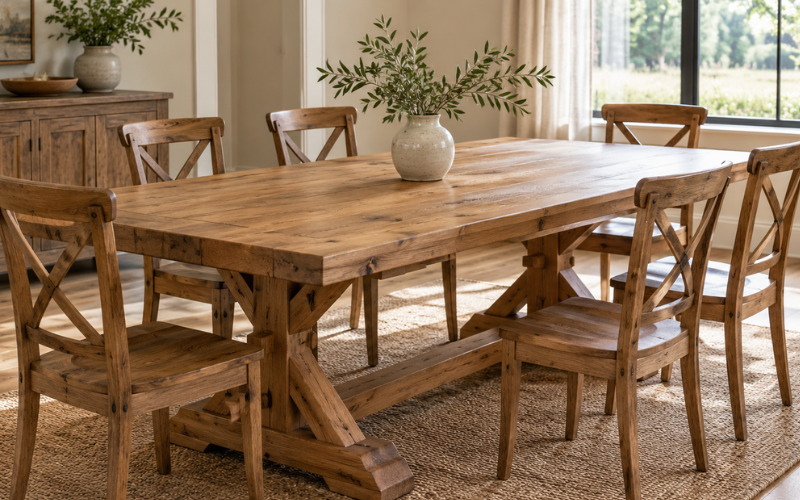
A farmhouse dining room table brings warmth to a room through its wood grain, sturdy shape, and welcoming appearance. It feels equally suited to a quiet breakfast, a family dinner, or an evening with friends. But choosing one takes more than finding a finish you like. The table also needs to fit your room, seat people comfortably, and handle everyday use.
Traditional farmhouse tables often feature thick tops, turned legs, or trestle bases with a rustic finish. Modern farmhouse options keep that warmth while using cleaner lines, smoother surfaces, and simpler details. Both styles can work well when their proportions suit the surrounding space.
The right choice depends on size, shape, materials, seating, finish, and upkeep. Thinking through these details before buying helps you find a table that looks inviting and feels comfortable long after the first meal.
What Gives a Dining Table Its Farmhouse Character?
Farmhouse style is more about the overall impression than one fixed design. Visible wood grain, substantial proportions, and a straightforward shape often create its familiar character. A table might have a natural wood top, painted legs, or a gently weathered surface without looking overly decorative.
Traditional versions tend to feel heavier and more rustic. Turned legs, broad wooden supports, and warm brown finishes are common features. Modern farmhouse tables usually simplify those details. A smooth top with straight legs can still feel farmhouse when the materials and proportions give it warmth.
Distressing deserves a closer look. Decorative marks may be added during manufacturing to suggest age, while actual wear develops through use. Neither tells you whether the table is well made. Examine the surface for loose splinters, unstable joints, or damage rather than assuming every rough detail belongs to the style.
Choose the level of rustic character you enjoy living with. A heavily textured tabletop may photograph beautifully but feel less convenient when wiping away crumbs or writing on paper.
Start With Room Measurements and Everyday Seating Needs
Measure the dining room before comparing tables. Include nearby cabinets, doorways, and the main walking route through the space. An empty room can make a large table seem manageable until chairs and other furniture are added.
Around 36 inches between the table edge and a wall or obstruction is a useful starting point for planning. Busy walkways may need more space, especially when someone must pass behind a seated diner. Room & Board recommends 36 inches around a table and approximately 18–24 inches per place setting.
Treat those measurements as guidance rather than a promise of comfort. Wide chairs, armchairs, and bulky table bases can reduce usable seating. Check the distance between the legs instead of relying only on the tabletop length.
Mark the proposed table outline on the floor with removable tape. Place an existing chair beside it, pull the chair out, and walk around it. This simple exercise makes the scale easier to judge.
Plan around your usual household first. If extra guests visit occasionally, an extendable table may be more practical than a large permanent table that crowds the room every day.
Choosing Between Rectangular, Round, and Extendable Tables
A rectangular farmhouse dining room table often suits a long room because its shape follows the space. It also provides a clear arrangement for several diners and can work well with a bench along one side. However, seating at the ends depends on the position of the base.
Round tables encourage conversation because everyone faces toward the center. They can also ease movement through some compact or square rooms. Still, a round table is not automatically space-saving. Its full diameter and the chairs surrounding it must fit comfortably.
An extendable table offers flexibility for households that host occasionally. Before buying, check both its closed and extended dimensions. The larger version still needs enough room for chairs and movement.
Ask how the extension works, whether one person can operate it, and where removable leaves will be stored. A leaf that stays inside the table may be convenient, but the mechanism should open smoothly and lock securely.
If possible, test the table in both positions. Check that the extended surface sits evenly and that the added length creates useful seating rather than placing diners against awkward supports.
Wood and Tabletop Materials: Appearance Meets Practicality
Solid wood appeals to many buyers because of its natural grain and potential for repair. However, its performance depends on the wood, construction, finish, and care. A solid wood label alone does not guarantee a durable table.
Reclaimed wood can bring varied color, old marks, and an individual appearance. Examine how those features affect the usable surface. Deep grooves or open gaps may collect food, while an uneven top can make glasses or plates feel unstable.
Veneer is a thin layer of real wood attached to another material. It should not be confused with a printed wood-look surface. Well-made veneer furniture can offer attractive grain and reliable construction; Stickley notes that veneers are also used in high-quality furniture.
Engineered materials vary considerably. Ask what forms the core, how the edges are finished, and what cleaning or moisture precautions apply. Product descriptions such as “wood table” may leave these details unclear.
For frequent family meals, consider how the surface handles crumbs, spills, and repeated cleaning. Weight also matters if you expect to move the table often. Compare the complete construction rather than choosing by material name alone.
Table Bases That Leave Enough Room for Everyone
The base affects comfort as much as the tabletop. A table may appear spacious from above while its supports make several seats awkward to use.
Trestle bases usually have two substantial supports connected underneath. They create a familiar farmhouse look and can leave the outer corners open. However, the support positions and connecting bar may interfere with knees or feet. Sit at the ends and along the sides before deciding.
Pedestal bases can provide more freedom around the edge, particularly on round tables. Check the size of the pedestal foot, though. A broad floor-level base may limit where diners can place their feet.
Four-leg designs are straightforward, but corner legs reduce the space available between chairs. This becomes noticeable when trying to add another person along a side.
Benches need particular attention. If you want a bench to tuck underneath, compare its length with the opening between the legs. Also check its height against the underside of the table. A bench that fits beneath the tabletop may still be blocked by the base.
Finding a Finish That Suits Your Room and Routine
Finish changes both the appearance of the table and the care it requires. Natural-looking wood can feel warm and understated, while a darker stain gives a stronger visual presence. Painted bases introduce contrast, and two-tone designs combine a wood top with a different base color.
Look at finish samples in your room when possible. Daylight, wall color, and nearby flooring can make the same shade appear different from a showroom photograph. You do not need identical wood tones throughout the room, but they should feel comfortable together.
Surface texture is another practical decision. Smooth tops are generally easier to wipe and use for homework or paperwork. Deeply textured finishes may require more attention around grooves and uneven areas.
Ask whether the surface has oil, wax, lacquer, or another protective coating, then request the specific care instructions. A natural appearance does not necessarily mean the wood is unfinished.
Choose a finish that matches your routine. If you prefer simple cleaning, make that requirement part of your search rather than assuming every farmhouse table offers the same protection.
Pairing Your Table With Comfortable Chairs or Benches
Comfortable seating starts with the relationship between the chair and the table. Overall table height is only part of the picture. The apron—the piece running beneath the tabletop edge—can reduce the space available for your legs.
Sit in the intended chair and check whether your thighs fit comfortably underneath. Your arms should rest naturally when eating, without raised shoulders or an awkward reach. If choosing armchairs, confirm that the arms can slide beneath the table when you want to tuck them in.
Matching sets offer an easy visual arrangement, but mixed seating can work just as well. Connect the pieces through a shared finish, shape, or color rather than choosing chairs that compete with the table.
Benches create a relaxed look and may tuck away neatly, but they have trade-offs. Backless seating offers less support during long meals, and people in the middle may find it harder to leave.
Think about everyone who regularly uses the room. A mix of chairs and a bench can provide flexibility, while supportive chairs may be the better choice for longer gatherings.
Styling a Farmhouse Dining Room Table Without Crowding It
The table should remain easy to use after you decorate it. A modest vase, a shallow bowl, or a small grouping of objects can highlight the wood without occupying the space needed for meals.
Keep centerpieces low enough for diners to see one another. If a decoration needs to move before every meal, make sure it is light and has a convenient place to go. Large arrangements may suit occasional entertaining but become inconvenient for daily use.
A runner adds softness and can connect the table with other colors in the room. Choose one that leaves enough space for place settings. Placemats can define individual seats, although their protective value depends on their material and the table’s finish.
Match the scale of decorations to the tabletop. A small round table needs a lighter arrangement than a long rectangular one. Leaving some wood visible often supports the farmhouse character better than covering the entire surface.
What to Check Before Buying
Inspect the table closely or request clear photographs if buying online. Look for uneven surfaces, loose connections, damaged edges, and gaps that the product description does not explain. If a display table wobbles, ask whether assembly or construction is responsible before proceeding.
Confirm the exact dimensions, including the height and space beneath the apron. Ask how many people can sit comfortably with the chairs you plan to use. Advertised capacity may assume narrower seating than yours.
Understand the assembly requirements. Find out whether the legs are removable, whether delivery includes setup, and whether the table needs more than one person to handle it safely.
Measure the delivery route through doorways, corridors, and stair turns. A table that fits the dining room may still be difficult to bring inside.
Finally, compare the total cost, including delivery, assembly, chairs, and any return charges. Read the return terms carefully, particularly for custom orders. A clear understanding of these details is more useful than a discount that hides additional costs.
Caring for the Table Through Everyday Use
Start with the manufacturer’s instructions for your particular material and finish. A cleaning method suitable for one table may damage another. Ethan Allen’s wood furniture guidance recommends regular dusting with a soft, slightly damp, lint-free cloth. Avoid leaving moisture behind after cleaning.
Blot spills promptly and protect the surface from hot or damp objects. Coasters and suitable heat-resistant mats help reduce direct contact, but they should not trap moisture underneath. Ethan Allen also advises against placing hot or damp items directly on furniture.
Wood can respond to changes in indoor conditions. Keep the table away from strong heat sources and avoid extreme temperature or humidity changes. Stickley notes that these conditions can contribute to swelling, warping, or cracking.
Check assembly connections if the table becomes loose, following the maker’s instructions. Do not keep tightening hardware without understanding the cause.
For deeper scratches, lifting veneer, or a failing finish, ask about repair options. Refinishing may suit some solid wood tables, while thin veneer needs particular care. Get advice before sanding or applying an unfamiliar product.
Conclusion
The best farmhouse dining room table combines the character you enjoy with proportions that suit daily life. Its appearance matters, but comfortable seating, usable legroom, reliable construction, and sensible care requirements matter just as much.
Start with your room measurements and usual seating needs. Then compare shapes, bases, materials, and finishes against those requirements. Before buying, confirm the delivery route and test the seating arrangement wherever possible.
A carefully chosen table can become a comfortable place for meals, conversations, and everyday activities. When it fits the room and your routine, its farmhouse character feels natural.
FAQs
1. What size farmhouse dining room table do I need for six people?
There is no single size that comfortably seats six in every design. Chair width, table shape, and base placement all affect capacity. Compare the usable space between supports and allow room for each place setting. Check the full arrangement rather than relying only on a “six-seater” label.
2. Can a farmhouse dining table work in a small dining room?
Yes, provided its dimensions leave enough space for chairs and movement. A compact rectangular or round design may work, depending on the room’s shape. Mark the footprint on the floor before buying. A smaller table with comfortable clearance is usually more useful than a larger one that restricts access.
3. Is solid wood better than veneer for a farmhouse table?
Neither is automatically better in every situation. Solid wood may offer more options for refinishing, while good-quality veneer can provide attractive grain and dependable construction. Compare the core materials, joints, finish, warranty, and care requirements. The quality of the complete table matters more than the label alone.
4. Do farmhouse dining tables need matching chairs?
No. Mixed chairs can look balanced when they share a finish, color, or design detail. Comfort should come first, however. Check seat height, legroom, and armrest clearance before considering appearance. Using the same chair design in different finishes can also create variety without making the arrangement feel busy.
5. How can I protect a farmhouse tabletop without covering the wood?
Use coasters, suitable placemats, and heat-resistant mats where needed, then remove them when no longer required. Clean spills promptly and follow the finish-specific care instructions. A small runner can add decoration while leaving much of the grain visible. Avoid treating fabric alone as protection against heat or moisture.