
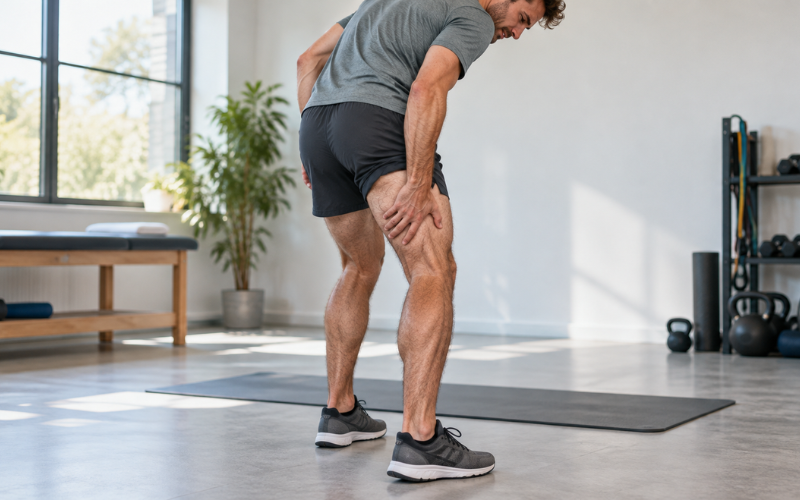
The hamstring is a group of three muscles at the back of your thigh, between your hip and knee. These muscles help you bend your knee and move your thigh backward. You use them when you walk, climb stairs, run, and perform many everyday movements. Although people often say “my hamstring” as if it were one muscle, the term usually refers to the whole group.
You may barely notice your hamstrings until they feel tight, sore, or painful. A demanding workout can leave them aching, while a sudden sprint or overstretch can cause an injury. Understanding the difference helps you decide when to adjust your activity and when to seek medical advice.
Understanding the Hamstring Muscles
The three hamstring muscles are called the biceps femoris, semitendinosus, and semimembranosus. Their names sound complicated, but their basic arrangement is straightforward. The biceps femoris runs along the outer part of the back of your thigh. The other two muscles sit closer to the inner side.
Most of the hamstring group begins at the lower part of your pelvis, near the bones you sit on. The muscles travel down the back of your thigh and attach through tendons to the lower-leg bones near the knee. One part of the biceps femoris begins on the thigh bone instead of the pelvis.
Tendons are strong bands of tissue that connect muscles to bones. When a hamstring muscle tightens, its tendons transfer that pulling force to the bones, creating movement. Because most of these muscles cross both the hip and knee, their position changes when either joint moves.
This connection explains why you may feel a stretch behind your thigh when you bend forward with your knee straight. It also helps explain why hamstring discomfort can occur near the buttock, in the middle of the thigh, or closer to the knee.
How Your Hamstrings Help You Move
Your hamstrings have two main jobs: bending your knee and helping move your thigh backward at the hip. Bringing your heel toward your buttock uses the first action. Moving your leg behind you uses the second.
During walking, these muscles work with the muscles at the front of your thighs and around your hips. They help move your leg and control it as you step. When you climb stairs, they assist the muscles around your buttocks in moving your body upward.
Running places greater demands on the hamstrings. They must produce force quickly while also slowing parts of the leg’s movement. At certain points in a running stride, they work while lengthening. This means they act partly like brakes, helping control the leg rather than simply pulling it backward. High-speed running makes this work especially demanding.
Healthy hamstrings therefore need more than flexibility. They also need enough strength and control for the activities you expect them to handle.
Hamstring Tightness, Soreness, and Pain: Understanding the Difference
Hamstring tightness often feels like pulling or resistance when you move. You may notice it while bending forward or straightening your knee. However, a feeling of tightness does not always mean the muscle simply needs more stretching. Ongoing tightness can have different causes, and repeated stretching may fail to address the underlying problem.
Soreness commonly follows unfamiliar exercise or a harder workout than usual. It may appear the next day rather than during the activity. This delayed muscle soreness often feels like a broad ache or stiffness and usually settles over the following days. You may notice it after adding hills, increasing resistance, or returning to exercise after a break.
Injury-related pain may begin suddenly during a movement. It can feel sharp, occur in a particular spot, or make you stop exercising. However, some tendon problems develop gradually rather than through one obvious incident.
The pattern matters more than the label. Consider when the discomfort started, what brings it on, and whether it is improving. Pain that repeatedly changes how you walk or exercise deserves assessment. Symptoms alone cannot reliably tell you which tissue is affected or how serious an injury is.
Common Hamstring Injuries and Their Symptoms
A hamstring strain happens when the muscle is stretched or loaded beyond what it can handle. It can involve a small amount of muscle damage, a partial tear, or a complete tear. Strains often happen during sprinting or movements that suddenly lengthen the muscle under force.
A mild strain may cause tenderness and discomfort while leaving much of your movement intact. A larger tear can cause more pain, swelling, bruising, and weakness. Some people feel a snapping sensation or hear a pop. Bruising may develop after the injury rather than appearing immediately.
Hamstring tendons can also develop problems. Tendinopathy is the term often used for persistent tendon pain and reduced ability to handle activity. When the upper tendon near the buttock is affected, sitting, running, or certain bent-hip positions may provoke symptoms. This differs from the sudden onset typical of many muscle strains.
A more serious tendon injury occurs when a tendon pulls away from its attachment to the bone. This requires medical assessment and may need surgery.
Not every pain behind the thigh comes from the hamstring itself. Problems involving the lower back, hip, or nearby structures can cause pain in a similar area, which is another reason to avoid self-diagnosing persistent symptoms.
When Hamstring Pain Needs Medical Attention
Seek prompt medical advice if hamstring pain is severe, worsening, or makes standing and walking difficult. A large amount of swelling or bruising, marked stiffness, or difficulty moving the leg also needs attention. Do not continue exercising to test whether a painful injury will “loosen up.”
Arrange an assessment if discomfort does not improve with appropriate changes to activity or keeps returning whenever you resume exercise. Repeated symptoms can make it difficult to build strength and confidence without a clear plan.
During an appointment, a clinician will ask how the symptoms began and which movements make them worse. They may examine the thigh for tenderness, bruising, swelling, and weakness. Your recent training changes and previous injuries can also help them understand the problem.
Some injuries need imaging. An MRI can show damage to muscles and tendons, while an X-ray may help identify an injury involving bone. The clinician decides whether a scan would add useful information; not every sore hamstring requires one.
Before the appointment, note when the pain started and what you were doing. A clear description is more useful than trying to assign your injury a grade yourself.
Hamstring Injury Treatment and Recovery
Treatment depends on what is injured, how severe the damage is, and the activities you want to return to. A mild muscle strain and a tendon torn away from bone require different approaches. Most hamstring strains are treated without surgery, although some serious injuries need specialist care.
Initially, stop the activity that caused the pain and protect the leg from further strain. A cold pack wrapped in a towel can provide short-term relief; avoid placing ice directly against your skin. Compression and raising the leg may help manage swelling. During the first few days, avoid aggressive massage and heat over a fresh injury.
Ask a pharmacist or clinician about suitable pain relief if needed. Medicines should not be used to hide symptoms so you can continue training.
As symptoms settle, recovery usually moves toward gentle movement and gradually increasing exercise. A physiotherapist can help choose the starting level and adjust it as your strength improves. Rehabilitation may include controlled strengthening, exercises that work the muscle while it lengthens, and later, running practice.
Recovery time varies. Mild injuries may improve relatively quickly, while substantial tears can take weeks or months. Feeling less pain does not automatically mean the hamstring is ready for sprinting or heavy exercise.
Returning safely requires rebuilding the abilities your activity demands. Walking comfortably is an early milestone, but football, fast running, and jumping require much more. A gradual return allows you to practise harder movements before attempting full effort. After a significant injury, follow your clinician’s guidance rather than relying on a fixed calendar date.
Hamstring Stretching: Technique and Timing
Gentle stretching can help maintain or improve hamstring flexibility. The goal is a comfortable pulling sensation, not pain. You do not need to touch your toes or match someone else’s range of movement for a stretch to be useful.
One option is a lying hamstring stretch. Lie on your back, raise one thigh, and support it with your hands behind the thigh. Slowly straighten the knee until you feel a gentle stretch. Keep your head and shoulders relaxed, and avoid pulling the leg farther simply to increase the sensation.
Warm up with easy movement before stretching. Hold the position calmly, breathe normally, and avoid bouncing. Keeping a slight bend in the knee can make the position more comfortable. Stop if you feel pain rather than a mild stretch.
Timing matters when symptoms are present. Stretching a fresh strain forcefully can aggravate it. Some upper hamstring tendon problems also become more uncomfortable in deep stretching positions because of pressure around the tendon attachment.
If stretching repeatedly leaves your hamstring feeling worse, reconsider the approach. More flexibility is not always the missing piece. An assessment can help determine whether strengthening, activity changes, or another treatment would be more useful.
Building Hamstring Strength With Controlled Exercise
Hamstring strengthening should cover both main functions of the muscle group: bending the knee and moving the thigh backward. A balanced routine develops these actions gradually instead of relying on one demanding exercise.
For someone without a current injury, a basic bridge is a useful starting movement. Lie on your back with your knees bent and feet resting on the floor. Lift your hips slowly, then lower them with control. The muscles around your buttocks share the work with your hamstrings.
A standing hamstring curl focuses more directly on knee bending. Hold a stable support and bring one heel toward your buttock without swinging the leg. Lower it slowly. Begin without added resistance, then consider a light band or weight when the movement feels comfortable.
Hip-hinge exercises train a different movement pattern. With your knees slightly bent, move your hips backward while keeping your back in a comfortable position, then stand upright. Learn the movement before adding weight. Hamstring rehabilitation commonly includes both knee-focused exercises and hip-focused strengthening, with the difficulty matched to the person’s stage of recovery.
Progress can come from better control, a greater comfortable movement range, extra repetitions, or increased resistance. You do not need to change all these at once. Leave recovery time between harder sessions and reduce the workload if symptoms increase.
These movements are examples, not a personalised injury programme. After a strain or tendon injury, a physiotherapist can select suitable exercises and starting loads. Some people need simpler muscle holds before progressing to moving exercises.
Reducing the Risk of Hamstring Injuries
No routine can guarantee that you will avoid a hamstring injury. However, preparing for activity and building fitness gradually can reduce unnecessary demands on the muscles.
Start with a warm-up that moves from easy activity toward the movements you plan to perform. Before running fast, for example, give yourself time to walk or jog comfortably and build speed gradually. Avoid making your first effort the hardest one.
Training changes deserve similar care. Returning after a break, adding sprint sessions, or increasing exercise intensity introduces demands your hamstrings may not be used to. Make manageable changes and observe how you respond before progressing again.
Regular strength work helps prepare the muscles for activity. Research-based hamstring guidance includes strengthening exercises that challenge the muscle while it lengthens, often called eccentric exercise. The Nordic hamstring exercise is one example, but its difficulty should be adapted rather than attempted at full intensity immediately.
Recovery is part of preparation. Tired muscles may struggle to handle demanding exercise, so adjust a session when fatigue is affecting your movement. A previous hamstring injury also matters: rebuilding strength and completing rehabilitation are important before returning to harder activity.
Recurring tightness or pain is useful feedback. Address it before adding more speed, distance, or resistance, rather than repeatedly training through the same symptoms.
Conclusion
Your hamstring muscles help you move, produce force, and control your legs. Keeping them healthy involves strength, suitable flexibility, preparation for activity, and enough recovery.
Tightness, exercise soreness, and injury-related pain can overlap, so pay attention to how symptoms begin and whether they improve. Gentle stretching may help flexibility, but persistent discomfort needs more than repeated attempts to stretch it away.
Build exercise demands gradually and take recovery seriously after an injury. If hamstring pain is severe, affects walking, or repeatedly returns, seek an assessment so your next steps fit the actual problem.
FAQs
1. Where is the hamstring located?
The hamstring muscle group sits at the back of your thigh, between your pelvis and knee. Its tendons connect the muscles to bones near the hip and lower leg. Depending on which area is affected, discomfort may occur near the buttock, along the thigh, or close to the knee.
2. How can I tell whether I pulled my hamstring?
A pulled hamstring often causes sudden pain during running, stretching, or another forceful movement. Tenderness, weakness, swelling, or bruising may follow. These symptoms suggest an injury but do not confirm its severity. A clinician can assess whether you have a strain, tendon injury, or another cause of pain.
3. Should I stretch a painful hamstring?
Avoid forcing a painful hamstring into a stretch, especially soon after an injury. Gentle stretching may become appropriate during recovery, but the timing depends on the injury and your symptoms. Stop any stretch that causes sharp pain or makes discomfort worse afterward, and ask a physiotherapist for guidance.
4. How long does a hamstring injury take to heal?
There is no single recovery timeline. A mild strain may improve quickly, while a larger tear or significant tendon injury can require weeks or months. Your return should depend on restored movement, strength, and ability to perform the required activity, rather than the number of days since the injury.
5. Can I walk with a hamstring injury?
Some mild injuries allow comfortable walking, but others make standing or taking steps painful. Do not force yourself to walk through significant pain or a pronounced limp. Seek medical advice if you struggle to bear weight; a clinician may recommend temporary support and explain how to increase movement safely.