
Introduction
Izolarea is a Romanian word commonly translated into English as isolation or insulation. However, neither translation works in every situation. Its correct meaning depends on the subject, the sentence, and the words appearing around it.
In a conversation about houses, izolarea usually refers to thermal, sound, or moisture insulation. In healthcare, it can describe separating a person with an infectious illness from others. The word may also appear in discussions about loneliness, electricity, scientific research, and computer databases.
What Izolarea Means in Plain English
The Romanian noun izolare describes the action or result of separating, distancing, or insulating something. Romanian dictionary definitions connect it with separation and removal from surrounding people, objects, or conditions. Depending on the situation, it can mean isolation, insulation, separation, containment, or protection. Dexonline’s Romanian dictionary entry provides the word’s central meaning as the action and result of isolating.
The difference between izolare and izolarea is grammatical. Romanian normally attaches the definite article to the end of a noun. Therefore, izolare means “isolation” or “insulation,” while izolarea usually means “the isolation” or “the insulation.”
A natural English translation may not include “the” in every sentence. Translators must adjust the wording to fit normal English usage while preserving the intended meaning.
The Main Contexts in Which Izolarea Is Used
The central idea behind izolarea is creating some form of separation or barrier. What is being separated determines the English translation.
A person may be isolated from a community. A building may be insulated from heat, cold, noise, or moisture. A patient may be separated from other people to limit the spread of an infection. In science and technology, a material, electrical circuit, physical system, or set of data may be isolated from outside influence.
Izolarea in Homes and Buildings
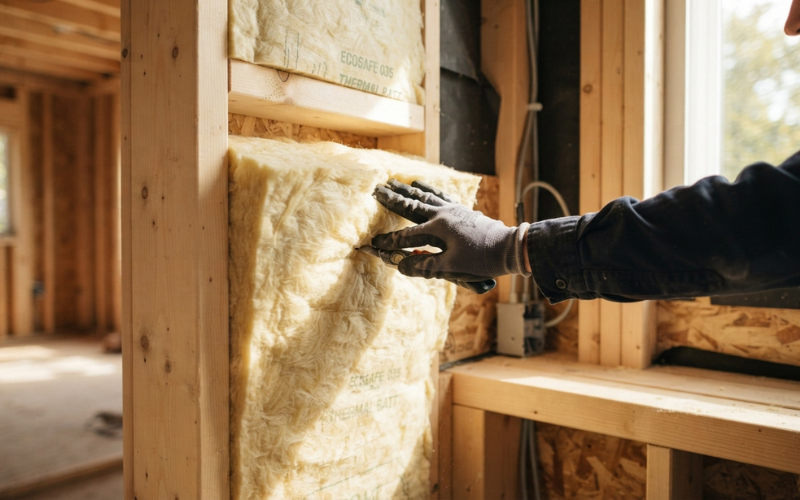
In construction, izolarea most often means insulation. It describes methods used to limit the movement of heat, sound, water, or moisture through a building.
Thermal insulation slows heat transfer through walls, roofs, ceilings, and floors. It can help a building remain warmer during cold weather and cooler during hot weather. The U.S. Department of Energy explains that insulation works by resisting heat flow through the building envelope. Department of Energy building guidance also notes that heat moves through conduction, convection, and radiation.
Sound insulation reduces the amount of noise passing between rooms or entering from outside. Moisture protection, often discussed through waterproofing or damp-proofing, helps limit water damage.
Izolarea may be installed on the interior or exterior of a building. The correct approach depends on the climate, wall construction, available space, ventilation, and moisture conditions.
Materials Commonly Associated with Izolarea
Several materials may be used for building izolarea. Mineral wool, including basalt or rock wool, is valued for its thermal performance, sound reduction, and resistance to fire.
Expanded polystyrene, commonly known as EPS, is frequently used on exterior walls. Extruded polystyrene, or XPS, has a denser structure and is often selected for areas exposed to moisture or pressure.
Polyurethane foam can fill cracks and irregular spaces, creating both an insulating layer and an air barrier. Cellulose, cork, wood fiber, and other natural products may provide alternatives for projects that prioritize recycled or renewable materials.
No single material is ideal for every building. Performance depends on the material’s properties, thickness, location, installation quality, and compatibility with the rest of the structure.
The Practical Benefits of Building Izolarea
Well-planned izolarea can make indoor temperatures more stable and reduce the need for constant heating or cooling. This may improve comfort while lowering energy consumption.
Sound insulation can create quieter living and working spaces. Suitable moisture protection may also reduce the risk of damp surfaces and water-related damage. However, insulation is not the same as sealing a building completely. Ventilation and moisture control remain important.
Correct installation is essential. The Department of Energy warns that poor installation can significantly reduce insulation performance. A badly designed system may also allow condensation to form in walls or ceilings. Official building-science guidance emphasizes the need to consider insulation and moisture control together.
Izolarea in Social and Emotional Contexts
When izolarea describes a person, it usually means social isolation or separation from regular contact with others. This is different from choosing to spend a little time alone. Voluntary solitude can be restful, while social isolation generally involves limited relationships, support, or interaction.
Common causes include living alone, illness, disability, bereavement, relocation, family conflict, and difficulty participating in community life. A person can also feel lonely while surrounded by people because loneliness is an emotional experience, whereas social isolation concerns the amount of meaningful contact a person has.
Long-lasting isolation may affect mental and physical well-being. The U.S. National Institute on Aging reports associations between social isolation or loneliness and problems such as depression, heart disease, and cognitive decline. Its guidance on loneliness and social isolation also offers practical ways to maintain connection.
Isolation may be becoming harmful when it causes continuing sadness, anxiety, loss of interest, or difficulty managing everyday life. In such cases, support from trusted people or a qualified healthcare professional may help.
Izolarea in Medicine and Public Health
In medical language, izolarea refers to separating people who have certain infectious illnesses from those who are not sick. Its purpose is to reduce exposure and limit transmission.
Isolation is not identical to quarantine. According to the CDC, isolation separates people who are sick with a contagious disease, while quarantine restricts the movement of people who were exposed and may later become sick. The CDC’s explanation makes this distinction clear.
Medical precautions vary according to the illness and setting. They may involve a separate room, careful hand hygiene, protective equipment, cleaning procedures, or limits on visitors. Instructions should come from the relevant healthcare provider or public-health authority.
Technical and Scientific Uses of Izolarea
In electrical work, izolarea can mean preventing current from moving into unintended conductive parts. Insulating materials protect wires, equipment, and users, although the exact safety requirements depend on the system.
Thermal and vibration isolation limit unwanted heat transfer or mechanical movement. In chemistry, isolation can mean separating a desired substance from a mixture. In biology, reproductive isolation describes conditions that prevent different populations from exchanging genes.
In computing, transaction isolation controls what one database transaction can observe while other transactions run at the same time. This helps prevent conflicting operations from producing unreliable data. The PostgreSQL documentation describes several isolation levels that provide different levels of protection against concurrency problems.
How Context Changes the Meaning of Izolarea
Nearby words usually reveal the intended meaning. Terms such as walls, roof, heat, polystyrene, or mineral wool point toward building insulation. References to loneliness, relationships, or community suggest social isolation.
Words such as patient, infection, transmission, or hospital indicate a medical meaning. Circuit, voltage, vibration, experiment, and database signal a specialized technical use.
Common Misunderstandings About Izolarea
A frequent mistake is translating izolarea only as “isolation.” That translation sounds unnatural when the subject is a wall, roof, cable, or heating system. In these cases, insulation is normally more accurate.
Another mistake is assuming that building insulation requires a completely airtight space. Insulation, air sealing, ventilation, and moisture management perform related but different jobs.
Medical isolation and quarantine are also often confused. Finally, taking the word out of context can produce a technically correct translation that fails to communicate the writer’s actual meaning.
Izolarea at a Glance
| Context | Meaning of izolarea | Natural English equivalent |
| General use | Separation from something else | Isolation or separation |
| Construction | Protection from heat, sound, or moisture | Insulation |
| Social life | Limited contact or support | Social isolation |
| Healthcare | Separating an infectious patient | Medical isolation |
| Electricity | Preventing unwanted electrical contact | Electrical insulation or isolation |
| Science | Separating a material, system, or population | Isolation or separation |
| Computing | Controlling interaction between transactions | Transaction isolation |
Conclusion
Izolarea has one central idea—separation—but its practical meaning changes with the context. It may describe insulation in a building, separation from other people, infection-control measures, electrical protection, scientific processes, or database behavior.
The most reliable way to understand izolarea is to examine the subject and surrounding vocabulary. This produces a clearer and more natural translation than relying on a single English equivalent.
FAQs
1. Is izolarea an English word?
No. Izolarea is Romanian. Depending on its context, it can be translated as “the isolation,” “the insulation,” “separation,” or another closely related term.
2. What is the difference between izolare and izolarea?
Izolare is the basic noun meaning isolation or insulation. Izolarea is its definite form and commonly corresponds to “the isolation” or “the insulation.”
3. Does izolarea always refer to building insulation?
No. Construction is only one possible context. The word can also refer to social isolation, medical separation, electrical protection, scientific processes, or computing.
4. Is social izolarea the same as being alone?
Not necessarily. Being alone can be a personal and temporary choice. Social isolation describes limited relationships, contact, or support and may be unwanted.
5. How can I choose the correct English translation?
Look at the surrounding words and identify what is being separated. Use “insulation” for buildings and protective materials, “isolation” for people or systems, and a more specific technical term when the subject requires it.