
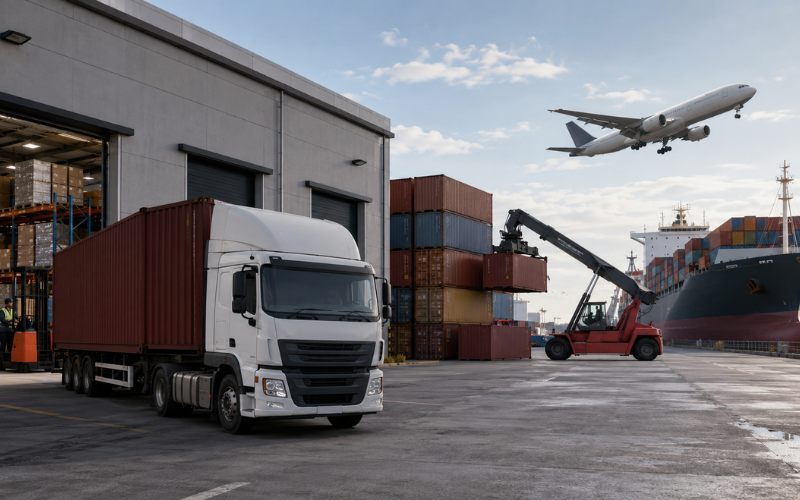
Logistics business category classification is the process of placing a logistics company into the industry group that best describes its main activity. A business may transport goods, store products, arrange shipments, manage supply chains, or combine several of these services.
Because logistics covers many activities, companies may fall under transportation, warehousing, distribution, delivery, consulting, or support-service categories. Choosing the correct category can affect business registration, taxes, permits, insurance, banking, and contracts. This guide explains the main logistics categories, common classification systems, and practical steps for selecting the right one.
Understanding Logistics Business Category Classification
A business classification describes what a company mainly does. Government agencies, insurers, banks, and commercial databases use classification codes to organize businesses by economic activity.
Accurate logistics business category classification is important because logistics companies do not all perform the same work. A trucking company owns or operates vehicles, while a freight broker arranges transportation through other carriers. A warehouse stores goods, whereas a logistics consultant advises companies on improving their supply chains.
The main activity usually determines the primary classification. Other services may be recorded under secondary codes. For example, a company that earns most of its income from warehousing but also offers local delivery would normally use warehousing as its primary category.
Where Logistics Fits in the Business Sector
Most logistics businesses fit within the broad transportation and storage sector. This includes freight carriers, delivery companies, warehouse operators, freight forwarders, and transportation support services.
Some businesses are more closely connected to supply chain management or distribution. A company that receives inventory, processes orders, packs products, and manages returns may be classified as a warehousing or fulfillment provider.
Businesses that only provide logistics planning, technology, or management advice may fall under professional, administrative, or support services instead. The correct position depends on the company’s actual work rather than the word “logistics” in its name.
Main Categories of Logistics Businesses
Freight transportation companies physically move goods by road, rail, air, or water. Trucking businesses are common examples, but the category also includes air cargo companies and shipping operators.
Freight forwarding businesses arrange shipments for customers. They may combine several forms of transportation, prepare documents, and coordinate movement between the sender and receiver. Freight brokers also arrange transport, although their legal duties may differ from those of forwarders.
Warehousing and storage providers hold goods for customers. Their services may include inventory control, loading, packing, labeling, and order processing. Refrigerated, farm-product, and hazardous-material storage can require more specific classifications.
Courier and last-mile delivery services move letters, parcels, or small shipments. A courier network operating across several regions may have a different category from a local messenger or neighborhood delivery company.
A third-party logistics provider, or 3PL, performs outsourced logistics work for clients. It may manage transportation, warehousing, fulfillment, or all three. A fourth-party logistics provider, or 4PL, usually manages a wider supply chain and coordinates several outside providers.
Other categories include customs brokerage, cargo handling, packing, cold-chain logistics, vehicle transportation, and specialist services for medical, chemical, oversized, or high-value goods.
Classifying a Logistics Business by Its Primary Activity
The best starting point is the company’s main source of revenue. If most income comes from transporting freight in company-operated trucks, trucking is likely the primary activity. If most revenue comes from storing inventory, warehousing may be more suitable.
Core activities should be separated from supporting services. Packing goods for warehouse customers does not automatically make packing the main category. Similarly, shipment tracking software used to support delivery does not necessarily turn a carrier into a technology company.
Businesses offering several services may need primary and secondary classifications. The primary code should describe the dominant activity, while secondary codes can represent important additional operations.
Industry Classification Systems Used for Logistics Companies
In the United States, the main system is the North American Industry Classification System, commonly called NAICS. Federal statistical agencies use NAICS to classify establishments by economic activity. The system groups many logistics companies under Sector 48–49, Transportation and Warehousing. The current official structure and code descriptions are available through the U.S. Census Bureau.
The older Standard Industrial Classification, or SIC, still appears in some commercial databases, insurance records, and older business documents. Examples include SIC 4213 for trucking except local operations, 4225 for general warehousing, and 4731 for arranging freight transportation. The OSHA SIC Manual provides official descriptions of these categories.
Internationally, the United Nations maintains ISIC, which places transportation and storage in Section H. ISIC Revision 5 includes land transport, water transport, air transport, warehousing, transportation support, and intermediation activities. Details are available from the United Nations Statistics Division.
European countries use NACE, which is based on international economic classifications but adapted for Europe. NACE Revision 2.1 also places transportation and storage in Section H. Individual countries may add more detailed national codes to the European structure, as explained in Eurostat’s NACE guide.
Common Logistics Business Codes and Their Uses
The following examples use the 2022 US NAICS system. These codes are general references, not automatic choices for every company.
| Logistics activity | Likely industry category | Common classification code | Typical business example | Important classification notes |
| Local general freight trucking | Road freight transportation | NAICS 484110 | Local trucking company | Applies when the business physically transports general freight locally |
| Long-distance truckload freight | Road freight transportation | NAICS 484121 | Interstate truckload carrier | Used for long-distance general freight moved as full truckloads |
| Freight forwarding or brokerage | Transportation arrangement | NAICS 488510 | Freight broker or forwarder | Usually applies when the business arranges freight movement |
| Courier and express delivery | Courier services | NAICS 492110 | Regional parcel network | Covers integrated pickup and delivery services |
| Local parcel delivery | Local delivery services | NAICS 492210 | Same-city delivery company | Intended for local messenger and small-item delivery work |
| General warehousing | Warehousing and storage | NAICS 493110 | Fulfillment warehouse | Suitable when storage is the main activity |
| Refrigerated storage | Specialized warehousing | NAICS 493120 | Cold-storage warehouse | Used for goods kept under controlled temperatures |
| Logistics consulting | Professional consulting | NAICS 541614 | Supply chain advisory firm | Applies to advice and planning rather than physical logistics operations |
Business Registration Category Versus Industry Classification Code
A company’s legal structure is different from its industry classification. A sole proprietorship, partnership, limited liability company, or corporation describes how the business is owned and legally organized. It does not explain what services the company provides.
An industry code describes the company’s economic activity. A tax category determines how its income and transactions are reported. Licenses and operating authority give the business permission to perform regulated work, such as commercial freight transportation or customs brokerage.
Insurance providers may also use their own risk categories. Therefore, choosing a NAICS or SIC code does not automatically satisfy registration, licensing, tax, or insurance requirements.
Classification Examples for Different Logistics Models
A local company delivering small packages within one city may fit under local messenger and delivery services. A business operating trucks and moving customer freight would generally belong to a freight trucking category.
A freight broker that connects shippers with independent carriers would normally be classified under freight transportation arrangement rather than trucking. An e-commerce fulfillment warehouse may use a warehousing classification if storing and processing inventory is its main activity.
A full-service 3PL might require more than one code because it provides transportation management, storage, and fulfillment. A 4PL focused mainly on planning may fit a logistics consulting category. An international freight forwarder will usually be classified according to shipment arrangement, although customs and country-specific rules may create additional requirements.
How Location Affects Logistics Business Classification
Classification systems vary by country. National authorities may use NAICS, NACE, ISIC, or a local system based on one of these standards. The wording and number of digits can also differ.
State, provincial, and regional governments may require separate registrations or operating permits. Local authorities can impose zoning, parking, loading, signage, and warehouse safety rules.
Cross-border logistics businesses must consider the requirements of every country in which they operate. Customs registration, carrier authority, tax obligations, and trade documentation are separate from the company’s general industry code.
Why the Correct Classification Matters
The correct category helps government agencies understand the nature of the business and apply suitable registration requirements. It may also affect tax forms, available deductions, reporting duties, and eligibility for certain programs.
Carriers, brokers, and customs businesses may require different licenses or operating authority. Insurers use business activities to measure risk, so an inaccurate classification could produce an unsuitable policy or premium.
Banks and payment processors may also review the category when assessing a company. Government contracts, grants, and funding programs sometimes limit eligibility by industry code. An accurate classification therefore creates clearer records and reduces avoidable compliance problems.
Common Logistics Classification Mistakes
One frequent mistake is selecting a broad transportation category without reviewing what the company actually does. A broker that never carries freight should not automatically use a trucking code.
Another error is choosing a code based on the industries served. Delivering medical products does not make a business a healthcare provider. The category should normally describe the service performed.
Businesses may also overlook fulfillment, warehousing, or forwarding activities. Finally, companies sometimes keep the same classification after their business model changes. A delivery company that later earns most of its income from warehousing may need to update its primary category.
How to Choose the Right Logistics Business Category
Begin by recording every service the company provides. Then identify the activity that generates the most revenue and uses the largest share of its staff, equipment, and operating time.
Compare that activity with official code descriptions rather than relying only on short category names. Check whether the company owns vehicles, stores customer goods, arranges shipments, provides consulting, or performs several of these functions.
Licensing and insurance requirements should be reviewed separately. Before submitting an important registration or application, confirm the selected category with the relevant government agency, accountant, licensing professional, or insurer. Review it again whenever the business adds major services or changes its main source of income.
Logistics Business Classification Checklist
Before choosing a category, confirm:
- The company’s primary service and main revenue source
- Its operating locations and delivery coverage
- Whether it owns or operates transportation equipment
- Whether it stores, packs, or fulfills customer inventory
- Whether it acts as a broker, forwarder, carrier, or consultant
- The licenses and permits required for its activities
- The correct primary and secondary industry codes
- Verification from the appropriate official authority
Conclusion
Logistics business category classification depends on what a company actually does, not simply how it describes itself. Transportation, freight arrangement, warehousing, delivery, fulfillment, and logistics consulting can all require different classifications.
Businesses should identify their primary revenue-generating activity, compare it with official code descriptions, and record important secondary activities when necessary. Because classification does not replace tax, licensing, insurance, or operating requirements, the final choice should be confirmed with the relevant authorities.
FAQs
1. What business category does logistics fall under?
Most logistics businesses fall under transportation and storage. However, a company may be classified under warehousing, delivery, freight arrangement, consulting, or another support category depending on its primary activity.
2. Is logistics classified as transportation or a service business?
It can be either. Companies that physically move goods generally belong to transportation. Businesses that arrange shipments, manage supply chains, or provide logistics advice may be classified as support or professional services.
3. Which classification applies to a third-party logistics company?
There is no single code for every 3PL. The correct classification depends on whether its main activity is transportation, warehousing, fulfillment, freight arrangement, or logistics management.
4. Is a freight broker classified differently from a freight carrier?
Yes. A carrier physically transports freight using vehicles it operates. A broker generally arranges transportation through authorized carriers. These activities usually have different industry codes, licenses, insurance needs, and legal duties.
5. When should a logistics business update its classification?
A company should review its classification after adding major services, entering new markets, buying transportation equipment, opening a warehouse, or changing its main revenue source. It should also check for updates when official classification systems are revised.