
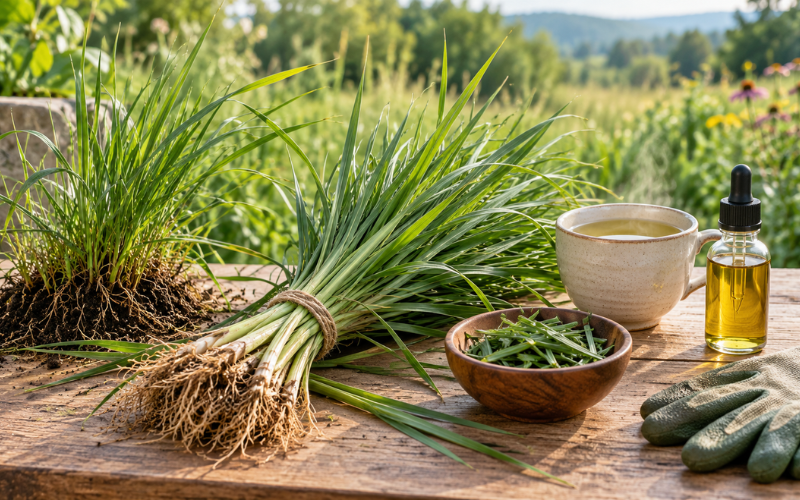
Lyposingrass is an unfamiliar term that currently has no clear, widely accepted definition. It may appear in search suggestions, social media posts, product descriptions, online discussions, or automatically generated web pages. However, the exact word does not appear to match a recognized plant, herb, medicine, or established scientific ingredient in major reference sources.
People may search for lyposingrass after seeing the word online or on a product label. Some may assume that it is a type of grass, herbal remedy, dietary supplement, or natural ingredient because the name ends in “grass.” That assumption should not be treated as fact. A product name can sound botanical without being the accepted name of a real plant.
The Meaning and Origin of Lyposingrass
There is no confirmed dictionary, botanical, medical, or scientific meaning for lyposingrass. A review of major plant and health information sources does not show it as an accepted common or scientific name. For comparison, the Royal Botanic Gardens, Kew maintains Plants of the World Online, a database containing more than 1.4 million plant names. Lyposingrass does not appear to be an established entry in that resource. This suggests that the word may be a spelling error, a newly created commercial name, a regional expression, or an online term rather than a formally identified species.
The origin of the word is also unclear. “Lyposingrass” could be a combination of several words, a mistranslation, or a name produced through incorrect transcription. It may also be a brand-specific phrase that has not gained wider recognition. Without the original context, packaging, photograph, or manufacturer’s information, its intended meaning cannot be confirmed.
There is no authoritative pronunciation for the term. Readers may divide it into parts such as “ly-po-sing-grass,” but that is only an informal reading of the spelling. It should not be presented as an official pronunciation.
The word may be confused with lemongrass, ryegrass, liriope, lilyturf, or another grass-like plant. These are separate plants with their own accepted names and characteristics. They should not be treated as alternative names for lyposingrass unless a reliable original source clearly establishes that connection.
Key Characteristics of Lyposingrass
No verified physical characteristics can be assigned to lyposingrass because its identity has not been established. There is no confirmed information about its leaves, roots, flowers, color, scent, growing conditions, chemical content, or natural habitat.
Photographs shared under an unfamiliar name are not enough to confirm a plant’s identity. Many grasses and narrow-leaved plants look similar, particularly in low-quality photographs. Even recognized species may be difficult to distinguish without seeing details such as the stem, seed head, root system, flowers, and leaf structure.
If lyposingrass appears on a packaged product, the most useful identifying details would be the full ingredient list, scientific plant name, manufacturer, country of origin, batch number, and intended use. A scientific name normally contains a genus and species, such as Cymbopogon citratus for lemongrass. The presence of a proper botanical name makes it easier to check reliable databases and research.
Until such information is available, lyposingrass should be considered an unidentified term. Describing it as a particular plant, supplement, or remedy based only on its name would be misleading.
Common Uses of Lyposingrass
There are no reliably documented traditional or modern uses associated with the exact term lyposingrass. Claims that it is commonly used in cooking, gardening, medicine, skin care, or weight management cannot be confirmed without first identifying what the word represents.
The context in which the name appears may offer clues. If it is printed on seed packaging, it may refer to a lawn or ornamental plant. If it appears on tea, capsules, powder, oil, or cosmetic packaging, it may be a commercial ingredient name. However, the product form alone does not reveal the ingredient’s true identity.
Consumers should not rely on repeated online statements as proof of traditional use. Websites can copy information from one another, allowing an unsupported claim to appear widely accepted. A genuine record of traditional use should identify the plant clearly, explain the cultural or regional context, and be supported by credible botanical or historical references.
If a seller uses the name lyposingrass, asking for the exact scientific name and complete composition is the most practical next step. A responsible supplier should be able to explain what the product contains and how it is intended to be used.
Potential Benefits Associated With Lyposingrass
No health, nutritional, cosmetic, or gardening benefits have been scientifically established for lyposingrass under that exact name. Statements claiming that it supports weight loss, improves digestion, removes toxins, treats illness, increases energy, or produces other health effects should be viewed cautiously.
A benefit cannot be evaluated until the ingredient itself is identified. Even when a familiar herb is involved, the evidence may depend on the species, plant part, preparation method, concentration, and amount used. Results from research on one botanical ingredient cannot automatically be transferred to another product with a similar name.
The National Center for Complementary and Integrative Health explains that scientific evidence for dietary supplements varies widely. Some ingredients have been studied carefully, while others have very little reliable research. Products sold online may also differ from the preparations used in scientific studies.
For lyposingrass, the main limitation is more basic: the subject has not been clearly defined. Until its identity and composition are confirmed, any discussion of benefits remains speculation. Personal testimonials, before-and-after photographs, influencer endorsements, and phrases such as “ancient remedy” do not replace controlled research.
How to Use Lyposingrass Properly
There is no responsible way to recommend a preparation method, serving size, dose, or frequency for lyposingrass while the term remains unidentified. Readers should not eat, drink, inhale, apply, plant, or give an unknown product to animals based only on information attached to this keyword.
If the term appears on a commercial product, begin by reading the entire label. Look for a complete ingredient list, the amount of each ingredient, directions, warnings, manufacturer contact details, and an expiration date. If it is described as a plant, look for its scientific name and the specific part used, such as the leaf, root, seed, or extract.
Do not guess a dose from a similar-looking herb. Different species may have very different effects, and concentration can vary greatly between tea, powder, oil, tincture, and extract. Essential oils and concentrated extracts, for example, are not automatically used in the same way as fresh plant material.
When identity remains uncertain, the safest choice is not to use the item. A pharmacist, doctor, qualified botanist, agricultural extension service, or poison-control professional may be able to help, depending on whether the item is a supplement, wild plant, garden product, or possible accidental exposure.
Possible Risks and Safety Considerations
Because lyposingrass has no confirmed composition, its possible side effects and allergy risks are unknown. Uncertainty does not mean that the substance is dangerous, but it also does not provide evidence that it is safe.
Extra care is necessary for children, pregnant or breastfeeding people, older adults, people preparing for surgery, and anyone taking prescription medicine. Herbal products and supplements can interact with medicines, affect laboratory results, or create problems during surgery. Some ingredients may also cause skin irritation, digestive symptoms, breathing problems, or allergic reactions.
The U.S. Food and Drug Administration advises consumers not to assume that a product is safe simply because it is described as natural. The agency also notes that dietary supplements are not approved for safety and effectiveness before being sold in the same way that medicines are.
Anyone who develops swelling, difficulty breathing, severe vomiting, fainting, chest pain, confusion, or another serious reaction after using an unknown product should seek urgent medical assistance. The packaging should be kept so health professionals can inspect the label and ingredients.
Choosing Good-Quality Lyposingrass
A product sold as lyposingrass should not be judged by attractive packaging, natural colors, or positive customer reviews. Quality begins with a clear identity.
A trustworthy label should state what the substance actually is. For a plant-based product, this normally includes the accepted common name, scientific name, plant part, quantity, and type of preparation. For a mixed supplement, every active ingredient and its amount should be disclosed. The label should also identify the manufacturer or distributor and provide contact information.
Be careful with products that promise instant results, guaranteed weight loss, complete detoxification, or cures for several unrelated conditions. Vague statements such as “scientifically proven” are not meaningful unless the seller provides relevant research on the same ingredient and preparation.
Terms such as “premium,” “pure,” “verified,” and “traditional” can be marketing language rather than evidence of quality. The NCCIH notes that words such as “standardized,” “verified,” or “certified” do not necessarily guarantee that a supplement is consistent or high quality.
Storage instructions cannot be provided for lyposingrass specifically. In general, consumers should follow the product label and avoid using items with broken seals, missing dates, unusual odors, moisture damage, or unexplained changes in appearance.
Lyposingrass Compared With Similar Alternatives
Lyposingrass cannot be compared accurately with lemongrass, ryegrass, liriope, or other plants until its identity is known. Similar spelling does not establish a botanical relationship.
Lemongrass is a recognized aromatic plant used in food and drinks. Ryegrass refers to recognized grasses commonly used for lawns, pasture, and sports surfaces. Liriope is a grass-like ornamental plant, although it is not a true grass. Each has distinct species, uses, and safety considerations.
None of these names should automatically replace lyposingrass. If the unfamiliar term resulted from a spelling mistake, the surrounding context may reveal the intended word. A cooking recipe might point toward lemongrass, while lawn-care instructions might indicate ryegrass. That would still be an informed possibility rather than proof.
The best alternative depends on the reader’s purpose. Someone looking for a culinary herb, lawn seed, ornamental border plant, or dietary supplement has a different need. Confirming that purpose and checking the accepted name should come before choosing any substitute.
Common Myths and Misunderstandings About Lyposingrass
One common misunderstanding is that every word ending in “grass” must identify a grass species. Common names do not always follow botanical rules, and commercial names can be created without reference to scientific classification.
Another myth is that a hard-to-find product must be rare, exotic, or especially powerful. Limited information may simply mean that a term is misspelled, newly invented, poorly translated, or unsupported. Scarcity of information is not evidence of value.
It is also incorrect to assume that repeated claims prove effectiveness. Search results may repeat the same original statement without checking it. Reliable evidence should identify the exact ingredient, describe how it was tested, and report both benefits and limitations.
Finally, “natural” does not mean harmless. The safety of any substance depends on its identity, amount, method of use, possible contamination, and the health of the person using it. These facts must be known before meaningful claims about lyposingrass can be assessed.
Conclusion
Lyposingrass is an unclear term rather than a well-documented plant, ingredient, or product. Its origin, characteristics, uses, benefits, dosage, and risks cannot be stated with confidence until its identity is confirmed.
Readers should avoid trusting dramatic claims or treating similar-sounding plant names as interchangeable. The most useful approach is to find the original context, check the full label, request a scientific name, and compare that information with reliable botanical or health sources.
FAQs
1. Is lyposingrass a recognized product or natural substance?
Lyposingrass does not currently appear to be a widely recognized scientific plant name, standard ingredient, or established natural substance. It may be a spelling error, commercial name, regional term, or newly created online phrase.
2. What is lyposingrass commonly used for?
No common uses can be verified under the exact name lyposingrass. Its intended use depends on what the word actually identifies. Check the original source, packaging, ingredients, and scientific name before drawing conclusions.
3. Is lyposingrass safe for regular use?
Its safety cannot be determined without knowing its composition. Do not consume or apply an unidentified product. Ask a qualified health professional for guidance if it is being marketed as a supplement or remedy.
4. Are there different types of lyposingrass?
There are no confirmed varieties or recognized types of lyposingrass. Products using the term may contain different ingredients, which makes careful label checking especially important.
5. Where can accurate information about lyposingrass be found?
Start with the original label or source and request an accepted scientific name. Botanical databases, government health resources, pharmacists, doctors, botanists, and agricultural extension services can then help verify the identity and relevant guidance.