
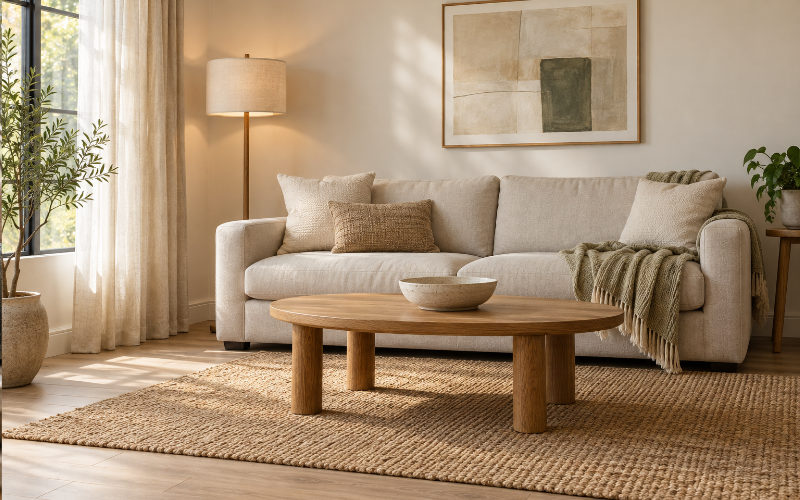
Minimalist home decor starts with choosing useful, well-made pieces that bring comfort and character to your space without overcrowding it. Every item should contribute something, whether that is a comfortable seat, a place to store belongings, or a personal detail you enjoy seeing.
The most useful minimalist home decor essentials include practical furniture, a connected color palette, comfortable lighting, simple textiles, and a few meaningful accents. Together, these elements help a room feel welcoming and complete while leaving enough space for everyday life.
You do not need an all-white interior or a new furniture collection to achieve this look. A favorite armchair, an inherited wooden table, or artwork you already own can provide a starting point. The aim is to make thoughtful choices around how you live and what makes your home feel comfortable.
A Simple Color Palette That Connects the Room
Choose a base color that works with your existing finishes
Start by looking at the elements that are likely to stay, including flooring, cabinets, countertops, and large furniture. Their colors can help guide your choice of walls, curtains, and other background surfaces.
Cream or soft beige can sit comfortably beside warm wood, while a muted gray may work with cooler finishes. White is an option, but it is not a requirement. Test paint samples beside your existing materials and view them throughout the day, since daylight and lamps can change their appearance.
Add subtle contrast through complementary shades
A room can feel flat when every surface has exactly the same tone. Gentle contrast helps define individual pieces while maintaining a calm overall appearance.
For example, pale walls might sit alongside a medium-brown table and olive cushions. A small amount of charcoal can give lighter furniture more definition. Choose shades that work well together and repeat them in a few places. This creates a connection between the room’s elements without making everything match.
Practical Furniture With Clean, Simple Shapes
Prioritize pieces that support your daily routine
Furniture should reflect how you use the room. If you regularly read in the living room, a supportive chair and a nearby surface for a book may matter more than an extra decorative console.
Simple shapes are often easy to combine, but comfort deserves equal attention. Consider seat depth, back support, and the effort needed to clean each piece. A minimalist room works best when its furniture makes ordinary activities easier and feels comfortable enough to use every day.
Match furniture size to the space
Furniture that is too large can restrict movement, while several undersized pieces can make a room feel scattered. Aim for proportions that suit both the room and the people using it.
Measure before buying, including doorways and the space needed to open drawers. Marking a piece’s footprint on the floor with removable tape can help you picture its size. Check whether you can walk around it comfortably without shifting other furniture or squeezing through narrow gaps.
Choose multipurpose pieces where they solve a real need
A storage bench can provide seating near an entrance while holding shoes. An extendable dining table can accommodate visitors without occupying its full size every day.
These pieces are useful when their extra functions fit your routine. Check how easy they are to operate and access. A storage ottoman becomes less convenient if you must remove a heavy tray whenever you need a blanket. Choose practical combinations that reduce the need for additional furniture.
Thoughtful Storage That Keeps Everyday Items Accessible
Use closed storage for visually busy belongings
Charging cables, paperwork, cleaning supplies, and spare household items can make a room look crowded even when they are neatly arranged. Closed storage gives these belongings a home while keeping the room’s visible surfaces simpler.
Choose storage according to what needs to fit inside. Adjustable shelves can accommodate changing needs, while drawers make smaller items easier to reach. Before adding another cabinet, review your current storage and check whether reorganizing it would solve the problem.
Add baskets or trays where small items collect
Notice where keys, remote controls, and other small belongings naturally gather. A shallow tray beside the entrance or a basket near the sofa can make those everyday habits easier to manage.
Keep containers close to where their contents are used. Their size should match the task, so they do not occupy more space than necessary. Empty them occasionally to remove items that belong elsewhere and prevent them from becoming permanent piles of unrelated objects.
Keep open shelving useful and lightly styled
Open shelves work well for frequently used books, bowls, or a small selection of decorative pieces. Leaving some space between groups helps each item remain visible and accessible.
Arrange shelves around real use first. Keep everyday belongings within easy reach and avoid placing fragile objects where they must be moved repeatedly. You do not need to fill every shelf from end to end. A little open space can make the entire unit feel more balanced.
Layered Lighting for a Comfortable Atmosphere
Combine general lighting with lamps for everyday tasks
One ceiling light may brighten a room, but it can leave reading corners dim or make the evening atmosphere feel harsh. Combining general lighting with lamps gives you more control over how the space feels.
A floor lamp beside a chair can support reading, while a table lamp can provide softer light later in the day. Position lights where activities happen, and check for glare on screens. Accessible switches also make the arrangement more convenient to use.
Choose simple fixtures that suit the room
Lighting fixtures should relate to nearby furniture and the room’s proportions. A large shade may overwhelm a small side table, while a tiny lamp can look disconnected beside a broad sofa.
Look for straightforward shapes and finishes that connect with other details in the space. Warm white light often suits relaxed living areas and bedrooms. Keep bulb colors reasonably consistent within the same room so adjacent lamps do not create an uneven mix of yellow and blue-looking light.
Textiles That Add Warmth Without Visual Clutter
Define the space with a well-sized rug
A rug can connect furniture into a clear seating area and make hard flooring feel more comfortable. Its size matters because a very small rug may appear separate from the furniture around it.
In many living rooms, a rug that reaches beneath the front legs of the main seating pieces helps bring the arrangement together. Measure your layout before choosing one. Consider cleaning needs, door clearance, and whether the rug stays securely in place during everyday use.
Soften windows with uncomplicated curtains
Curtains can add softness, privacy, and light control without becoming the strongest visual feature in the room. Plain fabrics or subtle woven textures are easy to combine with other minimalist home decor essentials.
Choose the fabric according to the room’s needs. Sheer curtains soften daylight but offer limited privacy after dark, while lined curtains provide more coverage. Make sure the panels open comfortably and avoid excessive fabric pooling where it could collect dust or obstruct movement.
Add texture through cushions, throws, and bedding
Texture gives a simple room depth without requiring several colors or bold patterns. Cotton, linen, wool, and other tactile fabrics can introduce gentle variation across a sofa or bed.
Choose cushions that provide support and throws that you actually use. If you must remove several decorative layers before sitting down or going to sleep, reduce the arrangement. A few comfortable textiles can give the room warmth while keeping daily tidying straightforward.
Natural Materials That Give Simple Spaces Character
Introduce wood, linen, ceramic, or stone
Natural materials often have small variations in grain, weave, or surface that make a room feel less uniform. A wooden side table, linen curtain, or ceramic bowl can add interest without elaborate decoration.
Consider maintenance as well as appearance. Some stone surfaces stain easily, and unfinished wood may need protection from spills. Choose materials and finishes that suit your household. An attractive piece is more useful when you can enjoy it without constantly worrying about damage.
Repeat a few materials for a cohesive look
Repeating a material in different parts of a room can help the space feel connected. Wood might appear in a table and picture frame, while ceramic could connect a lamp base with a small vase.
The pieces do not need identical finishes. Similar tones or surface qualities can provide enough consistency. Limit the number of competing materials if the room feels busy, but allow some variation so the arrangement retains a natural, personal character.
A Few Decorative Accents With Personal Meaning
Give artwork enough space to stand out
Artwork can provide a focal point without requiring many surrounding decorations. Choose a piece that fits the wall and relates comfortably to the furniture beneath it.
A larger work may give a room a clear center, while a small group can work well when arranged with consistent spacing. Leave enough open wall around the display for it to be seen clearly. Before making holes, use paper templates to test the placement and check it from different positions.
Choose objects you enjoy seeing every day
Personal objects help a restrained room feel lived in. A handmade bowl, a framed photograph, or a souvenir can contribute more meaning than decorations chosen only to fill an empty surface.
Select pieces you enjoy and give them a clear place. If you have a larger collection, display part of it and store the rest carefully. Rotating a few favorites can refresh the room while allowing individual objects to receive more attention.
Use a plant or simple arrangement as a natural accent
A plant can introduce color and an organic shape among straight furniture lines. Choose one according to the available light, the space it will need as it grows, and the care you can provide.
A single plant in a suitable pot may be enough for a small room. If live plants do not suit your routine, a simple branch arrangement or an empty sculptural vase can serve as an accent. Check plant suitability if children or pets may reach it.
Balance, Clear Surfaces, and Space Between Objects
Leave room around furniture for comfortable movement
Open space plays a practical role in minimalist decorating. It allows you to move through a room, reach storage, and use furniture without obstacles.
Walk through the main routes, including the paths between entrances, seating, and windows. Check whether cabinet doors open fully and dining chairs pull out easily. If movement feels awkward, try removing or repositioning a smaller piece before replacing larger furniture. Sometimes a more comfortable layout comes from a simple adjustment.
Keep everyday surfaces easy to use
A coffee table needs room for a drink, and a bedside table should hold the items you reach for at night. Decorations should leave enough space for those everyday purposes.
Use the surface’s function to guide what stays. A lamp and a small dish may be enough beside a bed. In the kitchen, keeping preparation areas available can make daily tasks easier. Clear surfaces are most valuable when they support how the room is actually used.
Group smaller accents instead of scattering them
Several small objects spread across a room can draw the eye in too many directions. Bringing related items together creates a more deliberate display and leaves other areas available.
For example, a vase and a favorite bowl might share one end of a sideboard. Vary their height slightly so both remain visible. There is no fixed number of objects required for a successful arrangement. Stop when the group feels balanced and the surface still serves its purpose.
Choosing Minimalist Home Decor Essentials Without Overbuying
Start with what you already own
Before shopping for minimalist home decor essentials, look at your existing belongings with the room’s needs in mind. Moving a lamp, changing a furniture arrangement, or uncovering a table beneath unused decorations may improve the space immediately.
Work through one area at a time. Keep useful pieces and objects with personal value, then consider whether anything would work better elsewhere. This helps you see what is missing before spending money on additions.
Identify what the room actually needs
A room may feel unfinished because it lacks lighting, comfortable textiles, or suitable storage. Adding decorative objects will not always address that underlying issue.
Observe the room during a normal day. Notice where you struggle to read, where belongings collect, or where furniture interrupts movement. These details provide a practical guide to your next decision. Addressing one clear problem can make a greater difference than buying several accessories without a defined purpose.
Add pieces gradually and check their purpose
Introduce new items slowly so you can judge their effect on the room. A purchase should improve comfort, support a routine, or contribute a personal detail that feels worth the space it occupies.
Before buying, decide where the piece will go and check its dimensions and care needs. After adding it, live with the arrangement for a while. This gives you time to understand whether the room needs anything else.
Conclusion
Minimalist home decor essentials help a room feel comfortable, useful, and personal. Practical furniture, connected colors, thoughtful lighting, and simple textiles create a strong foundation. A few meaningful accents add character, while suitable storage and clear pathways make everyday living easier.
Begin with what you already own and focus on the areas that need attention. You do not need a fixed number of possessions or perfectly empty surfaces. A room feels finished when its pieces work together, support your routines, and leave enough space to enjoy being there.
FAQs
1. What are the most important minimalist home decor essentials?
Start with furniture that fits your needs, suitable lighting, practical storage, and comfortable textiles. Use a consistent color palette to connect these elements, then add a few personal accents. The exact essentials depend on the room and how you use it.
2. How can I make minimalist decor feel warm?
Combine soft lighting with tactile fabrics and materials such as wood or ceramic. Warm colors can help, but texture and comfort matter too. A favorite photograph, artwork, or well-used reading chair can give the space a personal feel.
3. Does minimalist home decor have to be neutral?
No. Minimalist rooms can include green, blue, terracotta, or other colors you enjoy. Keep the palette focused and repeat selected shades thoughtfully. The balance of furniture, objects, and open space matters more than whether the walls are white.
4. Can I create a minimalist home on a small budget?
Yes. Begin by rearranging furniture, clearing useful surfaces, and improving existing storage. Keep pieces that work well and make purchases only when they meet a specific need. Decorating gradually also gives you time to find suitable secondhand options.
5. How do I keep a minimalist room from looking empty?
Check whether the furniture suits the room’s size and whether lighting and textiles provide enough warmth. A well-sized rug, thoughtfully placed artwork, or a comfortable chair can help. Add something where it improves the room’s function or appearance.