
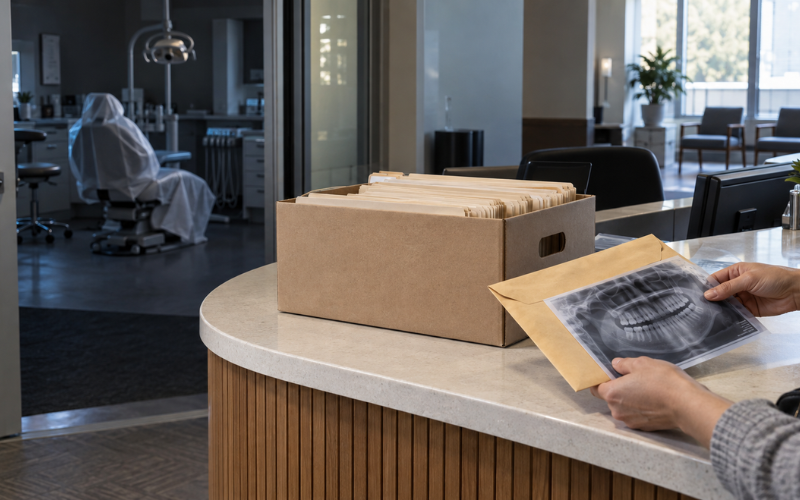
The Reichley Dental Group closure marked the end of a long-running family dental practice in Beavercreek, Ohio. The office announced its permanent closure in March 2026 after serving local patients for about 50 years.
According to the practice’s public announcement, the decision followed a serious health diagnosis involving Dr. Rochelle Reichley. The closure left former patients with practical questions about dental records, unfinished treatment, insurance claims, payments, and finding a new dentist.
Reichley Dental Group and Its 50-Year History
Reichley Dental Group was a family-owned dental practice that provided general and cosmetic dental care. Dr. Joseph “Joe” Reichley founded the practice in 1975, according to local reporting. The office moved to Beavercreek in 1988 and became part of the local healthcare community.
Dr. Rochelle Reichley joined her father’s practice in 2000. She later continued operating the business after he retired. Becker’s Dental Review reported that Dr. Joe Reichley retired in 2016, placing Dr. Rochelle Reichley in charge of the practice.
The office treated generations of patients during its decades in operation. For many local families, its closure was more than a business change. It ended a professional relationship that may have lasted for years or even decades. WHIO’s closure report provides further background on the practice’s history.
The Closure Announcement and Confirmed Timeline
Reichley Dental Group announced its permanent closure through an emotional social media message in March 2026. Local news outlet WHIO reported the announcement on March 11, 2026.
The practice said that Dr. Rochelle Reichley had been diagnosed with Stage 4 lung cancer that had spread to her brain. It explained that she needed to focus on her health and treatment. This was the publicly reported reason for closing the practice.
The announcement also thanked patients for the trust they had placed in the office over the years. It stated that patients could contact the office to request copies of their dental records. WHIO published 937-475-9541 as the number for record requests.
Becker’s Dental Review reported that the practice expected to transfer patient records for 60 days following the announcement. That original period has now passed. The published number may no longer be monitored, so patients should confirm its current status before sharing personal information. Becker’s Dental Review summarizes the closure notice and the original record-transfer period.
What Is Confirmed—and What Remains Unclear
The main fact is clear: Reichley Dental Group permanently closed. The Better Business Bureau currently marks the business as out of operation, and there has been no confirmed public announcement that regular appointments have resumed. Its historical website or business listings should not be treated as proof that dental services are available.
There is also no widely published notice identifying a successor dentist who took over all Reichley Dental Group patients. Former patients should not assume that their records were automatically sent to another local practice.
Public reports do not clearly identify the current long-term custodian of the records. They also do not explain whether the office telephone number is still active or whether a separate company now manages record requests.
Patients should rely on verified information rather than comments on social media, old directory listings, or unconfirmed claims about where the records may be stored. The BBB business profile confirms the out-of-business status but does not identify a replacement practice or permanent record custodian.
Requesting Records After the Reichley Dental Group Closure
Records former patients may need
A complete dental file contains more than a list of past appointments. Patients may need their clinical chart, treatment notes, dental X-rays, scans, periodontal measurements, medication information, referrals, and current treatment plan. Records related to crowns, bridges, implants, dentures, root canals, and other major procedures can be especially important.
Patients should also consider requesting financial documents. These may include itemized statements, insurance submissions, payment records, treatment estimates, credits, and information about any deposit made for future care.
The records can be sent directly to the patient or, when properly authorized, to a new dentist. The American Dental Association explains that patients may request that a covered dental practice send copies to another person or provider. A written request should be signed and should clearly identify who will receive the records and where they should be sent. ADA guidance on releasing dental records explains this process.
How to submit and document a records request
Begin with the record-request number published in the closure report. If someone answers, confirm that the person or service is authorized to manage Reichley Dental Group records before providing a date of birth, address, insurance information, or other private details.
A written request is useful even if the first contact is made by phone. Include the patient’s full name, date of birth, former address if it has changed, approximate dates of care, and a clear description of the requested documents. State whether the records should go to the patient or a new dental office.
Ask for the complete clinical file and original-quality digital images rather than only a short treatment summary. Keep copies of emails, forms, postal receipts, and notes showing when calls were made.
Steps to take if the original transfer period has passed
The end of the announced 60-day transfer period does not necessarily mean that all records are gone. Under federal HIPAA rules, where those rules apply, patients generally retain the right to access protected health information for as long as a covered provider or its business partner maintains it.
The U.S. Department of Health and Human Services says covered providers normally must act on an access request within 30 calendar days. One additional 30-day extension may be allowed if the provider gives the patient a written explanation and a completion date. Reasonable copying costs may apply. HHS patient-access guidance explains these rights and limits.
Where patients can seek guidance if they receive no response
If repeated, documented requests receive no reply, patients can contact the Ohio State Dental Board for general guidance or information about its complaint process. A possible HIPAA access problem may also be reported to the U.S. Department of Health and Human Services Office for Civil Rights.
These agencies cannot guarantee that a particular file will be recovered, but they can explain relevant procedures. Patients with a complex financial or legal dispute may also wish to seek advice from a qualified professional.
Managing Unfinished or Ongoing Dental Treatment
Patients should not delay unfinished treatment while waiting for old records. A temporary crown, unfinished root canal, healing implant, broken restoration, or active gum problem may require timely attention.
A new dentist will normally need to examine the patient before continuing another provider’s treatment plan. The new provider may recommend fresh X-rays or a different approach based on the current condition of the teeth and gums. An old estimate or treatment plan provides helpful background, but it does not require the new dentist to offer the same procedure, material, price, or schedule.
Patients should tell the new office about temporary dental work, recent procedures, pain, swelling, medications, allergies, and upcoming treatment that had already been discussed. They should also bring any implant cards, appliance cases, referral letters, treatment estimates, or copies of records already in their possession.
Finding a New Dentist in Beavercreek or the Dayton Area
Start by checking which local offices are accepting new patients. Confirm that the dentist provides the services you need, especially if you have ongoing implant, periodontal, root canal, denture, or cosmetic treatment.
Insurance directories can help narrow the search, but patients should call the practice to verify current network participation. Online directories are not always updated immediately. It is also useful to ask about appointment availability, emergency visits, payment policies, accessibility needs, and experience reviewing work started by another dentist.
Before the first appointment, send any available records and explain that you are a former Reichley Dental Group patient. Bring a list of recent treatment, current concerns, medications, and questions. Clear information helps the new office decide what needs attention first.
Why Transferring Dental X-Rays and Treatment Notes Matters
Dental records help a new dentist understand what was diagnosed, what treatment was completed, and what may still need attention. X-rays can show earlier decay, bone levels, root canal work, implants, and changes that are difficult to see during a visual examination.
Treatment notes may identify restoration materials, implant systems, laboratory work, previous symptoms, or reasons behind earlier recommendations. Financial and insurance records can also help patients understand what was billed and paid.
Existing records do not guarantee that new imaging will be unnecessary. A dentist may need updated X-rays when an image is too old, incomplete, poor in quality, or no longer reflects the patient’s condition. Even so, transferring usable records gives the new provider better context and may prevent avoidable confusion.
Handling Urgent Dental Needs After the Closure
Record retrieval should not delay urgent care. Severe or increasing pain, uncontrolled bleeding, a broken tooth with significant discomfort, facial swelling, fever, or signs of infection require prompt attention.
Call a local dentist that offers urgent appointments and clearly describe the symptoms. If swelling affects breathing or swallowing, bleeding will not stop, or facial trauma may threaten the airway, seek emergency medical care. The American Dental Association’s emergency guidance identifies uncontrolled bleeding and serious swelling that may affect the airway as dental emergencies.
Conclusion
The Reichley Dental Group closure ended about 50 years of family dental care in the Beavercreek community. Public reports confirm that the practice closed permanently in March 2026, but questions remain about the long-term location of patient records and whether any successor practice was appointed.
Former patients can move forward by requesting complete clinical and financial records, documenting every request, checking insurance matters, and arranging care with a new dentist. Most importantly, anyone with unfinished treatment or urgent symptoms should seek appropriate care without waiting for the record-transfer process to be completed.
FAQs
1. Is Reichley Dental Group permanently closed?
Yes. The practice announced a permanent closure in March 2026. Current public business information also identifies it as out of operation.
2. Why did Reichley Dental Group close?
The practice’s public message said it closed after Dr. Rochelle Reichley received a serious cancer diagnosis and needed to focus on treatment. This is the reason reported by local news and dental industry media.
3. Can former patients still request their dental records?
Patients can still try to request their records even though the original 60-day transfer period has passed. WHIO reported 937-475-9541 as the record-request number in March 2026, but its current availability has not been publicly confirmed. Patients should verify who is receiving the request before sharing private details.
4. Did another dentist take over Reichley Dental Group’s patients?
No publicly confirmed announcement reviewed for this article identifies a dentist or practice that automatically took over all patients. Former patients may need to choose a new provider independently.
5. What should patients do about unfinished treatment or dental pain?
Contact a new dentist promptly and explain what treatment was started. Do not wait for records if there is pain, swelling, infection, bleeding, broken temporary work, or another urgent concern. Serious swelling that affects breathing or swallowing requires emergency care.