
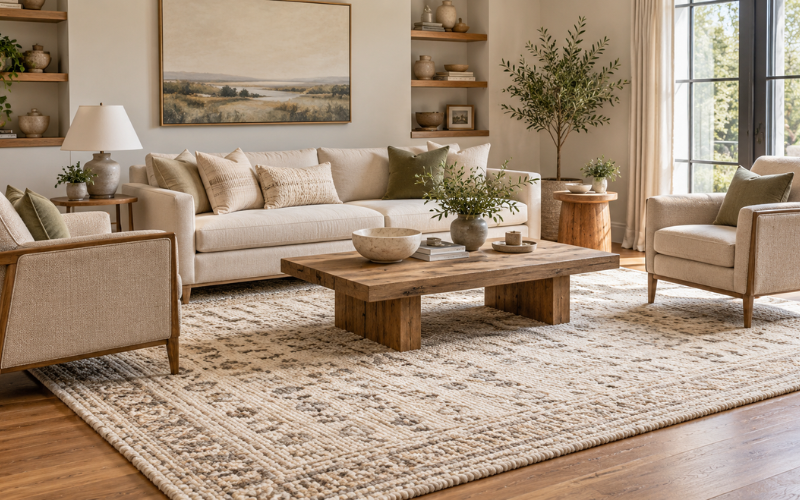
A living room rug can do more than cover part of the floor. It can define the seating area, soften a hard surface, and help the room’s colors and furniture feel connected. The right rug can make a large room feel more welcoming or give a smaller space a stronger sense of order.
Choosing one involves more than picking a color you like. Size and placement affect how the room looks and works, while material and texture influence comfort and care. This guide explains how to choose a living room rug that suits your seating area, home life, and style—and how to keep it looking its best.
How a Living Room Rug Shapes the Space
A rug gives the eye a clear area to focus on. In a living room, it often brings the sofa, chairs, and coffee table together as one seating zone. Without one, furniture can look as if it is floating separately around the room. With a well-sized rug beneath it, the arrangement tends to feel more settled.
Rugs can also soften hard floors, such as wood, tile, or stone. That can make the room feel more comfortable for walking, sitting, or playing on the floor. A rug may also help reduce the sharpness of sounds in a room, though the effect depends on its size, thickness, and the other surfaces in the space.
Color and pattern give a rug another role: connecting different parts of the room. It can echo a shade in the curtains or cushions, or add contrast to neutral furniture. The rug does not have to match every item. It simply needs to feel at ease with the room’s overall colors and mood.
Choosing a Rug Size That Fits Your Seating Area
Rug size is one of the most important choices because it changes the balance of the whole seating area. A rug that is too small can make the furniture look crowded around it. One that is much too large may hide most of the floor and make the arrangement feel heavy.
Start by measuring the area occupied by the sofa, chairs, and coffee table. Then decide how you want the furniture to relate to the rug. In many living rooms, the front legs of the sofa and chairs sit on the rug while the back legs remain on the floor. This approach links the furniture without requiring the rug to cover the entire seating area.
If the room and budget allow, placing all the main seating furniture on the rug can create a more connected look. In a compact room, a smaller rug can still work if it sits close to the furniture rather than alone in the middle of the floor.
Use painter’s tape to mark a possible rug outline before buying. This quick check can reveal whether there is enough room to walk around the furniture and whether the rug will leave a comfortable border of visible flooring. Measure the furniture, too, and check the rug’s actual dimensions rather than relying only on its label.
Placing the Rug Around Sofas and Chairs
A rug should relate clearly to the seating, not simply occupy an empty patch of floor. In a common arrangement, the sofa’s front legs and the front legs of nearby chairs rest on the rug. This creates a visual connection between the pieces while leaving some floor visible behind them.
Another option is to place all the seating legs on the rug. This can suit a larger room or a wide seating group, especially when you want the rug to define one generous conversation area. If you choose this arrangement, make sure the rug extends far enough beyond the furniture to avoid a cramped border.
Keeping every furniture leg off the rug can work in a small space, but the rug should still sit close to the sofa and chairs. If it is too far away, the seating area may look disconnected. The coffee table usually sits fully on the rug, but check that there is enough clearance for people to move comfortably around it.
Think about practical movement as well as appearance. Leave clear paths from doorways to the seating area, and avoid placing a rug edge where it might catch a door or create a tripping point. A rug pad can help keep the rug in place on smooth flooring.
Rug Materials for Different Homes and Lifestyles
Rug material affects how a rug feels, how it responds to everyday use, and what care it needs. Wool is often chosen for its soft feel and natural resilience. It can suit a frequently used living room, but the price and care instructions vary by rug.
Cotton rugs are often lighter and can be easier to move. Some are washable, but this depends on the construction and label instructions. A small cotton rug may be easier to clean at home than a large one, which can be difficult to fit into a washing machine.
Synthetic fibers, such as polypropylene or polyester, are common in rugs designed for everyday use. They can be practical in busy homes and are available in many colors and patterns. Their feel and durability differ from one product to another, so check the fiber details and care guidance before buying.
Natural-fiber rugs, including jute and sisal, add a dry, textured look. They can work well in relaxed spaces, but their rougher feel may not suit everyone, and some natural fibers need careful cleaning. Consider who uses the room, whether pets or children are present, and how much effort you want to spend on upkeep. Always follow the manufacturer’s care instructions for the specific rug.
Pile Height, Texture, and Everyday Comfort
Pile height describes how long or short the rug fibers are. A low-pile rug has a flatter surface, while a high-pile rug feels thicker and plusher underfoot. Neither is automatically better; the useful choice depends on how the room is used.
Low-pile rugs are often easier to vacuum and can be practical under furniture. Chair and table legs are less likely to sink into them, and doors are less likely to catch on the rug edge. A flat or low-pile surface can also be a sensible choice in a busy walkway.
A thicker rug can make a seating area feel softer and more relaxed. However, deep fibers may hold crumbs and dust more easily, and moving furniture over them can be harder. They may also need a more careful vacuuming routine.
Texture matters even when the pile is short. A woven pattern, raised detail, or mix of fibers can add interest without relying on bold colors. If you can, feel a sample before buying. Think about how the rug will feel under bare feet, whether a coffee table will sit steadily on it, and how it will respond to regular cleaning.
Choosing Colors and Patterns That Suit the Room
A living room rug can blend into the room or become its main visual feature. If your sofa and walls are already colorful or patterned, a rug in a quieter tone can help the space feel balanced. In a simple room, a patterned rug can bring energy and draw attention to the seating area.
Look at the room in daylight and in the evening before settling on a shade. Natural light, lamps, and surrounding colors can all affect how a rug appears. A sample placed near the sofa or curtains can be more helpful than judging a color on a screen.
The rug does not need to match the sofa exactly. Instead, look for a shared color or a complementary tone that helps the pieces sit comfortably together. For example, a rug with a small amount of a cushion color can connect the two without making the room feel overly coordinated.
Patterns can disguise some everyday marks better than a plain, very light surface, but the scale matters. Large designs may dominate a compact room, while very small patterns can look busy across a large area. Choose a pattern that suits the amount of visual detail already in the space.
Rug Shapes for Different Living Room Layouts
A rectangular rug is a common choice because it often follows the shape of a sofa and seating group. It can make the seating area feel orderly, especially in a longer room. A square rug may suit a more balanced arrangement, such as chairs placed around a central table.
Round rugs can soften rooms with many straight lines. They may work under a round coffee table or in a compact seating nook, but make sure the shape still relates to the furniture. A round rug that is too small can look like a separate accent rather than part of the main seating area.
The shape of the room is only one consideration. Think about where the furniture sits, how people walk through the space, and whether the rug edge will interrupt the layout. Before choosing an unusual shape, outline it on the floor with tape or paper. This makes it easier to see whether it supports the room or competes with the furniture.
Living Room Rug Ideas for Open-Plan Spaces
In an open-plan home, a living room rug can mark the seating area without closing it off. The rug creates a visual boundary between the lounge, dining area, or kitchen while keeping the space open. This is especially helpful when there are few walls to show where one activity ends and another begins.
Choose a rug that is large enough to hold the main seating arrangement. If it is too small, the living area may appear separate from its furniture. Keep the rug’s position in line with the sofa and chairs, even if the rest of the room has an irregular shape.
You can use color or texture to distinguish the living zone from nearby areas. For instance, a patterned rug under the sofa may bring character to a simple open room. If there is already a patterned floor or a strong dining rug nearby, a quieter design may help the zones feel related rather than competing.
Remember that open-plan rooms often have more foot traffic. Leave clear routes between the seating area and other parts of the home, and choose a material and pile that suit how often people cross the rug.
Cleaning and Caring for a Living Room Rug
Regular care can help a rug stay comfortable and presentable. Vacuum it according to its material and construction, and take care not to use a setting that pulls at loose fibers or fringe. Some rugs need gentler vacuuming than others, so check the label or manufacturer’s instructions.
Blot spills promptly with a clean cloth rather than rubbing them into the fibers. Use a cleaner only if it is suitable for the rug, and test it first on a small, less visible area. Strong products or too much water can damage some dyes and fibers.
Turn the rug from time to time if one area receives more sunlight or foot traffic than another. This can help wear and fading happen more evenly. A rug pad can also reduce slipping and help limit friction against the floor.
Deep cleaning methods vary by material and construction. Some rugs can be washed, while others need professional care. Check the care instructions before cleaning, especially if the rug is made from natural fibers, has a delicate backing, or uses dyes that may bleed.
Common Living Room Rug Mistakes to Avoid
One common mistake is choosing a rug before measuring. A design may look appealing in a store or online but feel too small once it is placed among the sofa and chairs. Measure the seating area, mark the rug’s footprint, and check that the planned size leaves enough room to walk around it.
Another mistake is choosing a rug only for its appearance. A pale, high-pile rug may look inviting, but it might be hard to maintain in a busy room with pets or young children. On the other hand, a very flat or rough rug may not feel comfortable where people like to sit on the floor.
Placement can also be an issue. A rug floating several inches away from all the furniture may make the seating feel disconnected. A rug pushed too far under the sofa may hide its design and leave little visible surface around the table.
Finally, do not overlook the rug pad, door clearance, or care label. These details affect how the rug works day to day. A few practical checks before buying can prevent an attractive rug from becoming an inconvenient one.
Conclusion
The right living room rug can make a seating area feel more connected, comfortable, and complete. Start with the size and furniture placement, then consider the material, pile, color, and shape that suit your home and routines. A rug that looks good and works well in everyday life will feel like a natural part of the room.
FAQs
1. What size rug works best in a living room?
The best size depends on the dimensions of the seating area and how you want the furniture to sit on the rug. A common approach is to place the front legs of the sofa and chairs on it. Measure the arrangement and mark the outline on the floor before choosing.
2. Should all the furniture legs sit on the living room rug?
No. The front legs of the main seating pieces can sit on the rug while the back legs remain on the floor. In a larger room, placing all the legs on the rug can make the seating group feel more unified. Choose the arrangement that fits the room and rug size.
3. What material is practical for a living room rug?
It depends on how the room is used. Wool, cotton, synthetic fibers, and natural fibers all have different feels and care needs. Consider foot traffic, pets, children, cleaning preferences, and the manufacturer’s instructions before deciding.
4. Is a high-pile or low-pile rug better for a living room?
A low-pile rug is often easier to clean and works well under furniture or in busy paths. A high-pile rug feels softer but may need more careful cleaning. Choose based on comfort, furniture stability, and how much maintenance suits your home.
5. Does a living room rug need a rug pad?
A rug pad can help reduce movement, especially on smooth floors. It may also add cushioning and help protect the floor from friction. Choose a pad designed for your rug and floor type, and check that it does not extend beyond the rug’s edges.