
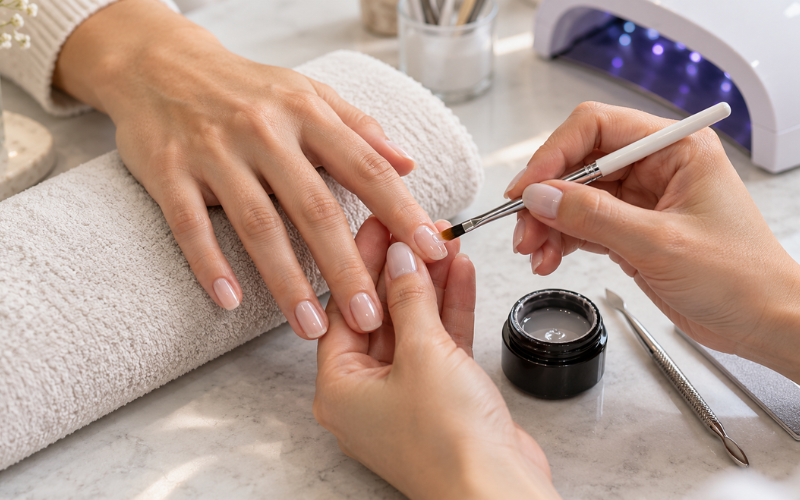
Builder gel is a nail product used to add structure and support to natural nails. It can also be used to create overlays or, with some formulas and techniques, add length. Unlike regular gel polish, which mainly adds color, builder gel is designed to create a thicker layer over the nail.
The name covers several kinds of products. Some builder gels come in bottles and can be brushed on; others come in pots and are shaped with a separate brush. They may also differ in how firm they feel and how they are removed. That’s why it helps to check the product’s instructions instead of assuming all builder gels work the same way.
What Builder Gel Is and What It’s Used For
Builder gel is a thicker gel product that cures under a UV or LED nail lamp. Once cured, it forms a firm coating over the nail. A nail technician can shape that coating to create a smooth finish and add support.
One common use is a natural nail overlay. The gel sits on the natural nail, adding a layer of structure without necessarily making the nail longer. Some people choose an overlay when they want a more substantial manicure or a base for color.
Builder gel can also be used to make extensions. Depending on the product and method, a technician may shape it over a nail form or use it with a tip. The finished length and shape depend on the formula, the nail underneath, and the technician’s approach.
Regular gel polish has a different main purpose. It provides color and a glossy finish in thin layers. Builder gel is used to create a thicker, shaped layer. A manicure may use builder gel for structure and then apply gel polish or a top coat for color and shine.
“Builder in a bottle” describes a builder gel packaged with a brush in the bottle, similar to nail polish. The format can make it convenient to apply, especially for overlays. It does not tell you everything about the product, though: formulas and removal methods vary. Read the label and follow the manufacturer’s instructions.
The Main Types of Builder Gel
Builder gel usually comes in a bottle or a pot. Bottle builder gel is applied with its built-in brush. It may be a practical choice for natural nail overlays, though the exact use depends on the formula. Some products marketed as builder gel can also be used to make extensions.
Pot or jar builder gel comes in a container and is usually picked up and shaped with a separate brush. The consistency may allow a technician to control the product as it is placed and shaped. It can be used for overlays or extensions, depending on the product.
You may also see terms such as soft gel and hard gel. These terms commonly describe differences in the cured product and how it can be removed. Many soft gels are designed to break down with the removal method specified by the manufacturer. Hard gels generally need to be filed down rather than soaked off. But product names are not always used consistently, so the label matters more than the packaging or the words “builder gel” alone.
Some ranges include different formulas for different needs. For example, a brand may offer products intended for overlays, extensions, or different levels of firmness. A manufacturer’s instructions will explain which lamp to use, how long to cure the gel, and how to remove it. Those details can differ from one product to another.
Builder Gel Compared With Other Nail Systems
Builder gel and gel polish both cure under a nail lamp, but they are used differently. Gel polish is usually applied in thinner layers to add color. Builder gel is meant to create a thicker structure that can be shaped over the nail. Some people wear builder gel on its own, while others add color or a top coat over it.
Builder gel and hard gel can be easy to confuse because “builder gel” is a broad product label. Some builder gels are soak-off products; others need to be filed down. Hard gel is commonly associated with file-off removal, but names and formulas vary. Before booking a service, ask which product the salon uses and how it is removed.
Acrylic is another system used for overlays and nail extensions. It is made and applied differently from gel and does not cure under a UV or LED nail lamp in the same way. The feel, application process, maintenance, and removal experience can differ. Neither system is automatically right for everyone; the choice depends on your preferred length, the result you want, your natural nail condition, and the care you are comfortable with.
If you’re deciding between them, focus on practical questions: Do you want to keep your natural length or add length? How often are you willing to return for maintenance? Do you prefer a product that may be soak-off or one that is filed down? A nail technician can explain the available options for your nails.
Who May Find Builder Gel Useful
Builder gel may appeal to people who want an overlay on their natural nails or a manicure with more structure than a thin coat of polish. It can also suit someone who wants to add some length, provided the chosen product and technique are designed for extensions.
It is not a guarantee that natural nails will grow longer or become healthier. The gel covers the nail while it is worn, but nail growth still comes from the nail underneath. If the product is applied or removed roughly, the natural nail can be weakened or damaged. Nail condition, product choice, application, and removal all matter.
Builder gel may not be the best option if your nails or surrounding skin are already irritated, injured, or showing signs of infection. In that situation, consider postponing the service and getting appropriate advice. If you have had a reaction to nail products before, tell the technician before the appointment and check ingredient information where available.
What to Expect During a Builder Gel Appointment
An appointment usually begins with nail preparation. The technician may clean the hands, shape the nails, and prepare the nail surface according to the product system. Good preparation should be careful and controlled; it should not leave you with pain or a burning sensation.
Next, the builder gel is applied and shaped. The technician may use a thin first layer, then add product to create the desired structure. How many layers and how much shaping are needed depend on the product, the nail, and whether the service is an overlay or an extension.
The gel is cured under a UV or LED lamp. Curing time depends on the formula and the lamp specified by the manufacturer. A salon should follow the product’s instructions rather than use the same timing for every gel. If the product touches your skin, tell the technician so it can be removed before curing.
After curing, the nail may be refined with a file and finished with a top coat or color. The technician should explain what you are wearing and whether it is designed to soak off or needs to be filed down. Knowing that information can make future maintenance and removal easier.
How to Care for Builder Gel Nails
Treat builder gel nails as a coating that needs care, not as a reason to use your nails as tools. Opening cans, scraping labels, or prying at objects with the nail tips can cause cracks or lifting. Use your fingertips or an appropriate tool instead.
Try to avoid picking, biting, or pulling at any loose product. This can lift layers of the natural nail along with the gel. If you notice a crack or lifting, contact your nail technician for advice rather than gluing it down or covering it with more product.
Maintenance timing varies. It can depend on how quickly your nails grow, the product, the length and shape, and your daily activities. Rather than relying on a fixed schedule, ask your technician when to return and what signs mean the set needs attention. A large gap near the cuticle, a change in balance, lifting, or a broken nail are reasons to check in.
Keep an eye on the skin and nails between appointments. Redness, soreness, swelling, or persistent irritation should not be treated as normal wear. Stop using the product and seek advice from a healthcare professional if you develop symptoms that suggest a reaction.
Builder Gel Removal and Nail Health
Removal depends on the product. Some builder gels are made to be soaked off, while others need to be filed down. A bottle or pot does not reliably tell you which type you have. Check the label, ask the salon, or contact the product manufacturer before trying to remove it.
Do not peel or force the gel off. Pulling at a bonded layer can remove parts of the natural nail and leave it rough or thin. Filing aggressively can also cause damage, especially if you do not know where the product ends and the natural nail begins.
If your product is soak-off, follow its specific removal instructions. If it is file-off, a nail professional can reduce the product while protecting the nail underneath. For an unfamiliar product or a set with extensions, professional removal is often the more straightforward choice.
After removal, nails may look or feel different for a while, particularly if they have been filed or exposed to repeated services. Give them a break if they are sore or visibly damaged, and avoid covering over irritation. If you have ongoing pain, discoloration, swelling, or other concerning changes, seek medical advice.
Benefits and Limitations of Builder Gel
One benefit of builder gel is its versatility. Depending on the formula, it can be used to create a natural-looking overlay, a smooth base for color, or an extension. It also offers more shaping and structure than regular gel polish.
The trade-offs are worth considering. Builder gel needs to be cured with the correct lamp and maintained as the nails grow. Application and removal require care, and different formulas may need different processes. A product that is convenient for one person may not suit someone else’s nail length, lifestyle, or sensitivity.
The finished result depends on several things: the product, the technician’s skill, the condition of the natural nail, and how the nails are treated afterward. Builder gel can add a strong coating, but it cannot prevent every break or guarantee damage-free wear. Careful application and removal matter as much as the product choice.
Safety and Sensitivity Considerations
Read the product label and follow its directions. Nail products can cause irritation or allergic reactions, and the FDA advises consumers to read nail-product labels and follow warnings. Avoid getting gel on the surrounding skin, and do not use a product in a way its manufacturer does not recommend.
Uncured gel should not be left on the skin. If gel gets onto the skin during application, it should be removed before the nail is cured. Curing time and lamp compatibility are product-specific; using a different lamp or guessing at the timing may not cure the product as intended. Follow the system’s instructions and ask the technician what lamp and curing process they use.
Watch for possible signs of sensitivity, such as itching, redness, rash, swelling, or peeling around the nails. A reaction can appear after exposure, and symptoms should not be dismissed as ordinary dryness. Stop using the product and consult a healthcare professional if you suspect an allergic reaction. The FDA notes that cosmetic reactions can include itchy skin, rash, flaking, or swelling, and recommends seeking medical advice for suspected reactions.
Choosing a Builder Gel Product or Nail Technician
When choosing a builder gel product, start with its intended use and removal directions. Check whether it is meant for overlays, extensions, or both, and whether it is soak-off or file-off. Also look for clear instructions about the curing lamp and timing. If those details are missing or confusing, contact the manufacturer or choose a product with instructions you can understand.
Before an appointment, ask the technician which type of builder gel they plan to use, how it will be removed, and how often it may need maintenance. Mention any past reaction to nail products, current nail damage, or concerns about your nail length. A good consultation should leave you clear about the process and realistic about upkeep.
Pay attention to hygiene and communication. Tools and work surfaces should be clean, and the technician should handle your nails gently. You should feel comfortable asking questions or speaking up if you experience pain, burning, or product on your skin. If anything feels wrong, it is reasonable to pause the service.
Conclusion
Builder gel is a versatile nail product that can add structure to natural nails or help create extensions. The best option depends on the formula, your nails, the look you want, and how you prefer to handle maintenance and removal. Before booking or buying, find out whether the product is soak-off or file-off, follow its curing instructions, and keep uncured gel off your skin. Those simple checks can help you make a more informed choice about builder gel.
FAQs
1. How long does builder gel last?
Wear time varies with the product, nail growth, application, and daily activities. Ask your nail technician when to schedule maintenance and what signs mean the product needs attention.
2. Can builder gel be used on natural nails?
Yes. Some builder gels are designed for natural nail overlays. The product instructions and the condition of your nails help determine whether it is suitable.
3. Is builder gel the same as BIAB?
BIAB stands for “builder in a bottle,” a name used for certain bottle-form builder gel products. Product names and formulas vary by brand, so check the manufacturer’s description rather than assuming every BIAB product is identical.
4. Does builder gel damage your nails?
Builder gel does not automatically damage nails, but rough application, aggressive filing, or peeling the product off can. Proper application and removal are important for protecting the natural nail.
5. Can builder gel be removed at home?
That depends on the formula. Some products are designed to soak off, while others need to be filed down. Check the manufacturer’s removal instructions, and avoid pulling or peeling the gel from your nails.