
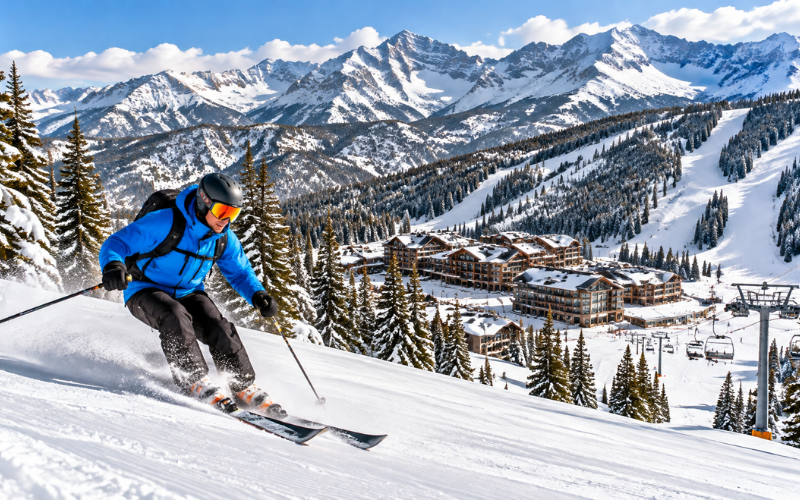
The best ski resorts in Colorado are not the same for everyone. Beginners may value gentle learning areas, while experts want bowls, glades, and steep high-alpine terrain. Families need easy logistics, and other travelers may prioritize restaurants, nightlife, price, or quiet slopes.
This comparison covers major destinations, family mountains, expert favorites, and smaller ski areas. Because prices, snowfall, opening dates, and available terrain change, confirm current details before traveling.
Best Ski Resorts in Colorado at a Glance
| Travel priority | Strong choice | Why it stands out |
| Best overall experience | Vail | Large, varied mountain with a complete resort village |
| Best for beginners | Beaver Creek | Dedicated learning areas and comfortable base facilities |
| Best for families | Keystone | Lessons, family activities, and convenient village lodging |
| Best for experts | Crested Butte | Steep, technical, lift-served terrain |
| Best for powder | Wolf Creek | High average natural snowfall and a simple ski-area feel |
| Best near Denver | Winter Park | Varied terrain with road, shuttle, and seasonal rail access |
| Best luxury experience | Aspen Snowmass | Four mountains plus high-end lodging and dining |
| Best nightlife | Breckenridge | A busy historic town with many places to eat and socialize |
| Best for fewer crowds | Telluride | Remote setting and a spacious destination experience |
| Best value | Monarch Mountain | Independent atmosphere and fewer big-resort extras |
How We Selected Colorado’s Standout Ski Resorts
The choices consider terrain, snow reliability, lifts, learning areas, lodging, dining, crowds, value, and travel effort. They also examine progression: beginners need comfortable practice space, intermediates need variety, and experts need genuine challenges.
A smaller mountain may rank highly when simple parking, lighter crowds, or lower trip costs matter more than size. These recommendations describe each resort’s general character rather than promise exact daily conditions.
Vail: The Best All-Around Colorado Ski Experience
Vail is a strong overall choice for travelers who want a large mountain and a complete vacation in one place. Its front side offers learning terrain and groomed runs, while the famous Back Bowls provide broad, open skiing when conditions allow. Blue Sky Basin adds glades and a more remote feel. Vail reports 5,317 acres of terrain, including nearly 3,000 acres in the Back Bowls.
Vail Village and Lionshead have extensive lodging, dining, rentals, and après-ski. The tradeoffs are high costs and potentially large holiday or powder-day crowds, making advance booking and early starts worthwhile.
Aspen Snowmass: Four Mountains in One Ski Vacation
Aspen Snowmass combines four ski areas on one ticket. Snowmass has the broadest terrain mix and works well for families. Buttermilk offers gentle learning slopes and terrain parks. Aspen Highlands attracts strong skiers, while Aspen Mountain rises above downtown and has no true beginner terrain.
The four mountains provide more than 5,700 combined acres, making this destination rewarding for longer stays. Visitors also get extensive lodging, dining, cultural attractions, and après-ski. It is expensive, but few Colorado destinations offer as much variety within one trip.
Breckenridge: High-Altitude Skiing With a Lively Town
Breckenridge spreads varied terrain across five peaks. Lower areas include beginner runs and groomed cruising, while the upper mountain offers bowls and exposed high-alpine skiing. The official mountain statistics list 2,908 acres and a summit elevation of 12,998 feet.
The historic downtown adds restaurants, shops, bars, and a livelier atmosphere than most base villages. Denver access is practical, but Interstate 70 traffic can greatly extend the drive. Because the town sits around 9,600 feet, visitors should hydrate, rest, and allow time to adjust to the altitude.
Steamboat: Deep Snow and a Welcoming Ski-Town Feel
Steamboat is especially attractive to skiers who enjoy powder and tree-lined runs. Its glades are a defining feature, while broad intermediate terrain, learning programs, and easier slopes widen its appeal. Steamboat reports 3,741 acres of permitted terrain across six peaks, with glades around Mahogany Ridge, Sunshine, and Storm Peak among its signature areas.
Steamboat Springs feels like a real Western town rather than a purpose-built village. Restaurants, shops, and nearby hot springs provide options for rest days. It is farther from Denver than the Interstate 70 resorts, but regional air service and its distinctive atmosphere make it rewarding for longer vacations.
Winter Park: Varied Terrain With Convenient Denver Access
Winter Park provides a balanced mountain experience. The Winter Park side has learning areas and groomed runs, while Mary Jane is celebrated for moguls, trees, and harder terrain. The resort offers more than 3,000 acres, allowing groups with different abilities to find suitable slopes.
Visitors can drive from Denver, take a shuttle, or check seasonal rail service from Union Station. The base village supplies lodging, food, rentals, and activities, although it is smaller than Vail or Breckenridge. This combination makes Winter Park suitable for both focused weekends and longer trips.
Telluride: Dramatic Scenery Without the Usual Resort Crowds
Telluride pairs serious skiing with a memorable setting. The historic town sits in a box canyon, while Mountain Village offers slope-side convenience. A free pedestrian gondola connects them, so many guests do not need a car.
The mountain has scenic beginner and intermediate routes plus steep expert terrain. Its official statistics describe more than 2,000 acres, with 41% of the terrain rated advanced or expert.
Telluride’s remote southwestern location requires more planning than a Summit County trip. However, it feels removed from the busiest Front Range crowds and suits travelers seeking scenery, character, and relative quiet.
Beaver Creek: A Polished Choice for Families and Comfort
Beaver Creek is built around a comfortable guest experience. Organized base areas, ski school, and dedicated learning zones make it a leading choice for first-time skiers and families. McCoy Park offers 250 acres of beginner and intermediate terrain, including gentle groomed glades designed for progression.
Stronger skiers can find steeper challenges elsewhere on the mountain. Slope-side lodging and pedestrian areas simplify each day, while non-skiers have dining, shopping, and spa options. These benefits come at a premium, so Beaver Creek best fits travelers willing to pay more for comfort and easy logistics.
Copper Mountain: Naturally Divided Terrain for Mixed-Ability Groups
Copper Mountain’s naturally divided layout is a major advantage. Easier terrain is mainly in the west, intermediate runs occupy the center, and harder slopes extend east and upward. Mixed-ability groups can choose a meeting point and then explore at their own pace.
The resort reports 2,538 skiable acres and 157 marked trails. It also has terrain parks, training facilities, and three villages with lodging and food. Its atmosphere is quieter than Breckenridge, but direct Interstate 70 access makes Copper practical for visitors who value skiing more than nightlife.
Keystone: Family Skiing and Long Days on the Mountain
Keystone combines a large trail network with a family focus. Learning areas, ski school, and long groomed runs help beginners build confidence, while stronger guests can find trees, bowls, and advanced terrain. The resort currently reports 3,149 skiable acres across its mountain areas.
River Run Village offers lodging, rentals, restaurants, and gondola access. Tubing, ice skating, and seasonal events add options away from skiing. Night skiing may operate on selected dates, so travelers should confirm the current schedule.
Crested Butte: Character, Steeps, and a True Mountain Town
Crested Butte has a strong identity built around steep, technical skiing. Its extreme terrain includes narrow routes, cliffs, and demanding pitches intended only for highly capable skiers and riders. Easier runs exist, but experts are most likely to find the mountain exceptional.
Official figures list 1,547 acres, including 561 acres of expert terrain. The colorful historic town and independent culture add personality. Reaching it takes longer than visiting resorts near Denver, and storm travel can be difficult, yet strong skiers may consider the terrain and character worth the effort.
Arapahoe Basin: High-Alpine Terrain and a Longer Ski Season
Arapahoe Basin, commonly called A-Basin, is a high-elevation ski area known for advanced terrain and a season that often runs later than those of many Colorado competitors. Its field guide lists 1,428 acres, a summit elevation of 13,050 feet, and 73% advanced or expert terrain.
Bowls, chutes, moguls, and exposed upper-mountain routes serve confident visitors, although easier terrain exists. A-Basin has a straightforward ski-area atmosphere rather than a lodging village, so most guests stay elsewhere and drive in.
Check current parking rules before visiting. Choose A-Basin for high-alpine skiing and relaxed mountain culture rather than luxury or nightlife.
Wolf Creek: A Powder-Focused Escape in Southern Colorado
Wolf Creek reports an average of about 430 inches of snow per season, supporting its strong powder reputation. Its 1,600 acres include wide green slopes, intermediate groomers, trees, bowls, and steep hike-to terrain.
This traditional ski area has no major slopeside village. Visitors commonly stay in Pagosa Springs or South Fork. The remote location requires effort, but lift access and lodging may cost less than at famous destinations. Check road conditions carefully because Wolf Creek Pass can be difficult during storms.
Monarch Mountain: Smaller Crowds and Strong Overall Value
Monarch Mountain is a simpler alternative to Colorado’s largest resorts. It has an independent feel, a manageable base, and terrain for beginners through advanced skiers.
The No Name Basin expansion added 377 acres of lift-served and hike-to terrain, with intermediate and advanced bowls, glades, and fall-line runs.
There is no large base village, so travelers generally stay in Salida or another nearby community. That is less convenient than ski-in, ski-out lodging but can support a more affordable trip. Monarch suits visitors who value natural snow, relaxed surroundings, and mountain time over luxury extras.
Matching a Colorado Ski Resort to Your Ability Level
First-time skiers should consider Beaver Creek, Keystone, Snowmass, or Buttermilk for lessons and gentle terrain. Progressing skiers may prefer Copper, Steamboat, Winter Park, or Vail.
Crested Butte stands out for technical steeps, while A-Basin provides high-alpine challenges. Telluride, Vail, Aspen Highlands, Breckenridge, and Wolf Creek also have serious terrain when conditions allow.
Mixed groups should study trail maps before booking and choose a base that serves their least experienced members. A mountain with suitable terrain for everyone will usually create a better trip than one selected only for its expert runs.
Colorado Ski Resorts for Families, Couples, and Groups
Keystone and Beaver Creek make lessons, convenient bases, and off-slope activities easy to organize. Snowmass and Steamboat suit longer family stays.
Couples seeking scenery and dining may prefer Telluride or Aspen, while Breckenridge offers a lively town after the lifts close. Copper, Vail, Winter Park, and Aspen Snowmass serve mixed abilities well.
Travelers looking for quieter surroundings should consider Monarch, Wolf Creek, or Telluride. The final choice should work for the whole group, not only its strongest skier.
Lift Passes, Ticket Prices, and the Real Cost of a Ski Trip
Lift tickets are only one part of the budget. Lodging, rentals, lessons, meals, parking, flights, and ground transportation can cost as much as mountain access. Buying dated tickets early is often cheaper than purchasing at the window, but discounted products may have restrictions.
Epic products cover resorts such as Vail, Beaver Creek, Breckenridge, Keystone, and Crested Butte, with certain products also providing limited Telluride access. Ikon products connect destinations including Aspen Snowmass, Steamboat, Winter Park, Copper, and A-Basin. Access levels and blackout dates vary by product.
Monarch and Wolf Creek sell their own products. Compare the exact terms for your travel season before purchasing. A pass is valuable only when it covers the resorts and dates you will actually use.
The Best Time to Ski in Colorado
Early winter can bring lower prices and lighter crowds, but open terrain may be limited. January and February generally offer colder weather and stronger midwinter coverage, although holidays are busy.
March often combines a deeper snow base with longer, sunnier days. High resorts may continue operating into spring, when warm afternoons and overnight freezes can change snow quality quickly.
No month guarantees perfect conditions. Storm tracks differ across Colorado, and strong wind can affect high lifts even after fresh snow. Weekdays are generally calmer than weekends. Flexible travelers should follow official snow and terrain reports instead of judging a trip only by seasonal averages.
Getting to Colorado’s Major Ski Resorts
Denver International Airport is the main arrival point for many visitors, but the mountain drive can be unpredictable. Interstate 70 becomes congested on Friday evenings, weekend mornings, and holiday periods. Snow, crashes, and traction requirements can add hours, so avoid tight flight connections.
Regional airports serve areas such as Aspen, Steamboat, Telluride, and Crested Butte, although flights may cost more or experience weather disruption.
Winter Park has seasonal train access, and several resorts have commercial shuttles from Denver. A rental car is useful for remote areas such as Wolf Creek and Monarch, but it may be unnecessary in pedestrian destinations with reliable local transportation.
What to Check Before Booking Your Colorado Ski Vacation
Compare ability levels, trail maps, lessons, lodging, pass rules, and transportation. A cheap room far from the lifts can lose its value after parking or long drives are added. Reserve equipment early for busy periods.
Colorado’s elevation can affect visitors, especially on the first day. Drink water, limit alcohol, rest, and seek medical help for serious symptoms.
Check official snow reports, road forecasts, cancellation terms, and travel-insurance coverage before leaving. Mountain conditions change quickly, so keep the schedule flexible.
Common Questions About Colorado Ski Resorts
Which Colorado ski resort is best for first-time visitors?
Beaver Creek and Keystone are two of the easiest choices for first-time visitors because both combine learning areas, lessons, rentals, and convenient base facilities. Buttermilk at Aspen Snowmass is another excellent option for travelers who want a quieter beginner mountain within a larger destination.
What is the best Colorado ski resort near Denver?
Winter Park is a strong overall choice because it has varied terrain and seasonal rail access from Denver. A-Basin can work well for a ski-focused day trip, while Keystone, Breckenridge, and Copper offer more lodging and village facilities. Travel time depends heavily on traffic and weather.
Which Colorado resort receives the most snow?
Wolf Creek states that it averages about 430 inches each season, the highest reported average among Colorado ski areas. Actual snowfall changes from year to year, and one area can outperform another during a particular storm cycle.
Is an Epic Pass or Ikon Pass better for Colorado?
Epic is usually the more natural fit for trips centered on Vail, Beaver Creek, Breckenridge, Keystone, or Crested Butte. Ikon is better aligned with Aspen Snowmass, Steamboat, Winter Park, Copper, and A-Basin. The better option depends on travel dates, blackout rules, and the number of planned ski days.
How many days are enough for a Colorado ski trip?
Three ski days are enough for a short visit to one resort, especially for experienced travelers. Four to six days give beginners time for lessons and allow everyone a rest or weather day.
Conclusion
The best ski resorts in Colorado serve very different travelers. Vail provides a broad all-around experience, Aspen Snowmass offers four distinct mountains, and Beaver Creek and Keystone make family planning easier.
Experts may favor Crested Butte or A-Basin, while powder seekers should consider Wolf Creek. Telluride supplies scenery and relative quiet, and Monarch offers a simpler, value-focused trip.
Choose according to skill level, total budget, travel time, and the experience wanted away from the slopes. Before booking, confirm current tickets, pass access, snow reports, opening dates, and road conditions. The best mountain is ultimately the one that fits the people taking the trip.