
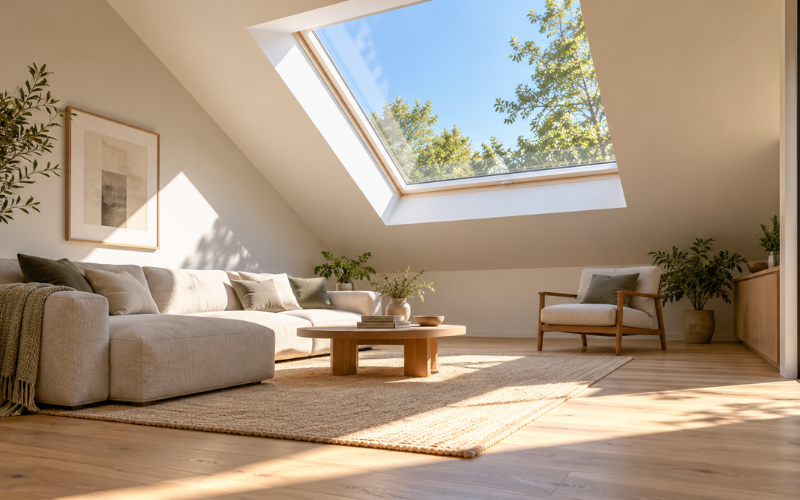
A skylight is a window fitted into a roof or ceiling to bring natural light into a room from above. It can be a fixed pane that stays closed or an opening unit that lets fresh air in. Some skylights sit directly in the roof, while tubular models carry daylight through a reflective shaft into rooms beneath the roof.
Homeowners often consider a skylight when a room feels dim or has few options for adding a regular window. A well-placed unit can brighten a kitchen, hallway, bathroom, or attic. The best choice depends on the room, roof design, climate, privacy needs, and the amount of sunlight you want. Skylights can also bring extra heat, glare, or maintenance needs, so it helps to understand their types and trade-offs before deciding.
What a Skylight Is and How It Works
A skylight is a glazed opening in a roof that allows daylight to enter a building. The glass or plastic glazing is held in a frame, and the unit is sealed and connected to the roof so rain and melting snow can flow around it. On the inside, a skylight may open directly into a room or connect through a short shaft that guides light down from the roof.
The basic idea is simple: sunlight passes through the glazing and illuminates the space below. The amount and quality of light depend on factors such as the skylight’s size, its direction, the roof angle, nearby trees or buildings, and the season. A skylight facing a brighter part of the sky may receive more direct sun, while one shaded by trees may provide softer light.
Some skylights remain closed, while others can be opened. Vented versions may be operated by hand, with a switch, or through a remote control, depending on the model. A tube skylight uses a different path: a small roof opening captures daylight, and a reflective tube carries it through the attic or roof space to a ceiling diffuser.
Although a skylight is a type of window, it has a different installation position and different demands on the roof. It must be fitted into the roof covering and sealed carefully against water. The roof opening, frame, glazing, and surrounding flashing all work together to keep the interior dry.
Common Types of Skylights
The main skylight types are fixed, vented, and tubular. Each brings daylight indoors, but they suit different rooms and needs.
A fixed skylight is a sealed unit that does not open. Its main purpose is to let in light. Because it has no opening mechanism, it can be a straightforward option for rooms that do not need extra ventilation, such as a living room or stairwell. The size and shape can vary, and some fixed skylights are designed to sit nearly flush with the roof.
A vented skylight can be opened to release warm air or bring in fresh air. This can be useful in a kitchen or bathroom, where heat, steam, or odors may build up. A vented skylight may open manually or use powered controls. Some models include rain sensors that close the unit when wet weather is detected, but features differ by product. An opening unit has moving parts that may need occasional inspection and care.
A tubular skylight, sometimes called a sun tunnel, uses a small roof-mounted light collector, a reflective tube, and a ceiling diffuser. The tube carries daylight to a room below. Because it takes up less roof space than many traditional skylights, it can work in areas such as a hallway, closet, or small bathroom. It does not provide a view of the sky, and it generally does not open for ventilation.
Choosing among these types starts with the job you want the skylight to do. For daylight alone, a fixed or tubular option may be suitable. If you also want fresh air, consider a vented skylight and check that the roof and room layout can accommodate it.
Skylights, Roof Windows, and Sun Tunnels: Key Differences
The terms skylight, roof window, and sun tunnel are sometimes used loosely, but they can describe different products.
A skylight is generally a window installed on a sloping or flat roof to bring light inside. Many are fixed, though vented versions are available. A roof window is usually designed to be within reach and may open wide, making it possible to clean from inside or use it for ventilation. The exact distinction can vary between manufacturers and regions, so product names alone may not tell the whole story.
A sun tunnel carries light through a reflective tube from the roof to a ceiling diffuser. It does not provide the same view as a glass skylight and usually cannot be opened. However, its smaller roof opening can make it practical when a larger skylight would not fit or when the room is separated from the roof by an attic.
When comparing products, look at their installation requirements, opening options, glazing, measurements, and intended roof type. A product’s name is less useful than knowing what it can do in the space you have.
Where Skylights Work Best in a Home
A skylight can be useful in a room that lacks a suitable exterior wall for a regular window or where roof access makes overhead light practical. Kitchens, bathrooms, hallways, stairwells, and top-floor rooms are common possibilities. A skylight may also help brighten a central area that feels removed from nearby windows.
Placement matters. A skylight above a kitchen island or dining area can bring light to a frequently used part of the room, while one over a stairwell may brighten several levels. In a bathroom, a skylight can provide daylight while preserving privacy from neighboring properties. A vented model may also help release warm, moist air, though it should not replace proper bathroom ventilation where that is required.
Think about the room’s use throughout the day. A bright beam of direct sun may be welcome in a dim hallway but uncomfortable above a desk or television. Trees, nearby buildings, roof direction, and roof pitch affect the amount of light and heat the opening receives. Shades or blinds can give you more control, especially in bedrooms and rooms used for work.
It is also important to consider what lies between the roof and the ceiling. Rafters, wiring, plumbing, and the shape of an attic can affect where a skylight can go. A tubular model may be an option if there is limited space for a larger opening. A qualified installer can assess the roof and identify practical locations before any cutting begins.
The Main Benefits of Adding a Skylight
The most direct benefit of a skylight is natural light from above. Because the roof can receive more open sky than a nearby wall, a skylight may brighten parts of a room that a side window does not reach. This can make a dark hallway, central bathroom, or top-floor room feel more open during daylight hours.
Daylight can also change how a room looks. It may reveal colors and textures differently from electric lighting, and a view of the sky can add a visual connection to the outdoors. A skylight can become a feature in its own right, especially in a room with a high ceiling or a carefully planned roof shape.
A vented skylight has an additional benefit: it can release warm air that gathers near the ceiling. Since warm air rises, opening a high vent may help air move through a room when conditions outside are suitable. The effect depends on the room layout, weather, and other openings in the home.
A skylight may reduce the need to use electric lights during some daytime hours, though actual energy savings depend on the home and how the skylight is designed and used. Its glazing and installation matter because a roof opening can also affect heat flow. ENERGY STAR advises comparing certified product ratings for the relevant climate zone, rather than assuming that every skylight performs the same way.
Drawbacks to Consider Before Choosing a Skylight
A skylight is an opening in the roof, so installation and sealing must be done carefully. Poorly fitted flashing, worn seals, or damage around the opening can allow water into the roof or ceiling. The U.S. Department of Energy’s Building Science Education resource notes that skylights pass through the roof’s water-control layer, which makes proper installation and upkeep important.
Skylights can also affect indoor temperature. Direct sunlight may make a room warmer, while a poorly performing unit may let heat escape during cold weather. Glazing, shades, orientation, and product ratings all influence comfort. A skylight in a sunny location can cause glare or make it harder to sleep if it is installed above a bed.
Other considerations include condensation, cleaning access, and repair costs. Dust and debris can collect on the outside surface, especially under trees. An opening model has parts that may require more attention than a fixed one. If the glass is difficult to reach safely, cleaning or checking it may require professional help.
Before choosing a skylight, weigh the benefits against the roof work and ongoing care it may involve. The right product can improve a room, but an unsuitable size or location can create problems that are difficult to correct later.
Skylight Glazing, Frames, and Design Features
The glazing is the transparent or translucent part of the skylight. It may be glass or plastic, and different products can vary in insulation, strength, light transmission, and resistance to impact. Some glazing is made with multiple layers, special coatings, or a plastic layer designed to help keep broken pieces in place. Product details vary, so check the manufacturer’s specifications before deciding.
Frames support the glazing and help connect the unit to the roof. They may be made from materials such as aluminum, wood, vinyl, or combinations of materials. The frame’s design and finish affect the look of the skylight from inside and outside, but the roof connection and weather sealing are just as important as appearance.
Other features can help manage light and comfort. Interior blinds or shades can reduce glare and limit incoming sunlight. Some models offer manual, electric, or solar-powered opening controls. Screens may be available for vented skylights to help keep insects out when the unit is open.
Performance labels can help compare products. ENERGY STAR explains that its certified windows, doors, and skylights are tested and verified using established procedures, and that product criteria vary by climate zone. Ratings such as those on an NFRC label can help shoppers compare energy performance.
Basic Skylight Installation Considerations
Installing a skylight usually involves creating an opening through the roof and fitting the unit so it connects properly with the roof covering. The installer must consider the roof’s shape, slope, materials, structure, and drainage. They also need to check what is hidden beneath the roof, such as rafters, wiring, insulation, or pipes.
The installation method may depend on whether the skylight is mounted directly to the roof deck or placed on a raised curb. The roof covering and product instructions influence the flashing details. Flashing is the material used around the skylight to guide water away from the opening. It needs to be compatible with the skylight and roof type.
Work on a roof can carry fall and weather risks, and mistakes around a roof opening can lead to leaks or structural problems. For many homeowners, it makes sense to have a qualified roofing or skylight professional assess the project and complete the installation. If you are replacing an existing unit, ask whether the surrounding roof area, flashing, and interior finish need repair as well.
Building rules and permit requirements differ by location. Before work begins, check the local requirements and any conditions that apply to your roof or property. Follow the product’s installation instructions and use an installer familiar with the relevant roof material.
Skylight Maintenance and Signs of a Problem
Routine care can help you spot issues before they affect the surrounding roof or ceiling. Look for visible cracks in the glazing, loose or damaged exterior components, and water stains or peeling paint around the interior frame. After heavy rain or snow, pay attention to new damp patches or dripping near the skylight.
Condensation on the inside surface can occur when warm, moist indoor air meets a cold surface. Occasional condensation may relate to indoor humidity or weather conditions, while repeated moisture, staining, or soft material around the frame deserves closer attention. Do not assume that every water mark means the skylight itself is broken; the source may be a seal, flashing, roof covering, or another part of the roof.
Keep the glazing and frame clean according to the manufacturer’s instructions. Avoid leaning out of an opening or climbing onto the roof without suitable equipment and experience. If the skylight is hard to reach or you see signs of a leak, ask a qualified professional to inspect it. The Department of Energy’s Building Science Education guidance also recommends checking for water damage and infiltration around skylights.
A Simple Guide to Choosing the Right Skylight
Start by identifying what you need from the skylight. If the room needs more daylight but not more ventilation, a fixed skylight or tubular model may be worth considering. If you want to let warm air escape or bring in fresh air, look at vented options and how they open.
Next, consider the room and roof together. Measure the space, note where sunlight falls during the day, and think about whether glare or extra heat could be uncomfortable. Check for obstructions in the roof structure and consider how easy the skylight will be to reach for cleaning or maintenance.
Compare glazing and performance details as well as appearance. Look at energy ratings, light-control options, frame material, opening controls, and the product’s suitability for your roof. A shade may help manage brightness, but the skylight still needs to be correctly sized and placed.
Finally, include installation and long-term care in your decision. Ask a qualified installer to assess the roof, explain the flashing approach, and identify any permit needs. A little planning helps you choose a skylight that suits the room, roof, and way you use your home.
Conclusion
A skylight is a roof-mounted window that brings daylight into a home and, in some designs, can also provide ventilation. Fixed, vented, and tubular models serve different needs, while roof windows and sun tunnels offer other ways to bring light in from above.
The right skylight depends on where it will go, how much daylight or ventilation you want, and whether your roof can support the installation. Consider its potential benefits alongside heat, glare, maintenance, and leak prevention. With thoughtful placement, suitable glazing, and careful installation, a skylight can make a dim space feel brighter and more connected to the outdoors.
FAQs
1. What is a skylight used for?
A skylight brings daylight into a room through an opening in the roof. Some models also open to provide ventilation.
2. What are the main types of skylights?
The common types are fixed skylights, vented skylights, and tubular skylights. Fixed units do not open, vented units can open, and tubular units carry daylight through a reflective tube.
3. Does a skylight make a room hotter?
It can, particularly if it receives strong direct sunlight. The effect depends on its placement, glazing, shading, and product design.
4. Can a skylight leak?
Yes. Leaks can develop if installation, flashing, seals, or nearby roof materials fail. Proper installation and checks for water damage can help catch problems early.
5. What is the difference between a skylight and a sun tunnel?
A skylight is a roof window that usually shows a view of the sky. A sun tunnel uses a reflective tube to carry daylight to a ceiling diffuser, typically without providing a view or ventilation.