
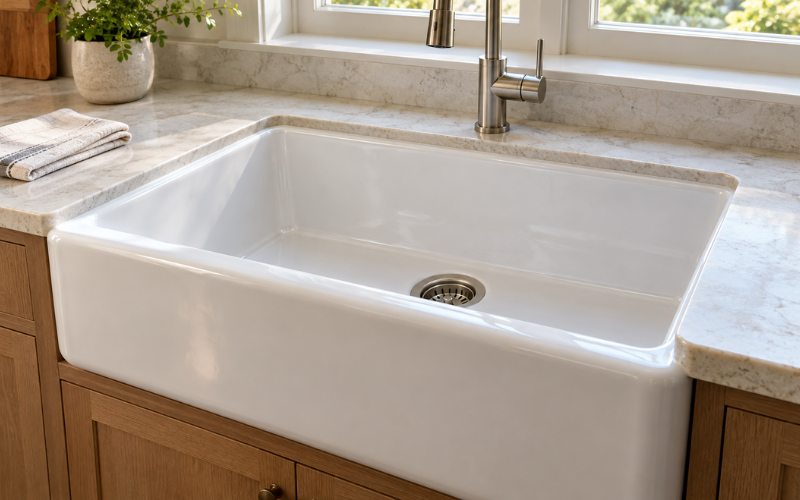
A fireclay farmhouse sink combines a clay-based body with an exposed front, often called an apron. Instead of sitting entirely behind the cabinet face, the sink’s front becomes a visible part of the kitchen. Its substantial shape and smooth finish can make it a strong design feature without adding much decoration.
However, appearance is only part of the decision. The sink must also fit your cookware, feel comfortable to use, and work with your cabinets and countertops. Its weight, installation needs, cleaning requirements, and complete fitted cost deserve attention before you order.
What Makes a Fireclay Farmhouse Sink Different
Fireclay sinks are made from specially prepared clay that is shaped, glazed, and fired at high temperatures. The finished glaze provides a smooth surface. Many models have a glossy finish, although some manufacturers offer matte options. The exact manufacturing process and finish vary between products.
It helps to separate the material from the design. Fireclay describes what the sink is made from. Farmhouse describes its apron-front style. A farmhouse sink can also be made from stainless steel or enameled cast iron, so the terms are not interchangeable.
The exposed apron affects how the sink looks and how it fits into the cabinet. A plain front creates a simple appearance, while fluted or shaped fronts add detail. Some fireclay models are reversible, allowing you to choose between two front designs before installation. BLANCO’s CERANA range, for example, offers different corner styles on its two sides.
White is a familiar choice, but available colors depend on the brand and collection. When comparing finishes, look at physical samples or showroom displays where possible. Website photographs may not show the exact color, shine, or surface texture you will see at home.
The Benefits and Trade-Offs of Everyday Use
One attraction of fireclay is its smooth, glazed surface. Kohler describes its fireclay finish as nonporous and easy to clean. That supports straightforward daily maintenance, although food residue, mineral deposits, and marks still need attention. Easy care does not mean the sink stays clean by itself.
A roomy apron-front basin can be useful when washing trays, rinsing vegetables, or handling large pots. However, this benefit depends on the bowl’s actual dimensions. A sink that looks large from the front may offer less usable space than expected because of thick walls, rounded corners, or a central divider.
The hard surface also calls for careful dish handling. Glasses and plates can break if dropped against it. Heavy cookware should be lowered gently rather than allowed to fall into the basin. Resistance to normal wear should never be treated as protection against every impact.
Consider how your household uses the kitchen. If dishes regularly pile up, a large single bowl may provide useful room. If several people cook and clean together, divided space might be more convenient. The best choice is the one that makes familiar tasks easier, rather than simply looking impressive.
Choosing the Right Size and Bowl Layout
Start with three separate measurements: overall width, front-to-back size, and bowl depth. Then check the usable interior dimensions. The outside measurement tells you about installation space, while the inside measurement tells you whether your roasting pan or baking sheet will fit.
A useful approach is to measure your largest regularly washed items before shopping. Check whether they can lie flat, turn comfortably, or sit at an angle without blocking the faucet. This is more reliable than choosing a sink based on photographs.
A single bowl provides uninterrupted washing space. It can suit households that use a dishwasher for most plates but wash larger cookware by hand. A double bowl separates tasks, such as washing on one side and rinsing on the other. The trade-off is that each compartment offers less room.
Depth deserves equal attention. A deeper basin can help contain splashes and keep dishes below the countertop, but reaching its bottom may require more bending. The installed position, countertop height, apron shape, and your own height all influence comfort.
If possible, stand at a showroom sink with similar dimensions. Reach toward the drain and imagine washing a heavy pot. Also check whether a fitted bottom grid would raise the working surface enough to change how the bowl feels.
Cabinet Fit and Installation Details to Check First
A fireclay farmhouse sink should be selected alongside the cabinet and countertop plan. The advertised sink width alone does not establish whether it will fit. Check the manufacturer’s minimum cabinet size, installation method, and required clearances for the exact model.
Apron height and projection matter too. The front may require an opening in the cabinet face, and its lower edge must leave suitable space for the doors beneath it. In an existing kitchen, this can mean cabinet alterations rather than a simple exchange of sinks.
Support is another essential detail. The installation must carry the sink safely under normal use, including its contents. Some models require a custom support system; BLANCO explicitly specifies one for its PROFINA fireclay sink. Follow the selected product’s instructions rather than assuming the countertop or standard cabinet fittings provide enough support.
Ask the installer when the physical sink needs to arrive. Before final cabinet or countertop cuts, confirm the actual product against the manufacturer’s measurements and instructions. This avoids relying entirely on a sales listing or a general drawing.
Finally, have the plumber check the drain position, fittings, and available space below the bowl. If you want a waste disposal unit, confirm that the sink supports it and whether a particular mounting flange is required. A deeper sink may also change how the existing drain connection needs to be arranged.
Fireclay Versus Other Farmhouse Sink Materials
Fireclay, enameled cast iron, and stainless steel can all provide an apron-front appearance. Their construction differs, however, so compare how each material fits your habits rather than assuming one is universally better.
Enameled cast iron has an iron body covered with enamel, while fireclay has a fired clay body with a glazed finish. Both offer a substantial appearance and require careful consideration of weight and support. Check individual product specifications because dimensions and installation requirements vary.
Stainless steel offers a different feel and appearance. Its metal surface develops visible wear differently from a glazed sink. Scratches and water spots may be noticeable, depending on the finish and maintenance. Sound also varies with the sink’s construction and any sound-reducing treatment.
For everyday cleaning, use the guidance for the material and model you choose. A product suitable for stainless steel may not be approved for fireclay or enamel. Likewise, a cleaning method recommended by one brand should not automatically be applied to another.
Repair options deserve attention before purchase. A cosmetic touch-up may not restore the original finish perfectly, and structural damage needs proper assessment. Ask each manufacturer how it handles chips, cracks, and warranty claims. Compare the answers alongside appearance, care requirements, and installed cost.
The Full Cost Beyond the Sink Price
The purchase price is only one part of the budget. Size, bowl layout, finish, front design, included accessories, and brand can all affect the amount you pay. A higher price does not automatically mean the sink will be more comfortable or better suited to your kitchen.
Installation costs depend heavily on the starting point. A new kitchen can be planned around the chosen sink. Replacing an existing sink may involve cutting the cabinet front, adding support, changing plumbing, or modifying the countertop. Ask for a written quote based on the specific model.
Delivery also belongs in the calculation. Check whether the charge covers doorstep delivery, placement inside the home, or anything beyond that. Find out who will move the sink into position and whether handling is included in the installer’s quote.
Accessories can add useful features, but buy them for a clear purpose. A fitted grid may help keep cookware above the sink floor. A compatible board or drying rack can provide temporary working space. Check whether these items are included, sold separately, and easy to remove for cleaning.
Compare complete project totals rather than product prices alone. The more useful figure includes the sink, delivery, fittings, cabinet work, countertop work, plumbing, and any accessories you actually need.
Cleaning and Protecting the Fireclay Surface
Simple, regular cleaning is a sensible starting point. Remove food debris, clean with a soft cloth or non-scratching sponge, and rinse away residue. Franke recommends mild liquid soap for routine fireclay care and warns that certain scouring products and concentrated cleaners can damage its finish. Follow the instructions supplied with your own sink.
Drying the surface after cleaning can help limit visible water deposits. Pay attention to corners, the area around the drain, and places beneath accessories where residue can collect. A brief daily clean is usually easier than dealing with a thick buildup later.
Treat stains, mineral deposits, and dark marks according to their likely cause. Do not assume every gray line is a scratch or every discolored patch is permanent damage. If you are unsure, send the manufacturer a clear photograph before trying a stronger product.
Some manufacturers allow vinegar-based cleaners for mineral buildup, but instructions differ. Franke includes these among its fireclay cleaning options. That does not make every concentration or soaking method suitable for every sink. Check approved products and contact times first.
A bottom grid also needs maintenance. Lift it out regularly and clean both the grid and the surface underneath. Check that its protective feet remain in place.
If you notice a chip or crack, photograph it and contact the manufacturer. Avoid applying a general repair compound before checking warranty requirements. A crack, leak, or loose installation needs assessment before continued use.
What to Check Before Placing Your Order
Before buying, collect the specification sheet, installation instructions, care guide, and warranty for the exact model number. Similar-looking sinks can differ in dimensions, drain placement, apron shape, and mounting requirements.
Confirm which side will face outward if the sink is reversible. Check that the installer knows your choice before planning the cabinet opening or countertop cut. Also verify whether the listing includes the drain fitting, grid, or other accessories shown in its photographs.
Read warranty terms beyond the headline duration. Find out what defects are covered, what documentation is required, and whether labor, removal, or reinstallation costs are included. Ask how shipping damage differs from a manufacturing defect and which company handles each type of claim.
Return conditions matter because the sink may be difficult to send back after delivery. Check the inspection period, return shipping arrangements, packaging requirements, and any restrictions once installation begins. Keep the original packaging until inspection is complete.
When the sink arrives, examine the apron, rim, bowl, corners, and drain opening before installation. Photograph damage and report it within the seller’s stated deadline. Finally, confirm that replacement accessories and suitable drain parts are available, particularly if the model uses a specific fitting.
Conclusion
A fireclay farmhouse sink can bring a clean, substantial focal point to the kitchen, but its practical value depends on the details. Bowl size, comfortable reach, cabinet fit, proper support, and suitable plumbing all matter as much as the exposed apron.
Choose a model around the tasks you perform most often. Measure your cookware, review the installation instructions with your installer, and compare the complete fitted cost. Make sure the care requirements and warranty terms are clear before placing the order.
When those checks align with your kitchen and routine, you can choose a fireclay farmhouse sink with a realistic understanding of both its appeal and its responsibilities.
FAQs
1. Does a fireclay farmhouse sink scratch or chip easily?
A fireclay farmhouse sink has a hard, glazed surface, but it should not be treated as damage-proof. Heavy impacts and unsuitable cleaning products can cause problems. Handle cookware carefully and follow the manufacturer’s care instructions. If a dark mark appears, ask whether it is surface residue before treating it as a scratch.
2. Can I install a fireclay farmhouse sink in an existing cabinet?
Sometimes, but compatibility must be checked before purchase. The cabinet may need an apron opening, additional support, or changes to its doors and plumbing. Countertop alterations may also be necessary. Give the installer the exact sink specifications and ask for an assessment rather than relying only on the cabinet’s outside width.
3. Is a single-bowl or double-bowl fireclay sink better?
Neither layout suits every household. A single bowl offers uninterrupted room for large pots and trays. A double bowl separates washing and rinsing tasks, but each compartment is smaller. Consider what you wash by hand and measure your largest cookware. Your daily habits provide a better guide than appearance alone.
4. Can a fireclay farmhouse sink be used with a waste disposal unit?
It may be compatible, depending on the model and disposal system. Check the sink’s instructions and ask the plumber to confirm the drain opening, mounting parts, and space beneath the bowl. Do not assume the fittings from your previous sink will work. Resolve compatibility before buying either product.
5. Does a fireclay farmhouse sink need a bottom grid?
A grid is optional unless the manufacturer specifies otherwise. It can keep cookware above the bowl floor and provide a useful resting surface, but it also needs regular cleaning. Choose one made for the sink’s interior shape and drain position. Remove it often enough to clean underneath and inspect its protective feet.